Understanding the Precipitated Calcium Carbonate (PCC) Production Mechanism and Its Characteristics in the Liquid-Gas System Using Milk of Lime (MOL) Suspension
Abstract
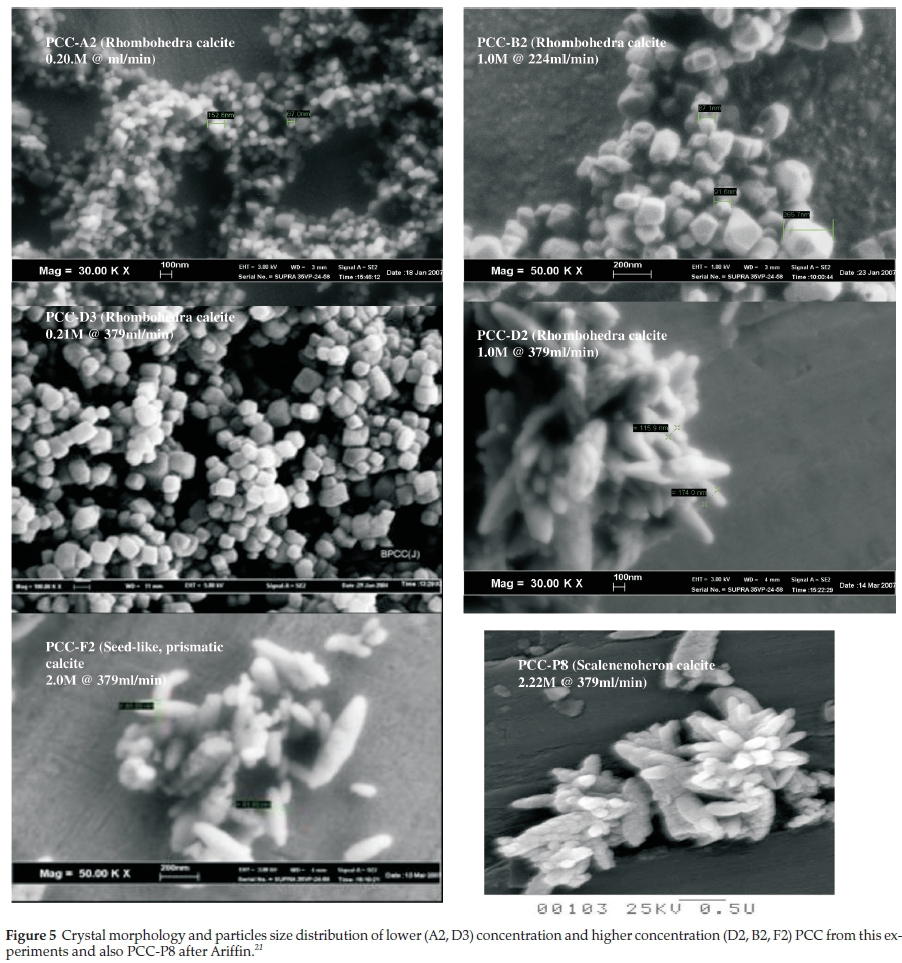
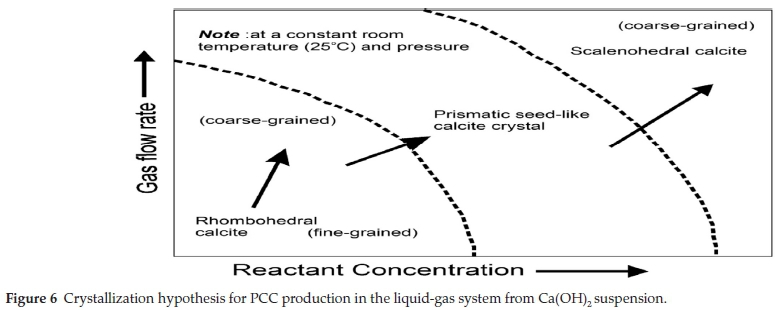
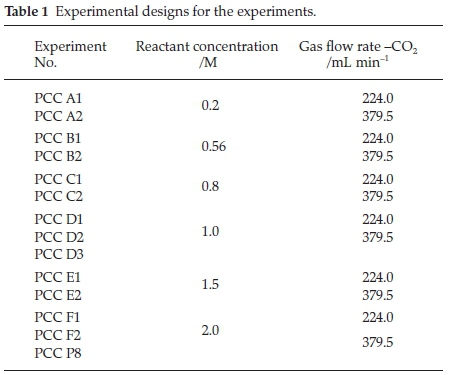
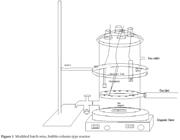
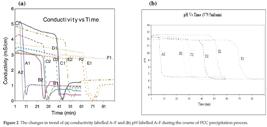
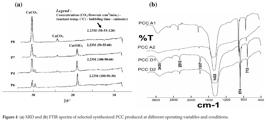
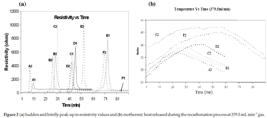
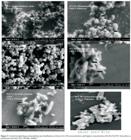
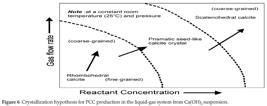
This study investigates the effect of operating variables and influence of milk of lime (MOL) conditions in PCC using a modified reactor. The variables includes: Ca(OH)2 feed concentration at 0.5 M-2.0 M and CO2 flow rates at 224.0 mL min-1 and 379.5 mL min-1, on the particle morphology and size in the gas-liquid route precipitation. The particle morphology and texture as well as the chemical content were sufficiently authenticated using X-ray diffraction (XRD), Fourier transform infrared spectroscopy (FTIR), scanning electron microscope (SEM) and X-ray fluorescence (XRF). Experimental data show that lower concentration (<1.0 M) favoured the formation of rhombohedra calcite crystals with the particle size below 100 nm. However, increase in concentration and gas flow rate yielded a coarser crystal particles. Two polymorphs were produced at1Mreactant, i.e. rhombohedra calcite with CO2 flow rate of 224 mL min-1 and prismatic calcite at 380 mL min-1. Molarities higher than 1 M yielded a coarser prismatic crystals, and also has a tendency to crystallize into scalenohedron species especially with higher reactant concentration.
Milk of lime; precipitated calcium carbonate; morphology; particle size; carbonation
 Thumbnail
 Thumbnail
 Thumbnail
 Thumbnail
 Thumbnail
 Thumbnail