Synthesis and Characterization of α-Zirconium Phosphate Nanoparticles
Abstract
In this work, α-zirconium phosphate (α-ZrP) was prepared by hydrothermal method, Free of any hydrofluoric acid, and characterized by fourier transform infrared (FTIR), Scanning electron microscope (SEM), X-ray diffraction (XRD), and thermogravimetric analysis (TGA) techniques. FTIR shows the fingerprint peaks at 1000 and 500 cm-1. SEM images of α-ZrP show a clearly layered lamellar structure of plate-like crystallites with stepped edges morphology. X-ray diffractogram showed three main peaks at 2-theta: 11.84°, 19.86°, and 25.03°, corresponding to the characteristic diffraction peaks of d (002), d (110), and d (112). Crystallinity degree was calculated from the XRD data and found to be at 21-26 nm. TGA thermogram gives two characteristic plateaus, one at about 300 °C, expressing the loss of about 4% combined water, and the other at about 600 °C representing 6.4% for the transformation of Zr(HPO4)2 to ZrP2O7. According to the TGA analysis the formula of α-Zirconium phosphate was proposed to be α-Zr(PO4)2.0.67H2O. Potentiometric titration for α-ZrP in the presence of Na+, Ba2+, and Al3+ was carried out, and accordingly the full load cation exchange capacities for Na+, Ba2+, and Al3+ were calculated and found to be 8.5, 10.2, and 7.1 meq.g-1 respectively.
α-Zirconium phosphate; hydrothermal method; cation exchange capacity; lamellar structure; HF-free synthesis
INTRODUCTION
Since the 1950s, several studies have focused on lamellar solids, namely their properties and possible applications. Precise emphasis has been paid to the development of new synthetic methods for their synthesis and subsequent use in applications across numerous technical sectors.1124)2.H2O (α-ZrP) for the first time since 1964.345
On the other hand, complexing agents were previously recommended for the synthesis of α-ZrP.662− species, which then slowly degrades in the presence of phosphoric acid. The pace at which the HF is eliminated determines the degree of crystallinity. When HF is gradually removed under low nitrogen flow, the complex gradually dissociates and α-ZrP precipitates.
Furthermore, a third alternative method was proposed by Shuai et al., a hydrothermal process based on the addition of zirconyl chloride solution slowly to phosphoric acid with constant stirring followed by heating the reaction mixture at 200 °C.7
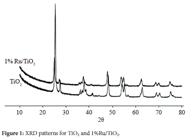
The structural refinement of α-ZrP, which explained the material's behavior as a cation exchanger, was reported in two different investigations in the 1970s7,8 after the placement of the hydrogen atoms in the crystalline phase was determined. The α-ZrP is composed of one plane of metal atoms connected by mono-hydrogen phosphate groups that alternately sit above and below each plane, comprising the α-ZrP. Three of the four oxygen atoms in each phosphate tetrahedron are shared by three zirconium atoms, and the fourth oxygen atom is joined to a hydrogen atom to produce the material's most active site. Six oxygen atoms from six distinct phosphates are coordinated with each zirconium atom. The layer packing creates six-sided holes for the water molecules, which interact with the P-OH groups in the same plane by creating hydrogen bonds (Figure 1).
The utilization of α-ZrP is supported by two important structural features: the acidic group -HPO42− and its layered structure. The first structural feature is utilized when α-ZrP is used as a cation exchanger.910,11 In a pH > 4 medium, transition metals (Cu2+, Co2+, Mn2+, Ni2+, and Zn2+) were easily absorbed by semi-crystalline ZrP produced by refluxing in 6 mol/L H₃PO₄ for 6 hours. The goal of this work is to manufacture α-ZrP at low temperatures without hydrofluoric acid using a different, straightforward method.
EXPERIMENTALMaterials
Oxalic acid (AnalaR purchased from BDH, 95.5-102%); zirconyl oxo chloride 97% (purchased from MERCK); orthophosphoric acid 88% (purchased from Analytical Rasayan), and deionized water was used to perform all the experiments.
Preparation of α-ZrP
α-Zirconium phosphate was prepared according to a modified method.1262- complex with zirconium. On removal of HF gradually under low flow of nitrogen, it results gradually in the dissociation of the complex and the precipitation of α-ZrP, resulting in a very high percent yield of the product with a lower degree of crystallinity.12, 13
Characterization
Cation exchange capacity
The resulting material, α-Zirconium phosphate, was characterized using different techniques. Cation-exchange capacity was measured according to the added salt method.142, and AlCl3 shaken for about 24 h, and titrated against 0.089 M of NaOH solution at 0.5 mL intervals; the pH was measured after each addition. Then cation exchange capacity (CEC) was calculated based on the volume of sodium hydroxide solution consumed at the equivalence point.
Instruments used
The α-ZrP product was characterized using techniques, such as: FTIR (IRPrestige-21, Shimadzu) was used for a full scan from 4000 to 400 cm−1
RESULTS AND DISCUSSION
Potentiometric titration
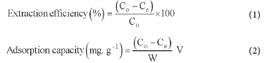
The volume of NaOH solution was plotted against the pH change to create a potentiometric titration curve. Equation 1 was used to compute the complete load exchange capacities for Na+, Ba2+, and Al3+. The results are displayed in Figure 2 and are 8.5, 10.2, and 7.1 meq.g-1, respectively. Previous studies on the Na+ exchange capacity of α-ZrP revealed that it was 8.8 meq.g-1 for Zr(HPO4)2.6H2O15-1 for barium.163+ should be the highest, but it appears to be lower than that of Ba2+ since Al3+ is hydrolysed from the hexahydrate Al(H2O)63+ to monomeric and polymeric hydroxyl aluminum species, including Al(OH)2+, Al(OH)2+, and others.17
FTIR analysis
The α-zirconium phosphate (α-ZrP) ion-exchanger's FTIR spectrum displays bands indicative of Zr-O vibrations together with O-H stretching, H-O-H bending, and P=O stretching. The asymmetric stretching vibration of intercalated water molecules generated by the split of position asymmetry is represented by two distinct peaks in Figure 3 at 3593 cm−1−1−11,18
The distinctive absorption peaks between 3404 and 3385 cm-1 are caused by deformation vibrations of the O-H bonds in water molecules. Zr-O and/or P-O vibration is associated with the bands at 596 and 528 cm−11,19
Deformation vibrations of the O-H bonds in water molecules produce the absorption peak at 1618 cm−1−1-1 represents the stretching vibration peak of the -PO4 group. The prepared α-ZrP's FTIR spectrum agrees with the traditional α-ZrP spectra.17
Scanning electron microscope (SEM)
The SEM images of the prepared α-ZrP powder are displayed in Figure 4, Showing a layered structure morphology with discrete, plate-like crystallites with stepped edges.20, 21
X-ray diffraction (XRD)
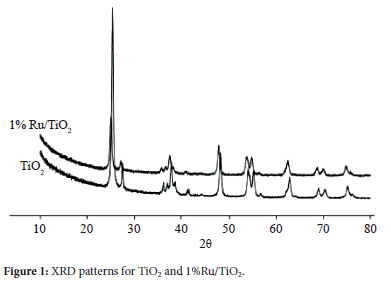
The XRD patterns of α-ZrP is shown in Figure 5. There are three main strong diffraction peaks at 2q (d-spacing) equal to: 11.84° (7.48Å), 19.86° (4.47 Å), and 25.03° (3.36 Å), Corresponding to the characteristic diffraction peaks of d (002), d (110), and d (112). The x-ray pattern gives also clear peaks at 33.90° and 48.57°, corresponding to the d-spacing of 2.64Å, and 1.87Å respectively. These values are very close to that obtained previously.18
Figure 5 displays the α-ZrP XRD patterns. The characteristic diffraction peaks of d (002), d (110), and d (112) are represented by the three primary strong diffraction peaks at 2θ (d-spacing), which are equivalent to 11.84° (7.48 Å), 19.86° (4.47 Å), and 25.03° (3.36 Å). Additionally, the x-ray pattern shows distinct peaks at 33.90° and 48.57°, which correspond to the d-spacing of 2.64 Å and 1.87 Å, respectively. These figures are extremely similar to the earlier results.18

In equation 2, K is a constant and equals 0.9, l is the wavelength of the x-ray source (l=0.1542 nm), b is the full width at half maximum (FWHM) of the peak (rad).18
Thermogravimetric analysis (TGA)
Figure 6 shows the thermogram of α-Zirconium phosphate, as it is shown, the graph has two clear plateaus. The first plateau is at around 317 °C, showing 4% weight loss attributed the loss of combined water and unreacted oxalic acid, producing Zr(HPO4)2. Figure 6 shows an unexpected peak raising between ambient and 100 °C, which then decreased with a small plateau at less than 200 °C which might be due to the presence of unreacted oxalic acid. At about 596 °C, a loss of 6.4% indicating the pyrolysis of Zr(HPO4)2 to a dominant form of zirconium pyrophosphate ZrP2O7.184)2.0.67H2O calculated as water loss only. On the other hand, the high decomposition temperature indicates that α-ZrP can maintain its layered structure and is thermally stable.
CONCLUSION
In this investigation, non-dangerous compounds were used to successfully and safely manufacture α-Zirconium phosphate (α-ZrP). It was estimated that the yield of α-ZrP was approximately 16%. The product was characterized using XRD, SEM, TGA including potentiometric titration revealing crystallite particle size of less than 26 nm, a layered morphology with multiple thin, angular lamellae that stack and overlap to form a loosely packed, layered texture and proposed structure of Zr(HPO4)2.0.67H₂O. Na+, Ba2+, and Al3+ were found to have cation exchange capacities of 8.5, 10.2, and 7.1 meq.g-1 respectively.
SUPPLEMENTARY MATERIAL
There is no supplementary.
CONFLICT OF INTERESTThe authors report no financial or any other conflicts of interest in this work.
CREDIT AUTHORSHIP CONTRIBUTIONS STATEMENTRuwaydah Ghoulah: Methodology, Ragiab Issa: Conceptualization, supervision, validation, writing draft, and editing. Abubaker Atrrog: Exchange capacity experiments. Hana AlHanash: Analysing the SEM and TGA analysis and writing the review and editing.
DECLARATION OF GENERATIVE AI AND AI-ASSISTED TECHNOLOGIES
The authors used QuillBot to proofread and check for grammatical errors and punctuation. After using QuillBot, the authors reviewed and edited the content as needed and take full responsibility for the content of the article.
AUTHOR ORCIDSRuwaydah Ghoulah: https://orcid.org/0009-0000-3930-4237
Ragiab Issa: https://orcid.org/0009-0004-3861-3221
Abubaker Atrrog: https://orcid.org/0009-0001-7128-5080
Hana AlHanash: https://orcid.org/0009-0003-0588-3906
ACKNOWLEDGMENTS
Authors thank the Faculty of Engineering, Sabratha University for providing laboratory facilities.
REFERENCES
-
1. Pica M, Donnadio A, Casciola M. From microcrystalline to nanosized α-Zirconium phosphate: synthetic approaches and applications of an old material with a bright future. Coord Chem Rev. 2018;374:218-235. https://doi.org/10.1016/j.ccr.2018.07.002.
» https://doi.org/10.1016/j.ccr.2018.07.002 -
2. Amghouz Z, García JR, Adawy A. A Review on the Synthesis and Current and Prospective Applications of Zirconium and Titanium Phosphates. Eng. 2022;3(1):161-174. https://doi.org/10.3390/eng3010013.
» https://doi.org/10.3390/eng3010013 -
3. Clearfield A, Stynes JA. The preparation of crystalline zirconium phosphate and some observations on its ion exchange behavior. J Inorg Nucl Chem. 1964;26(1):117-129. https://doi.org/10.1016/0022-1902(64)80238-4.
» https://doi.org/10.1016/0022-1902(64)80238-4 -
4. Clearfield A, Smith SD. The crystal structure of zirconium phosphate and the mechanism of its ion exchange behavior. J Colloid Interface Sci. 1968;28(2):325-330. https://doi.org/10.1016/0021-9797(68)90136-7.
» https://doi.org/10.1016/0021-9797(68)90136-7 -
5. Clearfield A, Smith GD. Crystallography and structure of alphα-Zirconium bis (mono-hydrogen orthophosphate) monohydrate. Inorg Chem. 1969;8(3):431-436. https://doi.org/10.1021/ic50073a005.
» https://doi.org/10.1021/ic50073a005 -
6. Alberti G, Costantino U, Allulli S, Massucci M. Crystalline insoluble acid salts of tetravalent metals-XX Forward and reverse Cs+/H+ and Rb+/H+ ion exchange on crystalline zirconium phosphate. J Inorg Nucl Chem. 1975;37(7-8):1779-1786. https://doi.org/10.1016/0022-1902(75)80316-2.
» https://doi.org/10.1016/0022-1902(75)80316-2 -
7. Shuai M, Mejia AF, Chang YW, Cheng Z. Hydrothermal synthesis of layered α-zirconium phosphate disks: control of aspect ratio and polydispersity for nano-architecture. CrystEngComm. 2013;15(10):1970-1977. https://doi.org/10.1039/c2ce26402a.
» https://doi.org/10.1039/c2ce26402a -
8. Albertsson J, Oskarsson A, Tellgren R, Thomas JO. Inorganic ion exchangers. 10. A neutron powder diffraction study of the hydrogen bond geometry in alphα-Zirconium bis(monohydrogenorthophosphate) monohydrate. A model for the ion exchange. J Phys Chem. 1977;81(16):1574-1578. https://doi.org/10.1021/j100531a011.
» https://doi.org/10.1021/j100531a011 -
9. Cheng Y, Bin Samsudin I, Jaenicke S, Chuah GK. Ion-exchange properties of γ-zirconium phosphate. Chem Asian J. 2020;15(21):3542-3550. https://doi.org/10.1002/asia.202000893.
» https://doi.org/10.1002/asia.202000893 -
10. Clearfield A. Inorganic ion exchanges, past, present, and future. Solvent Extr Ion Exch. 2000;18(4):655-678. https://doi.org/10.1080/07366290008934702.
» https://doi.org/10.1080/07366290008934702 -
11. Mu W, Chen B, Yu Q, Li X, Wei H, Yang Y, Peng S. A novel zirconium phosphonate adsorbent for highly efficient radioactive cesium removal. J Mol Liq. 2021;326:115307. https://doi.org/10.1016/j.molliq.2021.115307.
» https://doi.org/10.1016/j.molliq.2021.115307 -
12. Horsley SE, Nowell DV. The Preparation and Characterisation of Crystalline α-Zirconium Phosphate. J Appl Chem Biotechnol. 1973;23(3):215-224. https://doi.org/10.1002/jctb.5020230309.
» https://doi.org/10.1002/jctb.5020230309 -
13. Cheng Y, Chuah GK. The synthesis and applications of α-zirconium phosphate. Chin Chem Lett. 2020;31(2):307-310. https://doi.org/10.1016/j.cclet.2019.04.063.
» https://doi.org/10.1016/j.cclet.2019.04.063 -
14. Kshed S M, Alhanash H B, Issa R A M. Fibrous Cerium Phosphate and its Intercalated-Urea Product as Versatile Adsorbents for Mercury (II) Removal, Scientific Journal for the Faculty of Science-Sirte University 2025;5(1):39-102. https://doi.org/10.37375/sjfssu.v5i1.3199.
» https://doi.org/10.37375/sjfssu.v5i1.3199 -
15. Yinjie S, Hui Z, Qiaoling Y, Aimin Z. Preparation, characterization of crystalline zirconium phosphates and study on their acid stability and ion exchange behavior with uranyl ions. J Radioanal Nucl Chem. 1995 Dec;198(2):375-384. https://doi.org/10.1007/BF02036553.
» https://doi.org/10.1007/BF02036553 -
16. Costantino U, Marmottini F, Vivani R. Ion exchange properties of zirconium phosphate phosphite with alkaline earth metal ions. Solvent Extr Ion Exch. 1990;8(4-5):713-728. https://doi.org/10.1080/07366299008918026.
» https://doi.org/10.1080/07366299008918026 -
17. Coskuner O. Single Ion and Dimerization Studies of the Al (III) Ion in Aqueous Solution. J Phys Chem A. 2010;114(41):10981-10987. https://doi.org/10.1021/jp102906c.
» https://doi.org/10.1021/jp102906c -
18. Han L, Chen Q, Chen H, Yu S, Xiao L, Ye Z. Synthesis and Performance of Functionalized α-Zirconium Phosphate Modified with Octadecyl Isocyanate. J Nanomater. 2018;2018:1-9. https://doi.org/10.1155/2018/5873871.
» https://doi.org/10.1155/2018/5873871 -
19. Pica M. Treatment of Wastewaters with Zirconium Phosphate Based Materials: A Review on Efficient Systems for the Removal of Heavy Metal and Dye Water Pollutants. Molecules. 2021;26(8):2392. https://doi.org/10.3390/molecules26082392.
» https://doi.org/10.3390/molecules26082392 -
20. Thakkar R, Patel H, Chudasama U. A comparative study of proton transport properties of zirconium phosphate and its metal exchanged phases. Bull Mater Sci., 2007;30(3):205-209. https://doi.org/10.1007/s12034-007-0036-3.
» https://doi.org/10.1007/s12034-007-0036-3 -
21. Contreras-Ramirez A, Tao S, Day GS, Bakhmutov VI, Billinge SJL, Zhou H-C. Zirconium Phosphate: The Pathway from Turbostratic Disorder to Crystallinity. Inorg Chem. 2019;58(20):14260-14274. https://doi.org/10.1021/acs.inorgchem.9b02442.
» https://doi.org/10.1021/acs.inorgchem.9b02442
Revised: 23 March 2026
Accepted: 9 May 2026