Caffeine and Ciprofloxacin Adsorption from Water onto Clinoptilolite: Linear Isotherms, Kinetics, Thermodynamic and Mechanistic Studies
Abstract
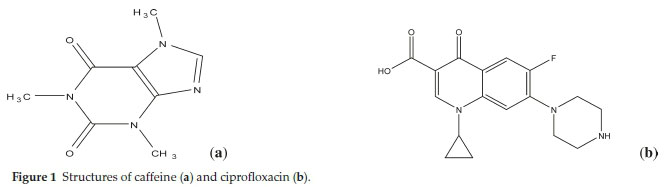
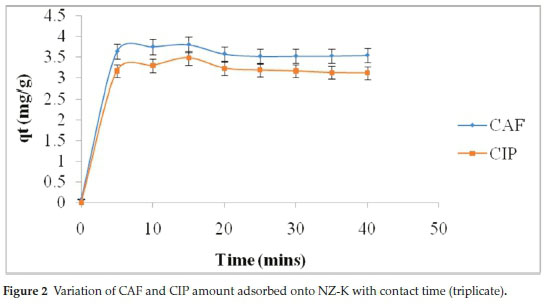
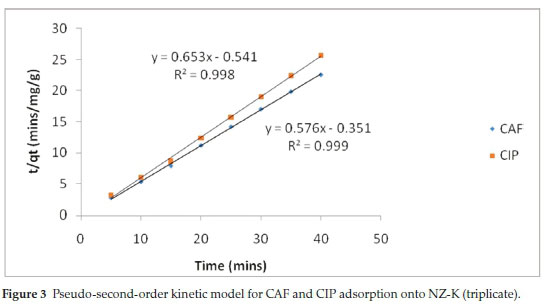
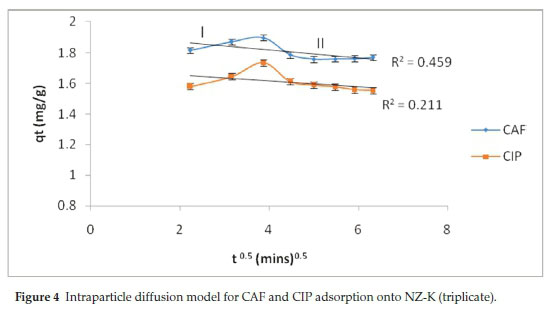
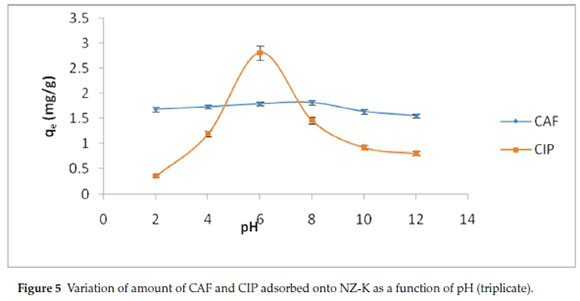
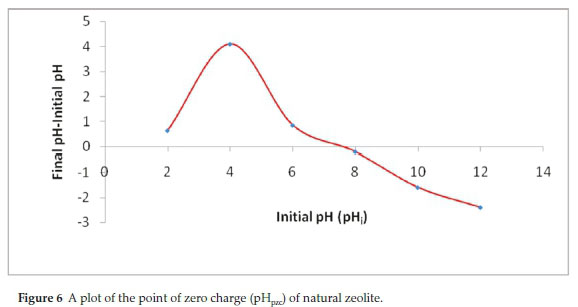
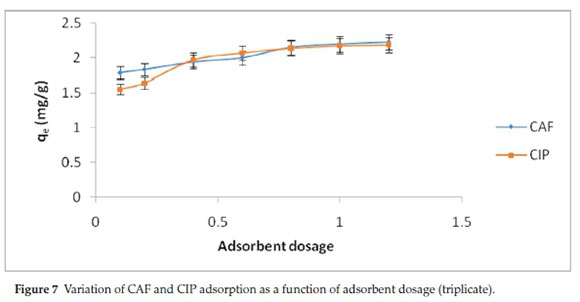
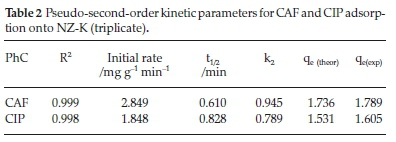
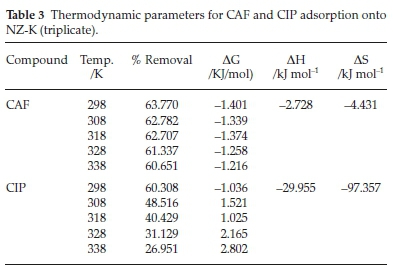
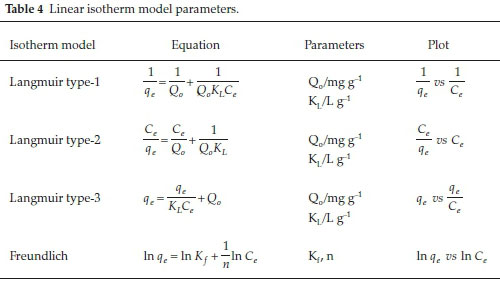
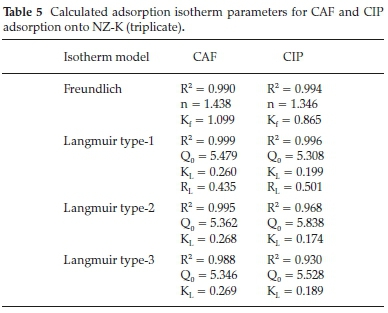
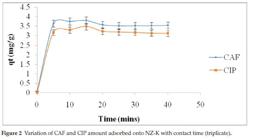
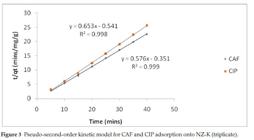
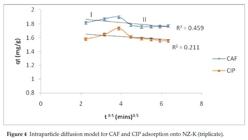
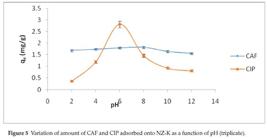
In this study, clinoptilolite was used to sequester ciprofloxacin (CIP) and caffeine (CAF), two emergent contaminants, from aqueous solution using batch equilibration method and the effects of contact time, pH, initial contaminant concentration, temperature and adsorbent dosage investigated and herein reported. The adsorption kinetics was described by the pseudo-second-order model (PSO) and pore diffusion was not the sole operative rate-controlling step as depicted by the intraparticle diffusion model. The equilibrium data were modelled using three linear forms of Langmuir equation and Freundlich model and was best fitted by the Lineweaver-Burk linearization of Langmuir equation (type-1). Linearization is shown to induce errors that may lead to discrepancies in parameter values estimation. The derived thermodynamic functions revealed the adsorption processes are exothermic, spontaneous and physical in nature. The adsorption mechanism of CIP is strongly controlled by electrostatic interactions while CAF adsorption is weakly affected by changes in pH. The findings demonstrate that clinoptilolite in its unmodified form is a potential low-cost and eco-friendly adsorbent for removal of pharma-ceutically active ingredients from water.
Caffeine; ciprofloxacin; adsorption; clinoptilolite; linear isotherms
 Thumbnail
 Thumbnail
 Thumbnail
 Thumbnail
 Thumbnail
 Thumbnail
 Thumbnail