Experimental sensing and density functional theory study of an ionic liquid mediated carbon nanotube modified carbon-paste electrode for electrochemical detection of metronidazole
Abstract
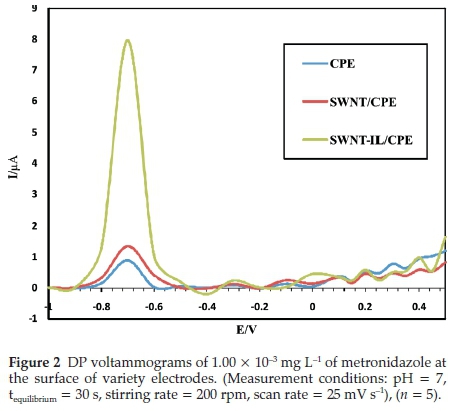
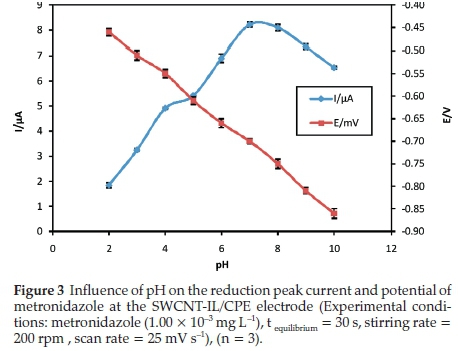
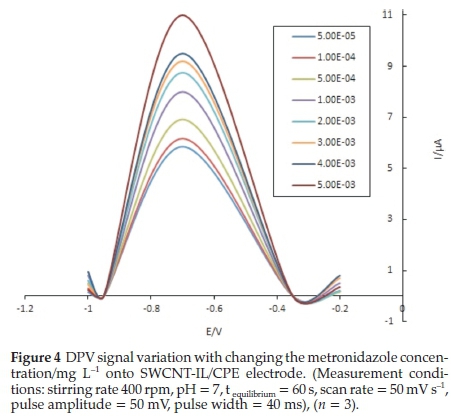
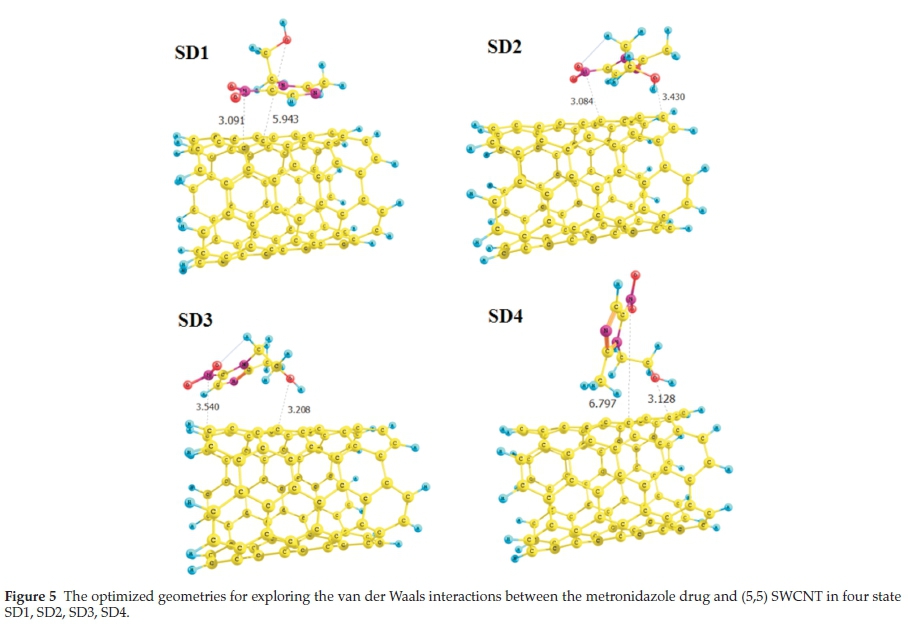
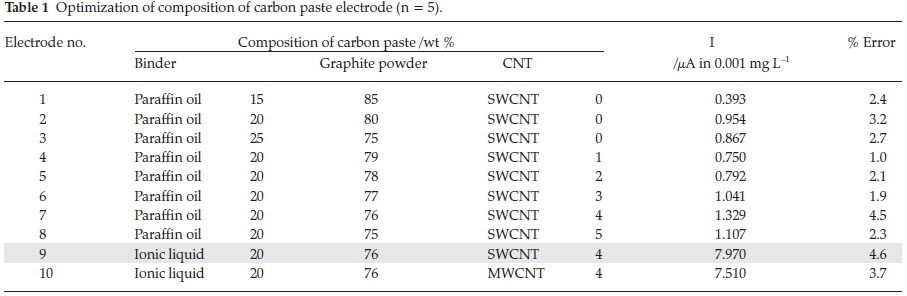
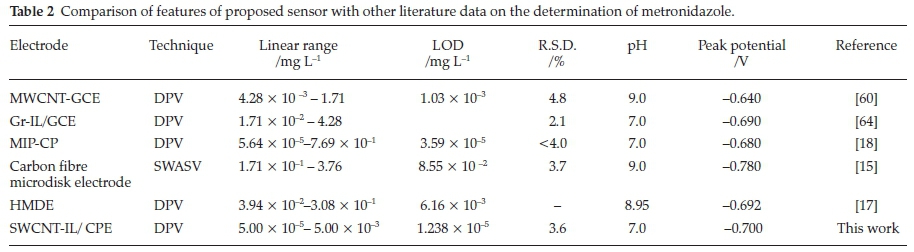
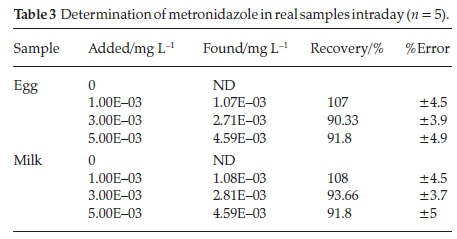
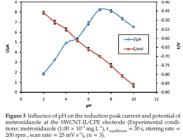
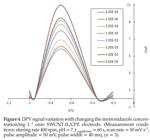
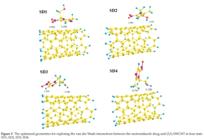
A new highly sensitive sensor was prepared for metronidazole (MNZ) employing single-walled carbon nanotube (SWCNT) and 1-butyl-3-methylimidazolium tetrafluoroborate as ionic liquid (IL). The utilization of IL as a binder in the paste increased the response of the electrode. The performance of the obtained carbon paste electrode was examined by differential pulse voltammetry. Various factors like electrode composition, types of supporting electrolyte, pH, stirring rate, scan rate were studied and optimized. The modified sensor demonstrated high recognition ability and sensitivity for MNZ when compared with the unmodified sensor. Moreover, the sensor also demonstrated good stability and acceptable reproducibility for the determination of MNZ. In the optimum experimental conditions, the current response of the electrochemical sensor studied for metronidazole solution and linearity was obtained in the range of 5.00 X 10⁻⁵ to 5.00 X 10⁻³ mg L-1, with a detection limit of 1.238 X 10⁻⁵ mg L-1. The method was successfully used for the analysis of MNZ in the milk and egg samples with acceptable recoveries of 90.33-108.0 %. In addition, the non-covalent interactions of the metronidazole with the SWCNT were investigated employing the density functional theory (DFT) method.
Carbon paste electrode; metronidazole; differential pulse voltammetry; single-walled carbon nanotube; density functional theory; 1-butyl-3-methylimidazolium tetrafluoroborate
 Thumbnail
 Thumbnail
 Thumbnail
 Thumbnail