How spiral is the South African Physical Science curriculum? A case study of Electrolytic cells in Grades 10-12
Abstract
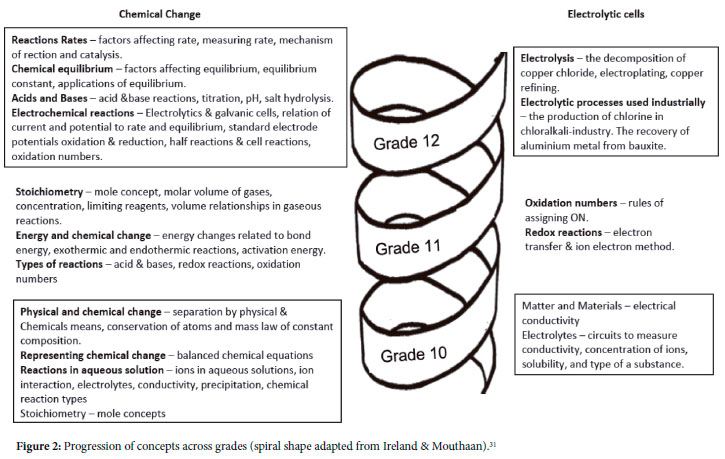
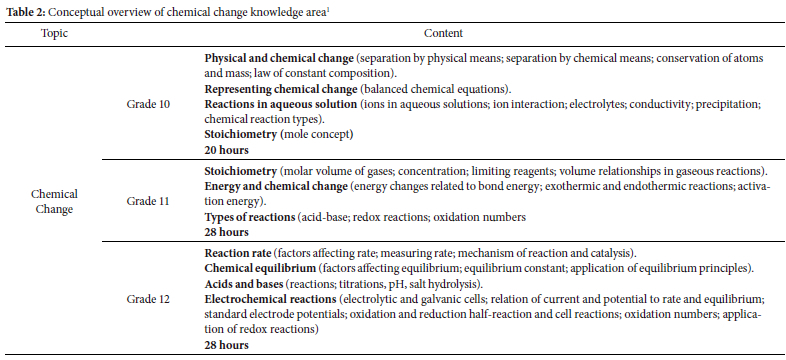
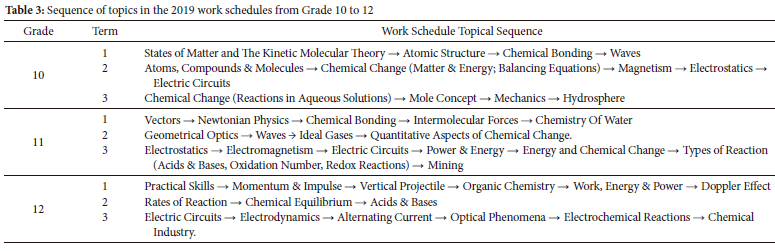
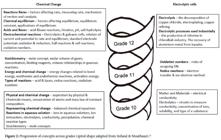
The South African Physical Science curriculum is regarded as spiral in nature due to its progression of concepts across grades, and its coherence of ideas within grades. A spiral curriculum supports coherence and boosts learner achievement in science. This inquiry examines the fundamental principles of electrolytic cells in the knowledge area of chemical change at the secondary level (Grades 10 to 12). Electrolytic cells' spiral nature was determined by analysing the Physical Science Curriculum (PSC) and 2019 Physical Science Work Schedule (PSWS), using pedagogical link-making for continuity. The PSC passed the spiral test due to the presence of increasingly difficult concepts across grades. Due to the absence of fundamental concepts like oxidation numbers and electrolytes in Grades 10 and 11, the PSC failed the conceptual progression test. Furthermore, the spiral characteristics of the PSC were compromised in the 2019 PSWS document. The sequencing of concepts in the 2019 PSWS does not encourage linking on the meso scale, where the interlinking of ideas is vital for learner comprehension and conceptual understanding. Curriculum designers should introduce oxidation numbers in Grade 10 and electrolytic cells in Grade 11. Furthermore, it is recommended that curriculum designers consider separating chemistry and physics knowledge areas.
electrolytic cells; spiral curriculum; pedagogical link-making; promoting continuity; scientific story
 Thumbnail
 Thumbnail