Colour removal from wastewaters by an electrooxidation method
Abstract
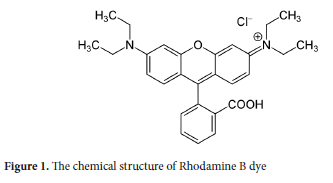
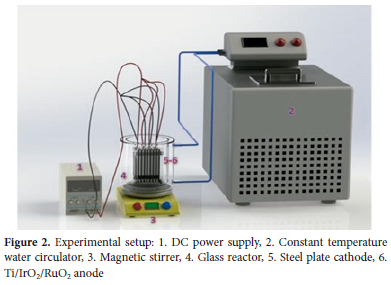
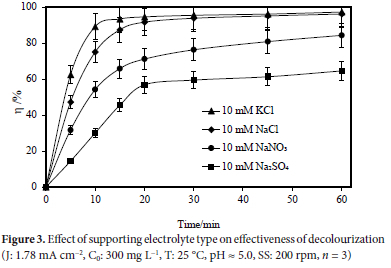
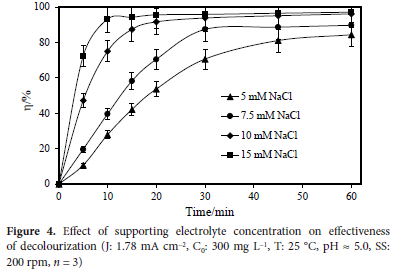
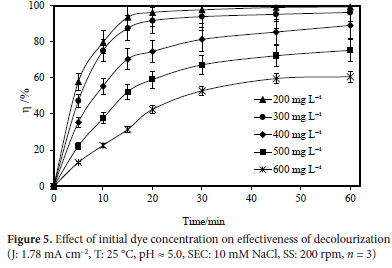
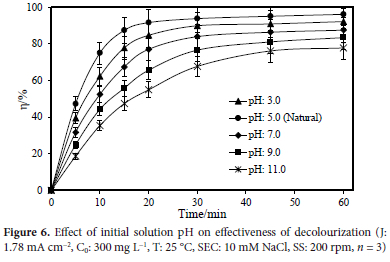
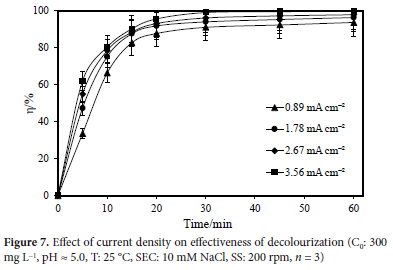
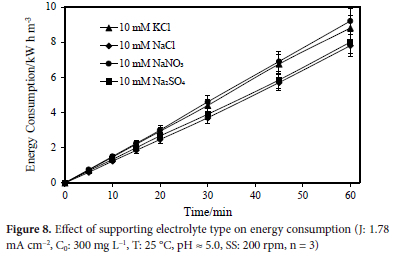
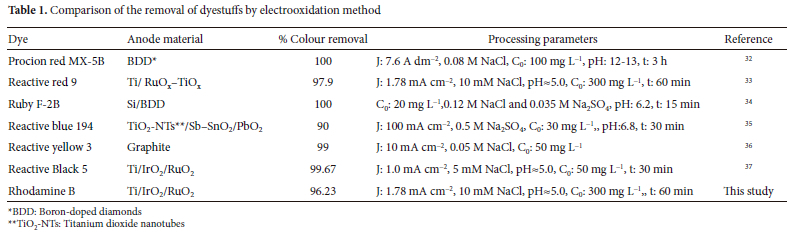
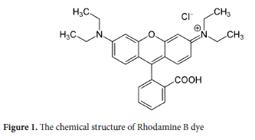
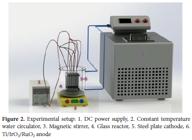
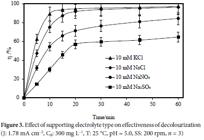
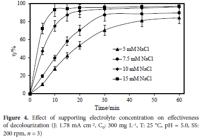
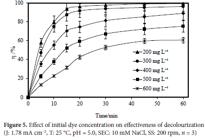
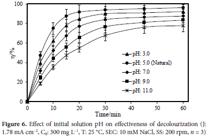
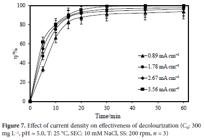
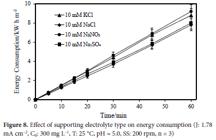
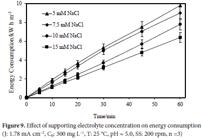
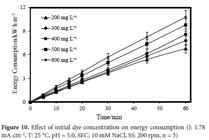
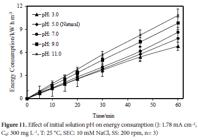
This study examined the potential of electrooxidation techniques for treating Rhodamine B dyestuff from aqueous solutions made from synthetic wastewater. The Rhodamine B dyestuff was electro-oxidized by using five anodes coated with "Ti/IrO2/RuO2" as anode material and five stainless steel cathodes as cathode material. The initial concentration of Rhodamine B, the type of support electrolyte, the current density, and the initial pH of the wastewater were evaluated. KCl, NaCl, NaNO3 and Na2SO4 were used as supporting electrolytes. Colour removal performance was optimum when the initial pH was approximately 5, the current density was 1.78 mA cm-2, and the supporting electrolyte was NaCl at a concentration of 10 mM. Under ideal circumstances, colour removal was shown to be 99.72% effective.
electrooxidation; stainless steel cathode; supporting electrolyte type; Ti/IrO2/RuO2 anode
 Thumbnail
 Thumbnail
 Thumbnail
 Thumbnail
 Thumbnail
 Thumbnail
 Thumbnail
 Thumbnail
 Thumbnail
 Thumbnail
 Thumbnail
 Thumbnail