Development of physicochemical methods for the quantification of CBD in South African cannabis-based consumer goods
Abstract
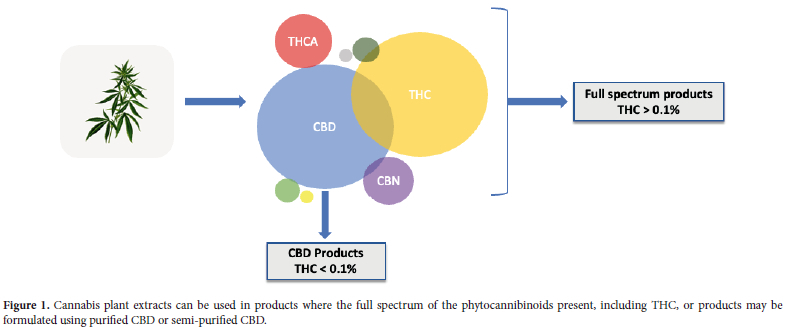
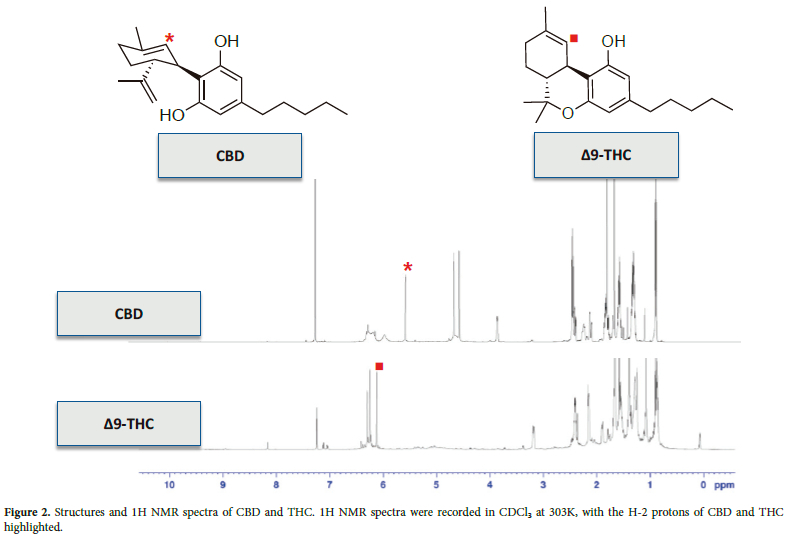
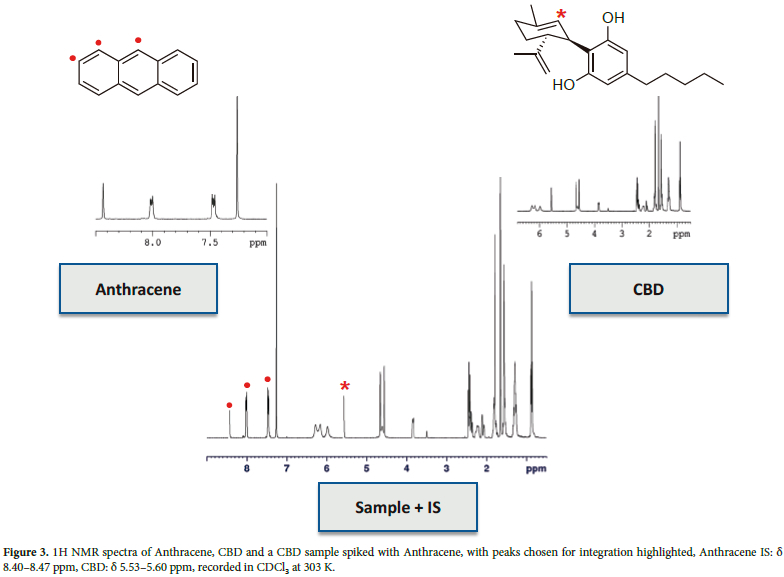
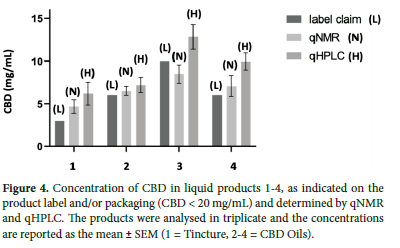
In this study, various cannabis-based products were analysed for their cannabidiol (CBD) and ∆-9-tetrahydrocannabinol (∆9-THC) content. Thirteen samples were analysed using proton nuclear magnetic resonance (1H NMR) spectroscopy, with a subset further analysed by high pressure liquid chromatography (HPLC). In South Africa, it is currently required that the amount of CBD present in a sales pack should not exceed 600 mg, with the maximum dose in an individual unit being 20 mg, while the concentration of ∆-9-THC in processed products should not exceed 0.1% w/w. This study found that 85% of the products analysed had some degree of incorrect labelling with respect to CBD and THC content. Significant amounts (>1% w/w) of ∆-9-THC were also detected in 23% of the products that were tested. This method was also applied to 6 Cannabis plant extracts, which are used in the production of some of the cannabis-based goods. The concentrations of CBD and THC in both the goods and extracts, as determined by NMR spectroscopy, were in good agreement with concentrations determined orthogonally by HPLC. Analysis by 1H NMR spectroscopy, in particular, is shown to be a rapid and robust method for detecting and quantifying CBD and ∆-9-THC in cannabis-based products.
cannabis; cannabinoids; CBD; THC; NMR spectroscopy
 Thumbnail
 Thumbnail
 Thumbnail
 Thumbnail
 Thumbnail
 Thumbnail
 Thumbnail
 Thumbnail
 Thumbnail