Carbon dots derived from biomass and their application towards fluorescence sensing of heavy metals - a review
Abstract
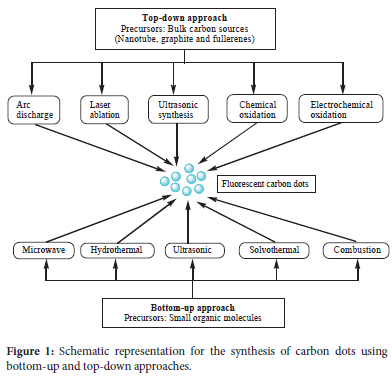
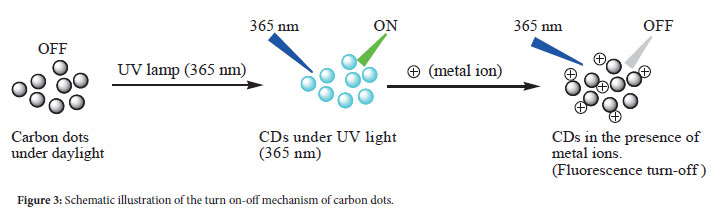
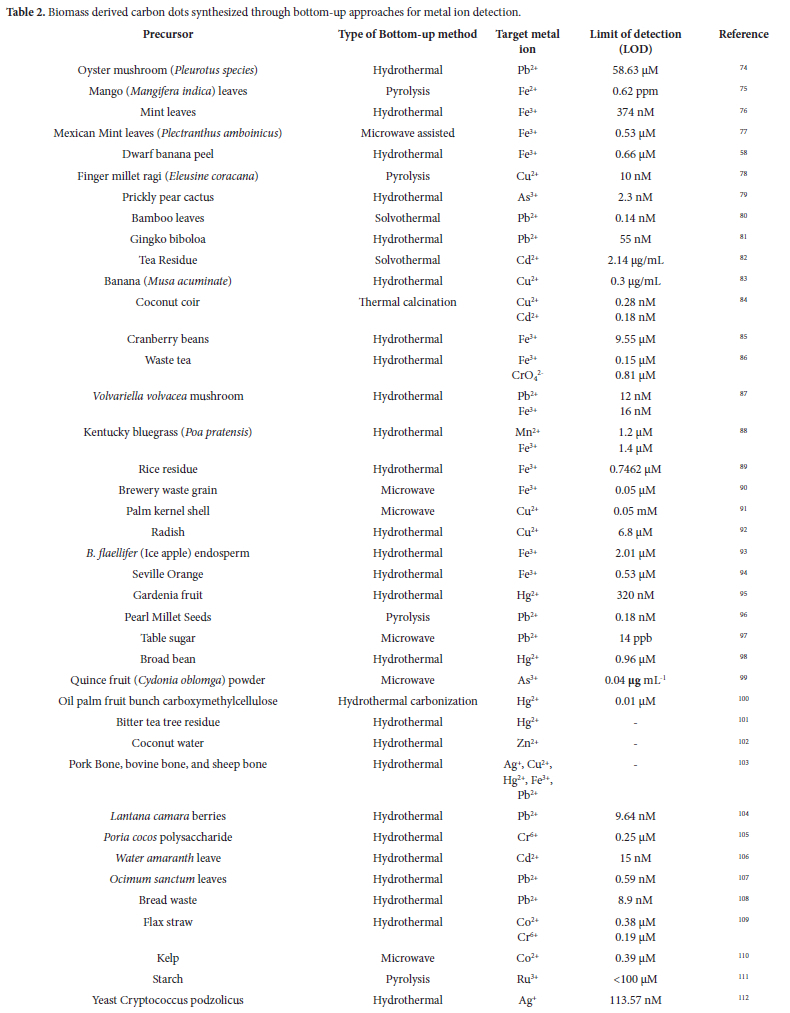
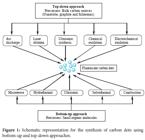
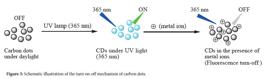
Environmental pollution from toxic metal ions has become a problem worldwide due rapid industrialization. The release of such toxic metal ions into the environment pose a serious threat to human health and biota. To abate migration of toxic metal ions through the food chain they should be detected and analytical techniques used to detect them are costly and sophisticated. Therefore, utilization of carbon dots as fluorescent-based metal ion sensors compared with the traditional analytical methods is rapidly increasing owing to their low toxicity, tunable fluorescent properties, rapid sensing, simplicity and inexpensive preparation methods. Carbon dots are able to detect metal ions based on the direct interaction between the metal ions and carbon dots which results in the change in the fluorescence signal of carbon dots. They can be synthesized from any carbon-containing source; however, research has shifted towards employing more environmentally friendly precursors such as biomass. As such, this review presents an overview of biomass derived carbon dots (BCDs) that have been employed for the fluorescence detection of environmental metal ion pollutants. Different synthetic methods of BCDs, i.e., top-down and bottom-up synthesis, are briefly discussed, followed by a summary of the possible mechanisms through which BCDs can undergo to enable the detection of analytes in different media. Furthermore, insights on recent advancements in the use of BCDs for metal ion detection are shared. Lastly, this review will conclude with future perspectives and shortcomings thus far.
Carbon dots; bottom-up synthesis; top-down synthesis; nanotechnology; contaminants
 Thumbnail
 Thumbnail
 Thumbnail