Transition metal oxide supported on alumina catalysts: a comparative study for the hydrogenation of octanal
Abstract
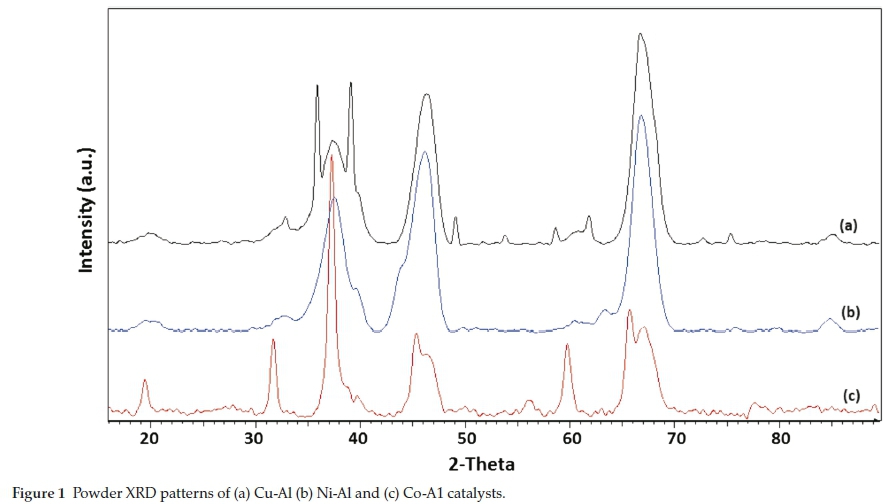
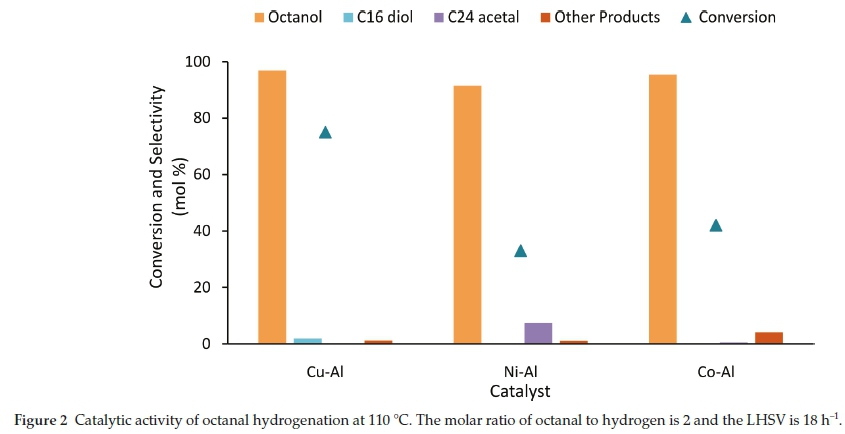
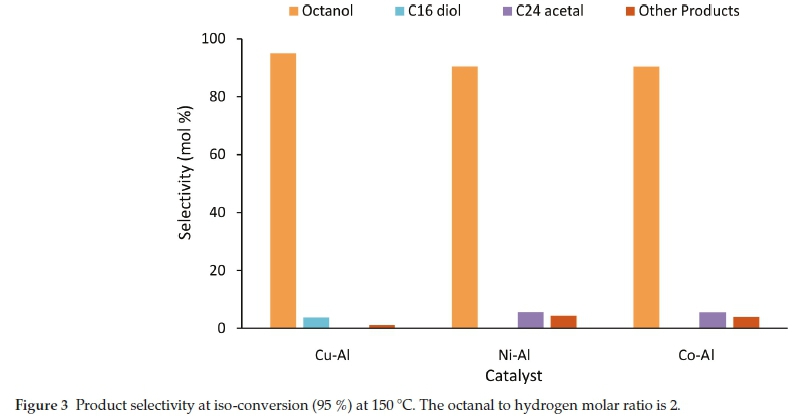
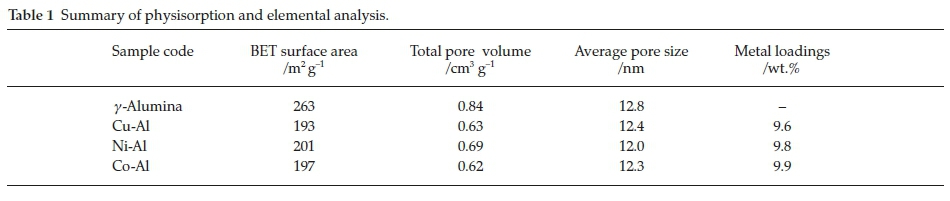
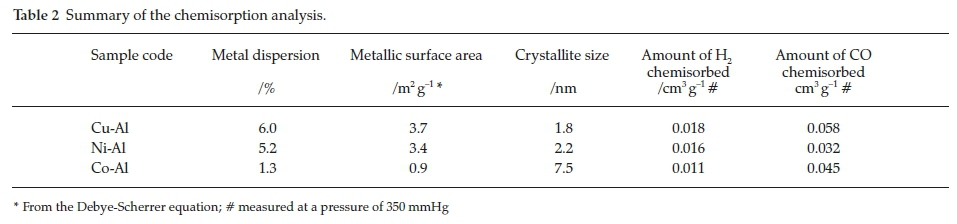
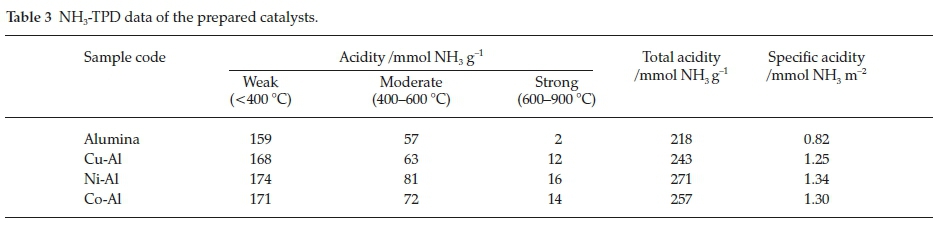
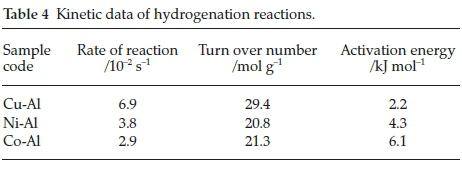
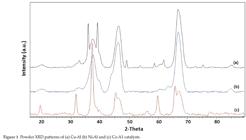
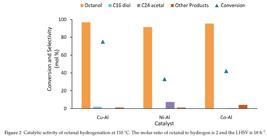
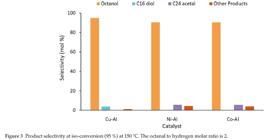
Monometallic (10 wt.%) Co, Ni and Cu nanoparticles supported on alumina catalysts were prepared using an ultrasonic impreg-nation-cavitation method and characterized using ICPP XRD, physisorption, chemisorption and temperature programmed techniques. The copper catalyst showed higher metal dispersion and greater hydrogen and CO chemisorption capacity when compared to the nickel and cobalt catalysts. Hydrogenation of octanal carried out in a continuous flow high pressure fixed bed reactor showed that the rate of reaction and turnover number of octanol depended on the amount of hydrogen chemisorbed. The copper catalyst showed the lowest activation energy, as well as best catalytic activity. The Cu-Al catalyst which showed higher metal dispersion and low acidity, showed the highest selectivity towards octanol with no C24 acetal formation, when compared to the Ni-Al and Co-Al catalysts.
Octanal hydrogenation; octanol; copper; nickel; cobalt
 Thumbnail
 Thumbnail
 Thumbnail