Synthesis, Characterization and Application of a Molecularly Imprinted Polymer in Selective Adsorption of Abacavir from Polluted Water
Abstract
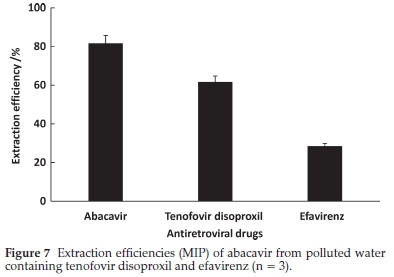
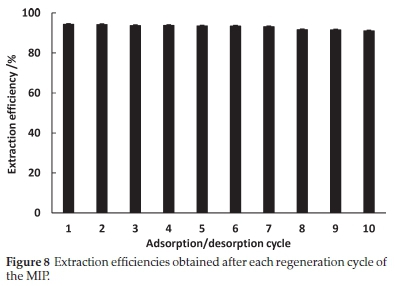
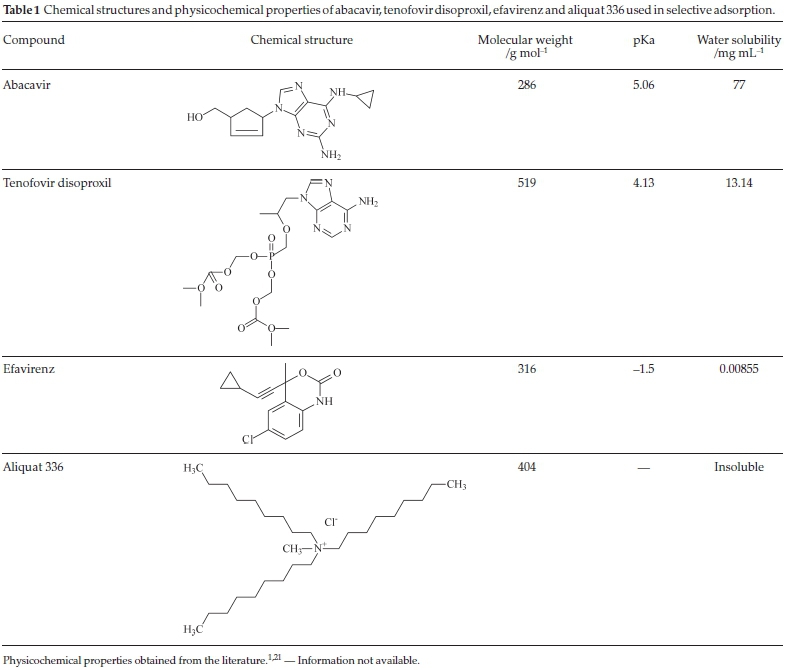
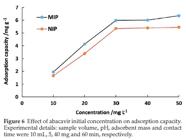
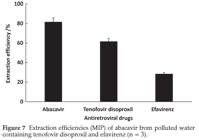
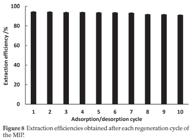
Abacavir is an antiretroviral drug (ARVD), which has been identified as a water pollutant. To find a selective adsorbent for its extraction from water, a molecularly imprinted polymer (MIP) is proposed for its selective uptake. A 24-hour bulk polymerization process was performed for imprinting abacavir with aliquat 336 and ethylene glycol dimethacrylate, as functional monomer and cross-linking agent, respectively. Uptake of abacavir from 10 mL of aqueous solutions was performed with 40 mg of MIP at pH 5 within 60 min of contact time. MIP selectively adsorbed abacavir from water in the presence of other ARVDs (tenofovir disoproxil and efavirenz). The maximum adsorption capacity obtained for abacavir was 5.98 mg g-1. The adsorption mechanism was best described by the Freundlich isotherm and pseudo-second-order kinetic model, which were translated to multilayer coverage and chemisorption influenced by electrostatic attractions, respectively. The extraction efficiencies achieved for abacavir in wastewater influent, effluent and estuarine water were 67,74 and 76 %, respectively. The synthesized MIP can be reused at least 10 consecutive times for adsorption of abacavir from polluted water without losing its extraction efficiency. This is the first study to report the application of aliquat 336 as the functional monomer in the synthesis of MIP for selective extraction of abacavir from water.
Abacavir; adsorption; aqueous solutions; extraction efficiency
 Thumbnail
 Thumbnail
 Thumbnail
 Thumbnail
 Thumbnail
 Thumbnail
 Thumbnail
 Thumbnail