James Moir as Organic Chemist
Abstract
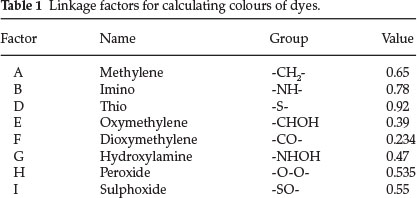
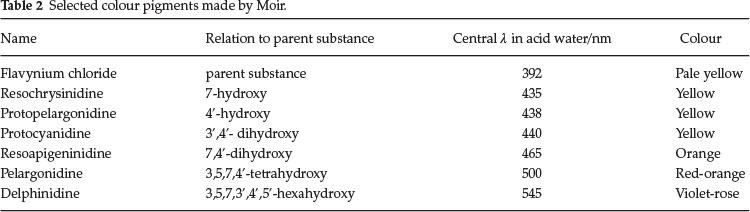
James Moir played a leading role in the South African Chemical Institute and was a pioneering organic chemist in South Africa during the early 1900s. He published widely on various organic topics but was especially noted for his work on the relationship between the colour of an organic substance and its chemical structure or constitution. After some initial research work in Scotland and London dealing with amarine and diacetonitrile, he arrived in South Africa in 1902. He first worked on derivatives of diphenol, oxidation products of benzidine, diphenylquinone and other compounds. His immense study of colour covered the years 1916-1929. He put forward theories on colour, which he applied to a whole range of phthaleins and related compounds, in order to see the effect of substitution on the spectrum of the compound. He introduced his numerical solution of colour, by which he could predict the band centre of absorption of many compounds. He applied this to a variety of different dyes and substituted products of phenolphthalein and fluorescein, relating colour to structure. He also studied the factors responsible for organic fluorescence, and doubly-linked diphenylene compounds. Finally he studied the structure of various flower pigments. This article explores his research output in the field of organic chemistry.
Colour; phthaleins; history of chemistry; organic chemistry