Adsorptive removal of malachite green with activated carbon prepared from oil palm fruit fibre by KOH activation and CO2 gasification
Abstract
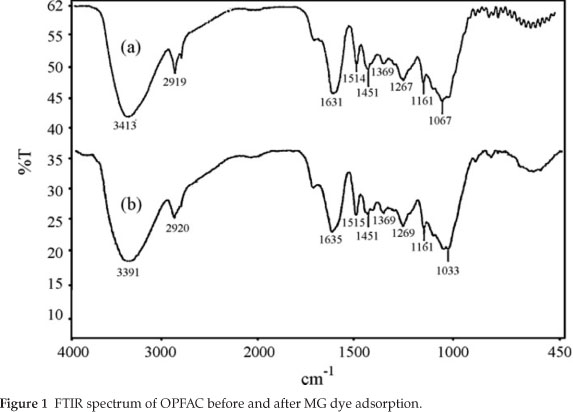
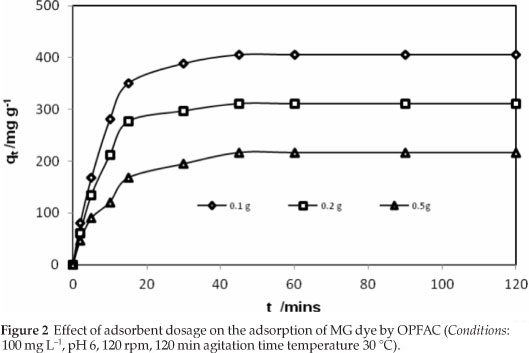
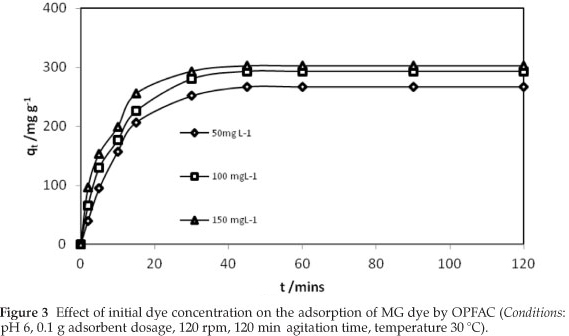
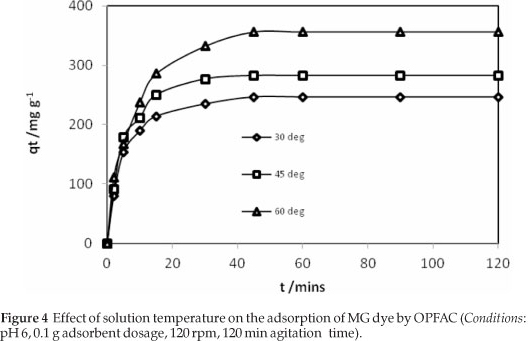
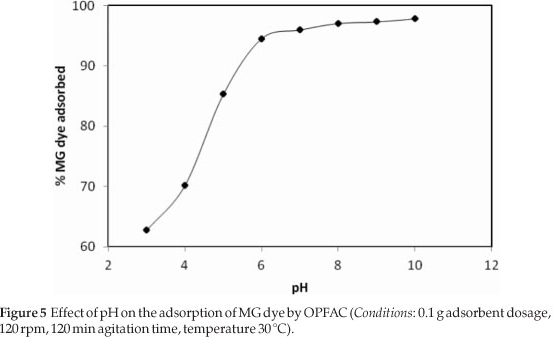
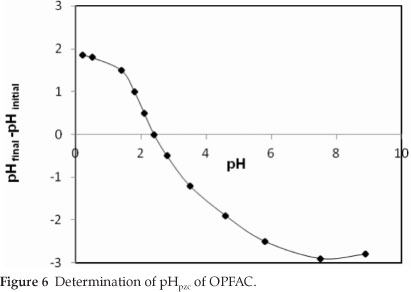
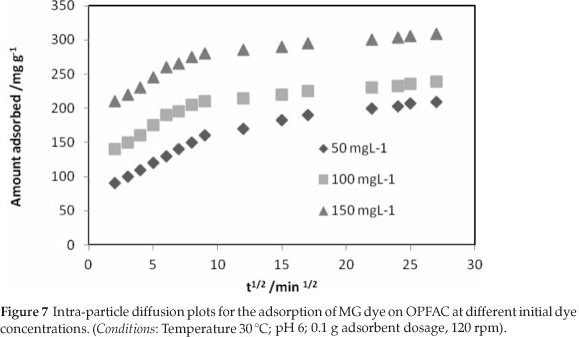
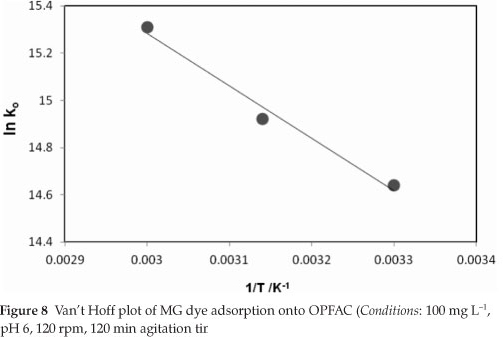
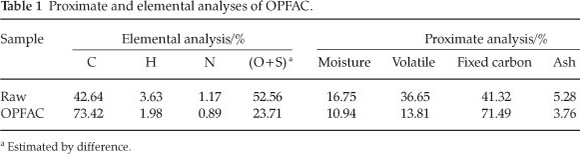
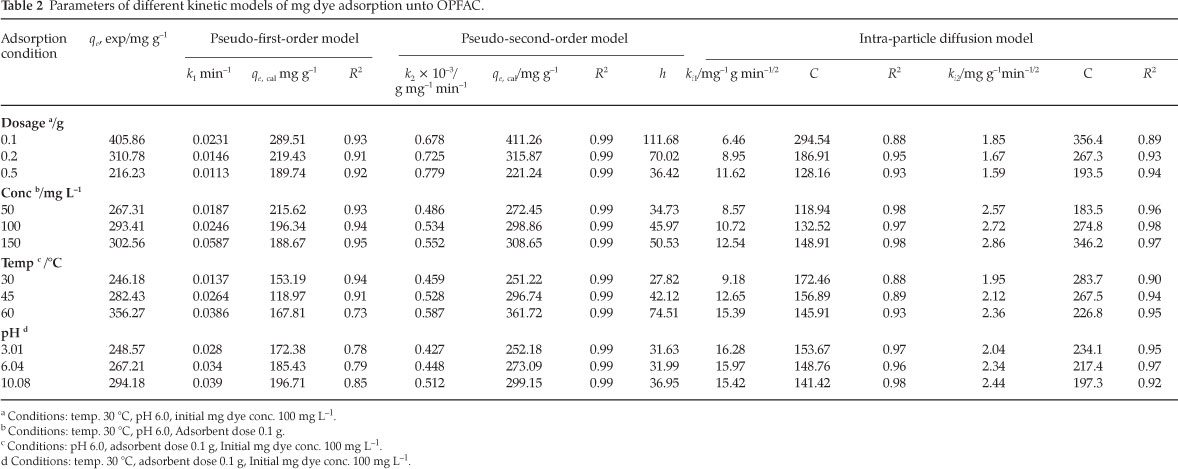
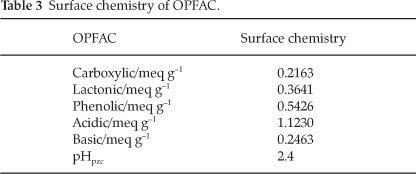
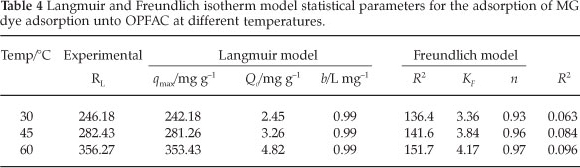
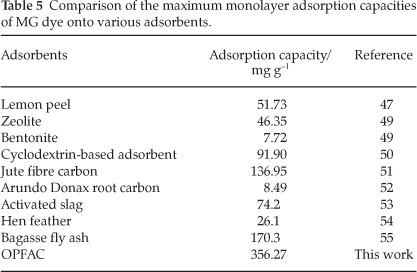
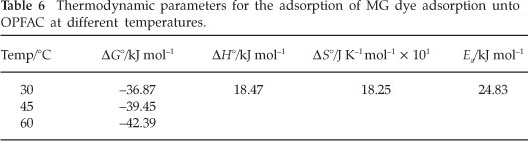
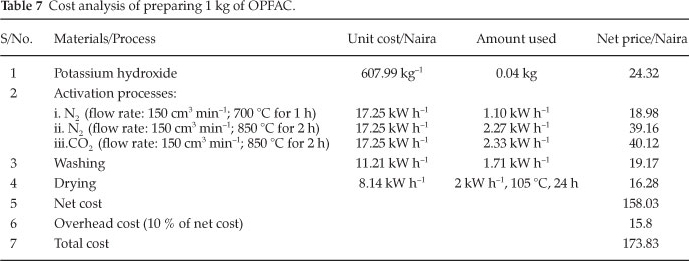
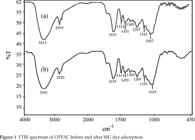
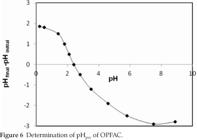
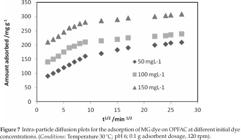
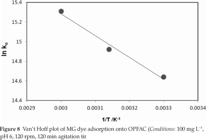
The adsorptive potential of activated carbon prepared by chemical activation from oil palm fruit fibre (OPFAC) to remove malachite green (MG) dye from its aqueous solution was investigated in this study. The OPFAC prepared was characterized by means of BET, TGA, FTIR, pHpzc, elemental analysis and Boehm titration. Operational parameters such as pH, adsorbent dose, contact time, initial dye concentration and temperature were studied in batch process. It was found that OPFAC has a larger surface area and total pore volume than commercially activated carbon. The adsorption process attained equilibrium in 45 minutes. Equilibrium data were tested by using two isotherm models: Langmuir and Freundlich. It was found that adsorption of MG on OPFAC correlated well with the Langmuir isotherm model with a maximum monolayer adsorption capacity of 356.27 mg g-1. The kinetics of the adsorption process was tested by means of pseudo-first-order, pseudo-second-order and intraparticle diffusion models. The pseudo-second-order kinetic model provided the best correlation for the experimental data studied. The adsorption process is controlled by both the boundary layer and intraparticle diffusion mechanisms. The thermodynamic study showed that the process is endothermic, spontaneous and feasible. Cost analysis revealed that OPFAC is 20 times cheaper than commercially available activated carbon.
Oil palm fruit fibre; dye; adsorption; spontaneous; endothermic; activated carbon
 Thumbnail
 Thumbnail
 Thumbnail
 Thumbnail
 Thumbnail
 Thumbnail
 Thumbnail
 Thumbnail