Comparative evaluation of metal content and health risk assessment of garcinia huillensis using acid digestion and hot-water extraction methods
Abstract
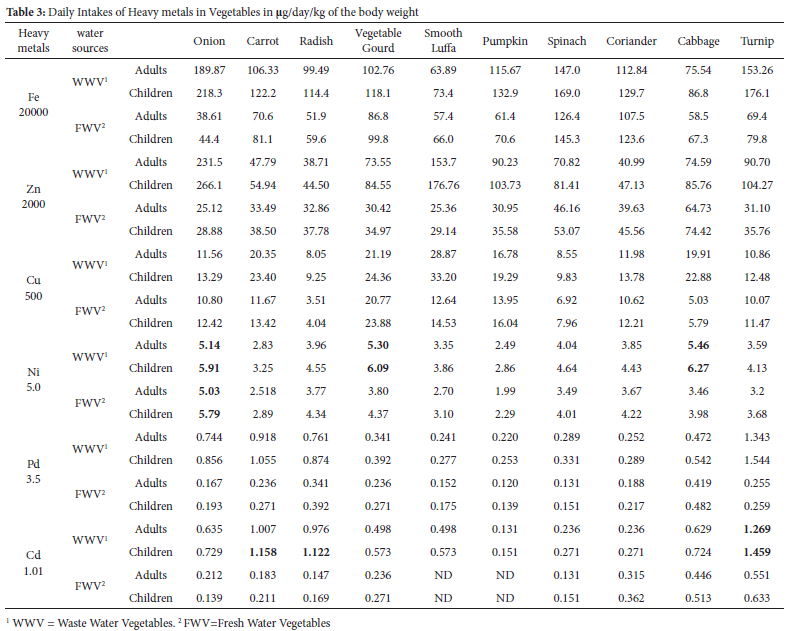
Metal composition and health risk assessment of Garcinia huillensis (Clusiaceae) were investigated. Root, stem, and leaf samples were analysed using two extraction methods: acid microwave digestion and hot water extraction, and the results were compared. ICP-OES was employed to determine the concentrations of metals present in the samples. Both extraction methods revealed high concentrations of essential nutritional metals. Acid digestion showed elevated levels of potassium (6628.64-15764.52 mg kg-1), calcium (5452.39-38158.925 mg kg-1), magnesium (424.86-2071.71 mg kg-1), and sulfur (736.86-2918.33 mg kg-1). Similarly, hot water extraction recorded potassium levels of 6709.11-14203.98 mg kg-1, calcium 705.19-2380.59 mg kg-1, magnesium 232.64-2213.93 mg kg-1, and sulfur 316.35-1897.01 mg kg-1. Heavy metal analysis indicated the presence of aluminium (Al), zinc (Zn), copper (Cu), and iron (Fe), whereas lead (Pb), manganese (Mn), lithium (Li), and vanadium (V) were not detected in the extracts. The acid digestion method generally produced higher metal concentration values compared to the hot water extraction method. Hot water extraction method was found to be safe for consumers, as all detected heavy metals had estimated daily intake (EDI) values of less than 1. These findings suggest that G. huillensis is safe for traditional medicinal use.
Health risk assessment; Heavy metal Content; Garcinia huillensis; Medicinal plant; Hot water extraction
 Thumbnail