Extraction and Pre-concentration of Phthalic Acid Esters from Aqueous Solutions using Agitation-assisted Dispersed Binary Solvents Microextraction
Abstract
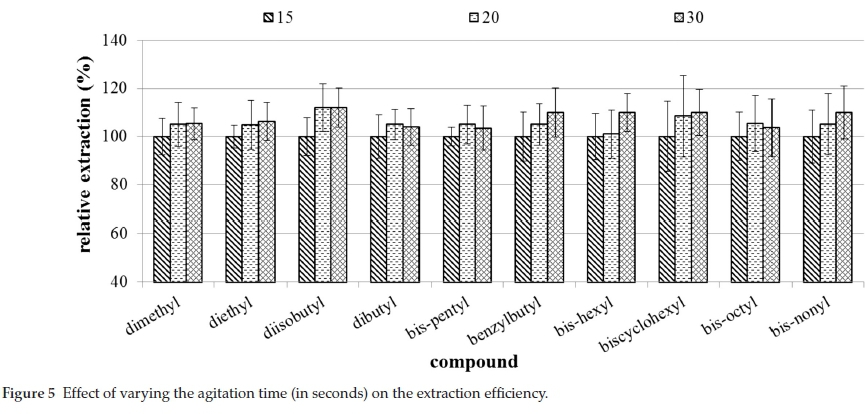
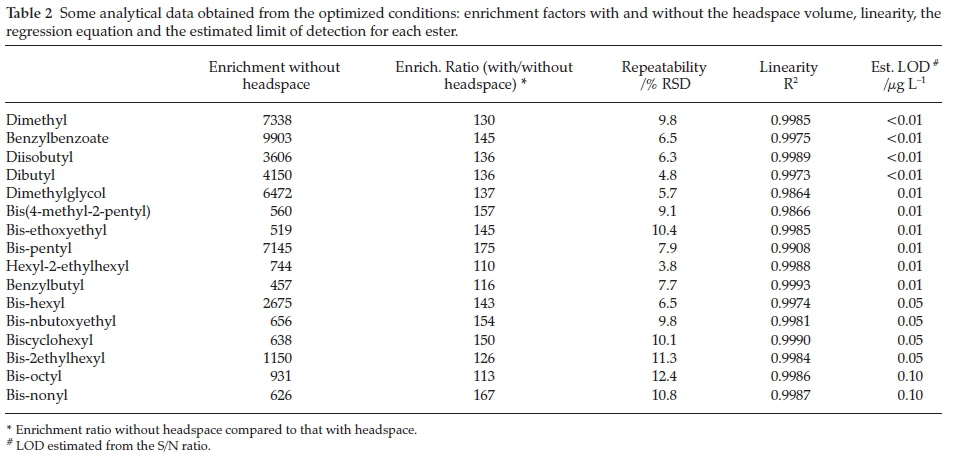
As the search for efficient, affordable and environmentally friendly extraction methods continues, miniaturized solvent techniques are receiving considerable attention due to their simplicity, efficiency and fast extraction rates. Herein we report application of a modified dispersive liquid-liquid microextraction through the introduction of a second extracting solvent in place of a disperser solvent leading to a much improved organic solvent recovery after the extraction of phthalic acid esters from aqueous solutions. The method employs a 75 μL binary mixture of ethylacetate and tetrachloromethane with a 3:1 ratio, extraction time of 20 seconds, and 10 % NaCl. The method demonstrates sufficient linearity (R2 > 0.9866) and repeatability (%RSD £ 12.5, for n = 15) with the estimated LOD in the range (0.01-0.05 ng mL-1) using the S/N approach. The method demonstrated significant enrichment factors averaging about 2100 with headspace and about 3000 and increase of over 40 % without headspace, indicating the importance of reduced headspace volume in this approach, especially if the ionic strength is increased. However, the method yielded a significantly wide range of recoveries (65-115 %) when applied to the analysis of spiked soil samples when coupled to hot-water extraction. However, this may notbe entirely attributable to the extraction approach but rather heat-induced hydrolysis during the hot-water dissolution, prior to the proposed organic extraction method.
Dispersive liquid-liquid microextraction; binary solvents; phthalic acid esters; headspace volume; extracting solvent recovery
 Thumbnail
 Thumbnail
 Thumbnail
 Thumbnail
 Thumbnail