Determination of Dichlorodiphenyltrichloroethane (DDT) and metabolites residues in fish species from eastern Lake Tanganyika
Abstract
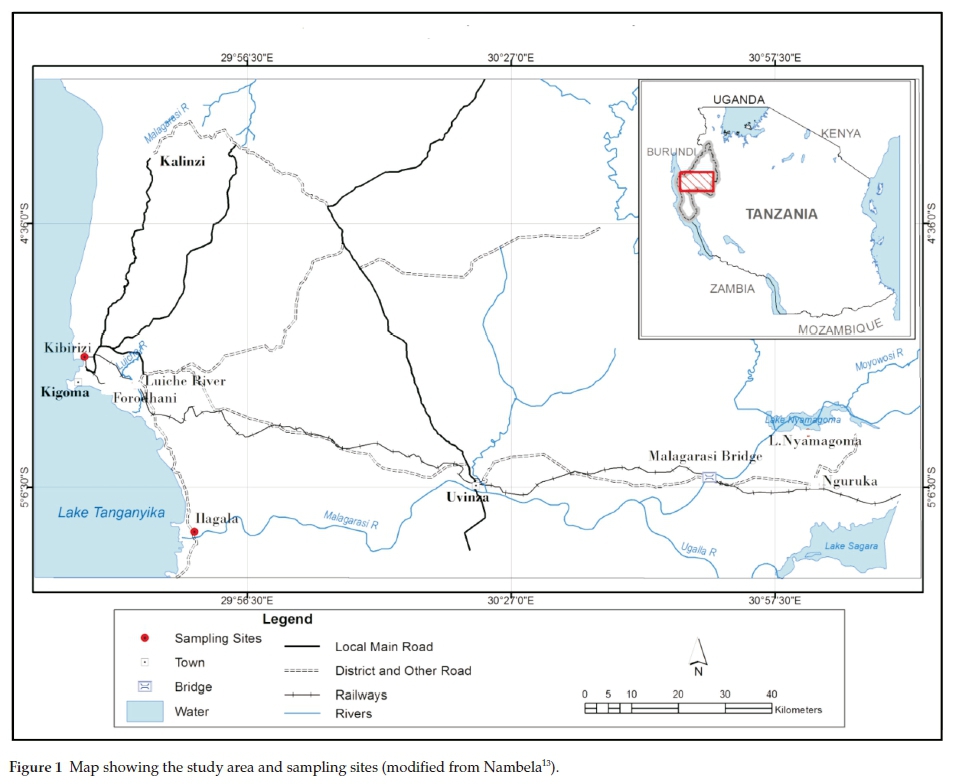
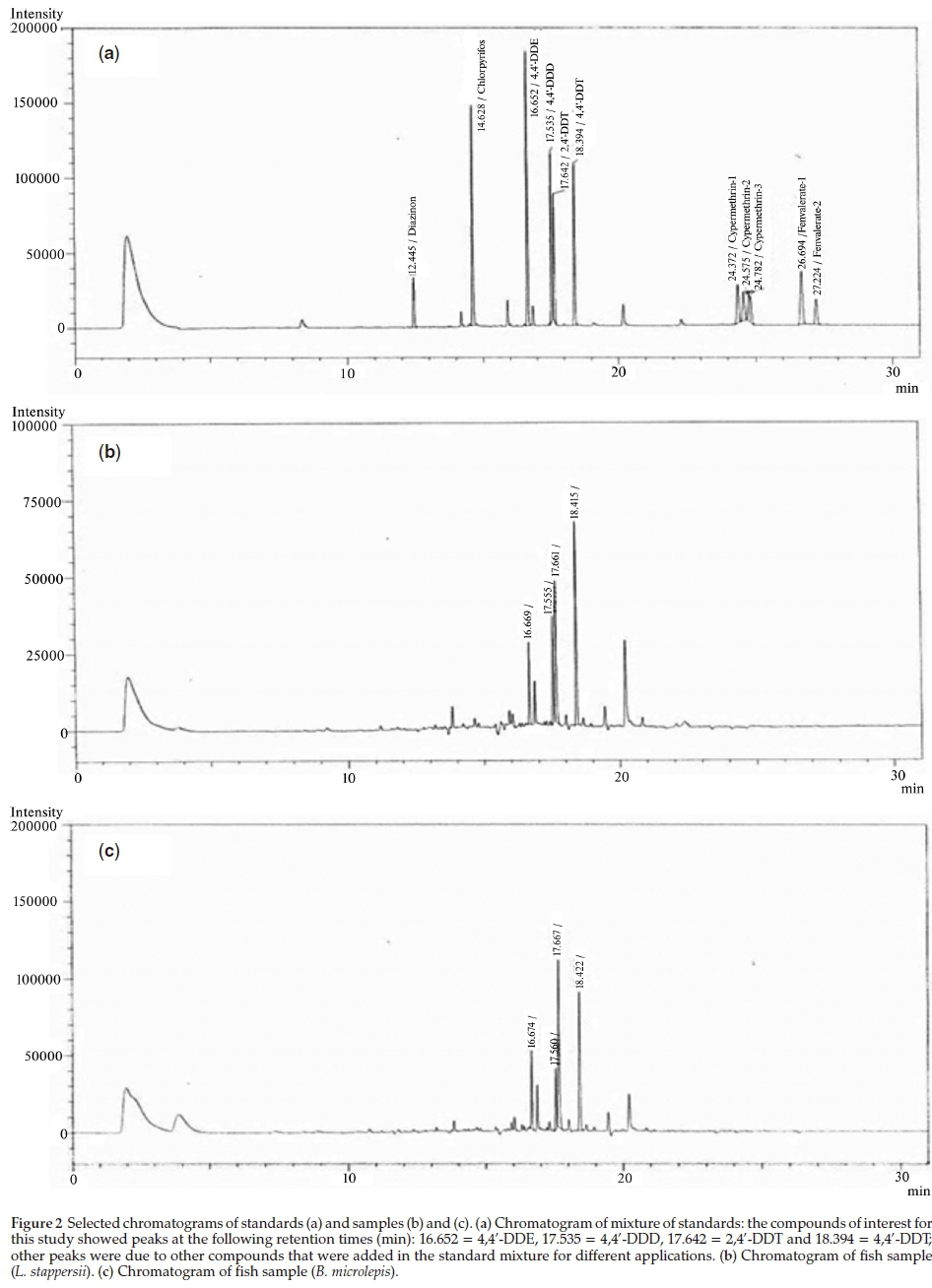
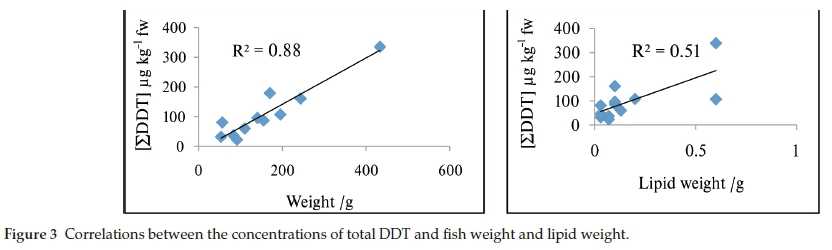
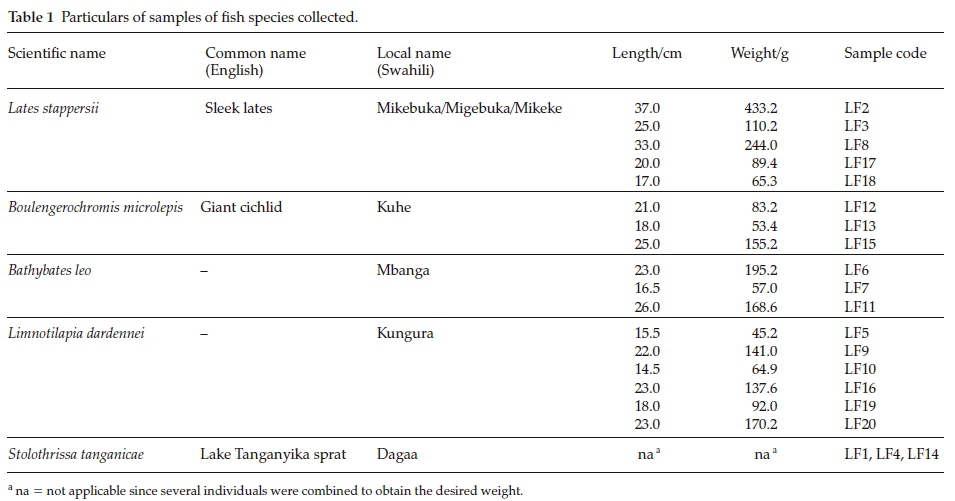
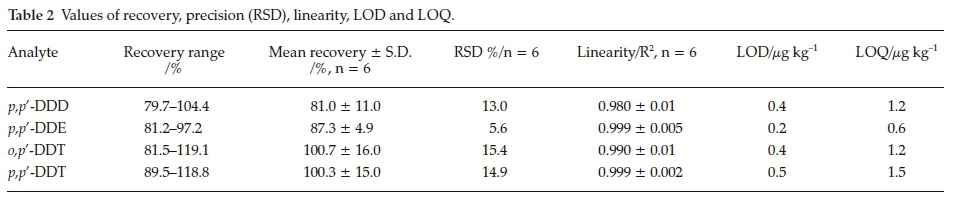
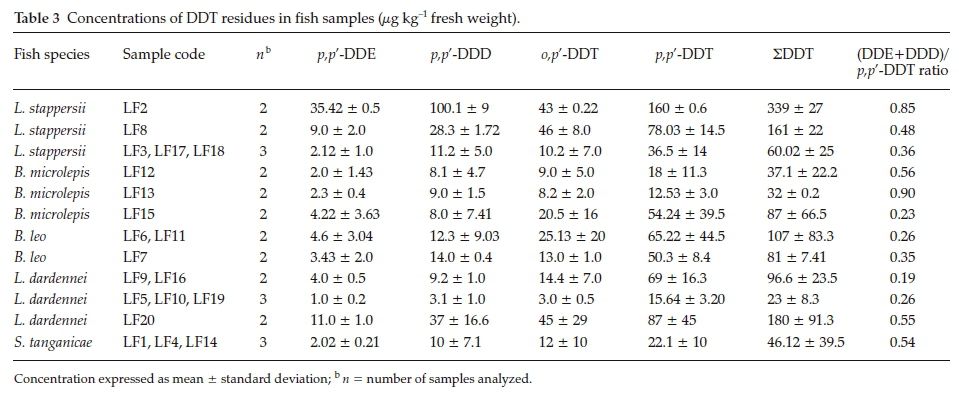
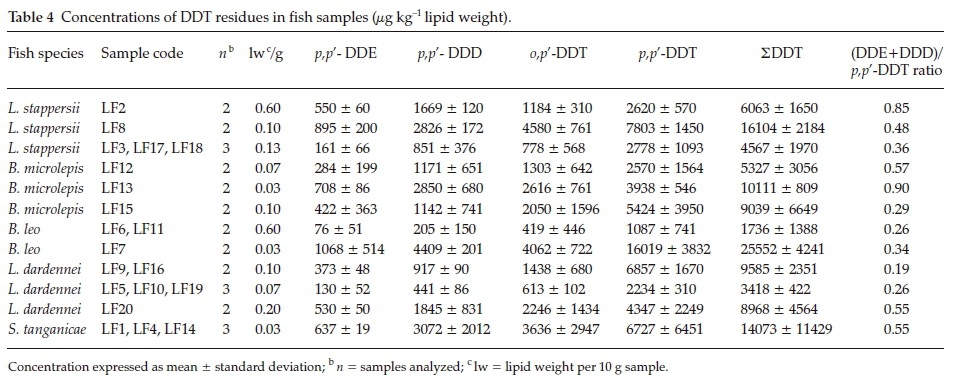
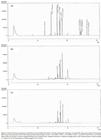
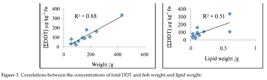
In this study, the levels and status of dichlorodiphenyltrichloroethane (DDT) residues in fish samples collected from Eastern Lake Tanganyika were investigated. The analytes were determined using gas chromatography equipped with an electron capture detector (GC-ECD) and by gas chromatography-mass spectrometry (GC-MS). The compounds p,p'-DDE (4,4'-DDE), p,p'-DDD (4,4'-DDD), o,p'-DDT (2,4'-DDT) and p,p'-DDT (4,4'-DDT) were detected in all the samples, with total DDT concentrations ranging from 23 ± 8.3 to 339 ± 27 kg-1 fresh weight and 1736 ± 1388 kg-1 to 25 552 ± 4241 kg-1 lipid weight. The highest concentrations of total DDT were detected in Lates stappersii species. The ratios of the metabolites (DDD + DDE) to the parent compound (p,p'-DDT) were low (< 1) in all the fish samples, indicating exposure to fresh DDT. The concentrations of the DDT residues exceeded the extraneous maximum residue limit of 1.0 /ug kg-1, indicating risks and concerns for public health and the environment because of the indication of fresh application of banned pesticides and bioaccumulation. There is need for continued monitoring of the residues in Lake Tanganyika environs and controlling the pesticides used in the area.
Pesticides; DDT; fish; lake; Tanzania
 Thumbnail
 Thumbnail
 Thumbnail