Cerium(IV) Decorated Coconut Shell-Reduced Graphene Oxide in Epoxy Resin Matrix as X-Band Radar Absorber Composite
Abstract
The development of lightweight and efficient radar-absorbing materials (RAM) remains a critical challenge for electromagnetic (EM) attenuation in modern stealth applications. In this study, a cerium(IV) oxide (CeO2)-decorated, coconut shell-derived reduced graphene oxide composite embedded in an epoxy matrix (cs-rGO/CeO2/epoxy) was successfully synthesized using a modified Hummers method followed by hydrothermal reduction. The use of biomass-derived carbon offers a sustainable and low-cost alternative to conventional precursors. Structural and morphological analyses by SEM-EDX, Raman, XRD, and FT-IR instrument confirmed the successful reduction of graphene oxide, the formation of CeO2 nanoparticles, and their uniform dispersion within the matrix, with an average particle size of 15.38 nm. Electromagnetic measurements revealed a maximum reflection loss (RL) of −7.72 dB at 9.77 GHz in the X-band at a thickness of 1 mm. This performance is attributed to the combined effects of dielectric loss, interfacial polarization, and multiple scattering within the heterogeneous structure. Although the absorption performance remains moderate, the ability of the composite to achieve effective attenuation at low thickness demonstrates its strong potential as a lightweight RAM. The favourable combination of reduced thickness, lightweight characteristics, and microwave attenuation capability makes this composite a promising candidate for advanced electromagnetic wave absorption applications and merits further comprehensive investigation.
reduced graphene oxide; coconut shell; cerium(IV) oxide; epoxy resin; radar absorbing material
INTRODUCTION
The development of radar-absorbing materials (RAM) has attracted increasing attention due to their importance in electromagnetic (EM) wave attenuation and stealth technology applications.1−23−42), was first utilized in Germany.56et al.44,6−8
rGO is commonly synthesized via a modified Hummers method followed by reduction processes such as hydrothermal treatment, producing materials with enhanced electrical and structural properties.9−137,14 Surface modification of rGO with these materials can significantly improve EM absorption. Additionally, such modifications can help balance the electrical conductivity of rGO.132), with its high dielectric constant and chemical stability, is a promising candidate for such modification.7,15
Although graphene-based RAMs have been extensively investigated, most reported systems rely on non-renewable graphite precursors and require relatively thick configurations (typically >2 mm) to achieve effective microwave absorption. The development of sustainable, biomass-derived reduced graphene oxide (rGO) combined with functional metal oxides in thin absorber configurations remains limited. In particular, achieving measurable electromagnetic attenuation at a thickness as low as 1 mm remains a significant challenge. Moreover, studies on the integration of cerium(IV) oxide (CeO2) into biomass-derived rGO-based polymer composites for thin, lightweight microwave absorbers remain scarce. Therefore, this study aims to develop a cerium(IV)-decorated coconut shell-derived rGO composite dispersed in an epoxy matrix and to systematically investigate its structural, morphological, and electromagnetic properties, with a focus on its microwave absorption performance in the X-band at a thickness of 1 mm.
MATERIALS AND METHODS
Materials
All chemicals (hydrofluoric acid, HF 48%; hydrochloric acid, HCl 37%; sulfuric acid, H2SO4 98%; sodium nitrate, NaNO3; potassium permanganate, KMnO4; hydrogen peroxide, H2O2 30%; cerium(III) nitrate, Ce(NO3)3; ammonium hydroxide, NH4OH 25%; and ethanol, C2H5OH) were of analytical grade and supplied by Merck®, Germany, and were used without further purification. Coconut shells were obtained from Poso, Central Sulawesi. Epoxy resin (Dextone) and hardener Hybrid 951 (HY 951, Dextone) were used as the composite matrix. HY 951 is a low-viscosity hardener suitable for casting applications.
Instrumentation
Fourier transform infrared spectroscopy (FT-IR, Bruker Tensor 27) was used for functional group analysis. The measurements were carried out using the transmission method in the range of 600-4000 cm-1 at 25°C using KBr pellets. Scanning electron microscopy coupled with energy-dispersive X-ray spectroscopy (SEM-EDX, JEOL JSM-6390), at an accelerating voltage of 10 kV), was utilized to investigate the surface morphology and chemical composition of the material. Raman shifts were recorded using DXR™3xi Raman Imaging Microscope (Thermo Fisher Scientific) over the range 300-3000 cm-1. X-ray diffraction (XRD, Surveymeter Ranger S/N R309523) analysis was performed using Cu Kα radiation (λ = 1.54 Å) at 40 kV and 30 mA, with a scanning range of 10-79.98° (2° min-1). Electromagnetic absorption properties were evaluated using a vector network analyzer (VNA) in the X-band frequency range (8-12 GHz).
Synthesis of coconut shell-based graphite (cs-Gi)
Coconut shell-based graphite (cs-Gi) was synthesized via a carbonization method following previously reported procedures with slight modifications.16−1816
Synthesis of coconut shell-based graphite oxide (cs-GiO)
Graphite oxide (cs-GiO) was synthesized using a modified Hummers method following Sujiono et al.152SO4, 2.0 g of cs-Gi, and 0.5 g of NaNO3 were mixed and stirred for 30 minutes at 50°C. Subsequently, 6.0 g of KMnO4 was gradually added, and the mixture was stirred for 3 hours at a constant temperature. Then, 100 mL of distilled water was added, followed by an additional 200 mL of distilled water while maintaining the same conditions. After 1 hour, 10 mL of 30% H2O2 was added and stirred for 30 minutes at 50°C. The mixture was filtered using a vacuum Büchner funnel. The resulting solid was washed with 80 mL of 20% HCl, followed by distilled water until neutral pH (pH = 7) was achieved. The product was dried at 110°C for 12 hours and labeled as cs-GiO. Characterization was performed using SEM-EDX, Raman, XRD, and FT-IR.
Synthesis of cs-rGO/CeO2/epoxy composite
The cs-rGO/CeO2 composite was synthesized via one-pot hydrothermal reduction following Wang et al.16et al.133)3 was added under magnetic stirring for 1 hour at 25°C. A 25% NH4OH solution was then added dropwise as a reducing agent until the pH reached 10. The mixture was transferred into a 100 mL Teflon-lined stainless-steel autoclave and heated at 200°C for 12 hours. After cooling, the product was filtered and washed with ethanol and deionized water until neutral pH was achieved. The solid was dried at 110°C for 12 hours. Pure cs-rGO and CeO2 were prepared using similar procedures. All samples were characterized using SEM-EDX, Raman, XRD, and FT-IR.
For composite fabrication, cs-rGO/CeO2 powder was dispersed into the epoxy matrix following Ahmad et al.142, and 0.5 g (10 wt%) hardener (HY 951) was homogenized using a vortex mixer. The mixture was poured into silicone molds with a thickness of 1 mm and cured at 80°C for 12 hours. The resulting composites were characterized using SEM-EDX, XRD, and FTIR.
Characterization
The crystal size (D) and interplanar spacing (d-spacing) were calculated using Debye-Scherrer equation (equation 1) and Bragg's Law (equation 2). K is the dimensionless shape factor, typically approximated as 0.9, λ is the wavelength of Cu Kα radiation, B is full width half maximum (FWHM), n is an order, and θ is Bragg's angle.

The reflection coefficient (Г) was calculated using equation 3. The reflected power and through power value were calculated using the equation 4 and equation 5, respectively.

RESULTS AND DISCUSSION
Characterization of cs-rGO/CeO2/epoxy
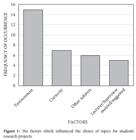
The surface morphology of cs-rGO and its modified composites was examined using SEM (Figure 1-3). The cs-rGO sample exhibits a characteristic wrinkled and layered structure with minimal agglomeration, indicating successful exfoliation during the reduction process.1910,14
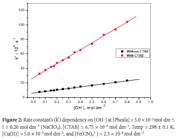
After CeO2 decoration, a noticeable increase in surface roughness is observed (Figure 2). This result confirms the successful deposition of CeO2 nanoparticles onto the rGO sheets, forming heterogeneous interfaces, consistent with previous reports.162 particles introduce multiple scattering pathways, further enhancing EM wave attenuation.13
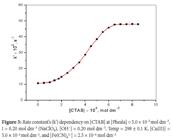
The cs-rGO/CeO2 particles are uniformly dispersed within the epoxy matrix (Figure 3), with no significant agglomeration observed. This homogeneous distribution indicates good interfacial compatibility between the filler and the polymer matrix.20−2214
Overall, the morphological characteristics indicate that the incorporation of CeO2 and its subsequent dispersion in the epoxy matrix modify the surface structure and introduce features that may contribute to improved EM wave attenuation.
The elemental composition of cs-rGO and its composites was analyzed using energy-dispersive X-ray spectroscopy (EDX) (Table 1). The cs-rGO sample primarily consists of carbon (83.31%) and oxygen (16.69%), with a C/O ratio of 6.65. This relatively high ratio indicates effective reduction of oxygen-containing functional groups and partial restoration of the sp222
After CeO2 incorporation, the cs-rGO/CeO2 composite shows the presence of cerium (7.11%), along with carbon (75.32%) and oxygen (17.56%). The detection of cerium confirms the successful integration of CeO2 into the rGO structure, consistent with previous studies.2222 phase, strongly indicating the effectively formation of the hybrid composite structure. This finding is further corroborated by the Raman analysis.
For the cs-rGO/CeO2/epoxy composite, carbon (77.57%), oxygen (22.32%), and a lower cerium content (0.11%) were detected. The reduced cerium signal is likely due to dilution by the epoxy matrix and embedding of the filler within the polymer, which limits surface detection.13−14,22 Nevertheless, the presence of cerium confirms that the functional filler is retained after composite formation.
Raman spectroscopy was performed to evaluate the structural disorder and graphitic characteristics of cs-GiO, cs-rGO, and cs-rGO/CeO2. As shown in Figure 4, all samples exhibit the characteristic D band (1352-1355 cm-1) and G band (1582-1590 cm-1), corresponding to defect-induced vibration and sp223-24 The cs-GiO sample shows a relatively intense D band due to the formation of oxygen-containing functional groups during the Hummers oxidation process. After hydrothermal reduction, the G band shifted from 1590 to 1582 cm-1, indicating the partial restoration of the sp2102 sample, the Raman peak observed at approximately 450 cm-1 is attributed to the F2g vibrational mode of CeO2 suggesting the successful incorporation of CeO2 nanoparticles onto the cs-rGO sheets, in agreement with previous studies.13,16
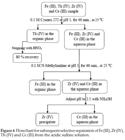
The calculated ID/IG ratios for cs-GiO, cs-rGO, and cs-rGO/CeO2 were 0.617, 0.715, and 0.713, respectively. The increased ID/IG ratio after reduction indicates the formation of smaller sp211,25 Meanwhile, the nearly unchanged ID/IG value of cs-rGO/CeO2 indicates that CeO2 decoration did not significantly disrupt the graphitic structure of cs-rGO. The preserved defect sites and sp27,8
The crystallinity of the synthesized materials was analyzed using X-ray diffraction (XRD) (Figure 5-6). The cs-Gi, cs-GiO, and cs-rGO samples exhibit broad diffraction peaks at approximately 2θ = 23.74°, 23.51°, and 23.99°, respectively, consistent with JCPDS data (No. 75-2078).19261422
Following CeO2 incorporation (Figure 5b), distinct diffraction peaks appear at 2θ = 28.71°, 33.26°, 47.75°, and 56.65°, corresponding to the (111), (200), (202), and (311) planes of cubic fluorite CeO2 (JCPDS No. 34-0394).8,21 These peaks confirm the formation of crystalline CeO2 nanoparticles on the rGO surface. The coexistence of amorphous carbon and crystalline CeO2 indicates a heterogeneous composite structure.
In the cs-rGO/CeO2/epoxy composite (Figure 6), the characteristic CeO2 peaks are retained, while an additional broad peak at approximately 2θ = 17.70° corresponds to the amorphous epoxy matrix. This confirms that the crystalline structure of CeO2 remains stable after composite formation.8,21 The combination of amorphous carbon and crystalline CeO2 is beneficial for EM wave absorption, as it enhances dielectric loss and interfacial polarization, improving impedance matching and attenuation efficiency.14
Crystallite size (D) and interlayer spacing (d-spacing) values are summarized in Table 2. The cs-Gi, cs-GiO, and cs-rGO samples exhibit relatively small crystallite sizes, consistent with their amorphous structure.234 and H2SO4.21,24−25272 composite exhibits a crystallite size of 14.50 nm and a d-spacing of 0.256 nm. After incorporation into the epoxy matrix, the crystallite size slightly increases to 15.38 nm, while the d-spacing remains nearly constant (~0.25 nm). This suggests that the structural framework of rGO is preserved during composite formation.14,28
Crystallinity analysis shows that cs-rGO has relatively low crystallinity (24.90%), reflecting its disordered structure.11,28−292 (69.35%) due to the presence of crystalline CeO2.8,30−3129−30
Fourier transform infrared (FT-IR) spectroscopy was used to analyze functional group evolution (Figure 7, Table 3). The spectra of cs-Gi, cs-GiO, and cs-rGO (Figure 7a) show characteristic C=C stretching associated with the sp2202829
Following hydrothermal reduction and CeO2 decoration (Figure 7b), a decrease in oxygen-related functional groups is observed, indicating effective reduction and partial restoration of the sp226-1 corresponding to Ce-O vibrations confirms the presence of CeO2.23,27,32−332 likely forms interfacial bonding, modifying the electronic structure of the composite.34−35
For the cs-rGO/CeO2/epoxy composite (Figure 7c), characteristic peaks from both filler and matrix are observed. The retention of the C=C band confirms that the rGO structure is preserved after composite formation.14362
Microwave absorption properties of cs-rGO/CeO2/epoxy composite
The microwave absorption performance of the cs-rGO/CeO2/epoxy composite was evaluated using a vector network analyzer (VNA) in the X-band frequency range. The reflection loss (RL), derived from the S11 parameter, is widely used to assess electromagnetic (EM) wave absorption, where lower RL values indicate stronger absorption performance. The S11 parameter represents the reflection loss, while the S21 parameter corresponds to the insertion loss (IL) of the composite.37−38
As shown in Figure 8a, the composite with a thickness of 1 mm exhibits a maximum RL of −7.72 dB at 9.77 GHz. Although the RL value is lower than those reported for similar graphene-based composites,14−15
The observed absorption behavior can be attributed to dielectric loss and interfacial effects within the composite system. The rGO component provides conductive pathways, while the incorporation of CeO2 introduces dielectric heterogeneity.182 is expected to alter the dielectric properties of the composite by introducing additional interfaces and structural heterogeneity, which may contribute to EM wave attenuation.8,39 However, the relatively low RL value suggests that the absorption performance is not yet optimized, possibly due to the limited CeO2 content and the lack of significant magnetic contributions.40
Further analysis based on the reflection coefficient (Γ) indicates that the composite exhibits approximately 16% reflected power and 84% transmitted power, suggesting that a substantial portion of the incident EM waves is not fully attenuated. This observation is consistent with the measured RL values. As reported in previous studies, materials exhibiting absorption levels above 70% are considered promising for further development.38,41−4221 parameter) shows that the composite exhibits a maximum insertion loss of −1.26 dB at 11.20 GHz (Figure 8b). This relatively low attenuation indicates that part of the incident EM waves is transmitted through the material, further supporting the moderate absorption performance.36
As summarized in Table 4, the RL performance of composite materials depend on their composition, particularly the balance between dielectric and magnetic component.162/epoxy system exhibits relatively low RL values, the ability of the composite to achieve measurable absorption at a thickness of only 1 mm is notable. Thin absorbers are desirable for applications requiring lightweight and compact materials. Therefore, further optimization of composition, filler loading, and impedance matching is expected to improve the microwave absorption performance of the cs-rGO/CeO2/epoxy composite.
CONCLUSION
In this study, a cerium(IV) oxide (CeO2)-decorated coconut shell-derived reduced graphene oxide (cs-rGO) composite dispersed in an epoxy matrix was synthesized via a modified Hummers method followed by hydrothermal reduction. Structural and chemical characterization confirmed the reduction of graphene oxide, the incorporation of CeO2 nanoparticles, and the homogeneous dispersion of the filler within the polymer matrix. The combination of rGO and CeO2 forms a heterogeneous structure that promotes dielectric loss and interfacial polarization, while the rough surface morphology facilitates multiple scattering of EM waves. The composite exhibits a maximum reflection loss of −7.72 dB at 9.77 GHz at a thickness of 1 mm, indicating moderate microwave absorption performance at low thickness. Although the absorption performance is lower than that reported for thicker or more optimized systems, the ability to achieve measurable attenuation at a low thickness highlights the potential of this material as a lightweight radar-absorbing material. Further optimization, particularly in terms of CeO2 loading, dispersion quality, and impedance matching, may improve the overall absorption efficiency of the composite.
SUPPLEMENTARY INFORMATIONThis manuscript does not have Supplementary Information. All the data is presented in the article.
CREDIT AUTHORSHIP CONTRIBUTION STATEMENTPatricya Inggrid Wilhelmina Bolilanga: Conceptualization, Investigation, Methodology, Writing-original draft, review & editing. Rahmat Basuki: Supervision, Methodology, Writing-review. Nugroho Adi Sasongko and Gunaryo: Supervision, Formal Analysis. Arief Budi Santiko: Supervision, Formal Analysis. Yusuf Bramastya Apriliyanto: Supervision, Methodology.
DECLARATION OF COMPETING OR FINANCIAL INTERESTSThe authors declare that have no financial interests or personal relationships that could have appeared to influence the work reported in this paper.
DECLARATION OF GENERATIVE AI AND AI-ASSISTED TECHNOLOGIES
The authors declare that, during the preparation of this manuscript, AI-assisted tools were solely for language and grammar revision. All outputs were critically reviewed and edited by the authors, who assume full responsibility for the content.
AUTHORS ORCIDs
Patricya Inggrid Wilhelmina Bolilanga: https://orcid.org/0009-0000-7140-9231
Rahmat Basuki: https://orcid.org/0000-0002-3117-2740
Nugroho Adi Sasongko: https://orcid.org/0000-0002-6546-1348
Yusuf Bramastya Apriliyanto: https://orcid.org/0000-0003-0683-8456
Arief Budi Santiko: https://orcid.org/0000-0009-0000-8249-7476
Gunaryo Gunaryo: https://orcid.org/0009-0008-1510-2110
ACKNOWLEDGEMENT
The authors highly acknowledge the financial support provided by the LPDP-BRIN trough RIIM VII program, agreement number 41/IV/KS/02/2025 and PKS/19/II/2025/UNHANRI.
REFERENCES
-
1. Shinde DD, Babu V, Khandal S V. A review on types of radar absorbing materials. Shanlax Int J Manag. 2022;9(S1-Mar):122-127. https://doi.org/10.34293/management.v9iS1-Mar.4901.
» https://doi.org/10.34293/management.v9iS1-Mar.4901 -
2. Das S, Nayak GC, Sahu SK, Routray PC, Roy AK, Baskey H. Microwave absorption properties of double-layer radar absorbing materials based on doped Barium hexaferrite/TiO2/conducting Carbon Black. J Eng. 2014;2014:1-5. https://doi.org/10.1155/2014/468313.
» https://doi.org/10.1155/2014/468313 - 3. Esmaeili S, Sedghi H. Radar absorbing materials mechanism and effective parameters in behavior improving. Int J Recent Technol Eng. 2019;3878(1):1955-1959.
-
4. Ruiz-Perez F, López-Estrada SM, Tolentino-Hernández RV, Caballero-Briones F. Carbon-based radar absorbing materials: A critical review. J Sci Adv Mater Devices. 2022;7(3):100454. https://doi.org/10.1016/j.jsamd.2022.100454.
» https://doi.org/10.1016/j.jsamd.2022.100454 -
5. Aytaç A, İpek H, Aztekin K, Çanakçı B. A review of the radar absorber material and structures. Sci J Mil Univ L Forces. 2020;198(4):931-946. https://doi.org/10.5604/01.3001.0014.6064.
» https://doi.org/10.5604/01.3001.0014.6064 -
6. Wang Y, Li T, Zhao L, Hu Z, Gu Y. Research progress on nanostructured radar absorbing materials. Energy Power Eng. 2011;3(4):580-584. https://doi.org/10.4236/epe.2011.34072.
» https://doi.org/10.4236/epe.2011.34072 -
7. Shen Z, Xing H, Wang H, Jia H, Liu Y, Chen A, Yang P. Synthesis and enhanced electromagnetic absorption properties of Co-doped CeO2/rGO nanocomposites. J Alloys Compd. 2018;753:28-34. https://doi.org/10.1016/j.jallcom.2018.04.105.
» https://doi.org/10.1016/j.jallcom.2018.04.105 -
8. Wang S, Gao F, Zhao Y, Liu N, Tan T, Wang X. Two-Dimensional CeO2/rGO composite-modified separator for Lithium/Sulfur batteries. Nanoscale Res Lett. 2018;13(1):377. https://doi.org/10.1186/s11671-018-2798-5.
» https://doi.org/10.1186/s11671-018-2798-5 -
9. Abbas Q, Shinde PA, Abdelkareem MA, Alami AH, Mirzaeian M, Yadav A, et al. Graphene synthesis techniques and environmental applications. Materials (Basel). 2022;15(21):7804. https://doi.org/10.3390/ma15217804.
» https://doi.org/10.3390/ma15217804 -
10. Lesiak B, Trykowski G, Tóth J, Biniak S, Kövér L, Rangam N, Stobinski L, Malolepszy A. Chemical and structural properties of reduced graphene oxide-dependence on the reducing agent. J Mater Sci. 2021;56(5):3738-3754. https://doi.org/10.1007/s10853-020-05461-1.
» https://doi.org/10.1007/s10853-020-05461-1 -
11. Dideikin AT, Vul' AY. Graphene oxide and derivatives: the place in graphene family. Front Phys (Lausanne). 2019;6(JAN):149. https://doi.org/10.3389/fphy.2018.00149.
» https://doi.org/10.3389/fphy.2018.00149 -
12. Balci O, Polat EO, Kakenov N, Kocabas C. Graphene-enabled electrically switchable radar-absorbing surfaces. Nat Commun. 2015;6(1):6628. https://doi.org/10.1038/ncomms7628.
» https://doi.org/10.1038/ncomms7628 -
13. Yin Q, Xing H, Shu R, Ji X, Tan D, Gan Y. Enhanced microwave absorption properties of CeO2 nanoparticles supported on Reduced Graphene Oxide. Nano. 2016;11(5):1650058. https://doi.org/10.1142/S1793292016500582.
» https://doi.org/10.1142/S1793292016500582 -
14. Ahmad AF, Ab Aziz S, Abbas Z, Obaiys SJ, Khamis AM, Hussain IR, Zaid MHM. Preparation of a chemically Reduced Graphene Oxide reinforced Epoxy Resin Polymer as a composite for electromagnetic interference shielding and microwave-absorbing applications. Polymers (Basel). 2018;10(11):1180. https://doi.org/10.3390/polym10111180.
» https://doi.org/10.3390/polym10111180 -
15. Sujiono EH, Zurnansyah, Zabrian D, Dahlan MY, Amin BD, Samnur, Agus J. Graphene oxide based coconut shell waste: synthesis by modified Hummers method and characterization. Heliyon. 2020;6(8):e04568. https://doi.org/10.1016/j.heliyon.2020.e04568.
» https://doi.org/10.1016/j.heliyon.2020.e04568 -
16. Wang Z, Zhao P, He D, Cheng Y, Liao L, Li S, Luo Y, Peng Z, Li P. Cerium oxide immobilized Reduced Graphene Oxide hybrids with excellent microwave absorbing performance. Phys Chem Chem Phys. 2018;20(20):14155-14165. https://doi.org/10.1039/C8CP00160J.
» https://doi.org/10.1039/C8CP00160J - 17. Shalaby A, Nihtianova D, Markov P, Staneva AD, Iordanova RS, Dimitriev YB. Structural analysis of Reduced Graphene Oxide by transmission electron microscopy. Bulg Chem Commun. 2015;47(1):291-295.
-
18. Ban GD, Liu ZH, Ye ST, Yang HB, Tao R, Luo P. Microwave absorption properties of Carbon Fiber radar absorbing coatings prepared by water-based technologies. RSC Adv. 2017;7(43):26658-26664. https://doi.org/10.1039/C7RA02631E.
» https://doi.org/10.1039/C7RA02631E -
19. Zhang G, Chen Y, Chen Y, Guo H. Activated biomass carbon made from bamboo as electrode material for supercapacitors. Mater Res Bull. 2018;102:391-398. https://doi.org/10.1016/j.materresbull.2018.03.006.
» https://doi.org/10.1016/j.materresbull.2018.03.006 -
20. Olowojoba GB, Kopsidas S, Eslava S, Gutierrez ES, Kinloch AJ, Mattevi C, Rocha VG, Taylor AC. A facile way to produce Epoxy nanocomposites having excellent thermal conductivity with low contents of Reduced Graphene Oxide. J Mater Sci. 2017;52(12):7323-7344. https://doi.org/10.1007/s10853-017-0969-x.
» https://doi.org/10.1007/s10853-017-0969-x - 21. Farahmandjou M, Farahmandjou M, Zarinkamar M, Firoozabadi TP. Synthesis of Cerium Oxide (CeO2) nanoparticles using simple CO-precipitation method. Rev Mex Fis. 2016;62(October):496-499.
-
22. Xue J, Wu C, Du X, Ma W, Wen K, Huang S, Liu Y, Liu Y, Zhao G. Preparation and properties of functional particle Fe3O4-rGO and its modified fiber/epoxy composite for high-performance microwave absorption structure. Mater Res Express. 2020;7(4):045303. https://doi.org/10.1088/2053-1591/ab8257.
» https://doi.org/10.1088/2053-1591/ab8257 -
23. Thakur A, Kumar S, Rangra VS. Synthesis of Reduced Graphene Oxide (rGO) via chemical reduction. AIP Conf Proc. 2015;1661:080032. https://doi.org/10.1063/1.4915423.
» https://doi.org/10.1063/1.4915423 -
24. Tarcan R, Todor-Boer O, Petrovai I, Leordean C, Astilean S, Botiz I. Reduced Graphene Oxide today. J Mater Chem C Mater Opt Electron Devices. 2020;8(4):1198-1224. https://doi.org/10.1039/C9TC04916A.
» https://doi.org/10.1039/C9TC04916A -
25. Gutiérrez-Portocarrero S, Roquero P, Becerril-González M, Zúñiga-Franco D. Study of structural defects on Reduced Graphite Oxide generated by different reductants. Diamond Related Materials. 2019;92:219-227. https://doi.org/10.1016/j.diamond.2019.01.001.
» https://doi.org/10.1016/j.diamond.2019.01.001 -
26. Rukman NK, Jannatin M, Supriyanto G, Fahmi MZ, Ibrahim WAW. GO-Fe3O4 Nanocomposite from coconut shell: synthesis and characterization. IOP Conf Ser Earth Environ Sci. 2019;217:012008. https://doi.org/10.1088/1755-1315/217/1/012008.
» https://doi.org/10.1088/1755-1315/217/1/012008 -
27. Cao N, Zhang Y. Study of Reduced Graphene Oxide Preparation by Hummers' Method and Related Characterization. J Nanomater. 2015;2015(1):168125. https://doi.org/10.1155/2015/168125.
» https://doi.org/10.1155/2015/168125 -
28. Zainuddin MF, Nik Raikhan NH, Othman NH, Abdullah WFH. Synthesis of Reduced Graphene Oxide (rGO) using different treatments of Graphene Oxide (GO). IOP Conf Ser Mater Sci Eng. 2018;358:012046. https://doi.org/10.1088/1757-899X/358/1/012046.
» https://doi.org/10.1088/1757-899X/358/1/012046 -
29. Taufantri Y, Irdhawati I, Asih IARA. Sintesis dan karakterisasi Grafena dengan metode Reduksi Grafit Oksida menggunakan pereduksi Zn. J Kim Val. 2016;2(1):17-23. https://doi.org/10.15408/jkv.v2i1.2233.
» https://doi.org/10.15408/jkv.v2i1.2233 -
30. Bandara N, Esparza Y, Wu J. Graphite Oxide improves adhesion and water resistance of Canola Protein-Graphite Oxide Hybrid Adhesive. Sci Rep. 2017;7(1):11538. https://doi.org/10.1038/s41598-017-11538-8.
» https://doi.org/10.1038/s41598-017-11538-8 -
31. Mas'udah KW, Taufiq A, Sunaryo S. Sunaryo. The potential of corncobs in producing reduced graphene oxide as a semiconductor material. J Eng Technol Sci. 2022;54(2):220201. https://doi.org/10.5614/j.eng.technol.sci.2022.54.2.1.
» https://doi.org/10.5614/j.eng.technol.sci.2022.54.2.1 -
32. Gharagozloo Bahrami AB, Bahrami SH, Saber-Samandari S, Kowsari E. New functional Graphene Oxide based on transition metal complex (Cr/Fe) as wave absorber. J Mater Res Technol. 2022;20:3683-3696. https://doi.org/10.1016/j.jmrt.2022.08.061.
» https://doi.org/10.1016/j.jmrt.2022.08.061 -
33. Manoratne CH, Rosa SRD, Kottegoda IRM. XRD-HTA, UV Visible, FTIR and SEM Interpretation of Reduced Graphene Oxide synthesized from high purity vein Graphite. Mater Sci Res India. 2017;14(1):19-30. https://doi.org/10.13005/msri/140104.
» https://doi.org/10.13005/msri/140104 -
34. Verma R, Samdarshi SK. In situ decorated optimized CeO2 on Reduced Graphene Oxide with enhanced adsorptivity and visible light photocatalytic stability and reusability. Journal of Physical Chemistry C. 2016;120:22281-22290. https://doi.org/10.1021/acs.jpcc.6b04493.
» https://doi.org/10.1021/acs.jpcc.6b04493 -
35. Dezfuli AS, Ganjali MR, Norouzi P, Faridbod F. Facile sonochemical synthesis and electrochemical investigation of Ceria/Graphene nanocomposites. J Mater Chem B. 2015;3(11):2362-2370. https://doi.org/10.1039/C4TB01847H.
» https://doi.org/10.1039/C4TB01847H -
36. Strankowski M, Włodarczyk D, Piszczyk Ł, Strankowska J. Polyurethane nanocomposites containing Reduced Graphene Oxide, FTIR, Raman, and XRD Studies. J Spectrosc. 2016;2016:1-6. https://doi.org/10.1155/2016/7520741.
» https://doi.org/10.1155/2016/7520741 - 37. Hasan MZ, Wijanto H, Sigit V. Bandpass filter mikrostrip untuk radar cuaca s-band menggunakan meander loop dual resonator. E-Proceeding Eng. 2019;6(2):3628-3635.
-
38. Guo Y, Song X, Ma S, Qi Y, Yuan X, Fan H. Preparation of bunched CeO2 and study on microwave absorbing properties with MWCNTs binary composite. Particuology. 2023;73:95-102. https://doi.org/10.1016/j.partic.2022.04.002.
» https://doi.org/10.1016/j.partic.2022.04.002 - 39. Khan S, Bari P, Mishra S. Effect of chemically Reduced Graphene Oxide on mechanical and thermal properties of Epoxy nano composites. J Mater Sci Nanotechnol. 2019;7(2):1-9.
-
40. Xu C, Shi X, Ji A, Shi L, Zhou C, Cui Y. Fabrication and characteristics of Reduced Graphene Oxide produced with different green reductants. PLoS One. 2015;10(12):e0144842. https://doi.org/10.1371/journal.pone.0144842.
» https://doi.org/10.1371/journal.pone.0144842 -
41. Mittal G, Lee SW, Rhee KY. Reduced Graphene Oxide coating on basalt fabric using electrophoretic deposition and its role in the mechanical and tribological performance of Epoxy/Basalt fiber composites. Nanotechnol Rev. 2021;10(1):1383-1394. https://doi.org/10.1515/ntrev-2021-0091.
» https://doi.org/10.1515/ntrev-2021-0091 - 42. Chan YL, You KY, Mayzan MZH, Jusoh MA, Abas Z, Esa F. Investigation into return loss characteristic of graphene oxide/zinc ferrite/epoxy composite at X-band frequency. J Appl Sci Eng. 2020;23(4):593-602.
Revised: 21 April 2026
Accepted: 1 June 2026