Adsorption of Mercury(II) onto activated carbons derived from Theobroma cacao pod husk
Abstract
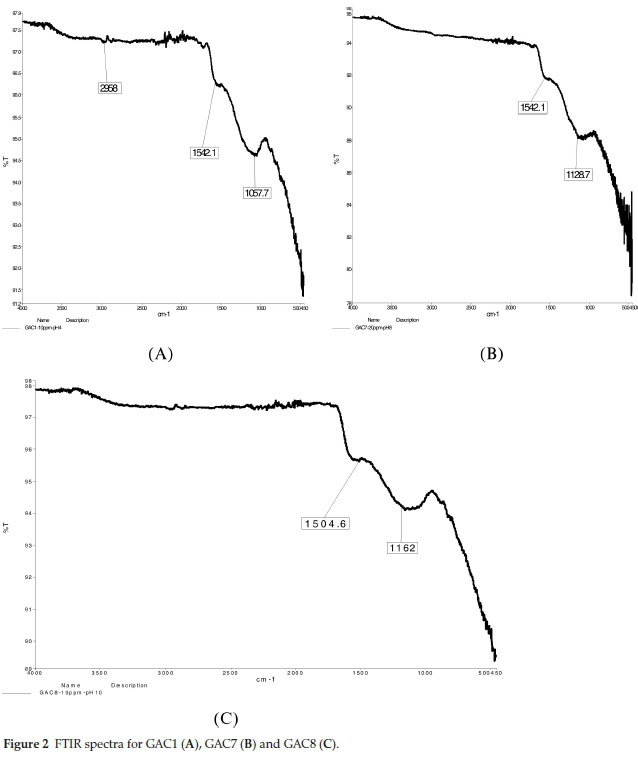
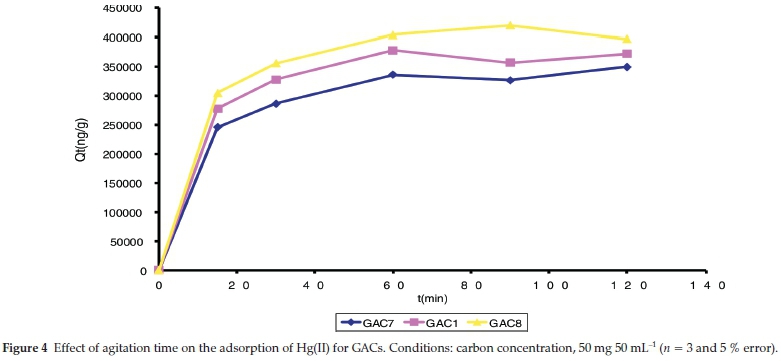
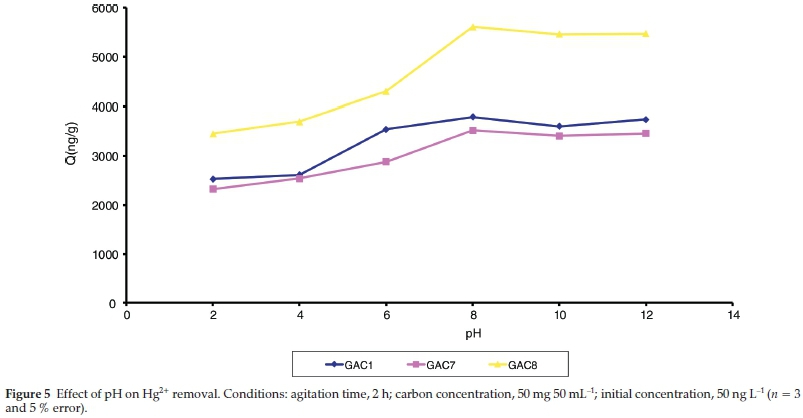
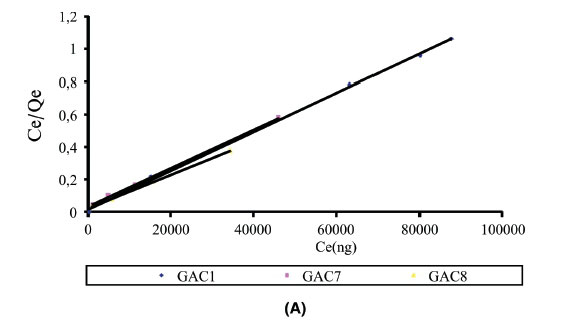
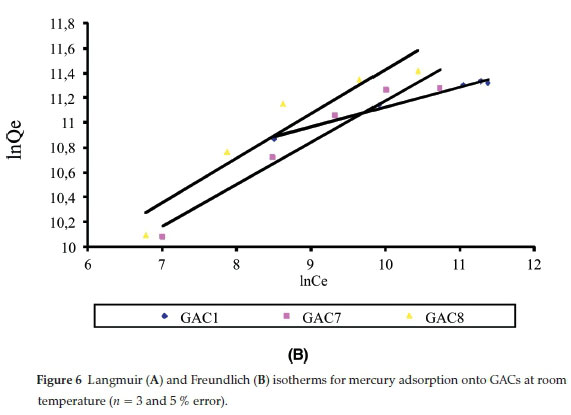
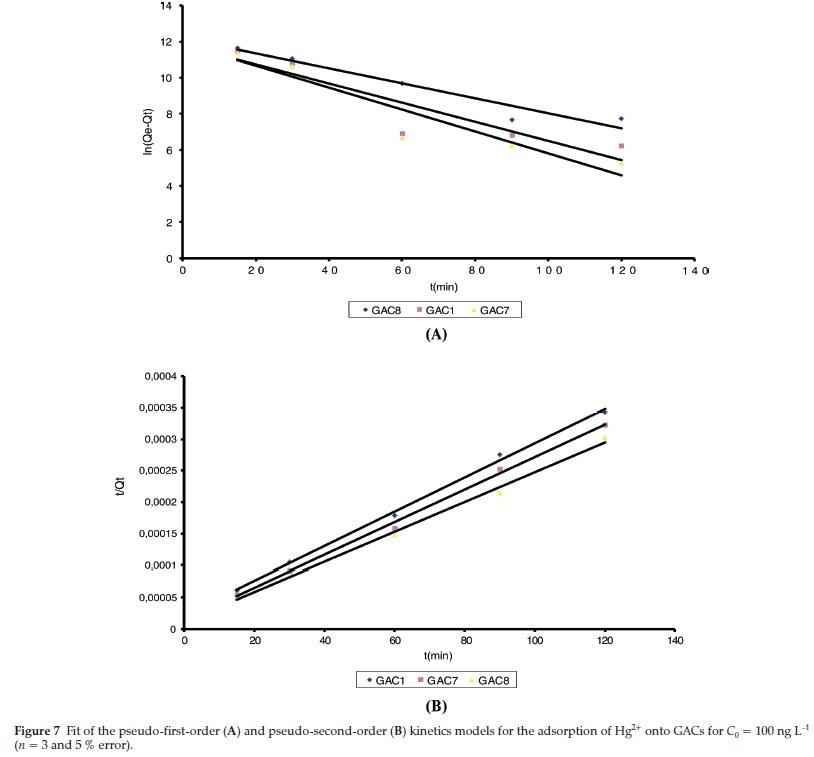
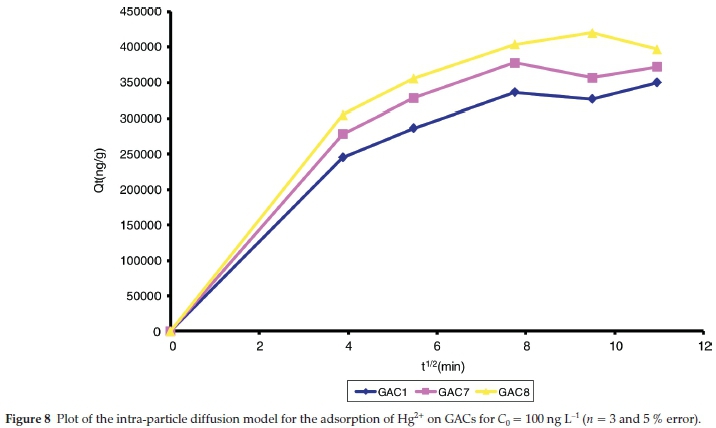
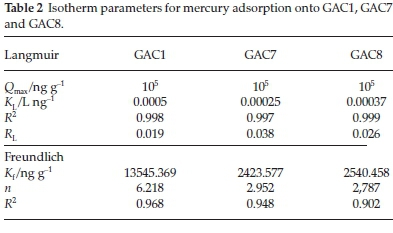
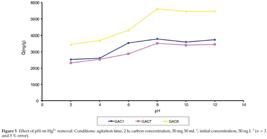
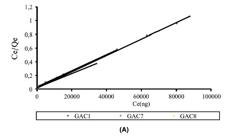
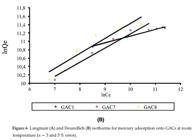
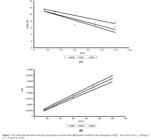
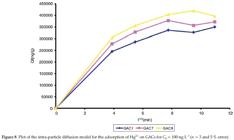
Activated carbon prepared from Theobroma cacao pod husk was used as a low-costbiosorbent for the removal of mercury(II) from aqueous solutions. The influence of pH and contact time on the adsorption was investigated by conducting a series of batch adsorption experiments. The equilibrium data were fitted to the Langmuir and Freundlich isotherm models. The Langmuir isotherm was found to best describe the experimental data. The amount adsorbed increased with increasing temperature. The maximum adsorption capacity of mercury was found to be 105 ng g-1 for an initial mercury concentration of 100 ppb. The kinetics of adsorption were modelled by means of the Lagergren-first-order and pseudo-second-order models. The pseudo-second-order model was found to explain the adsorption kinetics most effectively. It was also found that pore diffusion played an important role in the adsorption, and intra-particle diffusion was the rate-limiting step during the first 30 min. A FTIR study revealed that the carbonyl and sulfur functional groups present on the surface of the adsorbing material were involved in chemical interaction with mercury(II).
Mercury; thermal desorption; adsorption; activated carbon; Theobroma cacao; pod husk
 Thumbnail
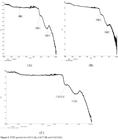 Thumbnail
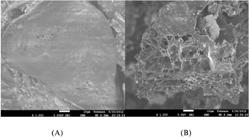 Thumbnail
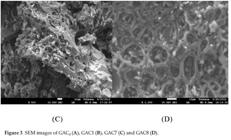 Thumbnail
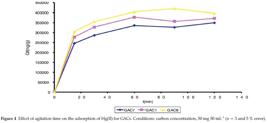 Thumbnail
 Thumbnail
 Thumbnail
 Thumbnail
 Thumbnail
 Thumbnail