Synthetic Possibilities for Hemilabile Ligands: A Case Study of Decacyclo[10.8.15,8.02,11.04,9.013,20.015,18]-heneicosane-3,10,14,19-tetraone
Abstract
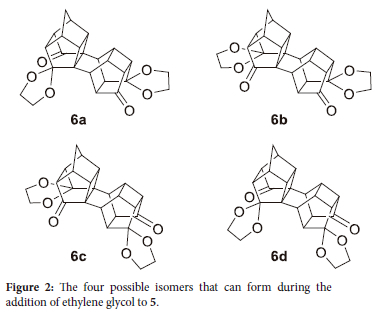
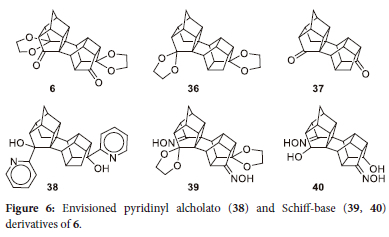
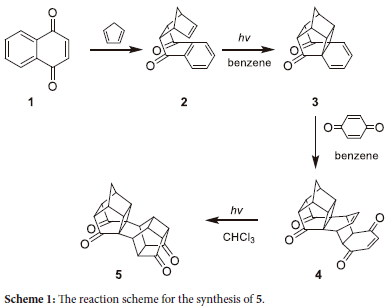
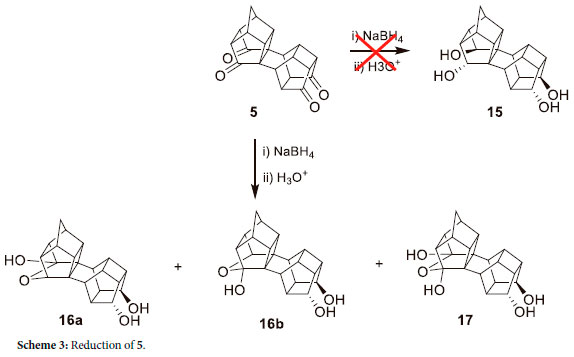
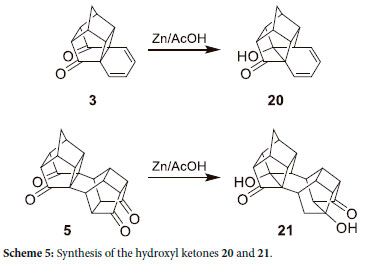
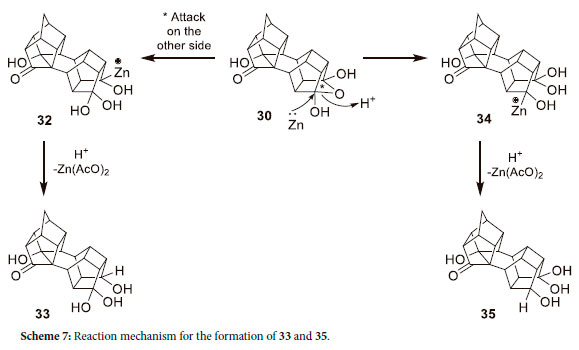
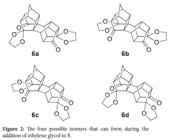
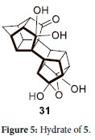
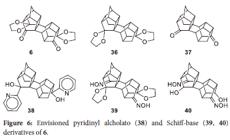
As proof of the synthetic possibilities for hemilabile ligands the chemistry of decacyclo[10.8.15,8.02,11.04,9.013,20.015,18]heneicosane-3,10,14,19-tetraone (5) was investigated. Reacting 5 with ethylene glycol under acid conditions gave the expected di-acetal protected ketone (6) as four possible isomers. Reduction of these isomers to produce the dialcohol ketal (7) was only possible with LiAlH4, after NaBH4, Luche's, and Meerwein-Ponndorf-Verley reduction methods were unsuccessful. Deprotection of 7 to the hydroxyl ketone (8) derivative was not possible under reflux with a 25% HCl solution. To evaluate the reactivity of 5, and investigate alternative synthetic routes to Grubbs pre-catalysis, 5 was treated with the reducing agents i) NaBH4, ii) glacial AcOH, Zn and iii) 80% AcOH/H2O/Zn mixture, which resulted in various reduction products. The AcOH/H2O/Zn reduction resulted in various products and a further investigation into the mechanism is given within this report.
Pentacycloundecane; Grubbs pre-catalyst; Cyclo-addition; Hemilabile ligands
 Thumbnail
 Thumbnail
 Thumbnail
 Thumbnail
 Thumbnail
 Thumbnail