Effect of benzamide on the corrosion inhibition of mild steel in sulphuric acid
Abstract
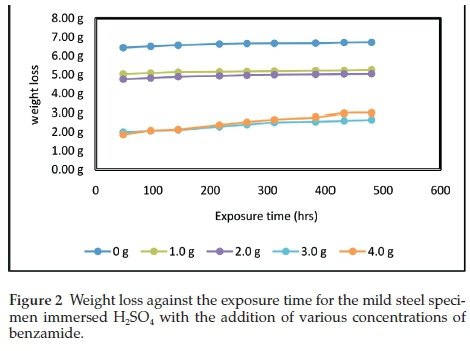
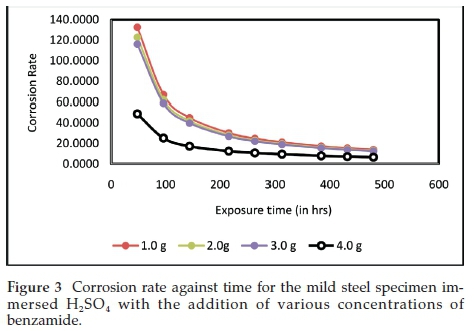
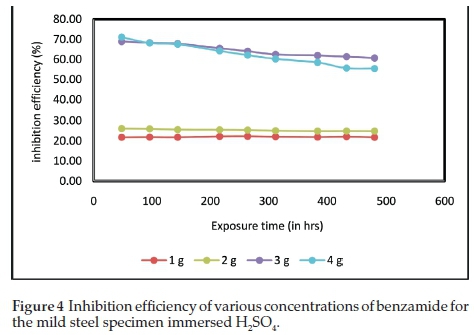
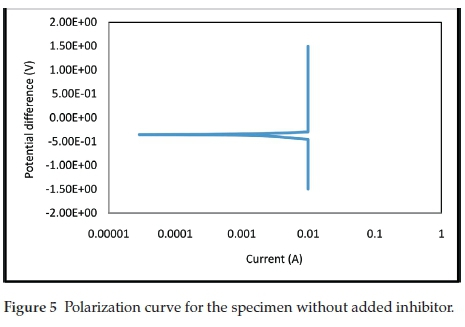
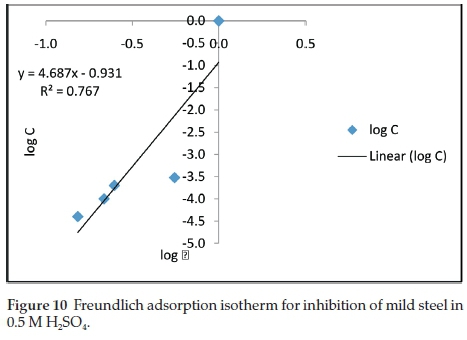
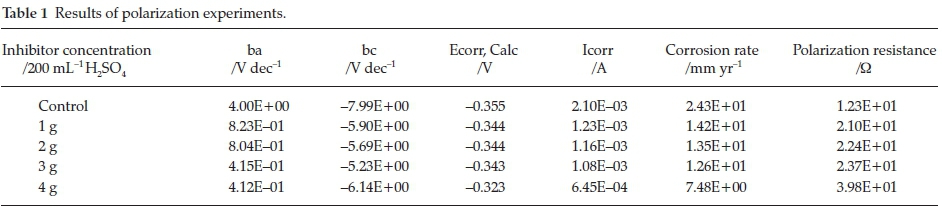
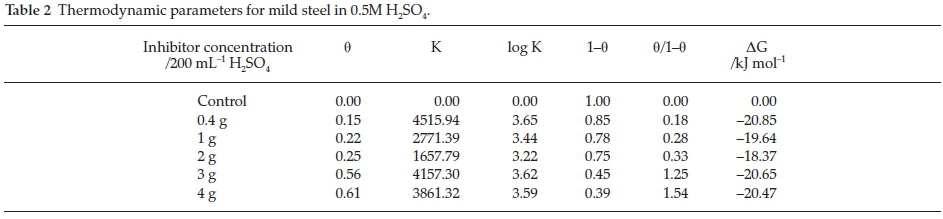
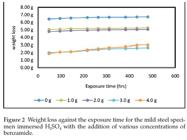
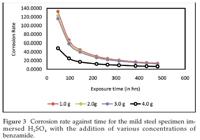
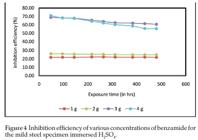
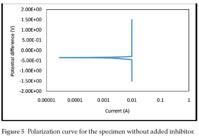
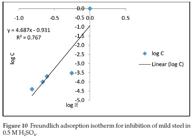
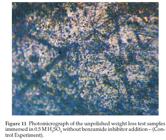
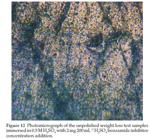
The effect of benzamide as a chemical inhibitor on mild steel corrosion in 0.5M H2SO4 was studied at ambient temperature. The experimental work was performed with gravimetric and potentiostatic polarization measurement methods. Potentiostatic polarization measurement was performed with a potentiostat (Autolab PGSTAT 30 ECO CHIMIE) interfaced with a computer for data acquisition and analysis. The benzamide inhibitor achieved very effective corrosion inhibition of the steel specimens in the H2SO4 test medium. The inhibition performance increased with increasing concentration of the inhibitor. Benzamide's best performance was achieved with the 4 g 200 mL-1 H2SO4 concentration and closely followed by the 3 g 200 mL-1 of the H2SO4.In 0.5 M H2SO4, the 4 g and 3 g 200 mL-1 H2SO4 gave the optimal performance with weight loss of 2.99 g at 480 h of the experiment, respectively. The corrosion rate for 4 g's was 6.4 mm yr-1. The experiment also achieved polarization resistance values of 3.98 and 2.37E + 01Ω; corrosion rate, CR, of 7.48E + 00and1.26E + 01 mm yr1 and current density (Icorr) values of 6.45E-04 and 1.08E - 03 A cm-2, respectively. The corrosion inhibition efficiency values are, respectively, 60 and 70 % for both 3 g and 4 g 200 mL-1 H2SO4 concentrations at 48 h. Results of ba and bc indicated a mixed type inhibitor. Benzamide adsorption on the steel's surface obeys the Freundlich adsorption isotherm.
Electrochemical corrosion; benzamide; inhibitor; sulphuric acid; mild steel; polarization
 Thumbnail
 Thumbnail
 Thumbnail
 Thumbnail
 Thumbnail
 Thumbnail
 Thumbnail
 Thumbnail