Solvent Extraction of a South African Bituminous Coal using a Model Biomass-derived Phenolic Mixture
Abstract
A model biomass-derived phenolic mixture was investigated for its solvent ability for extraction of a South African bituminous coal at temperatures of 300-360 °C. A previous study showed that phenol gave the highest extraction yield of 49.5 wt. % (daf) for bituminous coal at 360 °C, with an oil yield of 26.3 wt. % (daf). The phenolic products produced from sweet sorghum bagasse via an alkaline liquefaction process were identified and reported earlier and a model biomass-derived phenolic mixture was formulated, evaluated and results used in this study. The model mixture gave an extraction yield of 37.1 wt. % (daf) and oil yield of 16.9 wt. % (daf) at 360 °C. This solvent mixture was found to be less effective for high extraction yields when compared to phenol at mild temperatures. This could be due to phenol being a better hydrogen carrier than the solvent mixture during the internal redistribution of hydrogen in the coal. The infrared spectroscopy results of the coal and extraction products obtained using the model mixtures showed similar functional groups. These results demonstrate that the use of a model biomass-derived phenolic mixture has the potential to depolymerize coal and produce high-value chemicals from coal.
Coal extraction; bituminous coal; depolymerization; biomass-derived solvent
1. Introduction
South Africa relies on its abundant coal reserves to meet much of its energy demand. Coal provides 79 % of the country's total energy needs.1,2 The country's synthetic liquid fuel production contributes 40 % to the total liquid fuel demand. The remaining 60 % is sourced from the refining of imported crude oil.1,3 The production of liquid transportation fuels synthesized from coal provides an important alternative solution to augment the petroleum supply, thus reducing the dependency on imported petroleum and helping to relieve strained refinery capacity.4-6 Sasol runs an indirect liquefaction process for the production of liquid fuels and chemicals from coal. The indirect coal liquefaction facility in South Africa produces approximately 160 000 barrels of crude oil equivalent a day.1,7 However, the currently favoured approach to producing synthetic liquid fuels, coal gasification followed by the Fischer-Tropsch process, poses challenges.82), a greenhouse gas associated with global warming.910
Coal extraction with an appropriate solvent can be used to study the composition, structure of coal and also as a conversion process to produce value-added products from coal. The solvent extraction process and explanation of the terms used to describe the process (i.e. decomposition and depolymerization) was summarized by Sehume et al.1111,12 The extensive experiments, using phenol as a solvent, for solvent extraction of coal date back to the 1920s.13,14,15 This approach was found to be ideal as it is performed at temperatures close to the boiling point of the solvent for higher extraction yields.121617,18 According to Berkowitz,1920 2118,21-23 Coal extraction with some of the solvent mixtures can lead to high yields of extract.16,18,22-24 The influence of the mixed solvents was explained by the increase in the penetration of solvents into coals by coal swelling.2518 24262311
Sehume el al.27
2. Experimental Section
2.1.
MaterialsSouth African bituminous coal (Waterberg) was supplied by Exxaro Resources Limited (South Africa).11272 (high purity, 99.999 %) was supplied by Africa Oxygen Limited (AFROX, South Africa). Tetrahydrofuran (THF) and n-hexane were purchased from Merck Chemicals (Pty) Ltd, South Africa.
2.2.
Solvent Extraction Process and Characterization of ProductsAll experiments were conducted in a stainless-steel high-pressure autoclave as described by Sehume el al.11282. The autoclave was pressurized and heated to the reaction temperature in an N2 atmosphere (initial cold pressure of 0.5 MPa) at a heating rate of 4 °C min-1. The coal solvent extraction process was performed at reaction temperatures of 300,320, 340 and 360 °C, whilst magnetically stirring the mixture at 300 rpm. The autoclave was held for 20 min at each specified maximum temperature (±4 °C), and then cooled down to room temperature using an electric fan. The product mixtures (solid and liquid) were vacuum filtered and the gases produced were calculated according to mass balance. A series of extractions were carried out on the filtered liquid (after solvent extraction) using a reflux system with two solvents at 85 °C for 1 h, as described in a previous study.11
2.3. Characterization of Coal and Extraction Products
Proximate analyses were performed using a U-Therm TGA thermogravimetric analyzer, and ultimate analyses of the coal and solvent extraction products were carried out using an Elemental Vario El cube elemental analyzer, according to the ASTM 29541 method.11
The model biomass-derived phenolic mixture was characterized by GC/MS using an Agilent gas chromatograph (GC), model 6890 N coupled with an Agilent mass spectrometer detector (MS), model 5975B Inert XL EI/CI equipped with a CTC Analytics PAL autosampler. The GC was equipped with a capillary column (Agilent 19091S; 30 m length, 0.25 mm inner diameter, 0.25 μη! film thickness). The oven temperature program was as follows: 30 °C held for 2 min, then ramped up to 320 °C at 5 °C min-1 and held for 10 min. The total run time for the method was 50 min. Helium at a constant flow rate of 1.0 mL min-1 was used as a carrier gas. The injector was operated with a split ratio of 1/15 that was maintained at 250 °C throughout the analysis. The National Institute of Standards and Technology (NIST) spectral library was used for peak identification.
Samples were analyzed using an attenuated total reflection Bruker Fourier Transform Infra-Red spectrometer (ATR-FTIR) with an ALPHA's Platinum ATR single reflection diamond ATR module, at ambient temperature in the region of 400 to 4000 cm-1. Infrared spectroscopy was used to elucidate the effect of the solvent extraction process on the functional groups of the products that were obtained at different temperatures.
The pyrolysis behaviour of the coal and PAAs was studied by thermogravimetric analysis (TGA, SDTQ600). Samples of approximately 12 mg were analyzed. Thermogravimetric (TG) and derivative thermogravimetric (DTG) profiles of both the coal and the solid residues were obtained using a heating rate of 4 C min-1. Tests were conducted over the temperature range of 60-900 °C under a nitrogen flow of 75 mL min-1.
Simulated distillation (SimDis) analyses were carried out using an HP Model 5890 GC system, in accordance with the ASTM D2887 method. The analysis was carried out on a high-temperature GC-FID system that has been fitted with an ARX 2887 Restek column (10 m x 0.53 mm x 0.53 /xm). This process was followed by the injection of ~0.2 /xL of the fractions into the GC column. The distillation curves were determined on a solvent-free basis.
The overall percentage conversion or extraction yield of coal during the solvent extraction, using a model biomass-derived phenolic mixture as the solvent, was calculated according to the equation (all values indicated are weight percentages):11

The yield of pre-asphaltenes and asphaltenes (PAAs, HI) is defined by:

where daf coal is the weight of the dry, ash-free coal.
The oil part of the extracted products (HS) is obtained by difference:

where G is the yield of the gaseous products obtained after the coal solvent extraction (obtained by mass balance). The conversion or extraction yield and intermediate products yields (PAAs) were determined gravimetrically, based on the solvent-free dried residues.
3. Results and Discussion
3.1. GC-MS (Semi-quantitative) Analysis of the Model Biomass-derived Phenolic Mixture
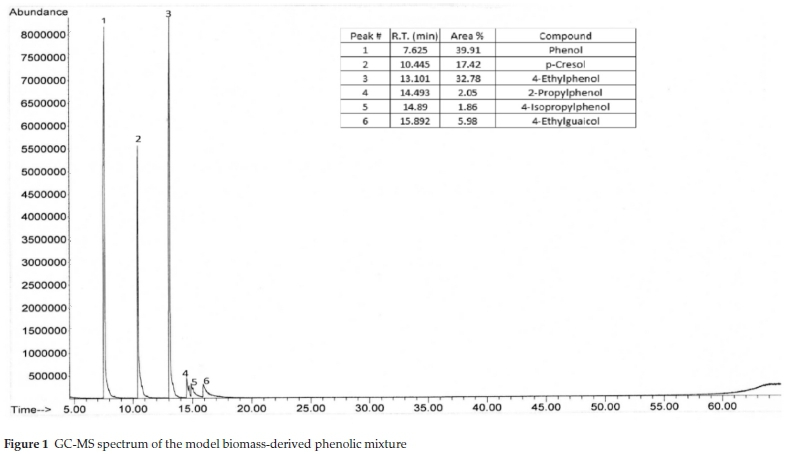
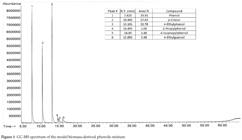
The GC-MS analysis was performed on the model biomass-derived phenolic mixture prior to solvent extraction and the results are show n in Fig. 1. Theareapercentagesofthephenolic compounds were 39.91, 17.42, 32.78, 2.05, 1.86 and 5.98 % for phenol, p-cresol, 4-ethylphenol, 2-propylphenol, 4-isopropyl-phenol, and 4-ethylguaicol, respectively (Fig. 1).
3.2. Characterization of Samples
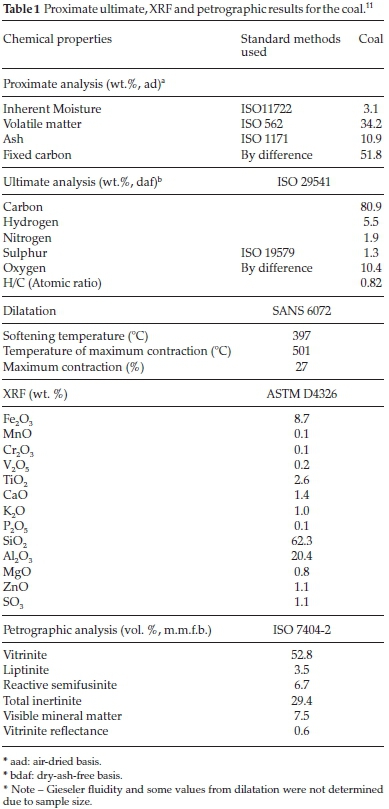
The elemental analysis, X-ray fluorescence (XRF) and maceral composition results as reported earlier for the coal are summarized in Table 1.11Table 1). Inmostbituminouscoalsaportionof the SiO2 may be present as free quartz; however, much or all of theSiO2islikelypresentinclays.AlloftheAl2O3willbeinclays or similar minerals. Probably most or all of any Fe2O3 are due to the oxidation of pyrite, FeS2, during the ashing process. The petrographic constituents of this coal decreased in the order vitrinite(52.8%),inertinite(29.4%),reactivesemifusinite(6.7%), and liptinite (3.5 %).
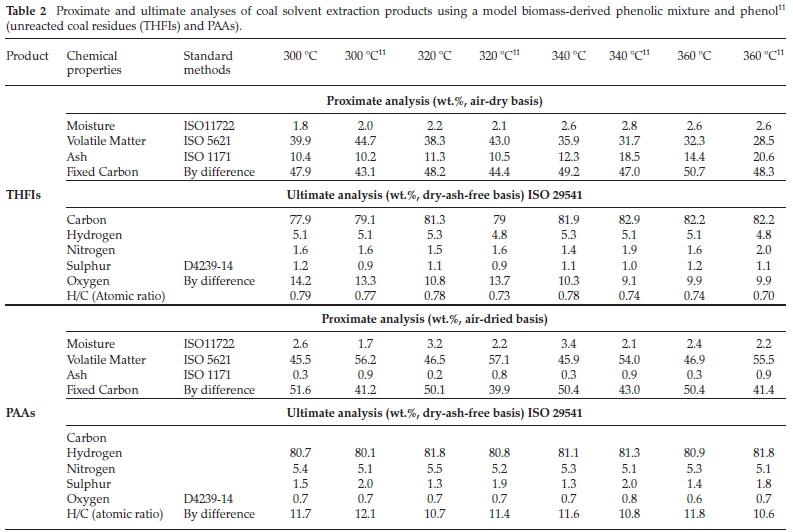
In Table 2, the results from the proximate analysis of the unreacted coal residues (THFIs) and the extraction products (PAAs) after the solvent extraction treatment are summarized. The results show that the ash percentages of THFIs increased from10.4and14.2wt.% withincreasingextractiontemperatures between 300 °C and 360 °C. The inorganic materials in the coal are largely or completely un-extracted, while the amount of organic substance extracted increases with temperature. Therefore, inevitably the ash yield will increase as observed in this study. The ash percentage trend is also similar to the results obtained through the use of pure phenol (10.4 wt. % up to 20.6 wt. %).1111
3.3. Coal Conversion as a Function of Temperature and Product Distribution
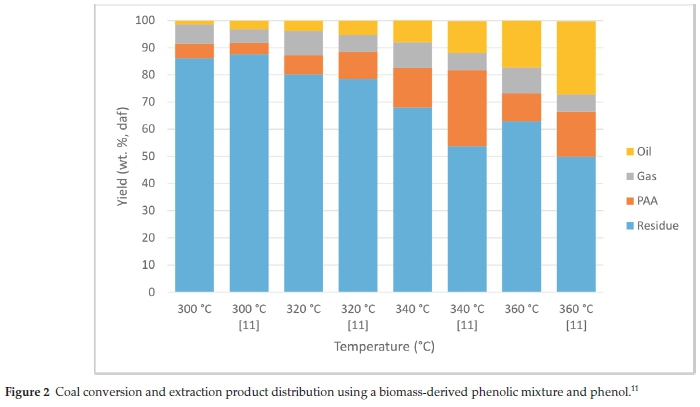
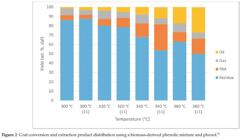
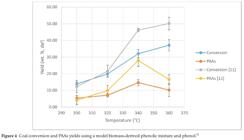
Figure 2 shows the coal conversion and overall product distribution after solvent extraction at 300-360 °C using a model biomass-derived phenolic mixture. As the temperature increases, the yield of the residue (THFIs) decreases, while the conversion increases. Using pure phenol as a solvent the same trend was observed.11Figure 2 shows the coal conversions of 14 wt. %, 20 wt. %, 32 wt. % and 37 wt. % using a model biomass-derived phenolic mixture at 300 °C, 320 °C, 340 °C and 360 °C. The yield of the solid residues (THFIs) during the solvent extraction decreased from 86 to 63 wt. % (daf) when treated between 300 °C and 360 °C. Pew and Withrow293021281125 132
3.4.
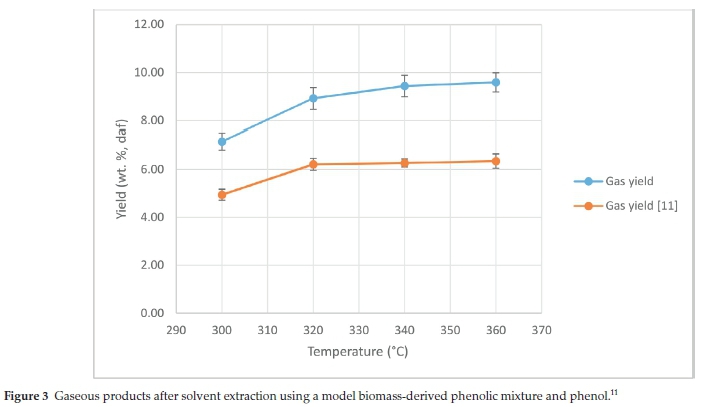
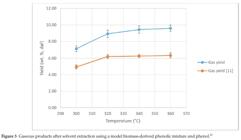
The Effect of Temperature on Gas Yields during Solvent ExtractionThe gaseous product yields obtained after coal solvent extraction at temperatures of 300-360 °C through mass balance are shown in Fig. 3. The temperature range above 250 °C has been reported to mark the onset of the active thermal decomposition of bituminous coal. 19,33 As it can be seen from Table 1 (dilatation results) that the coal used in this study begins to soften at about 397 °C. The results show that gaseous products progressively increased with increasing temperature (7-9.6 wt. %). Similar trends were also reported for coal extraction using phenol as a solvent (300-360 °C).1111
3.5.
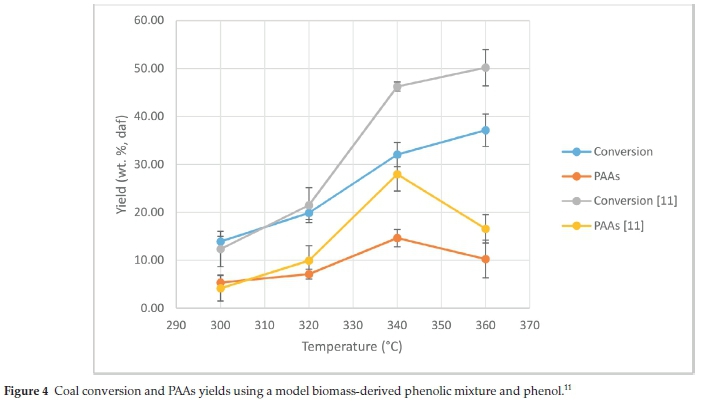
The Effect of Temperature on PAAs during Solvent ExtractionFigure 4 shows the effect of temperature on the conversion of coal and PAAs during the coal extraction process using a model biomass-derived phenolic mixture. It can be seen from Fig. 4 that the conversion increased from 14 to 37 wt. % with increasing reaction temperatures (300-360 °C). The PAAs are an intermediate product in coal extraction or liquefaction which can be further converted to oil and/or gases.34,35 PAAs were grouped together as one fraction due to the similarity in their dissolving ability in THF and n-hexane.351111
3.6. The Effect of the Temperature on Oil Yield during Solvent Extraction
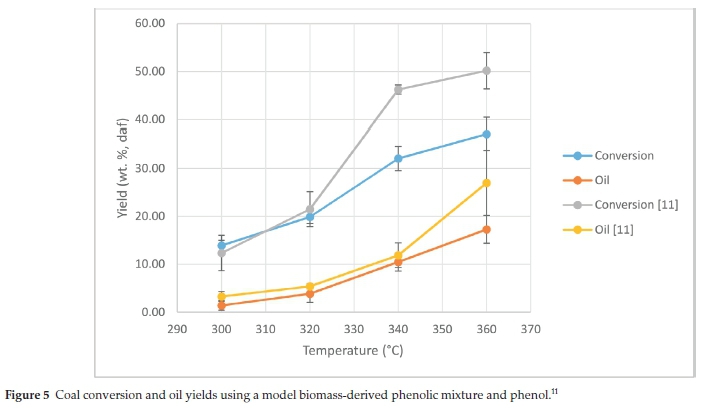
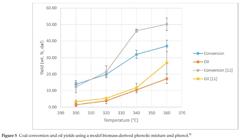
The effect of temperature on the yield of oil after solvent extraction using a model biomass-derived phenolic mixture is shown in Fig. 5. As shown earlier, an increase in the PAAs yield is coupled with higher coal conversions. The same trend is also observed with oil yields as coal is converted into solvent extraction products. From these results (Fig. 5), it can be seen that an increase in temperature also increased oil yields (300-360 °C). The oil yield in this temperature range increased from 1 wt. % to 17 wt. % and with the most significant change observed above 320 °C. The oil yield increased by nearly 5 wt. % between extraction temperatures of 340 °C to 360 °C, whilst the conversion increased by nearly 5 wt. %. The oil yield observed at 360 °C using phenol as a solvent was higher, at 27 wt. %, than the 17 wt. % observed in this study using the biomass-derived phenolic mixture.11
3.7. ATR-FTIR Spectroscopy
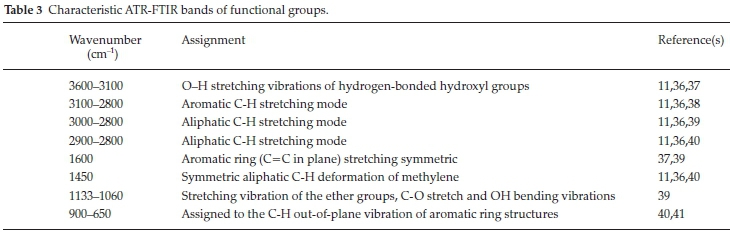
Figures 6-8 show the ATR-FTIR spectra of the coal, PAAs, and hexane soluble products (oil). ATR-FTIR spectrometry represents a relatively useful means of characterization of coal and coal-derived products in terms of functional groups. Table 3 shows a summary of bands of the functional groups observed in Figs. 6-8.
These results show that the coal and the coal-derived products spectra were nearly similar in functional groups and with minimal apparent structural changes observed after extraction temperatures.4214311
3.8. SimDis GC Analysis
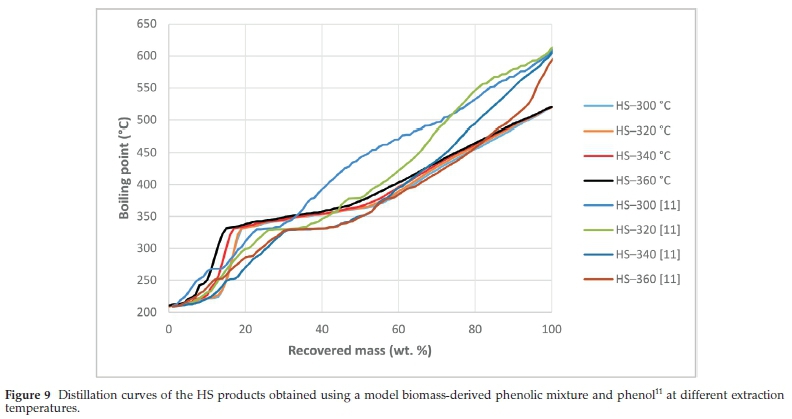
The distillation curves of the coal-derived liquefied HS fractions obtained through coal extraction using a model biomass-derived phenolic mixture at the temperature range of 300-360 °C, are shown in Fig. 9. The fractionation of coal liquids is based largely on schemes modified and developed for the characterization of petroleum.44-47 It is important to note that the evaluation of the distillation curves of the HS fractions has been determined on a phenol-free basis due to the hindrance of the phenols peak that masks the low boiling point fraction (79-191 °C) peaks.11
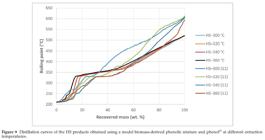
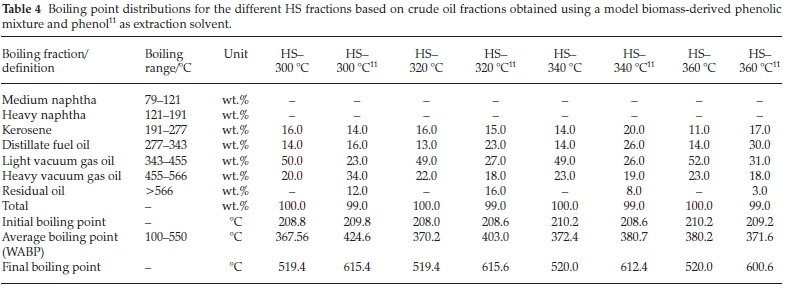
The boiling point distribution of HS fractions using a model biomass-derived phenolic mixture for coal extraction are summarized in Table 4. The quality of the oil obtained depends significantly on its boiling point distribution.423-C4 compounds, light, and middle distillates.
The average boiling point of the hydrocarbon constituents of the fractions was calculated as shown in a previous study.11Table 4). This trend is in contrast with the results obtained by using phenol as the extraction solvent where the WABP of HS fractions decreased with extraction temperatures (425-372 °C).11
4. Conclusions
The utilization of a model biomass-derived phenolic mixture for the solvent extraction of a South African bituminous coal under mild conditions was investigated. The choice of a phenolic mixture as a model for the extraction of bituminous coal allowed this study to investigate the feasibility of coal extraction using a biomass-derived solvent. This model biomass-derived phenolic mixture was found to be effective in extracting 14-37 wt. % of coal with increasing temperature (300 °C up to 360 °C). Alkyl-substituted phenols showed less depolymerization ability than compared with phenol may be due to poor hydrogen carrier capability. The extraction yields were influenced by the effect of physical properties of the solvent used in coal extraction.
The THFIs and PAAs obtained using a model biomass-derived mixture had similar H/C atomic ratios, which are similar to the H/C of the coal. These results confirm that PAAs are the intermediate product coal and oil in coal extraction. The drop of the PAAs yield between 340 °C and 360 °C during coal conversion corresponded with an increase of the oil yields as a function of temperature. The ATR-FTIR spectra of the coal and the extraction products showed nearly the same functional groups with no significant structural changes. These results show that the extraction production of the phenol-based solvents during coal extraction are of a similar chemical nature, despite differences in the extraction yields.
SimDis results showed that the increasing extraction temperature influenced the number of products in the boiling fractions. The differences in the boiling point distribution obtained using phenolic based solvents may be related to the difference in average molecular mass of the extracts during coal extraction (300-360 °C). However, more work ought to be carried out using biomass-derived phenolic solvent to examine the nature of the extracts (i.e. carbon distribution and the molecular weight distribution) and all alkyl-substituted phenols that may lead to higher extractions at maximum experimental conditions. The utilization of a biomass-derived solvent will assist in the facilitation of the production of useful liquids from South African coals and address environmental challenges associated with the currently favoured approach of producing synthetic liquid fuels, indirect coal liquefaction.
Conflict of interest
The authors declare no conflict of interest.
ORCID iDs
T.Z. Sehume: orcid.org/0000-0002-3814-8727
C.A. Strydom: orcid.org/0000-0001-5295-2095
J.R. Bunt: orcid.org/0000-0003-3051-2528
H.H. Schobert:orcid.org/0000-0001-6758-7174
Acknowledgements
The authors thank Mr Kgutso Mokoena (Sasol) for SimDis analysis. The work presented in this paper is based on research financially supported by the South African Research Chairs Initiative of the Department of Science and Technology and National Research Foundation of South Africa (Coal Research Chair Grant No. 86880, UID85643, Grant No. TP1208137225). Any opinion, finding, conclusion, or recommendation expressed in this material is that of the authors(s), and the NRF does not accept any liability in this regard.
References
- 1 H. Winkler, O. Davidson, A. Kenny, G. Prasad, J. Nkomo, D. Sparks, M. Howells and T. Alfstad, Energy policies for sustainable development in South Africa, Energy Research Centre, University of Cape Town, April 2006, pp. 1-4 & 13-60.
- 2 R. Falcon and M. van der Riet, in Effect of milling and coal quality on combustion, International Pittsburgh Coal Conference, Sandton, South Africa, 2007.
- 3 Department of Minerals and Energy (DME), 2006, Energy Security Master Plan - Liquid Fuels.
- 4 J. Fletcher, Q. Sun, R. Bajura, Y. Zhang and X. Ren, Coal to clean fuel -The Shenhua investment in direct coal liquefaction, in 21st Annual International Pittsburgh Coal Conference, Osaka, Japan, 13-17 September, 2004.
- 5 P. Nolan, A. Shioman and H. Rui, Coal liquefaction, Shenhua Group, and China's energy security, Eur. Manage. J., 2004, 22, 150-164.
- 6 L. Zhao and K. Gallagher, Research, development, demonstration, and early deployment policies for advanced-coal technology in China, Energy Policy, 2007, 35, 6467-6477.
- 7 P. Barta, South Africa has a way to get more oil; make it from coal, WSJ, 2006, CCXLVIII, 1.
- 8 A. Andrews and J. Logan, Fischer-Tropsch fuels from coal, natural gas and biomass: background and policy, Congressional Research Service (CRS) Report for Congress, Order Code RL34133,27 March 2008, pp. 1-26.
- 9 T.M. Aida, T. Sato, G. Sekiguchi, T. Adschiri and K. Arai, Extraction of Taiheiyo coal with supercritical water-phenol mixtures, Fuel, 2002, 81, 1453-1461.
- 10 J.G. Speight and S.E. Moschopedis, The co-processing of coal with heavy feedstock, Fuel Process. Technol., 1986, 13, 215-232.
- 11 T.Z. Sehume, C.A. Strydom, J.R. Bunt and H.H. Schobert, Effectivity of phenol during solvent extraction of a South African bituminous coal at mild conditions, Energy & Fuels, 2017, 31, 13655-13665.
- 12 T. Kabe, A. Ishihara, E.W. Qian, E.I.P. Sutrisna and Y. Kabe, Coal and Coal-related Compounds: Structures, Reactivity and Catalytic Reactions, Studies in Surface Science and Catalysis series, 150, Elsevier, Amsterdam, 2004.
- 13 M.W. Kiebler, The action of solvents on coal, in Chemistry of Coal Utilization (H.H. Lowry, ed.), Wiley, New York, 1945, pp. 677-760.
- 14 S.R. Illingworth, The action of solvents on coal, Fuel Sci. Pract., 1922,1, 213-219.
- 15 S.W. Parr and H.F. Hadley, The analysis of coal with phenol as a solvent, Fuel, 1925, 4, 31, 49.
- 16 A. Pott, H. Broche and W. Scheer, Solution of coal by pressure extraction and hydrogenation of the extracts, Glückauf, 1933, 69, 903-912.
- 17 J.G. Speight, The Chemistry and Technology of Coal, 3rd edn., CRC-Taylor and Francis Group, Boca Raton, FL, 2013, chapters 11 and 13.
- 18 M.I. Kuznetzov, The action of organic solvents on coal, Fuel, 1937,16, 114-121.
- 19 N. Berkowitz, An Introduction to Coal Technology, Energy Science and Engineering, Academic Press Series, 1979, chapter 7.
- 20 M. Orchin and H.H Storch, Solvation and hydrogenation of coal, ind. Eng. Chem., 1948, 40, 1385-1389.
- 21 A.C. Fieldner and P.M. Ambrose, Annual report of research and technologic work on coal, U.S. Bureau Mines, Information Circ. 7446, 1948, 113 pp.
- 22 S. Pande and D.K. Sharma, Ethylenediamine-assisted solvent extraction of coal in N-methyl-2 pyrrolidone: synergistic effect of ethylene-diamine on extraction of coal in N methyl-2 pyrrolidone, Energy & Fuel, 2002, 16, 194-204.
- 23 M. Iino, T. Takanohashi, S. Obara, H. Tsueta and Y. Sanokawa, Characterization of the extracts and residues from CS2-N-methyl-2-pyrrol-idinone mixed solvent extraction, Fuel, 1989, 68, 1588-1593.
- 24 K. Miura and T. Mae, Proceedings of the Society of Chemical Engineers Japan, 63rd Annual Meeting, 2000, p. G104.
- 25 M. Iino and M. Matsuda, Synergistic effects of alcohol-benzene mixture for coal extraction, Bull. Chem. Soc. Jpn., 1984, 57, 3290-3294.
- 26 K. Miura, K. Mae, T. Yoshimura, K. Masuda and K. Hashimoto, A new coal flash pyrolysis method utilizing effective radical transfer from solvent to coal, Energy & Fuels, 1991, 5, 803-808.
- 27 T.Z. Sehume, C.A. Strydom, J.R. Bunt and H.H. Schobert, Bio-oil production from sweet sorghum bagasse via liquefaction using alkaline solutions and identification of phenolic products, Waste & Biomass Valorization, submitted for publication, 2019 (Manuscript number WAVE-D-19-00223).
- 28 L.J. Darlage and M. Bailey, Solvent effects in the depolymerization of coal, Fuel, 1976, 55, 205-210.
- 29 J.C. Pew and J.R. Withrow, Action of various solvents on coal, Fuel, 1931, 10, 44-47.
- 30 M.W. Kiebler, Extraction of abituminous coal - influence of the nature of solvents, Ind. Eng. Chem, 1940, 32, 1389-1394.
- 31 J.W. Larsen, T.L. Sams and B.R. Rodgers, Internal rearrangement of hydrogen during heating of coals with phenol, Fuel, 1981, 60, 335-341.
- 32 For a thorough discussion of the chemistry of phenoxy radicals see: Scott, G. Atmospheric Oxidation and Antioxidents, Elsevier Publishing Co., New York, 1965.
- 33 H.H. Schobert, Chemistry of Fossil Fuels and Biofuels, Cambridge University Press, Cambridge, New York, 2013, chapter 22.
- 34 D.H. Buchanan, Status of coal research: solvent extraction, Fuel Chemical Division, American Chemical Society (ACS) 1994, 39, 64-68.
- 35 J. Yan, J. Bai, W. Li and J. Bai, Direct liquefaction of a Chinese brown coal and CO2 gasification of the residues, Fuel, 2014,136, 280-286.
- 36 K. Ouchi, K. Imuta and Y. Yamashita, Catalytic depolymerization of coal: depolymerization of Yubari coal by p-toluenesulphonic acid as catalyst, Fuel, 1965,44, 29-38.
- 37 P.C. Painter, R.W. Snyder, M. Starsinic, M.M. Coleman, D.W. Kuehn and A. Davis, Concerning the application of FT-IR to the study of coal: a critical assessment of band assignments and the application of spectral analysis programs, Appl. Speclrosc., 1981, 35, 475-85.
- 38 P.C. Painter, M. Starsinic, E. Squires and A.A. Davis, Concerning the 1600 cm-1 region in the IR spectrum of coal, Fuel, 1983, 62, 742-743
- 39 D. Van Niekerk, R.J. Pugmire, M.S. Solum, P.C. Painter and J.P. Mathews, Structural characterization of vitrinite-rich and inertinite-rich Permian-aged South African bituminous coals, Int. J. Coal Geol, 2008, 76, 290-300.
- 40 T.F. Yen, W.H. Wu and G.V Chilingar, A study of the structure of petroleum asphaltenes and related substances by infrared spectroscopy, Energy Sources, 1984, 7, 203-235.
- 41 J.V. Ibarra, E. Munoz and R. Moliner, FTIR study of the evolution of coal structure during the coalification process, Org. Geochem., 1996, 24, 725-735.
- 42 A. Sofianos and A. Butler, Catalytic liquefaction of South African coals using the carbon monoxide/water system. Part 2: Nature of the oils, Fuel Process. Technol., 1989, 22, 189-204.
- 43 D. Nag, P. Biswas, V.K. Chandaliya and P.K. Banerjee, Characterization of solvent extract of an Indian coal. Int. J. Coal Prep. Ulil., 2011,31, 1-8.
- 44 R.G. Ruberto, D.M. Jewell, R.K. Jensen and D.C. Cronauer, in Shale Oil, Tar Sands, and Related Fuel Sources, (T.F. Yen, ed.), Advances in Chemistry Series No. 151, American Chemical Society, Washington, DC, 1976, chapter 3.
- 45 J.E. Dooley, C.J. Thompson and S.E. Scheppele, in Analytical Methods for Coal and Coal Products, (C. Karr, Jr., ed.), Academic Press, New York, vol. I, 1978, chapter 16.
- 46 K.D. Bartle, in Spectroscopic Analysis of Coal Liquids, (J. Kershaw, ed.), Elsevier, Amsterdam, Netherlands, 1989, chapter 2.
- 47 J.G. Speight, Synthetic Fuels Handbook: Properties, Processes, and Performance, McGraw-Hill, New York, 2008.
Revised 15 August 2019
Accepted 28 August 2019.