Performance of Mn2+ modified Bentonite Clay for the Removal of Fluoride from Aqueous Solution
Abstract
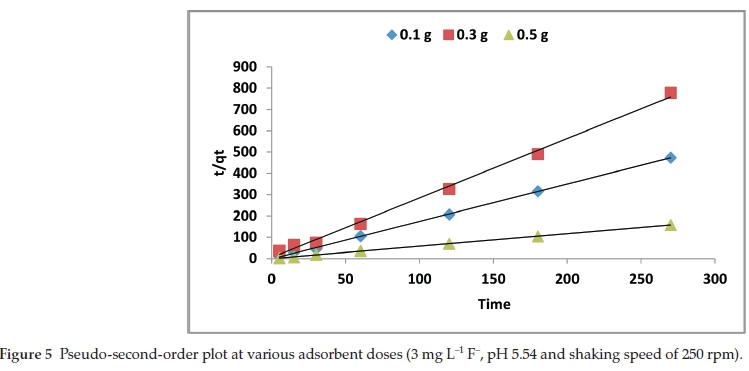
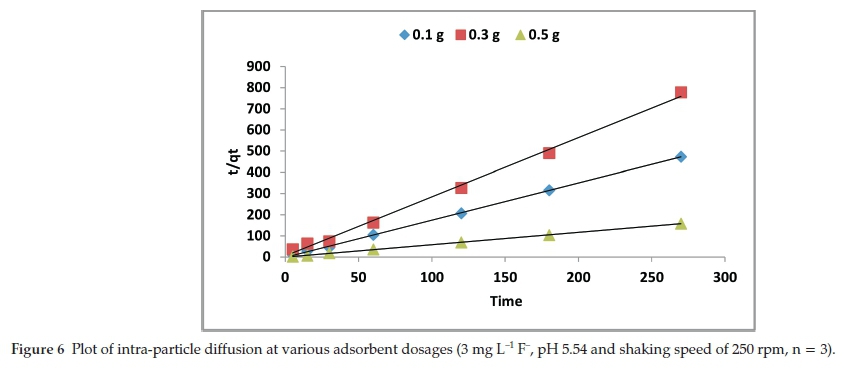
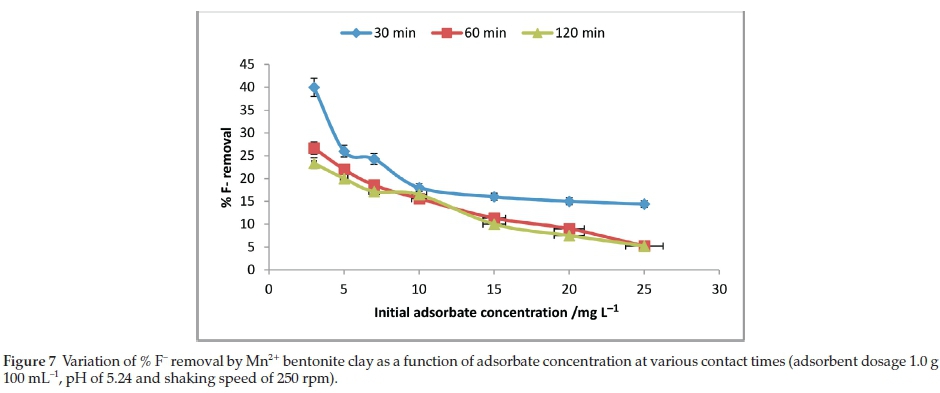
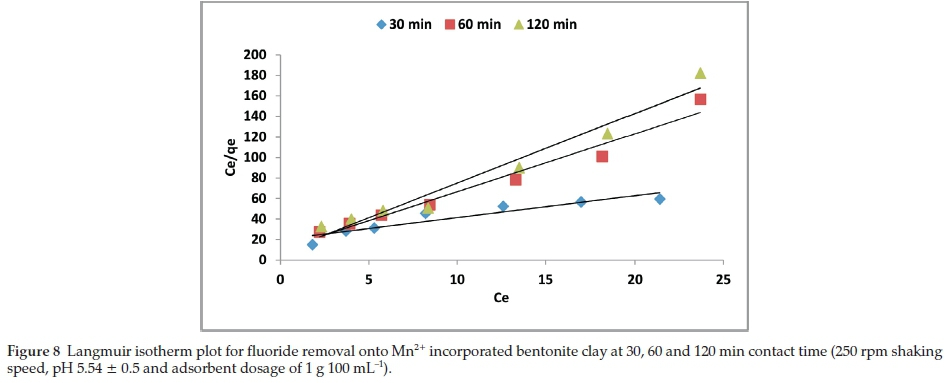
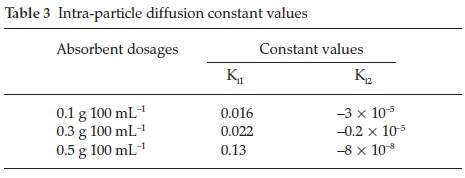
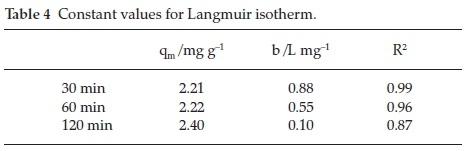
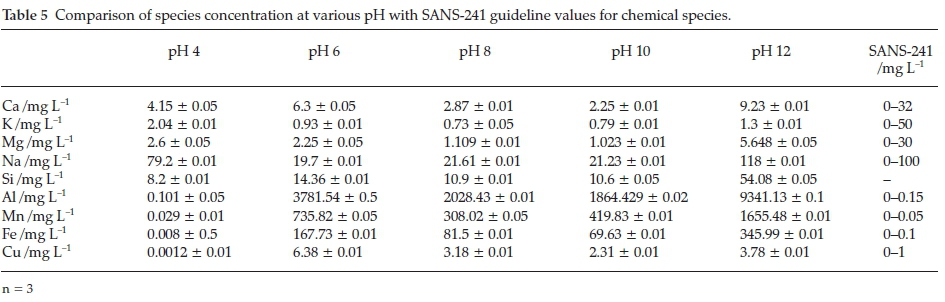
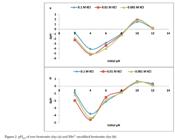
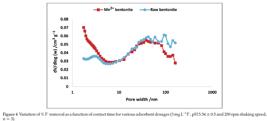
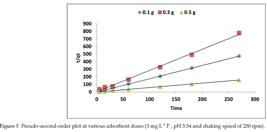
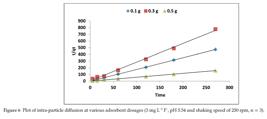
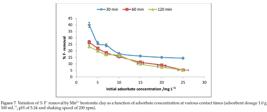
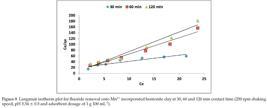
A low-cost adsorbent produced from Mn2+-modified bentonite clay was evaluated for groundwater defluoridation. Batch experiments were used to evaluate the effect of contact time at various adsorbent dosages, adsorption isotherms and the effect of pH on fluoride removal. The results showed that the optimum F- uptake occurred within the first 30 min contact time and the percentage removal increased with increasing adsorbent dosage. The data fitted better to pseudo-second-order reaction indicating that Fadsorption occurred via chemisorption. The Weber-Morris model of intra-particle diffusion revealed that both surface and intra-particle diffusion processes were involved during the F- adsorption process. Furthermore, the batch results showed that pH of the solution governed the percentage of fluoride removal with the optimum of 75.2 % fluoride removal achieved at pH 4. The adsorbent chemical stability assessment showed that chemical species were leached at trace concentrations which are within the South African National Standards (SANS) limits. Electrostatic attraction and ion-exchange were established as the major mechanisms responsible for fluoride adsorption at acidic pH and at moderate to alkaline pH levels, respectively. The study demonstrated that Mn2+ intercalated bentonite clay has potential for application in defluoridation of groundwater.
Adsorption; defluoridation; ion exchange; ligand exchange; intra-particle diffusion
 Thumbnail
 Thumbnail
 Thumbnail
 Thumbnail
 Thumbnail
 Thumbnail
 Thumbnail
 Thumbnail
 Thumbnail
 Thumbnail