Evaluation of six sample preparation methods for determination of trace metals in lubricating oils using inductively coupled plasma-optical emission spectrometry
Abstract
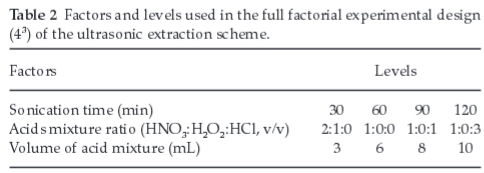
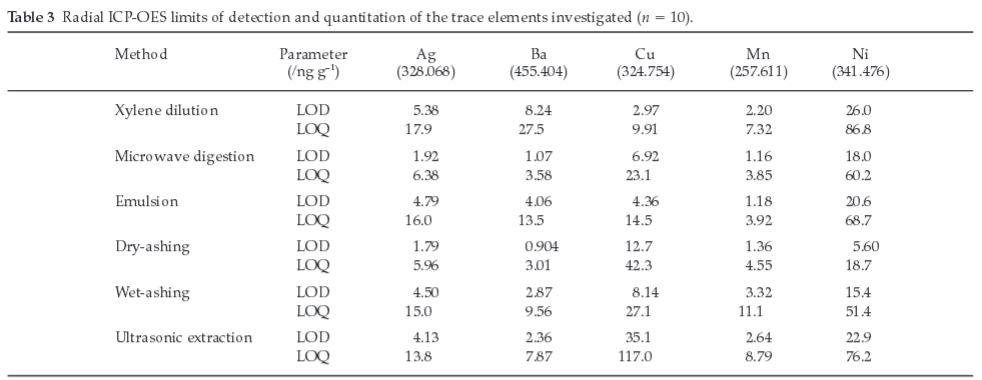
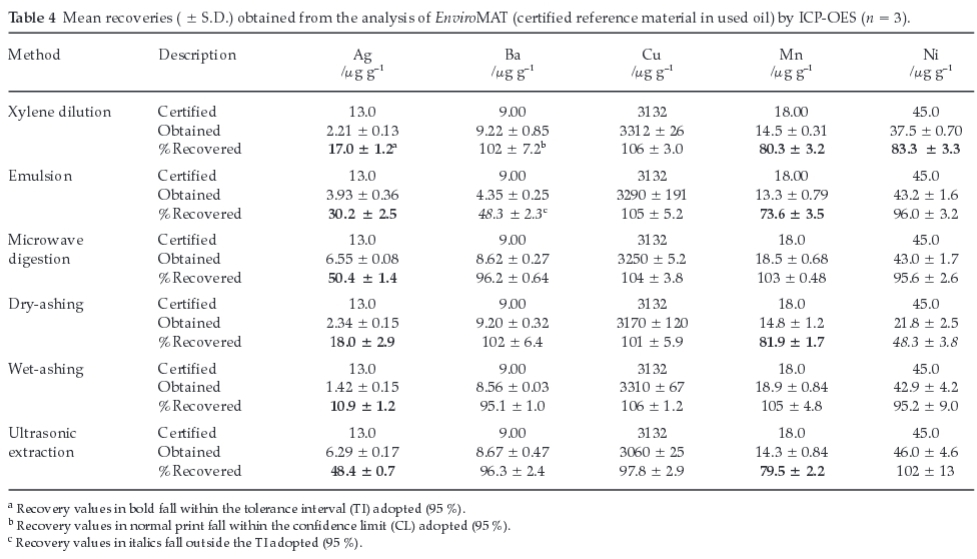
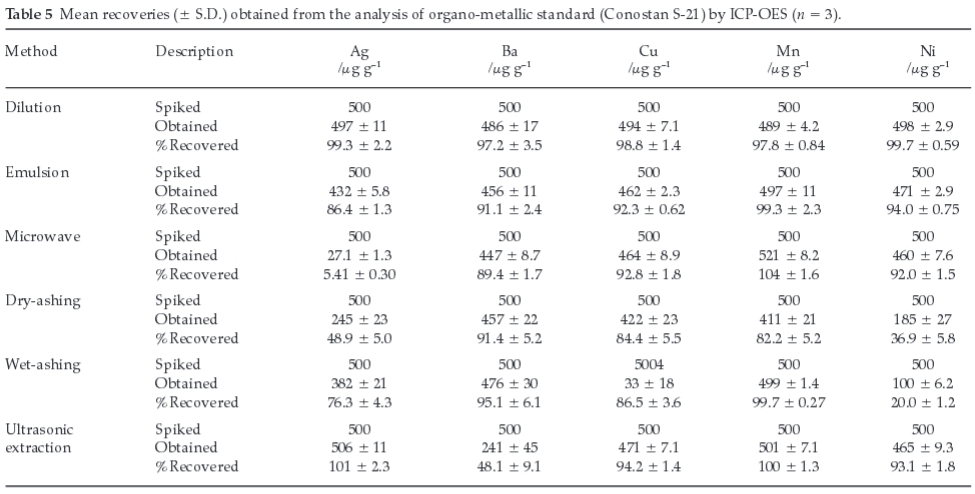
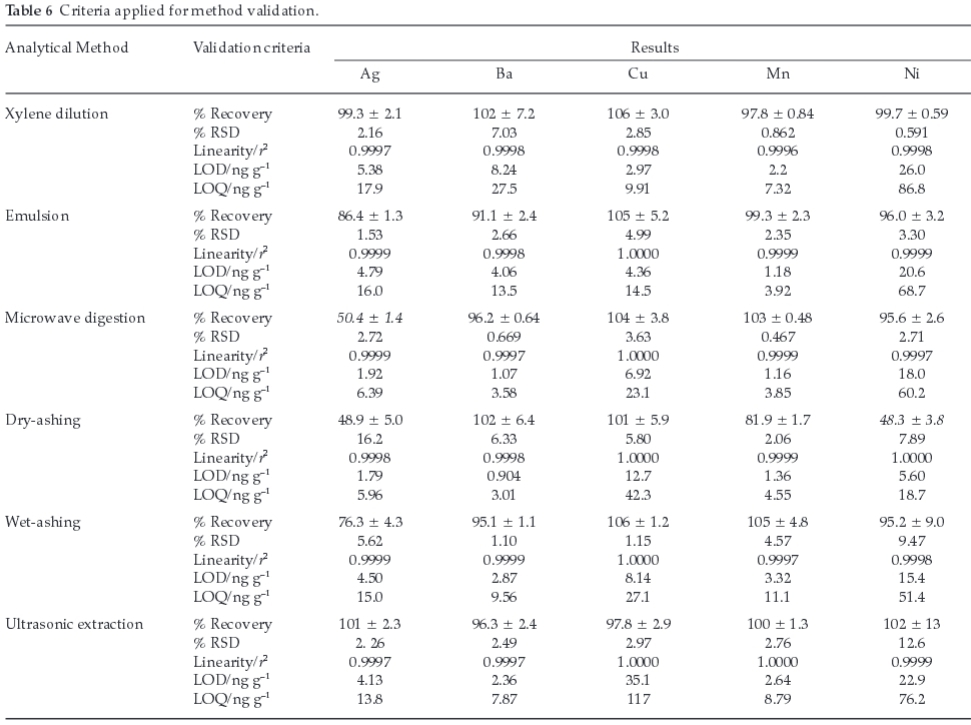
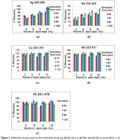
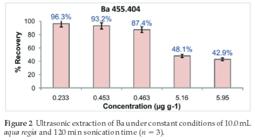
Quantification of trace elements in used lubricating oil forms a vital part in monitoring engine conditions and impact on the environment. In this study, inductively coupled plasma-optical emission spectrometry (ICP-OES) was employed for the determination of Ag, Ba, Cu, Mn and Ni in used lubricating oils. Methodology was developed so as to minimize the oil's carbonaceous matter and its effect on viscosity. Accordingly, six oil sample preparation techniques (xylene dilution, detergent emulsion, microwave digestion, dry-ashing, wet-ashing and ultrasonic extraction) were investigated for their efficiency. Optimization of the factors influencing ultrasonic-assisted extraction and ICP-OES operating parameters enabled quantification of the trace metals in oils. Limits of detection (3Sb/m), in the ng g-1 range, were obtained for each element of interest using each method investigated. The validity of the methodologies studied was confirmed through the analysis of quality control (QC) samples. Analyte recoveries, ranging from 48.3 to 106 %, were obtained. Evaluation of the analytical methods studied with regard to accuracy, precision, LOD, linearity, applicability for routine analysis, preparation time and cost was made. Based on these evaluations, ultrasonic extraction has a clear advantage in terms of accuracy, applicability for routine analysis, time and cost of sample preparation.
Lubricating oil; ICP-OES; optimization
 Thumbnail
 Thumbnail
 Thumbnail