Kinetics and mechanism of the oxidation of Coomassie Brilliant Blue-R dye by hypochlorite and role of acid therein
Abstract
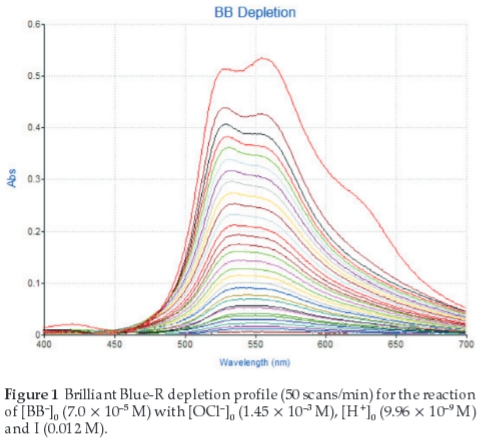
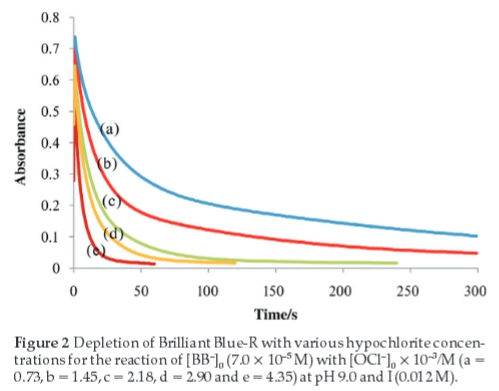
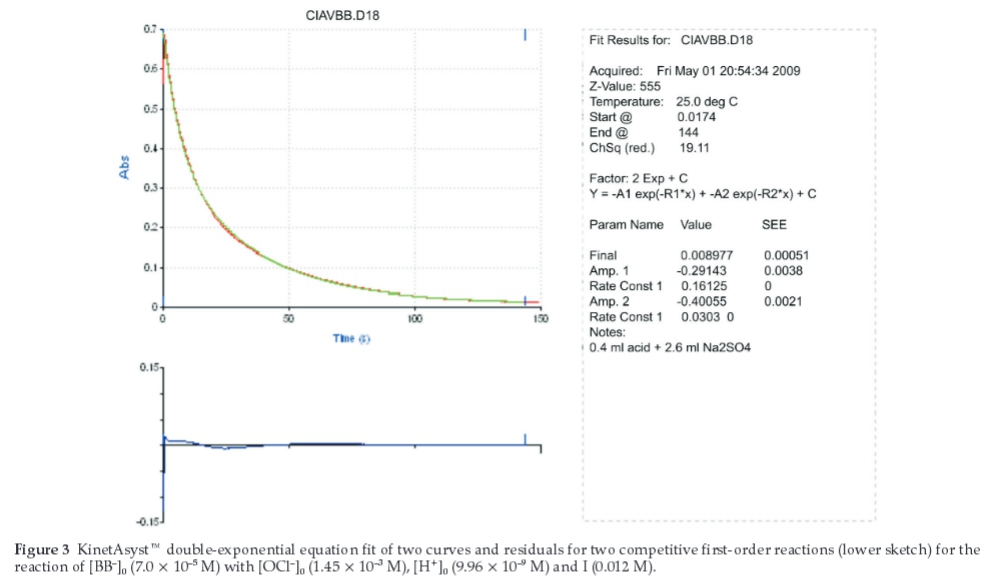
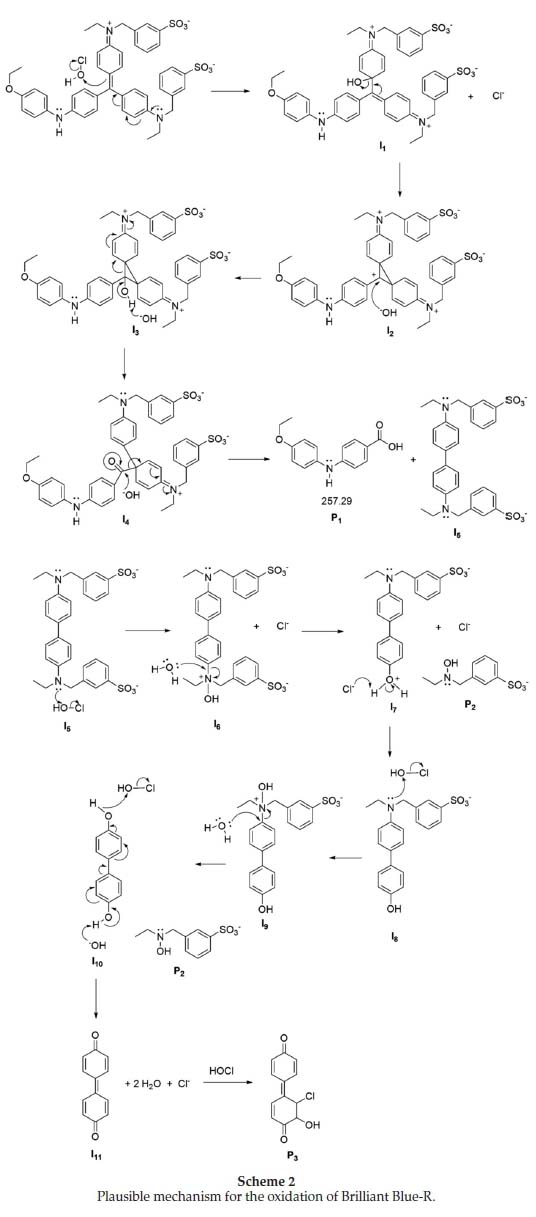
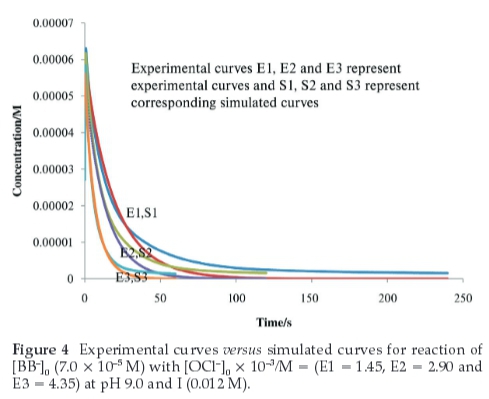
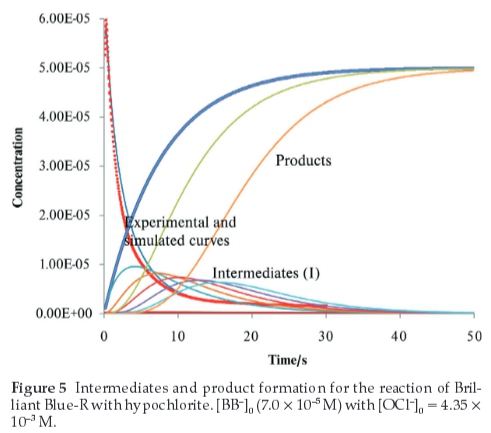
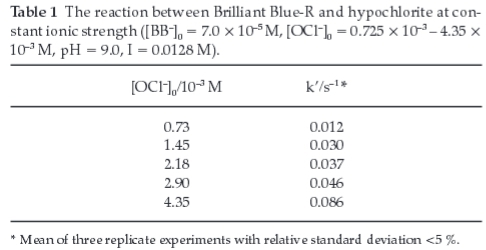
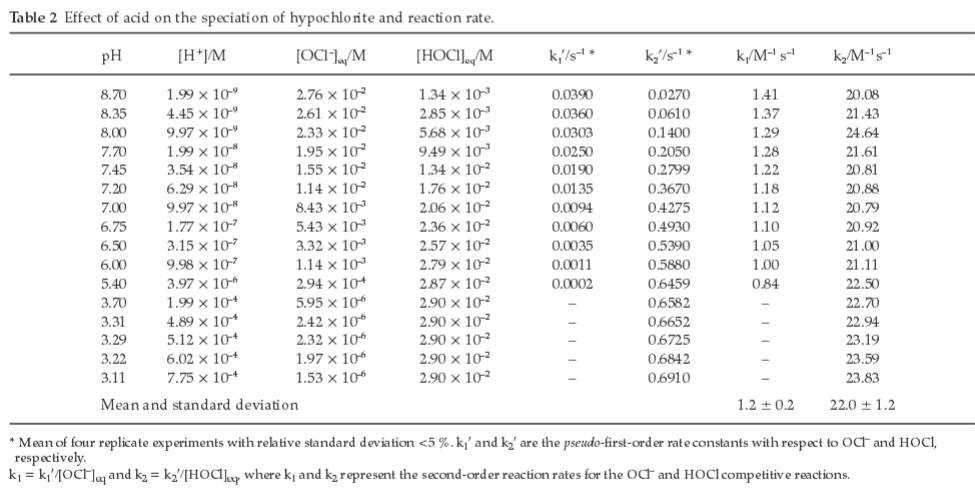
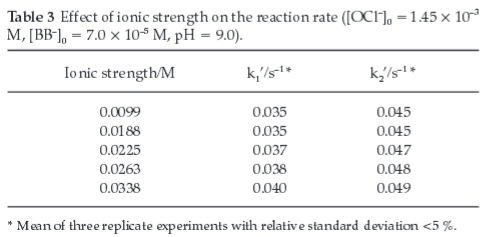
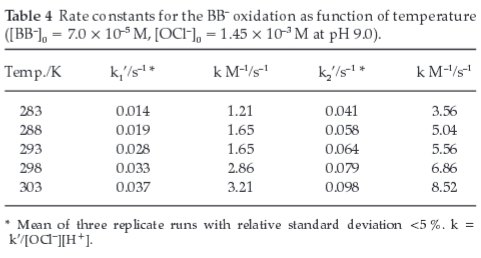
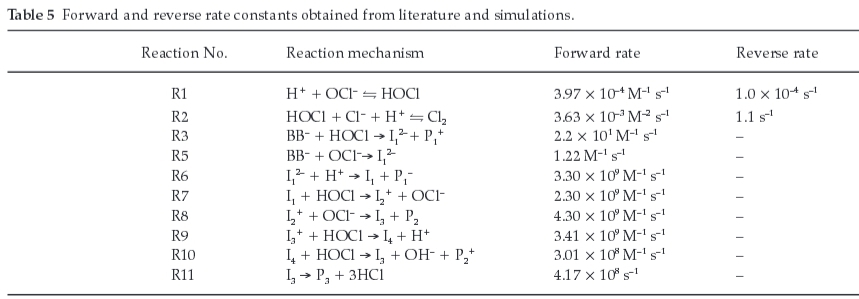
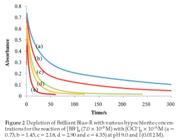
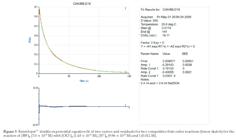
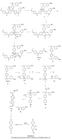
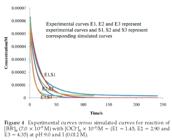
The kinetics of the oxidation of a triphenylmethane dye, Brilliant Blue-R (BB- Na+), in aqueous solutionby hypochlorite as a function of pH was investigated. While the degradation of dye obeyed pseudo-first-order kinetics, the oxidation of the dye occurred through two competitive reactions facilitated by [OCl-] and [HOCl]. Both reactions exhibited first-order dependence on [OCl-] and [HOCl], respectively, but the hypochlorous acid initiated reaction was about ten times faster. The relative importance of the two paths rested on the pH-dependent concentrations of hypochlorite and hypochlorous acid. The overall second-order rate constants for the OCl- and HOCl initiated reactions are 1.2 ± 0.2 M-1 s-1 and 22.2 ±1.2 M-1 s-1, respectively. The reaction energy parameters were determined as Ea = 35.5 kJ mol-1, ∆H‡ = 33.1 kJ mol-1 and ∆S‡ = -191.9 J K-1 mol-1 for the OCl- driven oxidation; and Ea = 26.8 kJ mol-1, ∆H‡ = 29.3 kJ mol-1 and ∆S‡ = -204.6 J K-1 mol-1 for the HOCl facilitated reaction. The governing rate law and probable reaction mechanism were elucidated and validated by simulation. The three main oxidation products were 4-(4-ethoxyphenylamino)benzoic acid, 3-[(ethyl-hydroxyamino)methyl]benzene sulfonic acid and 6'-chloro-5'-hydroxy-bicyclohexylidene-2,5,2'-triene-4,4'-dione.
Brilliant Blue-R; oxidative degradation; hypochlorite; hypochlorous acid; kinetics; simulations
 Thumbnail
 Thumbnail
 Thumbnail
 Thumbnail
 Thumbnail
 Thumbnail