Pollution assessment of antimony in shooting range soils
Abstract
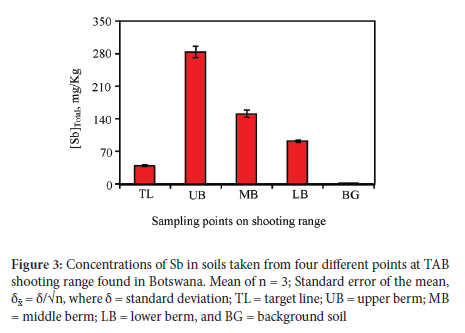
Soil samples collected from the berm at Thebephatshwa (TAB) shooting range found in Botswana showed variable total concentrations of antimony in the range 38±1 to 283±12 mg/kg. Total antimony concentrations found in the soils were higher than the set regulatory levels by the World Health Organization (36 mg/kg) and the United States Protection Agency (31 mg/kg). The upper berm showed elevated levels of antimony (283±12 mg/kg) due, in part, to the highest density of spent projectiles found in this part of the berm. Sequential extraction studies established that antimony was partitioned mostly in the organic and residual fractions of the soil. Environmental pollution risk assessment based on geoaccumulation index (Igeo), contamination factor (CF) and enrichment factor (EF) indicated all four sections of the berm posed high risk to the environment. The upper berm exhibited extreme pollution from antimony (Igeo ~9), very high contamination (CF ~744) and extreme antimony enrichment (EF ~506) compared to the other three sections studied. Elevated levels of antimony at TAB shooting range call for best shooting range management practices, soil remediation and reclamation methods to be carried out at this shooting range to minimize the mobility and bioavailability of antimony.
Botswana; geoaccumulation index; mobility factor; risk assessment code; shooting range
INTRODUCTION
Pollution in shooting range soils has focused mainly on Pb for many years.1-7 This is due in part to the fact that Pb constitutes more than 90% of bullets and shots followed by Sb (7%) and trace amounts of As (<2%) and Ni (<0.5%).8910 11 121314159 3) and the anionic Sb(V) (Sb(OH)6-).1612 1117183)SbO(OH)2), di-methylated dimethylstibonic acid, (CH3)2Sb(O)OH) and tri-methylated (trimethylantimony dichloride, (CH3)3SbCl2) chemical compounds which have been reported in soils contaminated with Sb.1818
In general, the widespread occurrence of Sb has caught the attention of scientists and researchers due to its carcinogenic effect to humans.17 1719 19 2011211414 22 3, in the pH range of 2 to 11, whereas Sb(V) exists predominantly as an oxyanion Sb(OH)6- under the same soil pH conditions.232425 22
Botswana as a developing country needs to be proactive in pollution and waste management at shooting ranges so as to conserve and preserve her precious environment. To the best of our knowledge, no research study has been conducted in the past to establish and assess the extent of Sb pollution at military shooting ranges found in Botswana. Therefore, the objectives of this study include 1) determination of the concentration of Sb in the soils collected from a shooting range in Botswana, 2) assessment of the mobility and leaching of Sb in the soil 3) establishment of the environmental pollution risk posed by deposition of Sb into shooting range soils by applying pollution risk indices. The extent of Sb contamination of shooting range soils will give an idea on the potential management and control measures for Sb pollution of shooting range soils that can help restrict the migration and mobility of Sb in the soil.
EXPERIMENTALDescriptions of the shooting range studied
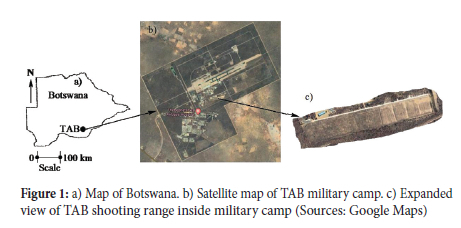
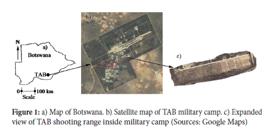
TAB shooting range is located in the southern part of Botswana with GPS coordinates: 24°14'42.79" S, 25°19'55.84" E (Figure 1a). Of particular interest is that TAB shooting range is located in a fenced military camp where military personnel and their families live (Figure 1b). This range has been in operation for more than 20 years and no study has been undertaken previously to ascertain the pollution risk posed by antimony contained ammunition.7
Soil sampling
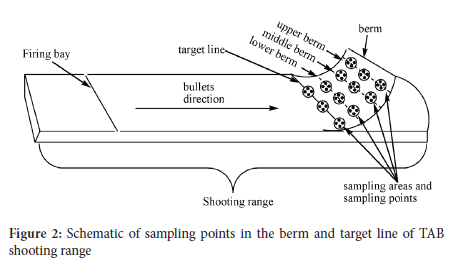
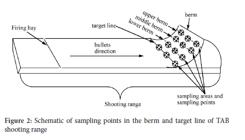
Soil sampling was carried out at the berm and target line areas of the shooting range (Figure 2). Three sampling points with a radius of 150 cm were located at the upper, middle, lower berm and target line. Four soil samples were obtained along central transect within each sampling point using a soil recovery probe to a depth of 20 cm from the earth surface. The four samples were then mixed together to make a composite sample representative of each sampling point. A total of 12 composite samples were obtained. The soil samples were collected into airtight butyrated zip-lock plastic bags and transported to the laboratory for analysis. Background soil samples were collected at a distance of 200 m from the shooting range.
Analysis of total Sb at TAB shooting range soils
Total Sb concentration was determined using inductively coupled plasma optical emission spectrometry (ICP-OES; Perkin Elmer, Optima7300DV). Samples were prepared by acid digestion using USEPA Method 3050. About 0.5 g of soil sample was combined with 25 ml of 1.1 v/v nitric acid in a 50 ml Teflon vial. The content was digested in a dry block digester for 16 hrs. Digested solution was cooled, filtered (Whatman No. 52) and diluted to 50 mL in a volumetric flask. Quality check and assurance was carried out using a certified reference material (CRM) for soil, NCS DC 73320, obtained from the Botswana University of Agriculture and Natural Resource (BUAN). The CRM contained a known concentration of 20 mg/kg of Sb. About 0.1 g of the CRM was taken through the same sample preparation procedure performed on shooting range soils. A percent recovery of 95% was achieved and the precision of measurements was <3% RSD, an indication of good accuracy of the analytical method.
Physical and chemical analysis of soil samples
Soil physicochemical properties such as pH, organic matter (OM) and cation exchange capacity (CEC) were all determined using standard methods. Briefly, pH measurements were carried out by taking 20 g of the homogenized soil sample into 40 ml of deionized water and 0.01 M CaCl2 solution. The resulting soil solution was stirred vigorously and pH measurements were taken using a calibrated crimson basic 20 pH meter after allowing the slurry to settle for 30 minutes. The WalkleyBlack procedure was used to determine the soil organic matter (OM).6 Soil cation exchange capacity was assessed using the USEPA Method 9081.
Fractionation studies and mineralogical studies
The migration and mobility of Sb in TAB shooting range soil was established using fractions obtained after the Tessier sequential extraction procedure.26267
Pollution risk assessment
The environmental pollution risk due to deposition of Sb into TAB shooting range soils was assessed and quantified using pollution risk indices.27geo), contamination factor (CF) and enrichment factor (EF) were used to give a quantitative measure of the ecological risk posed by Sb accumulation at TAB shooting range.
RESULTS AND DISCUSSION
Analysis of total Sb at TAB shooting range soils
Total antimony concentrations in the range of 38.8-283.5 mg/kg were measured at TAB shooting range (Figure 3). The upper portion of the berm area accumulated the highest concentration of Sb (283.5 mg/kg) whilst the target line collected the lowest concentration of Sb (38.8 mg/kg). The middle section of the berm also accumulated high concentration of Sb after the upper berm. The highest total concentration of Sb found on the upper berm could be attributed to the large density of spent bullets and shots found in this part of the berm. This implies that during the firing exercises, bullets pierce through the practice targets and collect in this section of the berm. Previous studies have established that there is direct correlation between elevated concentrations of trace elements in a specific site and the deposition of spent bullets and shots in the soil found in that particular area.28,29
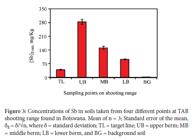
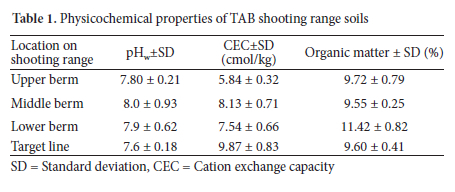
It is important to note that total Sb concentrations measured at TAB shooting range are higher than maximum contaminant limits of 31 mg/kg Sb in soil as set by the United States Environmental Protection Agency (USEPA) and 36 mg/kg as set by the World Health Organization (WHO).30Table 1). The alkaline soils favour the dissolution of Sb minerals.31316-) in the soil solution and the adsorption of this oxyanion by solid sorbents in the soil is normally not favoured at low pH.3233
Fractionation and mobility of Sb
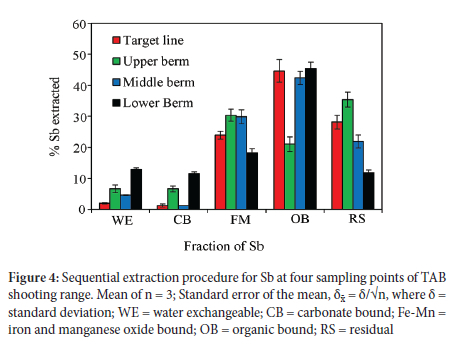
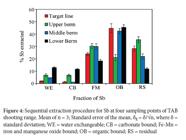
Sb was largely bound to organic matter (up to 45%), Fe-Mn oxides (30%) and residual matter (35%). The upper section of the berm where the highest density of unspent bullets and shots was found contained the highest amount of Sb partitioned in the residual fraction (35.4±2.5%) followed by FM (30.3±2.0) and OB (21.0±2.4). The relatively low concentrations of Sb in the labile WE and CB fractions compared to the other fractions is supported by the soil chemical properties of high pH, CEC and organic matter (Table 1). The high pH provides a suitable environment for the dissolution of Sb minerals such as (Sb(OH)6- anions.17,34 Furthermore, the upper berm and lower berm sections of the berm experienced high concentration of Sb in the WE and CB fractions than the middle and target line sections of the berm (Figure 4). The high concentration of Sb in the WE and CB fractions in the upper berm corroborates the claim that the occurrence of Sb at this section comes mainly from Sb released from the weathering and corrosion of the high density of spent bullets and shots in this area. In a similar study by Van Vleek et al. (2011), highest concentration of Sb was found in the WE whereby the majority of spent projectiles were located.9
The mobility of Sb in shooting range soil was estimated using a method suggested by Kabala and Singh (2001) as shown in equation (1).35

where
FWE = water soluble fraction
FCB = carbonate-bound fraction
FFM = Fe-Mn oxides fraction
FOM = organic-bound fraction
FRS = residual fraction
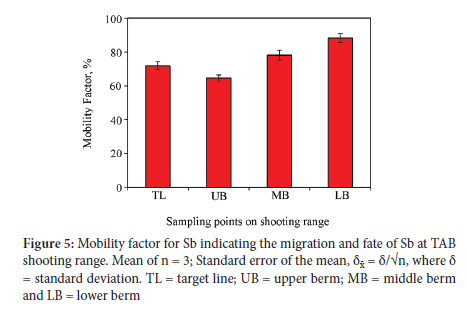
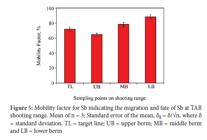
It is important to note that this is an estimate of the mobility of Sb since Sb in the fractions FFM and FOM is relatively less mobile. As a result, this describes the potential mobility of Sb at TAB shooting range soil. The potential mobility of Sb is given in Figure 5 and show that there is high mobility of Sb at TAB shooting range (mobility factor of 60-90%). The high mobility of Sb at TAB can be associated to a large extent with the soil physicochemical properties of high soil pH and high organic matter. As mentioned earlier, the high soil pH accelerate the dissolution of Sb species such as Sb(OH)6-.17
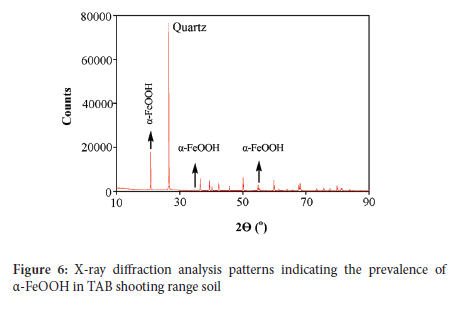
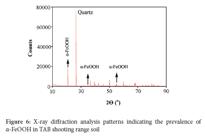
X-ray diffraction studies of the soil at TAB reveal the apparent prevalence of iron oxide minerals, such as goethite (α-FeOOH) which are known to form complexes with Sb (Figure 6).17,24 In a study by Ackermann et al. (2009), amorphous iron oxides such as goethite were found to absorb Sb into their crystalline structure forming inner-sphere complexes.1717179
Pollution risk assessment of Sb accumulation into the soil
Risk assessment code (RAC)
Risk assessment code (RAC) considers the percentage of Sb present in the mobile and labile fractions.363727,38,39 It is given by the ratio of Sb concentration in the exchangeable and labile fractions (bound to carbonates) to the concentration of Sb partitioned in all the five soil fractions.
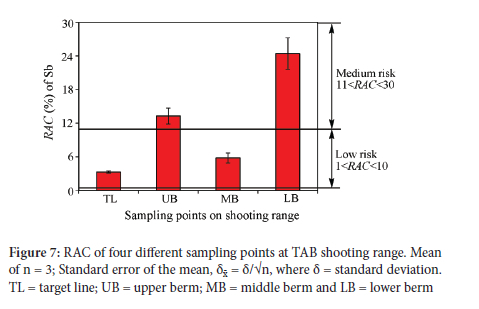
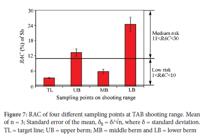
The accumulation of Sb into TAB shooting range soils posed low to medium ecological risk. The lower section and upper sections of the berm displayed pronounced environmental pollution risk (13%< RAC <25%) compared to the middle and target line sections (4%< RAC <6%) as shown in Figure 7. These findings corroborate the results that the upper and lower sections of the berm accumulated the highest total Sb concentrations, due in part to the highest density of spent bullets and shots found in the upper berm. The findings in this study are consistent with those of a similar study carried out in South Korea that indicated high risk from Sb pollution at one shooting range, the We-rye shooting range, with an RAC ~32 and medium risk at Cho-Do shooting range (RAC ~26).38
Geoaccumulation Index (Igeo)
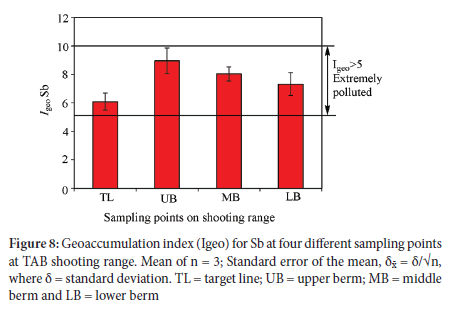
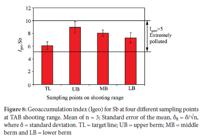
Geoaccumulation index (Igeo) describes the current contamination of soils with inorganic and organic contaminants relative to pre-industrial levels.40,41 Risk assessment of pollution from trace element such as Sb can be classified into seven Igeo grades where Grade 1 indicates Igeo <0 and no pollution from the metalloid, 0< Igeo <1 (Grade 2 and shows unpolluted to moderately polluted soils), 1< Igeo <2 (Grade 3, moderately polluted), 2< Igeo <3 (Grade 4, moderately to heavily polluted), 3< Igeo <4 (Grade 5, polluted soils), 4< Igeo <5 (Grade 6, heavily to extremely polluted) and Igeo >5 (Grade 7, extremely polluted soils). As depicted in Figure 8, TAB shooting range soils exhibited extreme pollution from Sb with Igeo of 6 to 9 (Grade 7). The highest Igeo of 9 was determined for the upper berm soils and these results agreed well with the RAC (Figure 7) and total Sb concentrations results (Figure 3). The high density of spent bullets and shots found in the upper berm section of the berm contributed significantly to the elevated levels of Sb. Corrosion and weathering processes on these spent bullets and shots resulted in the release of Sb. The Igeo results obtained in this study corroborate the findings by Lewinska and Karczewska (2019)42geo values of 7.14-8.36 indicating extreme pollution from Sb.4242
Contamination Factor (CF)
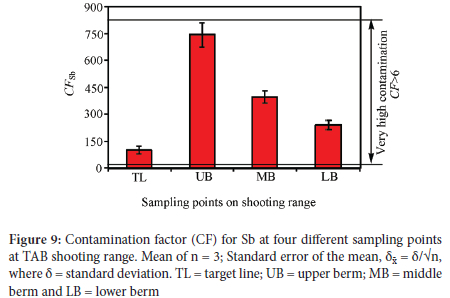
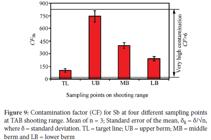
Contamination factor assesses soil contamination through comparison of geochemical background concentrations with contaminant concentrations in studied sites.2743 Figure 9). The very high contamination at the upper berm corroborates the findings that a high density of Pb shots and bullets were found in this section of berm. In addition, all the other three sampled sections of TAB berm indicated very high contamination from Sb with contamination factor of the range 100-400. The favourable physicochemical properties of the soil such as the alkaline pH, high CEC and organic matter provide a suitable environment for weathering and dissolution of Sb minerals. In a similar study in China, very high contamination from Sb was established at a small arms shooting range with CF ~11.6.4430
Enrichment Factor (EF)
The impact of human activities on the environment such as shooting exercises can be assessed using enrichment factor [EF].2727
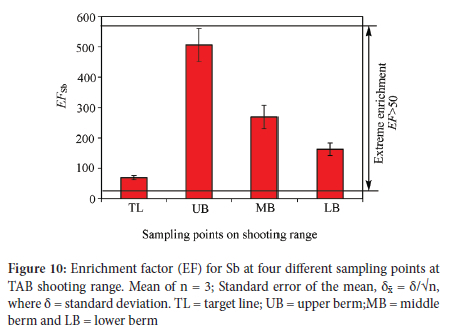
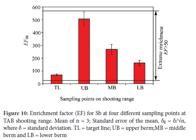
The degree of soil enrichment from a particular metal falls into seven categories. EF<1 represents no enrichment; 1< EF <3 show minor enrichment; 3< EF <5 (moderate enrichment); 5< EF <10 (moderate to severe enrichment); 10< EF <25 (severe enrichment) and EF >50 indicates extreme enrichment.45Figure 10). All the four sections of the berm (TL, UB, MB and LB) showed extreme Sb enrichment. However, the UB section showed the largest EF of 506 compared to other three sections with the TL bearing the lowest EF of 69. These results corroborate the results obtained for RAC, Igeo and CF which indicated high Sb content in the UB. In a similar study, extreme Sb enrichment of up to 98.61 was also determined at a military shooting range and training centre in El Teleno (Leon, Spain) with corresponding Sb total concentration of 96.10 mg/kg.
IMPLICATIONS OF ANTIMONY POLLUTION FOR SHOOTING RANGE BEST MANAGEMENT PRACTICES
Even though amendment Sb polluted soils is beyond the scope of this study, it is however, important to highlight some of the potential soil amendment techniques that are available. The accumulation of Sb into TAB shooting range soils calls for pollution management and control procedures and protocols as suggested in manuals by the World Health Organisation (WHO)3046464749 5051
CONCLUSIONS
This study has shown that pollution risk from Sb at shooting ranges cannot be ignored even though Sb is not a major component of shots and bullets. Being the first to be carried out in Botswana, it provides baseline data on Sb concentration in shooting range soils. It has been shown that different sections of shooting range berm pose distinct degree of environmental pollution risk. It has been shown further that the section where spent bullets and shots are collected such as the upper berm presents the highest pollution risk. Total Sb concentration determined in shooting range soils alone does not give a true picture of the environmental pollution RISk. Total Sb concentration in TAB shooting range berm soils was found to be 3-7 times higher than the set maximum contaminant limit (MCL) by the World Health Organization (WHO). However, this only gives information about the amount of Sb stored in shooting range soils but does not provide a quantitative measure of the degree of hazard posed by such large amounts of Sb deposited into the soil. As such environmental pollution risk assessment indices such as risk assessment code (RAC), geoaccumulation index (Igeo), contamination factor (CF) and Enrichment factor (EF) play a pivotal role in giving a quantitative measure of the pollution risk from exposure to Sb. Pollution risk assessment indices indicate a high environmental pollution risk at all sections of the berm at TAB shooting range with the upper berm posing the highest risk relative to other two sections: the middle berm and lower berm. The high environmental pollution risk posed by Sb deposition into TAB shooting range soils calls for expedited soil amendment and reclamation strategies. Soil remediation techniques that have been applied to polluted shooting range soils include such techniques as chemical amendments using phosphate and liming for immobilization of Sb to reduce its mobility and leaching into the soil. Other cost effective methods that are also environmentally friendly include phytoremediation. These methods have been found to be suitable because they do not involve removal of the soil which leads to loss of microorganism habitat.
ORCID IDs
Pogisego Dinake - https://orcid.org/0000-0003-2456-2043
Rosemary Kelebemang - https://orcid.org/0000-0002-5015-4951
Tsotlhe Trinity Kereeditse - https://orcid.org/0000-0002-0532-1431
ACKNOWLEDGMENTS
The authors would like to thank Botswana Defence Force (BDF) for availing their shooting ranges to be used in this study. This research work was wholly financially supported by the Botswana International University of Science and Technology (BIUST), Research Initiation Grant Number BIUST/ds/R&I/26/2016.
REFERENCES
-
1. Van Bon J, Boersema JJ. Sources, effects and management of metallic lead pollution: the contribution of hunting, shooting and angling. Contam. Soil. 1988;3:269-271. https://doi.org/10.1007/978-94-009-2807-7_47.
» https://doi.org/10.1007/978-94-009-2807-7_47 -
2. Camobreco VJ, Richards BK, Steenhuis TS, Peverly JH, McBride MB. Movement of heavy metals through undisturbed and homogenized soil columns. Soil Sci. 1996;161(11):740-750. https://doi.org/10.1097/00010694-199611000-00003.
» https://doi.org/10.1097/00010694-199611000-00003 -
3. Bruell R, Nikolaidis NP, Long RP. Evaluation of remedial alternatives of lead from shooting range soil. Environ Eng Sci. 1999;16(5):403-414. https://doi.org/10.1089/ees.1999.16.403.
» https://doi.org/10.1089/ees.1999.16.403 -
4. Astrup T, Boddum JK, Christensen TH. Lead distribution and mobility in a soilembankment used as a bullet stop at a shooting range. J. Soil Contarn. 1999;8(6):653-665. https://doi.org/10.1080/10588339991339522.
» https://doi.org/10.1080/10588339991339522 -
5. Hui CA. Lead distribution throughout soil, flora and an invertebrate at a wetland skeet range. J Toxicol Environ Health A. 2002;65(15):1093-1107. https://doi.org/10.1080/152873902760125246.
» https://doi.org/10.1080/152873902760125246 -
6. Cao X, Ma LQ, Chen M, Hardison DW Jr, Harris WG. Weathering of lead bullets and their environmental effects at outdoor shooting ranges. J Environ Qual. 2003;32(2):526-534. https://doi.org/10.2134/jeq2003.5260.
» https://doi.org/10.2134/jeq2003.5260 -
7. Sehube N, Kelebemang R, Totolo O, Laetsang M, Kamwi O, Dinake P. Lead pollution of shooting range soils. S Afr J Chem. 2017;70:21-28. https://doi.org/10.17159/0379-4350/2017/v70a4.
» https://doi.org/10.17159/0379-4350/2017/v70a4 -
8. Rooney CP, Mclaren RG, Cresswell RJ. Distribution and phytoavailability of lead in a soil contaminated with lead shot. Water Air Soil Pollut. 1999;116(3/4):535-548. https://doi.org/10.1023/A:1005181303843.
» https://doi.org/10.1023/A:1005181303843 -
9. Van Vleek B, Amarasiriwardena D, Xing B. Investigation of distribution of soil antimony using sequential extraction and antimony complexed to soil-derived humic acids molar mass fractions extracted from various depths in a shooting range soil. Microchem J. 2011;97(1):68-73. https://doi.org/10.1016/j.microc.2010.05.015.
» https://doi.org/10.1016/j.microc.2010.05.015 -
10. Herath I, Vithanage M, Bundschuh J. Antimony as a global dilemma: Geochemistry, mobility, fate and transport. Environ Pollut. 2017;223:545-559. https://doi.org/10.1016/j.envpol.2017.01.057.
» https://doi.org/10.1016/j.envpol.2017.01.057 -
11. Evangelou MWH, Hockmann K, Pokharel R, Jakob A, Schulin R. Accumulation of Sb, Pb, Cu, Zn and Cd by various plants species on two different relocated military shooting range soils. J Environ Manage. 2012;108:102-107. https://doi.org/10.1016/j.jenvman.2012.04.044.
» https://doi.org/10.1016/j.jenvman.2012.04.044 -
12. Johnson CA, Moench H, Wersin P, Kugler P, Wenger C. Solubility of antimony and other elements in samples taken from shooting ranges. J Environ Qual. 2005;34(1):248-254. https://doi.org/10.2134/jeq2005.0248.
» https://doi.org/10.2134/jeq2005.0248 -
13. Hockmann K, Tandy S, Studer B, Evangelou MWH, Schulin R. Plant uptake and availability of antimony, lead, copper and zinc in oxic and reduced shooting range soil. Environ Pollut. 2018;238:255-262. https://doi.org/10.1016/j.envpol.2018.03.014.
» https://doi.org/10.1016/j.envpol.2018.03.014 -
14. Okkenhaug G, Amstätter K, Lassen Bue H, Cornelissen G, Breedveld GD, Henriksen T, Mulder J. Antimony (Sb) contaminated shooting range soil: sb mobility and immobilization by soil amendments. Environ Sci Technol. 2013;47(12):6431-6439. https://doi.org/10.1021/es302448k.
» https://doi.org/10.1021/es302448k - 15. United States Environmental Protection Agency. Water related fate of the 129 Priority pollutants. Washington, DC, USA: USEPA; 1979.
-
16. Okkenhaug G, Grasshorn Gebhardt K-A, Amstaetter K, Lassen Bue H, Herzel H, Mariussen E, Rossebe Almas Ä, Cornelissen G, Breedveld GD, Rasmussen G, et al._Antimony (Sb) and lead (Pb) in contaminated shooting range soils: sb and Pb mobility and immobilization by iron based sorbents, a field study. J Hazard Mater. 2016;307:336-343. https://doi.org/10.1016/j.jhazmat.2016.01.005.
» https://doi.org/10.1016/j.jhazmat.2016.01.005 -
17. Ackermann S, Giere R, Newville M, Majzlan J. J, Antimony sinks in the weathering crust of bullets from Swiss shooting ranges. Sci Total Environ. 2009;407(5):1669-1682. https://doi.org/10.1016/j.scitotenv.2008.10.059.
» https://doi.org/10.1016/j.scitotenv.2008.10.059 -
18. Wilson SC, Lockwood PV, Ashley PM, Tighe M. The chemistry and behaviour of antimony in the soil environment with comparisons to arsenic: a critical review. Environ Pollut. 2010;158(5):1169-1181. https://doi.org/10.1016/j.envpol.2009.10.045.
» https://doi.org/10.1016/j.envpol.2009.10.045 -
19. Tylenda CA, Sullivan DW Jr, Bruce A. Fowler, Handbook on the toxicology of metals. Vol. II. 4th ed. Academic Press; 2015. p. 565-579. https://doi.org/10.1016/B978-0-444-59453-2.00027-5.
» https://doi.org/10.1016/B978-0-444-59453-2.00027-5 - 20. World Health Organisation. Antimony in drinking-water. Background document for development of WHO guidelines for drinking-water quality. Geneva, Switzerland: World Health Organization; 2003.
-
21. Robinson BH, Bischofberger S, Stoll A, Schroer D, Furrer G, Roulier S, Gruenwald A, Attinger W, Schulin R. Plant uptake of trace elements on a swiss military shooting range: uptake pathways and land management implications. Environ Pollut. 2008;153(3):668-676. https://doi.org/10.1016/j.envpol.2007.08.034.
» https://doi.org/10.1016/j.envpol.2007.08.034 -
22. Filella M, Belzile N, Chen Y-W. Antimony in the environment: a review focused on natural waters: I. Occurrence. Earth Sci Rev. 2002;57(1-2):125-176. https://doi.org/10.1016/S0012-8252(01)00070-8.
» https://doi.org/10.1016/S0012-8252(01)00070-8 -
23. Buschmann J, Sigg L. Antimony (III) binding to humic substances: influence of pH and type of humic acid. Environ Sci Technol. 2004;38(17):4535-4541. https://doi.org/10.1021/es049901o.
» https://doi.org/10.1021/es049901o -
24 MartinWA, Lee LS, SchwabP . Antimony migration trends from a small arms firing range compared to lead, copper, and zinc. Sci. Total Environ. 2013;463-464, 222-228. https://doi.org/10.1016/j.scitotenv.2013.05.086.
» https://doi.org/10.1016/j.scitotenv.2013.05.086 -
25. Hockmann K, Lenz M, Tandy S, Nachtegaal M, Janousch M, Schulin R. Release of antimony from contaminated soil induced by redox changes. J Hazard Mater. 2014;275:215-221. https://doi.org/10.1016/j.jhazmat.2014.04.065.
» https://doi.org/10.1016/j.jhazmat.2014.04.065 -
26. Tessier A, Campbell PGC, Bisson M. Sequential extraction procedure for the speciation of particulate trace metals. Anal Chem. 1979;52(7):844-851. https://doi.org/10.1021/ac50043a017.
» https://doi.org/10.1021/ac50043a017 -
27. Dinake P, Kelebemang R, Sehube N, Kamwi O, Laetsang M. Quantitative assessment of environmental risk from lead pollution of shooting range soils. Chem Spec Bioavail. 2018;30(1):76-85. https://doi.org/10.1080/09542299.2018.1507689.
» https://doi.org/10.1080/09542299.2018.1507689 -
28. Kelebemang R, Dinake P, Sehube N, Daniel B, Totolo O, Laetsang M. Speciation and mobility of lead in shooting range soils. Chem Spec Bioavail. 2017;29(1):143-152. https://doi.org/10.1080/09542299.2017.1349552.
» https://doi.org/10.1080/09542299.2017.1349552 -
29. Mellor A, McCartney C. The effects of lead shot deposition on soils and crops at a clay pigeon shooting site in northern England. Soil Use Manage. 1994;10(3):124-129. https://doi.org/10.1111/j.1475-2743.1994.tb00472.x.
» https://doi.org/10.1111/j.1475-2743.1994.tb00472.x - 30. Chang AC, Pan GX, Page AL, Asano T. Developing human health-related chemical guidelines for reclaimed water and sewage sludge applications in agriculture. Division of Environmental Health, World Health Organization,94. 2002.
-
31. Conesa HM, Wieser M, Gasser M, Hockmann K, Evangelou MWH, Studer B, Schulin R. Effects of three amendments on extractability and fractionation of Pb, Cu, Ni and Sb in two shooting range soils. J Hazard Mater. 2010;181(1-3):845-850. https://doi.org/10.1016/j.jhazmat.2010.05.090.
» https://doi.org/10.1016/j.jhazmat.2010.05.090 -
32. Krupka KM, Serne RJ. Geochemical factors affecting the behavior of antimony, cobalt, europium, technetium and uranium in Vadose Sediments. United States: Pacific Northwest National Laboratory; 2002. https://doi.org/10.2172/15004491.
» https://doi.org/10.2172/15004491 -
33. Mariussen E, Johnsen IV, Stromseng AE. Distribution and mobility of lead (Pb), copper (Cu), zinc (Zn), and antimony (Sb) from ammunition residues on shooting ranges for small arms located on mires. Environ Sci Pollut Res Int. 2017;24(11):10182-10196. https://doi.org/10.1007/s11356-017-8647-8.
» https://doi.org/10.1007/s11356-017-8647-8 -
34. Li L, Xu ZR, Zhang C, Bao J, Dai X. Quantitative evaluation of heavy metals in solid residues from sub- and super-critical water gasification of sewage sludge. Bioresour Technol. 2012;121:169-175. https://doi.org/10.1016/j.biortech.2012.06.084.
» https://doi.org/10.1016/j.biortech.2012.06.084 -
35. Kabala C, Singh BR. Fractionation and mobility of copper, lead and zinc in soil profiles in the vicinity of a copper smelter. J Environ Qual. 2001;30(2):485-492. https://doi.org/10.2134/jeq2001.302485x.
» https://doi.org/10.2134/jeq2001.302485x -
36. Latosinska J, Kowalik R, Gawdzik J. Risk assessment of soil contamination with heavy metals from municipal sewage sludge. Appl Sci (Basel). 2021;11(2):548-560. https://doi.org/10.3390/app11020548.
» https://doi.org/10.3390/app11020548 - 37. Perin G, Craboledda L, Lucchese M, Cirillo R, Dotta L, Zanette ML, Orio AA. Heavy metal speciation in the sediments of Northern Adriatic Sea-a new approach for environmental toxicity determination. In: Lakkas TD, editor. Heavy Metal in the Environment 2. Edinburgh: CEP Consultants; 1985. p. 454-456.
-
38. Islam MN, Nguyen XP, Jung HY, Park JH. Chemical speciation and quantitative evaluation of heavy metal pollution hazards in two army shooting range backstop soils. Bull Environ Contam Toxicol. 2016;96(2):179-185. https://doi.org/10.1007/s00128-015-1689-z.
» https://doi.org/10.1007/s00128-015-1689-z -
39. Islam MN, Park JH. Immobilization and reduction of bioavailability of lead in shooting range soil through hydrothermal treatment. J Environ Manage. 2017;191:172-178. https://doi.org/10.1016/j.jenvman.2017.01.017.
» https://doi.org/10.1016/j.jenvman.2017.01.017 - 40. Muller G. Index of geoaccumulation in sediments of the Rhine River. GeoJournal. 1969;2:109-118.
-
41. Rodríguez-Seijo A, Lago-Vila M, Andrade ML, Vega FA. Pb pollution in soils from a trap shooting range and the phytoremediation ability of Agrostis capillaris L. Environ Sci Pollut Res Int. 2016;23(2):1312-1323. https://doi.org/10.1007/s11356-015-5340-7.
» https://doi.org/10.1007/s11356-015-5340-7 -
42. Lewinska K, Karczewska A. Antimony in soils of SW Poland-an overview of potentially enriched sites. Environ Monit Assess. 2019;191(2):70. https://doi.org/10.1007/s10661-019-7214-9.
» https://doi.org/10.1007/s10661-019-7214-9 -
43. Hakanson L. An ecological risk index for aquatic pollution control. A sedimentological approach. Water Res. 1980;14(8):975-1001. https://doi.org/10.1016/0043-1354(80)90143-8.
» https://doi.org/10.1016/0043-1354(80)90143-8 -
44. Bai J, Zhao X. Ecological and human health risks of heavy metals in shooting range soils: A meta assessment from China. Toxics. 2020;8(2):32-43. https://doi.org/10.3390/toxics8020032.
» https://doi.org/10.3390/toxics8020032 - 45. Mmolawa KB, Likuku AS, Gaboutloeloe GK. Assessment of heavy metal pollution in soils along major roadside areas in Botswana. Afr J Environ Sci Technol. 2011;5:186-196.
- 46. United States Environmental Protection Agency (USEPA). Division of Enforcement and Compliance Assistance; 2005. Best management practices for lead at outdoor shooting ranges. New York (NY): USEPA. 2005; EPA- 902-B01-001.
-
47. Dinake P, Kelebemang R, Sehube N. A comprehensive approach to speciation of lead and its contamination of firing range soils: A review. Soil Sediment Contam. 2019;28(4):431-459. https://doi.org/10.1080/15320383.2019.1597831.
» https://doi.org/10.1080/15320383.2019.1597831 -
48. Spuller C, Weigand H, Marb C. Trace metal stabilisation in a shooting range soil: mobility and phytotoxicity. J Hazard Mater. 2007;141(2):378-387. https://doi.org/10.1016/j.jhazmat.2006.05.082.
» https://doi.org/10.1016/j.jhazmat.2006.05.082 -
49 Ogawa S, Katoh M, Sato T. Simultaneous lead and antimony immobilization in shooting range soil by a combined application of hydroxyapatite and ferrihydrite. Environ Technol. 2015;36(20):2647-2656. https://doi.org/10.1080/09593330.2015.1042071.
» https://doi.org/10.1080/09593330.2015.1042071 -
50. Okkenhaug G, Smebye AB, Pabst T, Amundsen CE, Saevarsson H, Breedveld GD. Shooting range contamination: mobility and transport of lead (Pb), copper (Cu) and antimony (Sb) in contaminated peatland. J Soils Sediments. 2018;18(11):3310-3323. https://doi.org/10.1007/s11368-017-1739-8.
» https://doi.org/10.1007/s11368-017-1739-8 -
51. Tariq SR, Ashraf A. Comparative evaluation of phytoremediation of metal contaminated soil of firing range by four different plant species. Arab J Chem. 2016;9(6):806-814. https://doi.org/10.1016/j.arabjc.2013.09.024
» https://doi.org/10.1016/j.arabjc.2013.09.024
Revised 03 February 2022
Accepted 03 February 2022