C-H activation: a Critical Evaluation of a Published Method and its Application Towards Inherently Chiral Calix[4]arenes
Abstract
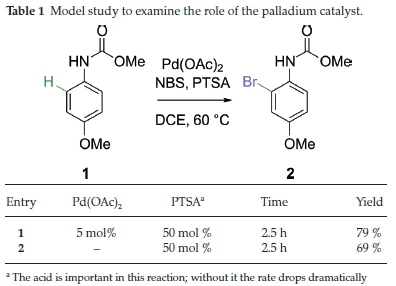
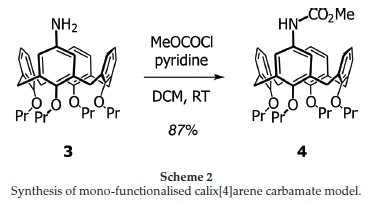
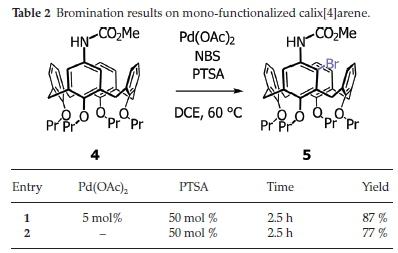
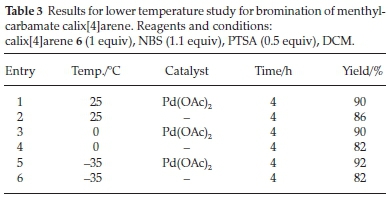
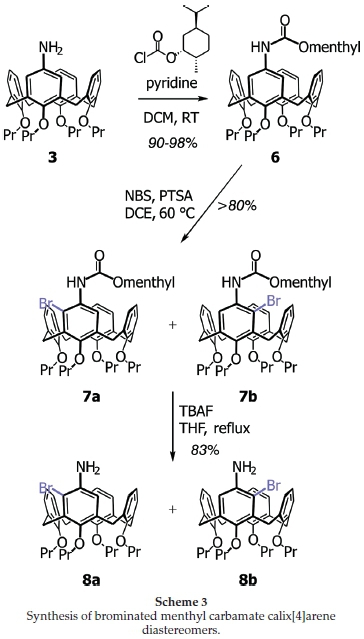
C-H activation offers an intriguing access into inherently chiral calix[4]arenes, but has been little explored in the literature. In this article, we report our investigation into a published C-H activation method that uses carbamates to direct a palladium catalyzed C-H activation and subsequent reaction with N-bromosuccinimide. However, we show that this report is unfortunately flawed on a number of points. An earlier reported study revealed the more likely SEAr mechanism of the bromination reaction, which did not involve palladium catalysis. We nevertheless employed the SEAr bromination in an attempt to form inherently chiral calix[4]arenes, using a chiral (+)-menthyl carbamate as a directing group. Unfortunately, although the reaction was high yielding, the diastereomers formed were inseparable and we were unable to quantify their ratio. Subsequent removal of the chiral (+)-menthyl carbamate, returned a small positive optical rotation, suggesting that at least a level of asymmetric induction was achieved in the bromination to afford a non-racemic product.
C-H activation; calix[4]arene; inherent chirality; bromination; diastereoselectivity
 Thumbnail
 Thumbnail
 Thumbnail