Co-encapsulation of Rifampicin and Isoniazid in Crude Soybean Lecithin Liposomes
Abstract
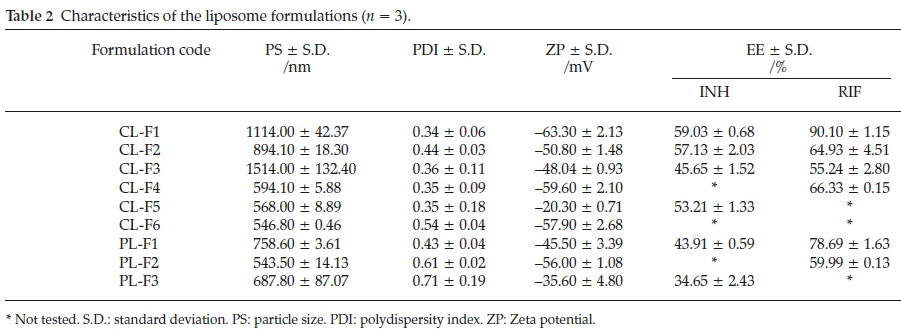
Despite the well-known anti-mycobacterial actions of isoniazid (INH) and rifampicin (RIF), the clinical success of tuberculosis (TB) therapy requires prolonged administration of multiple drugs in high doses, which often result in frequent adverse effects and low patient adherence. Although liposomes are promising candidates for controlled delivery of anti-TB drug, the high cost of synthetic and highly purified natural lipids currently used in liposomal technology might preclude the universal application of therapeutic liposomes. This work aimed at evaluating the potential of a cost-effective lipid material, crude soybean lecithin (CL), to co-encapsulate RIF and INH for liposomal dual delivery. RIF was encapsulated in CL-liposomes with/without cholesterol using film hydration method, after which INH was incorporated using a freeze-thawing technique. Dynamic light scattering, differential scanning calorimetry, X-ray diffraction and dialysis were used for liposome characterization. Liposomes containing CL alone (CLL) exhibited 90 % encapsulation efficiency for RIF and 59 % for INH. The mean size and surface charge of CLL were 1114 nm and -63 mV respectively. In addition, CLL showed a controlled release profile for the co-encapsulated drugs. CLL would be promising vehicles for macrophage-targeting drug delivery. The present findings demonstrate the feasibility of using CL for preparation of combination products for liposomal delivery.
Tuberculosis; isoniazid; rifampicin; drug delivery; liposomes; soybean lecithin
 Thumbnail
 Thumbnail
 Thumbnail