Structural Transformations of Northcom Transvaal and Libby Montana Vermiculite Clay Produced by Firing: Mossbauer Study
Abstract
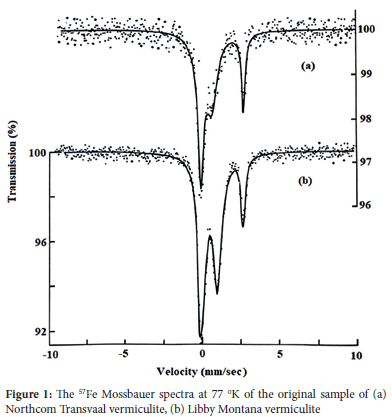
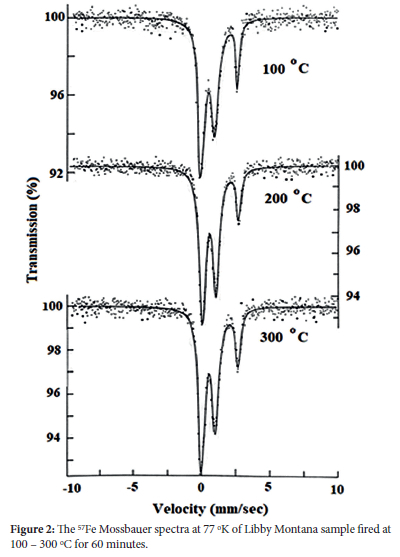
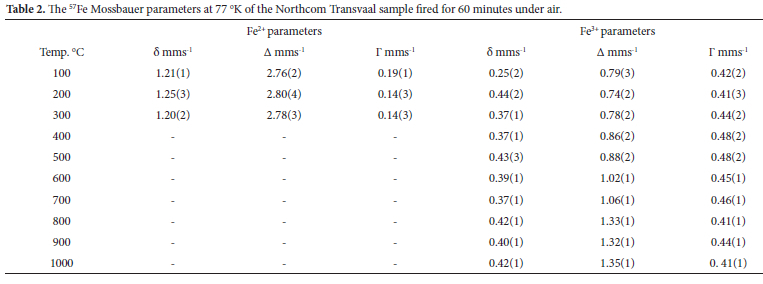
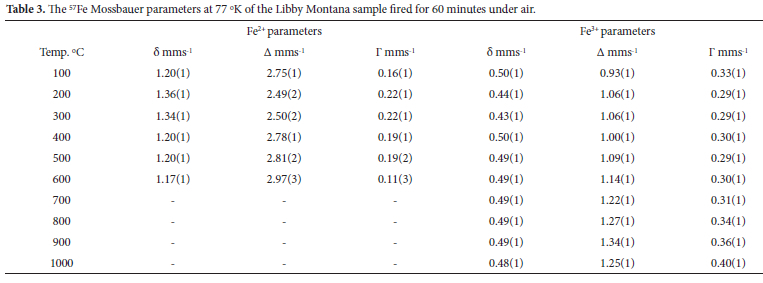
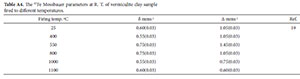
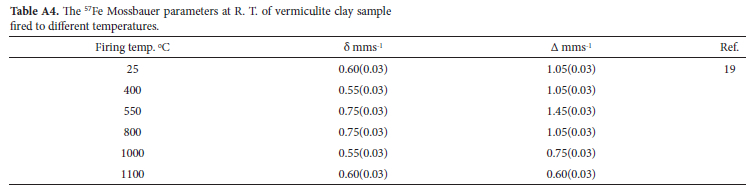
Two samples of vermiculite clay, which are known by the names Libby Montana and Northcom Transvaal, were subjected to a firing treatment from 100 to 1000 °C. The structural transformation was monitored by observing the changes that occur in the structural iron and the change in the Mossbauer data. 57Fe Mossbauer spectra indicate the presence of both Fe2+ and Fe3+ sites, and the main feature of the Mossbauer parameters of the two fired samples is that when the firing temperature is increased, the quadrupole splitting of the Fe3+ and to some extent Fe2+ doublet increases, indicating a distorted structure. There is no apparent correlation between the firing temperature and the isomer shift in both samples. The linewidth has also increased, indicating that more than one site is occupied. The complete oxidation of Fe2+ in the Northcom Transvaal sample occurred at 300 oC, while for the Libby Montana sample occurred at 600 oC.
Vermiculite; Libby Montana; Northcom Transvaal; Mossbauer; Firing
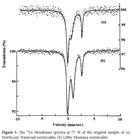 Thumbnail
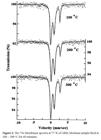 Thumbnail