Do firms' pension contributions decrease their investment efficiency in Chinese context?
Abstract
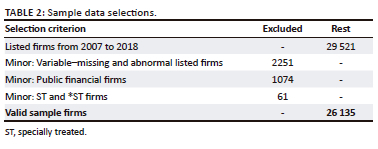
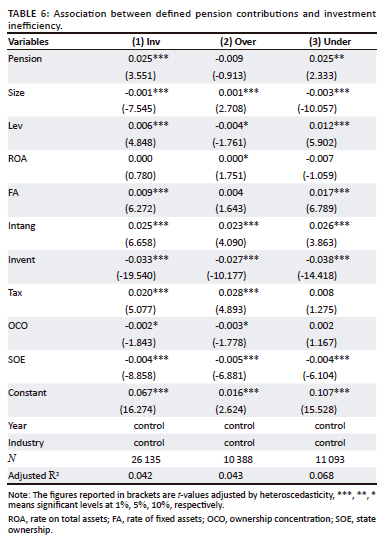
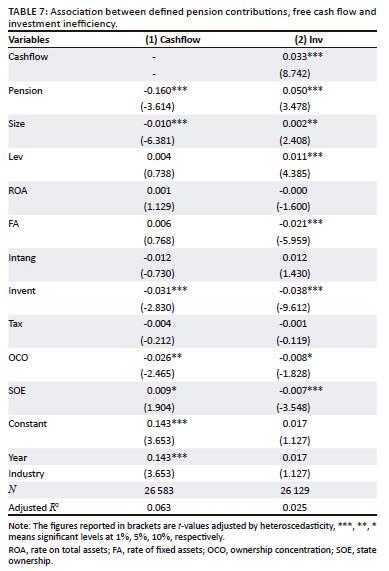
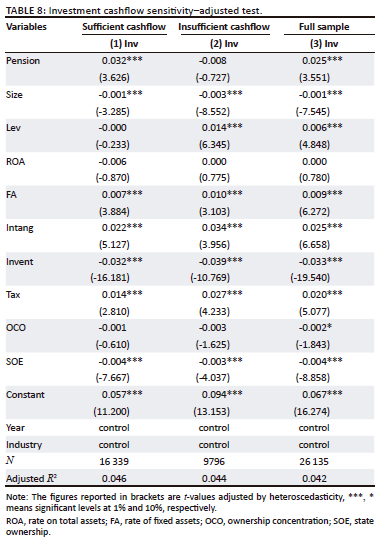
PURPOSE: This research aims to investigate whether increasing the pension contributions of a firm leads to inefficient investments DESIGN/METHODOLOGY/APPROACH: Based on the 26 135 observations of the Chinese listed firms, this study employs ordinary least squares models to investigate the relationship between pension costs and inefficient investments FINDINGS/RESULTS: This study shows that Chinese listed firms' pension contribution increments result in fewer investment opportunities and a decreased in investment efficiency. This is insignificant for the more profitable firms and state-owned enterprises. It suggests further that a firm's pension cost is significantly associated with its investment inefficiency, particularly for cash flow dominated and financing-restricted firms. This indicates a negative association between pension contributions and cash flows, and several pension contributions may lead to a cash flow shortage in the firms PRACTICAL IMPLICATIONS: For managers, they should improve their investment efficiency within an affordable pension plan; for investors, increasing pension costs potentially decrease their investment returns ORIGINALITY/VALUE: Some findings have reference values for some developing countries
pension contributions; Chinese pension policies; investment efficiency; Chinese listed firms; inefficient investment