Practical guidance in understanding the nuance of benefit sharing and what this means for South African health research ethics committees: Part 2
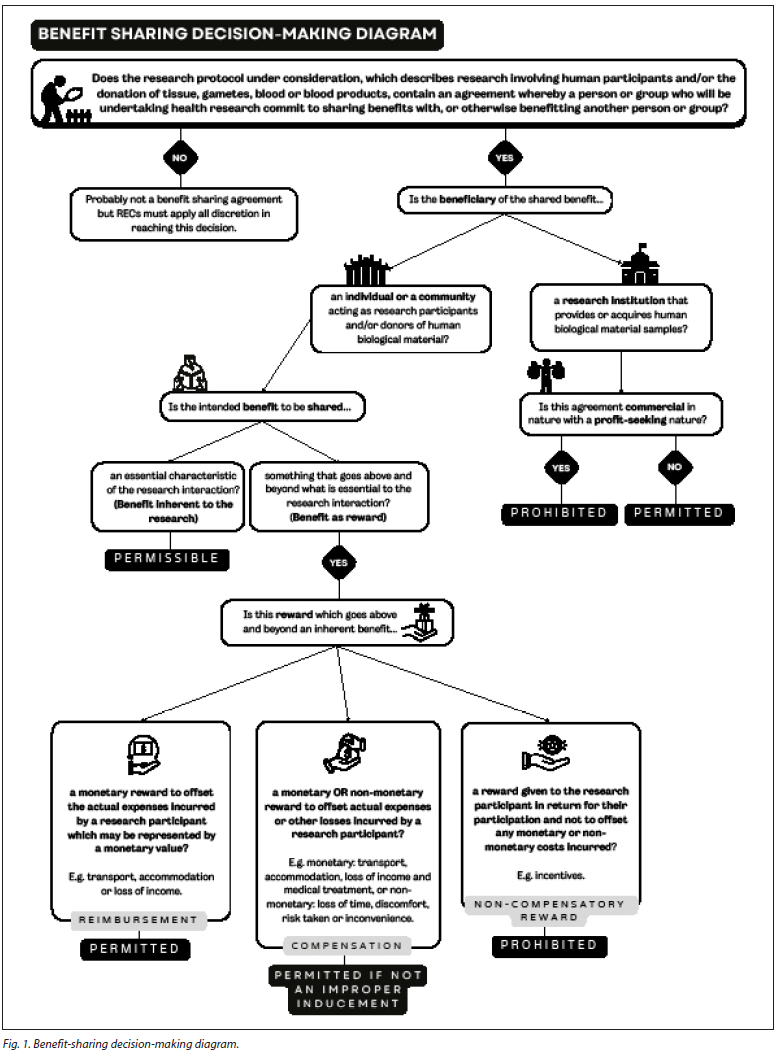
This article examines benefit sharing within health research, a subject of growing importance in South African regulatory and ethical frameworks. With reference to the National Health Act (NHA), this article builds on previous discussions about defining key terms in benefit sharing and offers health research ethics committees (RECs) in South Africa guidance in evaluating benefit-sharing provisions. It navigates three critical legislative frameworks - the Intellectual Property Rights from Publicly Financed Research and Development Act (IPRA), the Indigenous Knowledge Act (IKA) and the National Environmental Management: Biodiversity Act (NEMBA) - interpreting each for REC evaluation of research protocols involving publicly funded research, indigenous knowledge and non-human biological materials. The article also addresses the implications of section 60(4) of the NHA on benefit sharing for human participant research, dissecting questions around permissible forms of benefits to participants and research institutions. Through a decision-making diagram and two hypothetical scenarios, this article provides practical tools to help RECs assess and regulate benefit sharing in line with ethical and legal standards, ultimately promoting fair research practices.
Benefit sharing; legal position; nuanced understanding; practical guidance; research ethics committees; South Africa
 Thumbnail