Practical guidance in understanding the nuance of benefit sharing and what this means for South African health research ethics committees: Part 2
This article examines benefit sharing within health research, a subject of growing importance in South African regulatory and ethical frameworks. With reference to the National Health Act (NHA), this article builds on previous discussions about defining key terms in benefit sharing and offers health research ethics committees (RECs) in South Africa guidance in evaluating benefit-sharing provisions. It navigates three critical legislative frameworks - the Intellectual Property Rights from Publicly Financed Research and Development Act (IPRA), the Indigenous Knowledge Act (IKA) and the National Environmental Management: Biodiversity Act (NEMBA) - interpreting each for REC evaluation of research protocols involving publicly funded research, indigenous knowledge and non-human biological materials. The article also addresses the implications of section 60(4) of the NHA on benefit sharing for human participant research, dissecting questions around permissible forms of benefits to participants and research institutions. Through a decision-making diagram and two hypothetical scenarios, this article provides practical tools to help RECs assess and regulate benefit sharing in line with ethical and legal standards, ultimately promoting fair research practices.
Benefit sharing; legal position; nuanced understanding; practical guidance; research ethics committees; South Africa
Practical guidance in understanding the nuance of benefit sharing and what this means for South African health research ethics committees: Part 2
L Prinsen
LLB, LLM, LLD; Department of Public Law, Faculty of Law, University of the Free State, Bloemfontein, South Africa
ABSTRACTThis article examines benefit sharing within health research, a subject of growing importance in South African regulatory and ethical frameworks. With reference to the National Health Act (NHA), this article builds on previous discussions about defining key terms in benefit sharing and offers health research ethics committees (RECs) in South Africa guidance in evaluating benefit-sharing provisions. It navigates three critical legislative frameworks - the Intellectual Property Rights from Publicly Financed Research and Development Act (IPRA), the Indigenous Knowledge Act (IKA) and the National Environmental Management: Biodiversity Act (NEMBA) - interpreting each for REC evaluation of research protocols involving publicly funded research, indigenous knowledge and non-human biological materials. The article also addresses the implications of section 60(4) of the NHA on benefit sharing for human participant research, dissecting questions around permissible forms of benefits to participants and research institutions. Through a decision-making diagram and two hypothetical scenarios, this article provides practical tools to help RECs assess and regulate benefit sharing in line with ethical and legal standards, ultimately promoting fair research practices.
Keywords: Benefit sharing, legal position, nuanced understanding, practical guidance, research ethics committees, South Africa.
Benefit sharing in health research is a debated topic which is increasingly present in regulatory frameworks, ethical guidelines and research proposals and protocols. It has raised questions about what benefit sharing means, what constitutes a benefit, who should benefit and when benefit sharing is appropriate. As interest grows, these questions shape ongoing discussions on the role of benefit sharing in health research.
In terms of section 73 of the South African National Health Act of 2003 (NHA),[1] every institution, health agency and health establishment where health research is conducted, must establish or have access to a health research ethics committee (REC). These RECs must review research protocols to ensure that research conducted by the relevant institution, agency or establishment will promote health, contribute to the prevention of or cures for diseases and disability, and grant approval of the proposal or protocol where it meets the ethical standards of that health REC. Further, the National Department of Health of South Africa's Ethics in Health Research: Principles, Processes and Structures (NDoH guidelines) emphasises that proposals and protocols to conduct health research must be reviewed before research is started and that retrospective review and approval thereof is not permitted.[2] RECs are therefore the gatekeepers of research and hold in their hands the power to either stifle or support scientific progress.
As the first port of call in research ventures, however, health RECs are often the first to have to ask the questions posed above while also having to find their answers in order to be able to approve or reject a proposed research study. To find these answers, RECs may refer to ethical guidelines and legislation. In the context of benefit sharing in health research, especially involving human participants and human biological material, however, relying on these may be unhelpful or limiting as the NDoH guidelines[2] are ambiguous in their provisions for benefit sharing in health research involving human participants,[3] and other local ethical instruments lack comprehensive provisions, if any at all. This confusion is further compounded by differing legislative provisions for benefit sharing which should not be applied blanket-fashion in the context of health research.
In Part 1 of this article series, an attempt was made to provide South African health RECs with a nuanced understanding of benefit sharing.'4' This was done by providing terminological clarity in defining key terms such as 'benefit'; 'benefits inherent in research'; 'benefits as rewards for participation in research' and 'benefit sharing'. These definitions are the work of the Legal Aspects of Using Data Science in Health Innovation in Africa (DS-I Africa Law) group[3,5] and include the common characteristics found when examining the definitions and descriptions found in scholarly work on policy documents and international instruments providing, more or less, for benefit sharing. These characteristics comprise:
1. Equitable distribution: Benefit sharing involves the fair and equal distribution of goods or advantages resulting from research activities to various stakeholders.
2. Promotion of well-being: Benefit sharing aims to promote the well-being and welfare of individuals and communities involved in research.
3. Diverse types of benefits: Benefits can take various forms.
4. Ethical considerations: Benefit sharing is founded on ethical principles such as justice, fairness, transparency and respect for the rights and dignity of individuals and communities involved in research.
Part 1 further clarified the stakeholders relevant to benefit sharing and discussed the levels of benefit sharing, namely micro-, meso- and macrolevel benefit sharing.[4] Microlevel applies to individual or small community groups, focusing on personal or direct participant benefits such as knowledge or skill building. Mesolevel includes provincial or institutional groups, addressing community benefits such as local healthcare improvements. Macrolevel involves national or international stakeholders, such as governments and public health officials, who focus on large-scale benefits such as policy planning and healthcare services. These categories allow RECs to better discern who should benefit and to what extent.
Because RECs may rely on regulatory frameworks to aid in their deliberations before approving or rejecting a research protocol, attention was also given to the ethical and legal frameworks surrounding RECs. Here it was found that the South African ethical framework was insufficient in offering nuanced, practical guidance to RECs as the NDoH guidelines[2] are muddled, not legally aligned and lack clear terminological clarifications. Other ethical instruments were also discussed and found to contain unsatisfactory benefit-sharing provisions, if any.[4]
Relevant legislation on benefit sharing in varying contexts was also analysed.[4] These include the Intellectual Property Rights from Publicly Financed Research and Development Act of 2008 (IPRA),[6] Protection, Promotion, Development and Management of Indigenous Knowledge Act of 2019 (IKA),[7] National Environmental Management: Biodiversity Act of 2004 (NEMBA)[8] and the National Health Act of 2003 (NHA).[1] It was shown that IPRA requires benefit sharing in instances of publicly funded research to ensure that innovations primarily benefit the South African public; the IKA mandates benefit sharing in the commercial use of indigenous knowledge which may include the development of health interventions; and the NEMBA, although aimed at the regulation of non-human biological resources, affects benefit sharing in instances where such resources are used in health research.
Part 1 also illustrated that, on the face of it, benefit sharing related to human participant and human biological sample research is prohibited by section 60(4) of the NHA, which states that (1) it is an offence for a person who has donated certain biological materials to receive any form of financial or other reward for their donation, except for the reimbursement of reasonable costs incurred; and (2) it is an offence to sell or trade in certain human biological materials.[1] These principles challenge RECs and beg the following questions: What if a person participates in research which does not entail the donation of the mentioned biological materials? Does 'person' mean that individual benefit sharing is prohibited but collective forms thereof are permitted? What does a 'reward' entail? Are research institutions wholly prohibited from engaging in benefit sharing in the exchange of the mentioned biological materials?[4] These questions are now answered in the present article.
The aim of the article is therefore to build on the understanding of benefit sharing offered to RECs as provided in Part 1.[4] This will be done by providing further practical guidance on what the provisions of the IPRA, IKA and NEMBA mean to RECs in their evaluation of research protocols falling under the scope of these Acts. Particular attention is then given to the contextualisation and application of the preferred terminology, levels of benefit sharing and the relevant stakeholders and what these mean in the context of human participant or human biological material research and the NHA[1] by answering the questions facing RECs, posed above. This article also offers practical guidance to RECs by providing a decision-making diagram and hypothetical scenarios to assist in framing their considerations and approaches to benefit sharing.
The IPRA, IKA and NEMBA: What RECs should look out for
The IPRA,[6] IKA[7] and NEMBA[8] have been discussed in more general terms previously.[4] The present article, however, attempts to provide RECs with practical guidance and, as such, the following section of this article interprets these Acts for RECs and offers such practical advice. In other words, when encountering health research falling under the IPRA, IKA and NEMBA, what should RECs look out for? The information provided here may be included in standard operating procedures (SOPs) and guidelines or be converted into checklists to assist RECs in this regard. It may further assist in developing needed continued education courses for RECs on benefit sharing or to create a clear and comprehensive legal framework to be adopted by RECs.
The IPRA
The IPRA[6] mandates benefit sharing for publicly funded research to ensure that innovations primarily benefit the South African public.[4] RECs may therefore need to ensure that research aligns with the Act's requirements, which means special attention must be given to the following aspects during REC considerations of publicly funded health research protocols:
1. Verifying disclosure and benefit-sharing arrangements: The IPRA provides that intellectual property (IP) creators are entitled to share in the revenue (benefits) generated from their IP and that institutions must manage revenue from IP transactions, which includes administering benefit sharing to these IP creators. This right to benefit sharing is prioritised and, as such, these benefits must be allocated to IP creators (researchers) before any other institutional distributions, ensuring they receive their share first. RECs must therefore ensure the relevant research institution has the mechanisms in place to manage and report benefit sharing, especially guaranteeing that IP creators will receive their rightful share of any benefits. Institutions should also report to the National Intellectual Property Management Office (NIMPO) on revenue management, ensuring transparency in benefit sharing for publicly funded research as well as the societal benefits of publicly funded research.[6]
2. Confirm the establishment of an Office of Technology Transfer (OTT): RECs must verify that the relevant institution has an OTT or equivalent structure to oversee IP management, all commercialisation activities and benefit sharing related to IP. This OTT is therefore responsible for evaluating IP disclosures, handling IP transactions and supporting benefit sharing.
3. Assess the potential for national benefit: RECs should look for evidence that IP commercialisation serves the broader public, with particular emphasis on local benefits for the South African society and the area over which the REC has jurisdiction.
These provisions ensure that IP creators receive a fair share of the benefits from publicly funded research and that institutions have structured mechanisms to manage and report these benefits. By implementing the above, RECs may better be guided through their evaluations of research protocols involving publicly funded health research, ensuring compliance with legal and ethical standards while prioritising public welfare.
The IKA
The IKA[7] requires benefit sharing when indigenous knowledge is commercially used. In the context of health research, RECs should take note that the IKA may be applicable. In addition to the guidance provided to RECs in this regard in Part 1,[4] RECs should also: 1.Verify licensing and benefit-sharing agreements RECs must ensure that researchers using indigenous knowledge have a valid license from the National Indigenous Knowledge Systems Office (NIKSO) and a benefit-sharing agreement approved by the relevant indigenous community. NIKSO assists indigenous communities in negotiating benefit-sharing agreements for the use of their knowledge to ensure these communities receive equitable benefits. This agreement should specify the benefits to be shared and the community's recognition as knowledge holders, as enumerated below.
2. Confirm informed consent: RECs must also verify that the indigenous community provided prior informed consent freely and with full understanding of the research's nature and purpose, especially in a language they understand.
3. Monitor adherence to NIKSO's standards: RECs should ensure that research protocols follow the norms and standards set by NIKSO which includes the conditions for licensing and compliance with benefit-sharing arrangements.
4. Assess community involvement and benefits: RECs are required to contextualise the community they serve in considering research protocols and, as such, they must evaluate how the research will benefit the indigenous community, not just financially but also through non-monetary benefits, aligning with the community's welfare and cultural preservation.
5. Ensure compliance with ethical standards: Again, RECs are responsible for the specific community they serve and, as such, RECs must ensure that research protocols demonstrate respect for the cultural integrity, rights and welfare of indigenous communities, ensuring that their knowledge is not exploited or misappropriated.
By implementing the above, RECs will be better able to uphold ethical standards while ensuring indigenous communities retain control over and benefit equitably from their knowledge in health research contexts.
The NEMBA
NEMBA[8] governs non-human biological resources and impacts benefit sharing when these resources intersect with health research. RECs will therefore have to ensure compliance with NEMBA's legal framework.[8] In practical terms, this means that RECs must ensure the following:
1. Ensure benefit sharing and consent: RECs must verify that researchers have clear, approved benefit-sharing agreements in place, outlining how indigenous communities will benefit. In order to verify the validity of the agreement, RECs should ensure that the following requirements are met:[8]
• The agreement must be in a prescribed format.
• It must specify the type and quantity of indigenous biological resources, the source area, traditional uses by indigenous communities and its present potential uses.
• The parties to the agreement should be clearly named.
• The agreement must outline how indigenous biological resources will be used and how the stakeholder will share in any derived benefits.
• Regular reviews should be planned as bioprospecting progresses.
• The agreement must be submitted to the minister responsible for environmental management for approval and that it cannot take effect until approved.
2. Regular review: As benefit-sharing agreements should include provisions for regular review, RECs may request updates on these reviews, ensuring that indigenous communities' interests are continually respected as research progresses.
3. Material transfer agreement (MTA) compliance: RECs must confirm that MTAs are in place, approved and detail how indigenous resources will be managed, protected and potentially shared with third parties. The MTA must therefore specify the details about the provider, exporter or recipient of indigenous resources, including the type and quantity of materials to be shared, the collection source, purpose and conditions for third-party access. The MTA must also be submitted for ministerial approval.
4. Stakeholder engagement and informed consent: RECs must ensure that researchers have obtained informed consent from stakeholders and that all pertinent information has been disclosed regarding the research and its implications. This should be well-documented in the protocol.
5. Ministerial approvals: Again, RECs should require evidence that all necessary approvals from the minister (for both the benefit-sharing and material transfer agreements) are secured before research begins. Note that the minister may, however, exempt certain indigenous resources or activities from NEMBA provisions, following a consultative process.
6. Trust fund contributions: All monetary benefits from benefit-sharing agreements must go into the Bioprospecting Trust Fund to ensure accountability for stakeholders' benefits. For RECs, this means ensuring that all benefit-sharing payments are in fact directed to the trust.
7. Cultural sensitivity and ethical responsibility: RECs should look for evidence that researchers understand the cultural and ethical implications of using indigenous knowledge or biological materials, fostering a respectful and collaborative approach with the communities involved.
The above could guide RECs in aligning with legislative requirements and promote ethical standards in research involving indigenous materials or knowledge. Researchers must, however, also ensure NEMBA compliance from their side by securing permits before
engaging in bioprospecting involving indigenous biological resources and disclosing all bioprospecting-related information required for permit consideration.[8] The issuing authority must protect stakeholders' interests by requiring informed consent from stakeholders before granting a permit, and stakeholders must agree to the MTA and benefit-sharing arrangement before the Minister's final approval.[8]
The NHA and the application of the suggested terminology, levels of benefit sharing and the relevant stakeholders
In assessing the application of the NHA[1] on benefit sharing for health research involving human participants or human biological material, we return to the questions posed previously in the discussion of section 60(4) of the NHA: (1) May benefit sharing take place where a person participates in health research in a manner other than donating tissue, gametes, blood or blood products?; (2) Does the express use of 'person' entail a prohibition of only individual benefit sharing while permitting it at a communal level?; (3) What does a reward entail?; and (4) Are research institutions prohibited from benefit sharing in instances of the exchange of tissue, gametes, blood and blood products?
In answer to the first question, it should be kept in mind that health research comes in many shapes and forms and does not always entail the donation of biological material by participants, as was pointed out under the discussion of the IPRA,[6] IKA[7] and NEMBA[8] above. As the NHA[1] does not expressly place a blanket ban on recompense in all health research, it may be assumed that recompense for health research not involving the donation of biological materials may be permitted. However, this recompense is limited to the reimbursement of reasonable costs or as stipulated by the relevant other Acts. With reference to the suggested terminology, this would mean that participants may be entitled to a monetary reward intended to offset the actual expenses they incurred in order to enable their participation (this is referred to as 'reimbursement').[4] This is limited to expenses which may be represented in pecuniary terms. The TIE (time, inconvenience and expense) method of reimbursement, which is also generally recommended by the NDoH guidelines,[2] may be used in these instances and as long as any compensation cannot be regarded as an improper inducement. These participants are also entitled to benefits inherent to the research.
As to the second question, the NHA is explicit and clear: no person may receive a financial or other reward for the donation of the listed biological materials.[1] Clearly, the NHA intends to wholly prohibit individual benefit sharing. This is indicative of microlevel benefit sharing. The question remains, however, if this ban extends to communal benefit sharing. According to Kamau et al.,[3] benefit sharing with a community is welcomed within ethics literature and includes examples such as the provision of health benefits tailored to the specific needs of a community, environmental improvements and so forth. Legally, however, this is a thinly veiled attempt to skirt the NHA's prohibition on benefit sharing with research participants. Rather, simply ask: Does any participant who donated biological material receive a financial or any reward other than reimbursement for reasonable expenses incurred? If so, benefit sharing is unlawful. The indirect nature of the rewards being channeled through the community does not negate the unlawfulness thereof.[3] Microlevel benefit sharing includes individuals and communities and, as such, it becomes clear that benefit sharing at the microlevel for the donation of biological materials to health research is prohibited. These donors may still, however, be entitled to benefits inherent to the research - benefits that are essential characteristics of the research interaction - and to reimbursement as defined in Part 1.[4]
The third question is closely related to the second, and considers the meaning of 'reward' as mentioned in section 60(4)(a) of the NHA.[1] As discussed in Part 1,[4] a reward is a benefit over and above the benefits inherent to the research such as those included in the study's risk-benefit determination.[3] A reward may therefore come in the form of compensation or a non-compensatory reward. Compensation is that which is intended to offset costs, losses or inconvenience suffered by the research participant to enable their participation. It is therefore pecuniary and non-pecuniary. When the costs or losses are able to be expressed in pecuniary terms, the compensation takes the form of reimbursement. Non-compensatory rewards, on the other hand, are those which are intended to serve a different purpose than compensation and may, perhaps, be seen as incentivising the donation of biological materials. In terms of section 60(4)(a), this then means that donors of biological material may receive only reimbursement of reasonable pecuniary costs and that any additional non-pecuniary compensation or noncompensatory reward is prohibited.
Lastly, keeping in mind that biological material may at times be shared or exchanged between research institutions, an answer must be given, to whether or not benefit-sharing agreements may be reached in these instances as section 60(4)(b) of the NHA[1] prohibits the sale or trade of tissue, gametes, blood and blood products. Here, we may use legal interpretation principles which advocate using the plain meaning of a word. As such, 'sell' may be understood as a transaction of a monetary nature. However, 'trade' may be understood as a broader transaction which includes both a monetary, profit-seeking element as well as a non-monetary element.[3] This means that research institutions may engage in benefit-sharing agreements provided that these arrangements are not profit driven in nature. Institutions are categorised as falling under mesolevel stakeholders and, as such, it may be understood that nonprofit-seeking, mesolevel benefit sharing is permitted in South Africa in the context of health research.
Practical guidance and examples for South African RECs
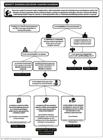
The present article sets out to provide practical guidance to RECs in their approach to human participant or human biological material protocols containing possible benefit-sharing agreements. In order to do so, firstly Fig. 1 below may be useful in guiding RECs through the process of deciding on whether an agreement within a research protocol constitutes benefit sharing and, if so, whether it is permissible or whether any other reward or benefit is permitted or prohibited.
Secondly, this article also offers practical guidance to RECs by posing two hypothetical scenarios to illustrate how possible benefit sharing agreements might be approached in the context of human participant or human biological material research.
Scenario one
A research group proposes a health study in which the effects of a healthy diet on blood sugar levels will be studied in a rural community in South Africa which covers a geographical area of about 10 km2. The study involves the drawing of blood for testing at the start and end of each month, for six months, at a centrally located site. To ensure that participants adhere to the prescribed healthy diet, each participant will be provided with pre-prepared meals, three times a day. Participants will also receive weekly general health evaluations. At least 50 participants in a community of 2 000 people are needed and the researchers have approached the community leaders to assist in recruitment for the study. By way of thanks, the research group agree to pay for the digging and installation of 10 boreholes throughout the community at viable locations.
Discussion of scenario one
In this instance, RECs may note the following:
1. This is a health research study which involves human participants.
2. The study also entails the donation of human biological material.
3. The study necessitates the provision of certain foodstuffs to the participants.
4. The study also provides participants with access to healthcare services.
5. Participants will have to travel to the research site from varying distances over a six-month period.
6. A reward of 10 boreholes will be given to the community as a whole.
In casu, the REC should withhold approval. In this scenario, an agreement is reached whereby a benefit in the form of a gift of boreholes is provided by the research group to the community. The beneficiary of the shared benefit - the boreholes - is a community. This benefit is something that goes above and beyond what is essential to the research interaction and also benefits the community as a whole. This benefit further rewards the participants and community in return for participation and does not offset any monetary or non-monetary costs incurred by the participants. As such, it is prohibited.
The individual research participants are, however, allowed the benefits inherent to the study, which in this instance takes the form of meals and access to healthcare services. They are further entitled to reimbursement of the reasonable costs incurred to participate in the study, such as costs expressed in monetary terms to travel to and from the research site for the drawing of their blood.
It may be noted that in this example, the provision of six-months' worth of meals may perhaps be regarded as an inducement to participate. RECs should apply their discretion in such instances and take into consideration the unique context of the community and its members - its needs, values, priorities and cultural expectations - in deciding on whether this inducement is improper.
Scenario two
A research institution in Canada approaches a South African research institution for the provision of tissue samples. The Canadians are pioneering a new technique in understanding disease mechanisms and require this tissue for their study. Included in the proposal by the Canadian institution is a benefit-sharing agreement in terms of which a group of researchers will travel to South Africa to gift the institution with new centrifuges and will collect the samples from the South African institution where they will also spend two months training local researchers in this new technique. In addition, the Canadian researchers will acknowledge the South African institution in all publications on findings stemming from the use of the South African tissue samples.
Discussion of scenario two
In this instance, RECs may note the following:
1. This study entails the exchange of human biological material.
2. The beneficiary of the benefit is an institution.
3. The benefits derived from this exchange take the form of equipment, skills capacity building, knowledge, career development and recognition.
In casu, the REC may approve the proposal as the benefit to be shared is non-commercial and not profit-seeking in nature at the meso level. This is on the condition that all other ethical considerations are met, of course.
Conclusion
This article attempted, firstly, to provide South African health RECs with a nuanced understanding of practical implications of the legal framework surrounding benefit sharing in general and, secondly, the implications for benefit sharing in terms of the NHA when considering human participant and human biological material research protocols in particular. This aim was accomplished by providing a practice-orientated discussion on what RECs will have to be mindful of in their considerations regarding benefit sharing in publicly funded health research or health research related to indigenous knowledge or non-human indigenous biological materials under the IPRA, IKA and NEMBA. Attention was then given to benefit sharing in human participant or biological material research and the application and impact of the NHA in conjunction with certain preferred terms and definitions, stakeholders and levels of benefit sharing. To provide practical guidance to RECs in these instances, a diagram which might be of use in guiding RECs through the decisional process was also provided as well as two hypothetical scenarios to illustrate how instances of proposed benefit sharing may be approached.
While this article offers valuable insight and guidance, it is essential to recognise that benefit sharing remains a complex subject which requires further analysis, debate and engagement from policymakers. As the gatekeepers of research, RECs play an important role in ensuring that benefit-sharing ventures align with ethical and legal principles and, as such, it is recommended that RECs across South Africa collaborate with the National Health Research Ethics Council (NHREC) in providing continued education on this issue to allow researchers and RECs to be updated on any new developments in this field. The NHREC and RECs should also collaborate in creating clear guidelines and standard operating procedures which reflect the nuances of benefit sharing. RECs should also create and adopt a comprehensive legal framework, taking into account the provisions of not only the NHA but also the IPRA, IKA and NEMBA. This framework should accommodate the different areas of application and legal requirements provided for by each Act. Due to the complex nature of the legal environment, it is also recommended that RECs better employ and collaborate with legal experts in the field of health law in order to navigate the intricacies for the benefit-sharing legal landscape.
As South Africa continues to grow its research capacity, it is imperative that RECs remain vigilant of controversial issues and informed of the lawful and best practice for approaching these. In this manner, RECs will be able to drive new science and development while ensuring that not only ethical, but also legal, requirements and conditions are met.
Declaration. None.
Acknowledgement. I would like to acknowledge and thank Aliki Edgcumbe of the DS-I Africa Law group for her invaluable assistance in the design and layout of the diagram in this article. I also acknowledge the support of the US National Institute of Mental Health and the US National Institutes of Health (award number U01MH127690).
Author contributions. This article is solely the work and responsibility of the author and does not necessarily represent official views of the US National Institute of Mental Health or the US National Institutes of Health.
Funding. None.
Conflict of interest. None.
Data availability statement. None.
1. Republic of South Africa. National Health Act No. 61 of 2003.
2. Department of Health of South Africa. Ethics in health research: Principles, processes and structures. 3rd ed. 2024. https://www.dropbox.com/scl/fo/2wddzxo6vonsrfpyeohs1/h?rlkey=vzf45esf0sas2pkx2b36iy8u1&e=1&dl=0 (accessed 19 February 2024).
3. Kamau C, Prinsen L, Thaldar D. Benefit-sharing with human participants in South Africa: A call for clarity. Developing World Bioeth 2024;1-10. https://doi.org/10.1111/dewb.12456

Accepted 3 December 2024