Informed consent in clinical trials
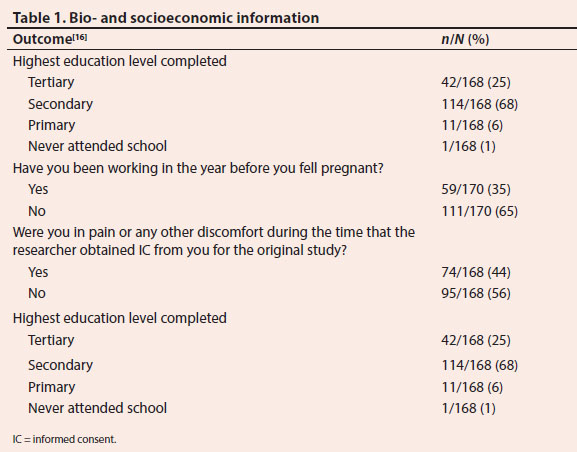
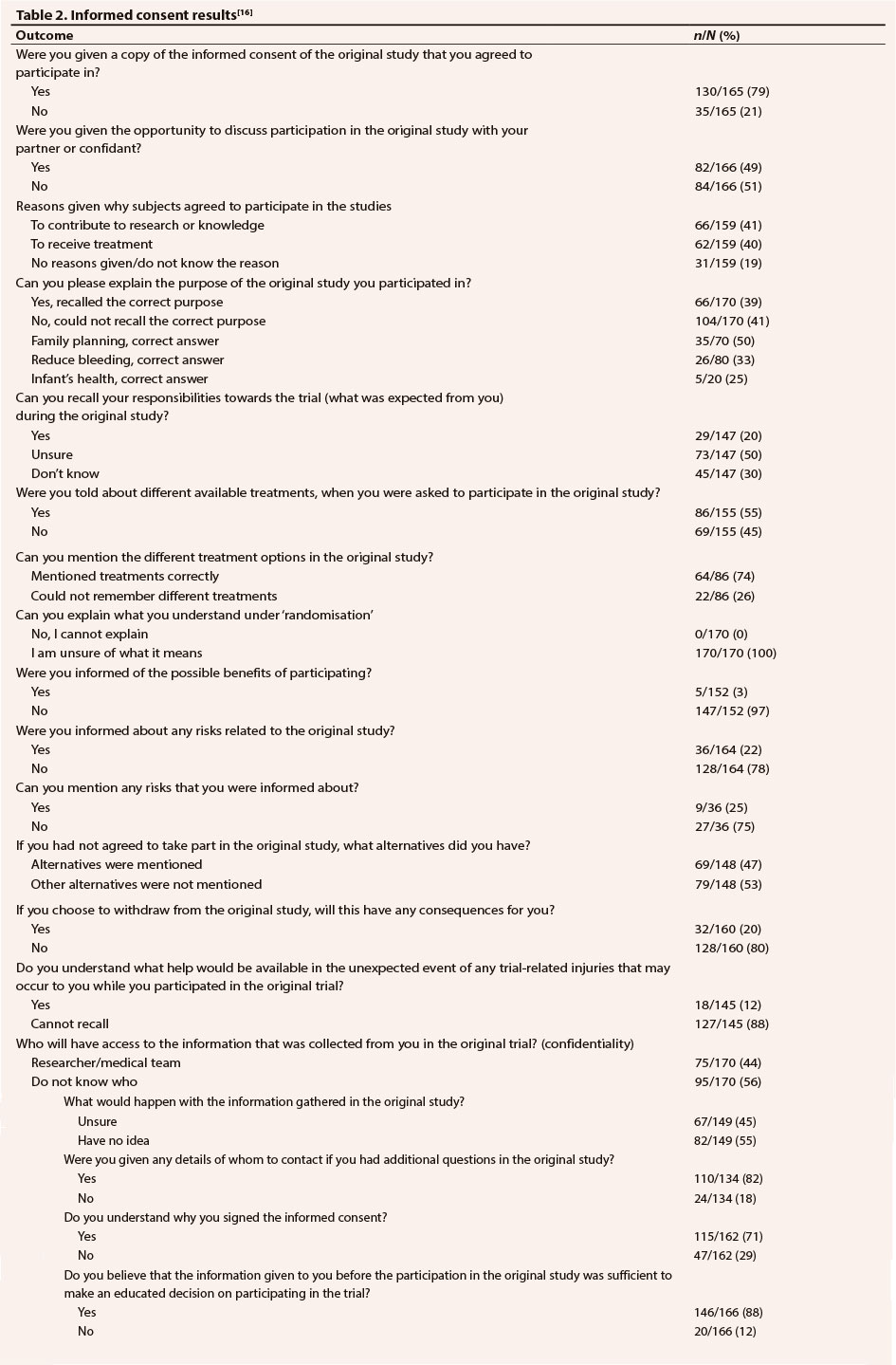
BACKGROUND. Informed consent (IC) is not only a regulatory but also an ethical requirement to participate in any clinical trial. It is essential to determine that research participants understand what they consent to. Studies that evaluate participants' understanding of IC conclude that recall and understanding of IC is often low, and researchers recommend that interactive multimedia interventions should be implemented to optimise understanding. OBJECTIVES. To assess participants' understanding of IC of the research trial that they agreed to participate in. METHODS. A descriptive survey design, within a quantitative research approach, was used to conduct the study at two government hospitals in the Eastern Cape Province. A semi-structured, self-administered questionnaire was used to collect information from 170 participants in research studies. Descriptive statistics were used to analyse the results. RESULTS. Participants were recruited from among women who enrolled in any of the three studies that were ongoing at the two sites during the recruitment period. The study participants had a mean age of 25.9 years. Nearly one-third (30%) could not recall the purpose of the original trial that they consented to. The concept of randomisation was not understood by any of the participants. CONCLUSION. Regardless of extensive efforts to ensure that participants understood their participation, this study unveiled poor recall of essential information on IC. It is proposed that IC should be short and only address essential components such as purpose, procedure, possible risks or benefits, alternative options if not participating and explaining the concept of voluntary participation.
South African Journal of Bioethics and Law