Gauging the need for research ethics training in a Southern African Developing Community - A SARIMA initiative
BACKGROUND. Recently, there has been a notable rise in requests for research ethics training from institutions across the Southern African Developing Community (SADC) region. This surge prompted the Southern African Research and Innovation Research Management Association (SARIMA) to seek input from all stakeholders to guide their efforts. SARIMA aims to enhance the professionalisation of research management and administration throughout SADC, thereby complementing the portfolio of skills for research administrators and managers who support Research Ethics Committees (RECs). OBJECTIVE. To gauge the needs and requirements for research ethics training within the SADC region and to determine the themes and topics that require attention and in-depth focus to support and facilitate ethical research development. METHODS. This quantitative study surveyed SARIMA members. In total, 84 professionals working in research ethics and integrity responded to the survey. The geographical scope was Southern Africa, encompassing 16 member states of the SADC region. RESULTS. Most respondents indicated strong institutional support or a positive attitude from institutional leadership toward RECs and related matters. Institutions were recognised for their responsibility in providing training in ethics and research conduct across the research ecosystem, including postgraduate students, researchers, managers and administrators. There are Communities of Practice in Research Ethics and Integrity in the SADC region under the auspices of SARIMA with the required knowledge and expertise to deliver such training upon request. CONCLUSION. Providing training in ethics and research conduct for all involved in the research ecosystem is a collective responsibility shared by institutions and researchers. Research management and administration professionals play a vital role in ensuring training initiatives in research ethics and integrity are available to their research community.
Research ethics; training needs; research ethics committees
Gauging the need for research ethics training in a Southern African Developing Community - A SARIMA initiative
S EngelbrechtI, II; T CoetzeeIII; E Flack-DavisonIV
IMPhil; Research Compliance, King Abdullah University of Science and Technology, Thuwal, Kingdom of Saudi Arabia
IIMPhil; Southern African Association for Research Innovation and Management Association, Centurion, South Africa
IIIMPhil; Office of Research Integrity, Directorate Research Support, University of South Africa, Pretoria, South Africa
IVBA, LLB, LLM; Research Office, University of the Witwatersrand, Johannesburg, South Africa
BACKGROUND. Recently, there has been a notable rise in requests for research ethics training from institutions across the Southern African Developing Community (SADC) region. This surge prompted the Southern African Research and Innovation Research Management Association (SARIMA) to seek input from all stakeholders to guide their efforts. SARIMA aims to enhance the professionalisation of research management and administration throughout SADC, thereby complementing the portfolio of skills for research administrators and managers who support Research Ethics Committees (RECs).
OBJECTIVE. To gauge the needs and requirements for research ethics training within the SADC region and to determine the themes and topics that require attention and in-depth focus to support and facilitate ethical research development.
METHODS. This quantitative study surveyed SARIMA members. In total, 84 professionals working in research ethics and integrity responded to the survey. The geographical scope was Southern Africa, encompassing 16 member states of the SADC region.
RESULTS. Most respondents indicated strong institutional support or a positive attitude from institutional leadership toward RECs and related matters. Institutions were recognised for their responsibility in providing training in ethics and research conduct across the research ecosystem, including postgraduate students, researchers, managers and administrators. There are Communities of Practice in Research Ethics and Integrity in the SADC region under the auspices of SARIMA with the required knowledge and expertise to deliver such training upon request.
CONCLUSION. Providing training in ethics and research conduct for all involved in the research ecosystem is a collective responsibility shared by institutions and researchers. Research management and administration professionals play a vital role in ensuring training initiatives in research ethics and integrity are available to their research community.
Keywords: Research ethics, training needs, research ethics committees.
Higher education institutions recognise and often report on a critical need for research ethics training at their institutions. As a response to these needs, several training initiatives, such as the Training and Resources in Research Ethics Evaluation (TRREE), which is presented on an online and free platform, were developed to enhance the quality of research ethics.[1] Institutions also report on developing their own certified and tailored research ethics training to promote the protection of human participants in studies.[2] More structured training initiatives, such as those by the Fogarty International Center (FIC), have contributed significantly to research ethics capacity building in the South African Developing Countries (SADC) and in Africa.[3] There is a growing interest in establishing mechanisms to assess the effectiveness of Research Ethics Committees (RECs). An assessment tool was tested with the chairs of several low- and middle-income countries (LMICs), such as Egypt, South Africa (SA) and India, and identified a lack of policies and procedures followed by RECs.[4] Although capacity needs for research ethics training for researchers receive wide attention from scholars, research ethics training needs for research ethics committee members, specifically in SADC and Africa, have not been widely discussed.
It is against this backdrop that the Southern African Research and Innovation Research Management Association (SARIMA) developed a survey to gauge the research ethics capacity building needs and requirements of their members. The survey was initiated by SARIMA in response to the increase in requests from universities and other stakeholders in SADC to provide research ethics training for REC members, administrators, postgraduate students and academic supervisors. The survey is in response to these requests to establish the needs and requirements of various registered institutions that form part of the SARIMA network. That will enable SARIMA to determine the format of training such as online research ethics training courses, webinars and face-to-face workshops. It will also contribute to determining the content of these course materials and the target audience. The survey allowed SARIMA to collect rigorous data on research ethics administration and related experiences from various stakeholders. This will also enable SARIMA to develop interventions to help improve research ethics knowledge and expertise, related systems and capacity development. The main aim of the survey was to gauge the need for research ethics and integrity training in SADC. The idea was that the responses would assist SARIMA in preparing for research ethics and integrity training and securing relevant facilitators and experts when receiving requests for research ethics and integrity training from the SADC members.
Methods
An online survey, administered by the SARIMA Administration Office, was emailed to all SARIMA-registered members (research managers and administrators in research ethics and integrity) including Directors of Research in the SADC region. The email addresses were obtained from SARIMA network members during registration, in line with permissions granted for accessing their email addresses for this specific purpose. The survey was circulated to prospective participants (i.e., SARIMA-registered members) once research ethics approval was obtained from the Human Research Ethics Committee.
The full sample of 16 countries within the SADC community were invited to participate in the study. This paper aims to summarise the findings obtained from 84 respondents within the research management and administration community, specifically focusing on research ethics, integrity administration and related matters.
This survey is in line with Goal 4 of the Sustainable Development Goals on Quality Education, which 'ensures inclusive and equitable quality education and promotes lifelong learning opportunities for all'.
Sample
The study population consisted of paid-up SARIMA members, including REC managers and administrators, REC members, research directors, governmental stakeholders and academics from diverse scientific backgrounds. The population consisted of members from higher education, research councils, governmental departments and non-governmental organisations.
The survey was conducted online using the Survey Monkey platform, in English. Members of the SARIMA Research Management Committee developed the survey questions.
The survey was anonymous and was circulated to SARIMA members. In total, 84 professionals working in research ethics and integrity responded to the survey. The geographical scope was Southern Africa, which includes 16 member states. The information gained from this survey would help SARIMA to identify the need for research ethics training in the SADC region. However, SARIMA members had no obligation to complete the survey and could withdraw from the study at any time during the completion of the survey. The survey was done with voluntary participation.
Data analysis
The study followed a quantitative research design approach. The analysis is largely descriptive.
Data storage
The dataset is kept on a password-protected laptop for 5 years for audit purposes, where it will be permanently destroyed. Records will be permanently deleted from the computer's hard drive housing the data.
Ethical considerations
There was no potential risk to the respondents as it is a no-to-minimal-risk survey. The respondents would not receive a direct benefit for their participation as individuals. However, it was envisioned that the findings of the anonymous and voluntary survey might assist in addressing research ethics and integrity training needs in the SADC region. It was not foreseeable that respondents would experience any negative consequences by completing the survey. There was no financial compensation or incentives for participation in the survey. Privacy and confidentiality were guaranteed. No personal information was requested, hence, there would be no personal identifiers. By completing the survey, the respondents consented to participate in the survey freely and voluntarily.
The study complied with the latest version of the Declaration of Helsinki™ and other local regulations, such as the Department of Health: Ethics in Health Research: Principles Structures and Processes.[7]
Ethical approval for conducting the survey was obtained from the University of Cape Town, Faculty of Health Sciences Human Research Ethics Committee (HREC Reference 584/2019). This HREC is registered with the National Health Research Ethics Council, Department of Health, South Africa (https://www.health.gov.za/nhrec-registration/).
Results
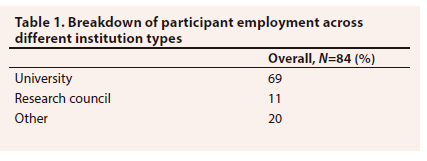
The respondents were asked about the type of institution or organisation where they work. Nearly 70% of respondents reported working at a university, 11% worked at a research council, while ~20% stated 'Other. 'Other' refers to institutions like governmental departments, non-governmental organisations, institutes of science and technology and science granting councils (Table 1).
Research ethics committees
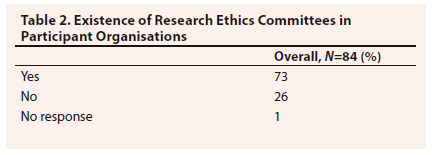
Since most respondents worked at a university, they reported that their institution had a REC in place. The majority of institutions had at least one REC. Only one (1%) respondent abstained from responding to this question. However, it is interesting and reassuring that respondents were aware of whether there was a REC at their institution (Table 2).
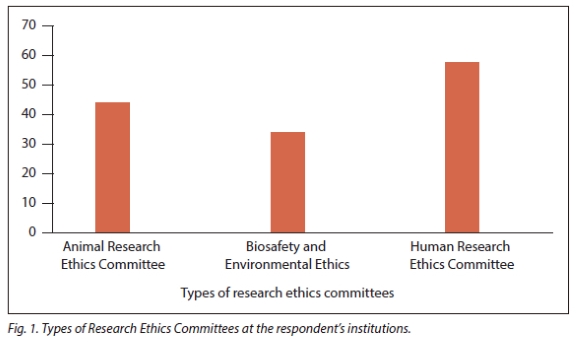
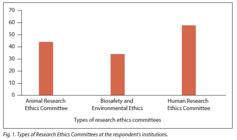
After confirming the presence of a REC, respondents were asked about the type of REC they had, such as the Human Research Ethics Committee (HREC), Animal Research Ethics Committee (AREC), and Biosafety and Environmental Ethics Committee. The majority reported having an HREC, followed up by an AREC and/or an Institutional Biosafety and Environmental Ethics Committee (Fig. 1).
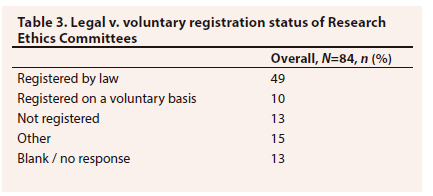
In some SADC countries, registering RECs with the relevant local authority is a legal requirement. Respondents were asked to report whether their REC(s) were legally required to register with the relevant local authority in their country. According to the responses, the majority of RECs were registered either by law (49%) or voluntarily (10%). For 'Other', respondents mentioned uncertainty about whether their REC's registration was a legal requirement or voluntary (Table 3).
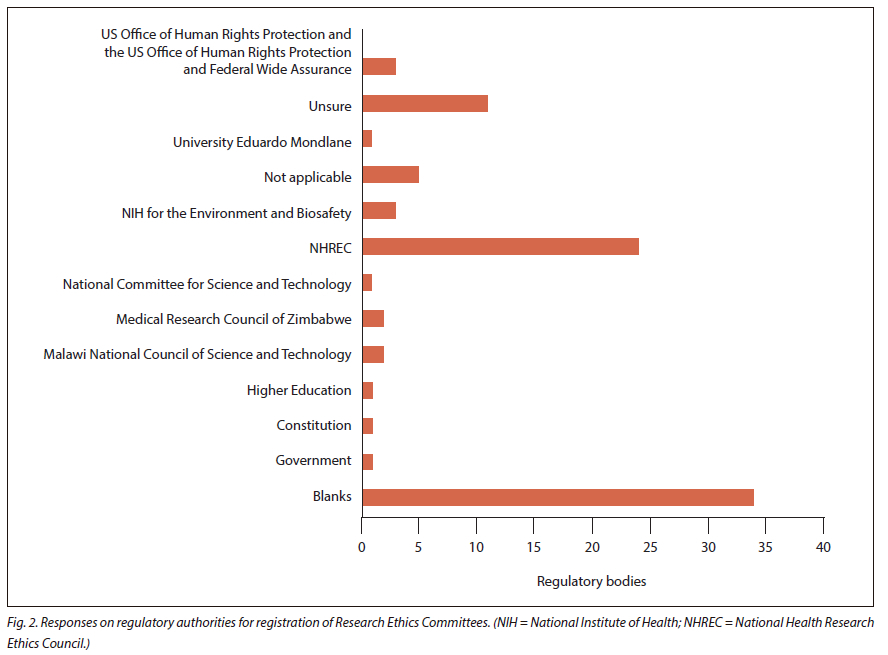
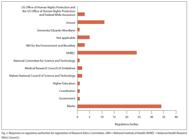
Another follow-up question pertained to the local authority for the registration of RECs. While some respondents were unsure of the local authority, most respondents were familiar with their local requirements for RECs' registration. Some respondents reported a constitutional legal requirement for RECs to be registered. In addition, respondents cited international governing or oversight bodies, such as the US Department of Health and Human Services Office of Research Integrity, the US Office of Human Rights Protection and Federal Wide Assurance (https://ori.hhs.gov/ and https://www.ncbi.nlm.nih.gov/pmc/articles/PMC4494751/). This registration is required when institutions receive US Federal funds for research purposes. For biosafety and environmental RECs, respondents listed the US National Institutes of Health's Office of Biotechnological Activities as the registration body. The majority of respondents listed the National Health Research Ethics Council in South Africa. Based on the responses, it is evident that a large portion of respondents were uncertain about the local legal requirements for the registration of RECs, as indicated by blank responses (40%). Additionally, some respondents (13%) explicitly stated their uncertainty about these requirements (Fig. 2).
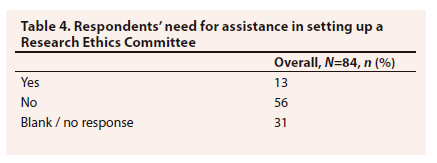
The respondents were further asked if they required assistance in establishing a REC. An overwhelming response (56%) suggested that they did not require assistance in establishing an REC. However, some respondents (13%) requested assistance to establish a REC. Based on the responses, it is evident that most institutions or organisations already have established RECs, which is encouraging (Table 4).
The respondents who requested assistance to establish a REC cited various reasons, including being in the process of establishing a REC, developing new processes to distinguish human research from animal research, managing increased scientific undertakings, needing training on processes and procedures and facing challenges related to the lack of financial and technical support.
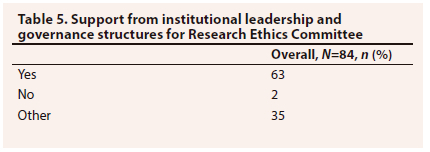
Institutional research ethics and integrity are bolstered by strong leadership that supports responsible conduct in research. It was encouraging to find that respondents echoed this sentiment in their responses. In total, 63% of respondents stated that the institutional leadership supports their REC and governance structures, whereas only 2% said 'no'. Some of the reasons under 'Other' included statements, such as 'This is not a requirement at our institution', 'Leadership needs to appoint an Institutional Officer, but the prepared documents were approved by Senate' and 'We do not have a REC we outsource our approvals'. Some of the positive comments from respondents included: 'Leadership of the institution was the driver behind the establishment of the RECs' and 'Our research institution has a code of research ethics, which guides our studies. Leadership recognises this code' (Table 5).
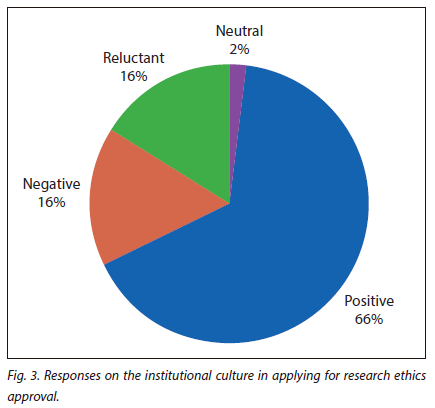
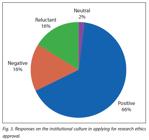
In response to the question, 'What is the institutional culture or attitude of your institution towards applying for research ethics approval', respondents reported a range of responses. Overall, the requirement for ethics approval is generally supported and accepted, with some resistance owing to a lack of understanding of ethics approval and compliance. In addition, there was a willingness to engage to ensure compliance with research ethics approval processes and requirements. In contrast, some respondents mentioned that 'it was very bad' or 'negative causing delays'. Overall, respondents are acutely aware of the importance of research ethics application and approval processes. The table below reflects the attitude (i.e., positive, negative, reluctant or neutral) towards the research ethics submission and approval processes. These were open-ended responses left for interpretation (Fig. 3).
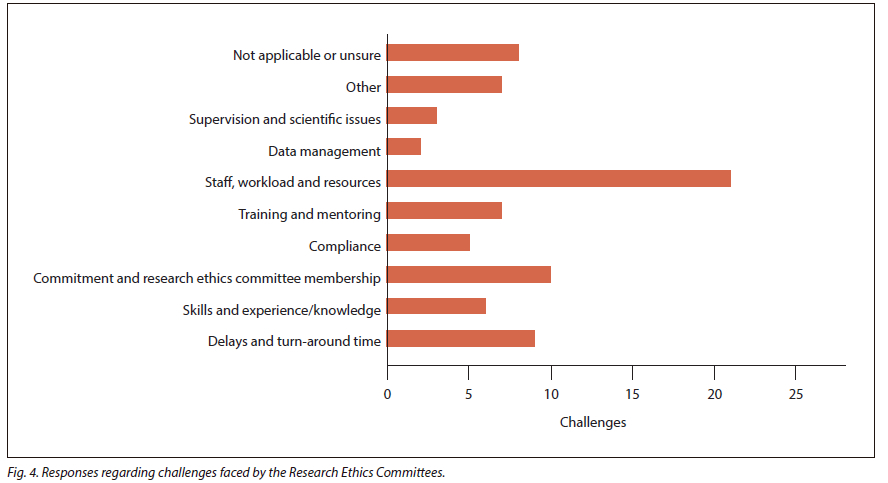
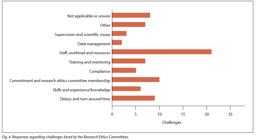
Respondents who had RECs as part of their institutional structure were asked to specify any challenges their RECs were experiencing. The responses varied from lack of proper administration, which includes inefficient processes and a high volume of paperwork, to a high volume of submissions and a lack of committee review resources, committee membership fatigue and inexperienced members with a lack of research ethics training. The majority of responses mentioned the lack of staff and administrative processes, which resulted in a huge delay in reviewing and the approval of research prior to commencement. This would require commitment from RECs on membership issues, such as appointing lay or non-institutional members. Another point raised was the lack of training and mentoring for REC members, reviewers and administrative staff. 'Other' issues included 'ethics approval is not seen as an important and necessary', 'not being able to pay people (lack of budget as well as the mindset that payment is unethical and only a small fee for loss of remuneration or expenses incurred)' and 'there is no standing committee to enforce research ethics' (Fig. 4).
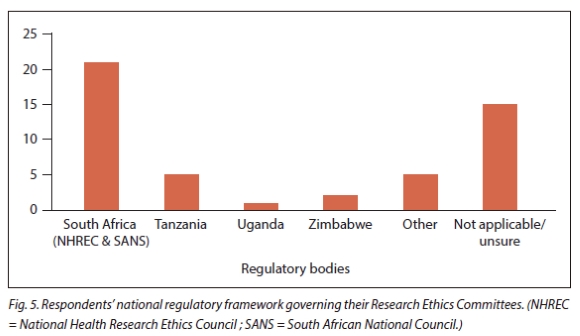
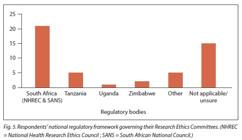
Regarding the registration of RECs, respondents were asked to report on the national regulatory framework, if any, that governs the REC functioning in their country. The respondents indicated that various governmental organisations regulate research ethics compliance in Tanzania. For example, the National Institute of Medical
Research regulates ethics in health, the Tanzania Commission for Science and Technology and the Tanzania Communications Regulatory Authority. In SA, RECs are governed by the National Health Research Ethics Council (NHREC), which falls under the Department of Health (as indicated by the majority of responses). In addition, for animal (biomedical) research, additional compliance with the South African National Standard (SANS) 10386 was required. The Medical Research Council of Zimbabwe guidelines govern RECs in Zimbabwe. The Uganda National Council of Science and Technology governs research in this jurisdiction. In other jurisdictions, REC oversight and governance occur in accordance with the Higher Education Act No. 01 of 1997. Some respondents were unsure or indicated 'not applicable'. It is evident that national laws and regulations govern RECs in the SADC region and are well-regulated (Fig. 5).
Training
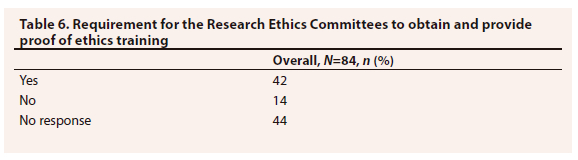
One of the challenges that respondents mentioned was training and mentoring (Fig. 4). Eight percent of respondents reported an absolute lack of training for REC members, reviewers and administrative staff. However, in response to the question regarding whether their RECs are required to obtain certified training, the majority responded affirmatively. They specified that this was a requirement by the national regulatory board or council (Table 6).
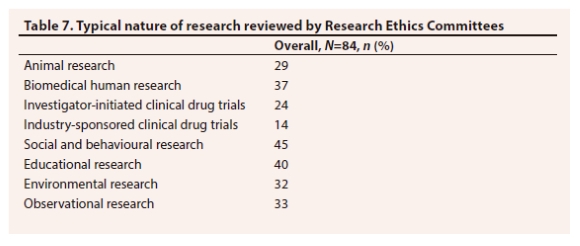
Based on the respondents' reports, there is a clear correlation between registered RECs and the type of research reviewed by their RECs. They specified that most of the research involved human participants (biomedical research, investigator-initiated clinical drug trials and industry-sponsored clinical drug trials, social and behavioural research, educational and observational research), followed by environmental research and then animal research (Table 7).
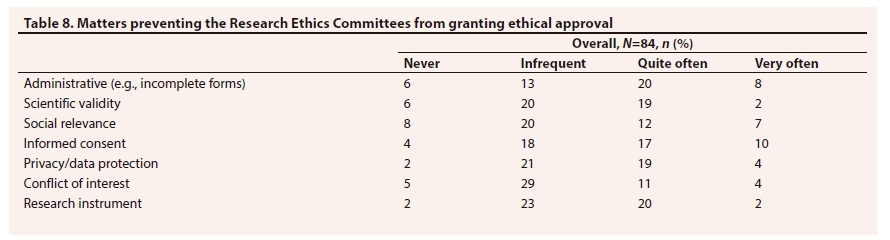
In addition to the question on challenges experienced by RECs, respondents were asked to indicate the typical issues that prevent their REC from granting ethical approval vis-à-vis documentation. The respondents were asked to respond on a Likert scale, which included the following options: never, infrequent, quite often and very often. The respondents reported on the following criteria:7administrative (e.g., incomplete forms), scientific validity, social relevance, informed consent, privacy/data protection, conflict of interest, research instrument and others.
The respondents provided a range of issues under 'Other; including gatekeeper role, inadequate risk and benefit ratio, use of other institution's REC in the absence of own REC and incomplete information leaflet and informed consent (Table 8).
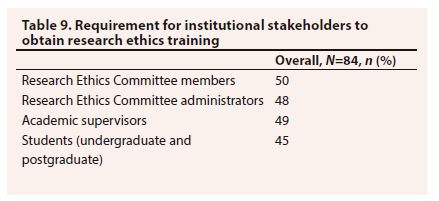
Some respondents indicated that training is not just required for REC members but also for administrative staff. In this regard, the respondents reported that various stakeholders require research ethics training, including academic staff and students. Under 'Otheri respondents mentioned other stakeholders who required training, including industry practitioners, established researchers without current research ethics training and research investigators (Table 9).
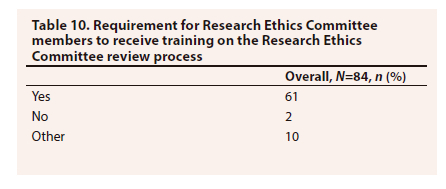
The majority of respondents reported a requirement for REC members to receive research ethics training on the review process. However, some respondents mentioned that not all their REC members required such training. Other respondents were unsure whether their REC members required research ethics training. Notably, some institutions offer in-house training for REC members but are also open to additional training from external facilitators and experts (Table 10).
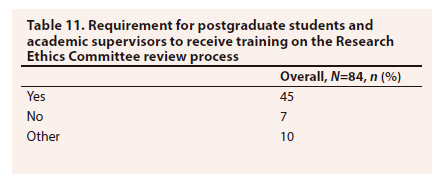
The majority of respondents reported that further research ethics training was needed for postgraduate students and some academic supervisors. Under 'Other', respondents cited that they are not at an academic institution, thus research ethics training for postgraduate students and academic supervisors does not apply to them. In addition, some respondents mentioned that they already offer such training in-house to postgraduate students and researchers. Finally, respondents reported that upper management does not always support the implementation of such training (Table 11).
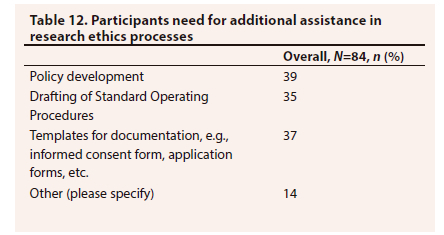
Documentation, such as terms of reference (ToR) and standard operating procedures (SOPs), are essential for the operation of RECs. The respondents recognised the need to have such documents in place. The respondents therefore reported that they need additional assistance in REC and research ethics-related matters, including policy development, drafting of SOPs and ToRs and creating templates for documentation (e.g., informed consent forms, application forms, etc.). Nearly 40% of respondents required additional assistance in policy development, drafting of SOPs and ToRs and creation of templates for documentation. Under 'Other', some respondents specified that greater public engagement would improve REC reviews. The majority of respondents mentioned that 'All documents are up to date for all our RECs', while other respondents reported that none of this documentation was in place at their institution (Table 12).
Social media training needs
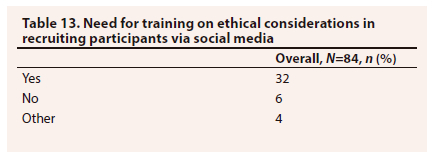
Researchers often use social media platforms, such as Facebook, Instagram and WhatsApp, to recruit prospective research participants. Such recruitment strategies may pose potential risks in the absence of ethical considerations. In the final question on research ethics training related to social media, respondents were asked whether they require research ethics training for the recruitment of prospective research participants via social media. More than 30% of respondents reported that they need training in this regard. Under 'Other', respondents mentioned that they apply ethical considerations, especially when the research involves social media platforms across borders. However, they would be interested in receiving more information on different ways to ensure ethical compliance. In addition, respondents cautioned that the privacy policy might not always be guaranteed. Finally, respondents advised that they try to avoid recruitment via social media (Table 13).
In response to the question regarding whether respondents would like to share any additional information about their REC, they reported the need for additional training in proposal writing in the field of research ethics and guidance on how to establish a REC.
Research integrity
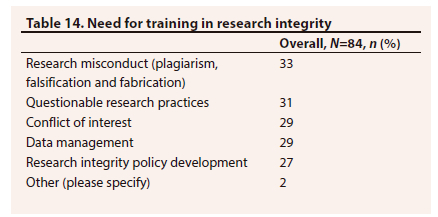
The purpose of the survey was to gauge the need for research ethics training in the SADC region. However, given the integral relationship between research ethics and research integrity, the survey made provision for a question in relation to research integrity. This question covers aspects such as research misconduct (plagiarism, falsification and fabrication), questionable research practices, conflict of interest, data management and research integrity policy development. The respondents could report additional research integrity-related matters under 'Other'. Under 'Other', respondents mentioned that their institution has already addressed these issues and requirements (Table 14).
Networking
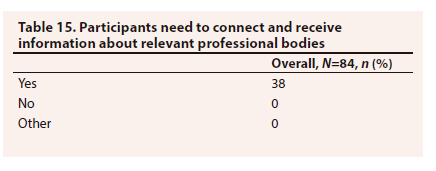
The final question of the survey asked respondents about their need for networking opportunities. This was the only question that received an overwhelming 'yes' response from nearly 40% of respondents. No further responses were noted (Table 15).
Discussion
In this paper, we surveyed relevant stakeholders, specifically SARIMA members, to gather their views and knowledge about their national regulatory framework. In addition, they reflected on their institutions' RECs practices and performance in relation to research ethics and integrity. Our findings highlight several problem areas that could be addressed through training, mentoring and further ad hoc guidance. However, there were enormous positive signs of RECs' readiness to adopt new approaches. Some institutions have already identified issues, such as lack of staff, inadequate documentation, training needs and lack of resources, and have begun addressing these through in-house training and creating or updating the necessary documentation.
There is a good understanding of the national and international regulatory frameworks that govern RECs. Most responses indicated that their national or local oversight bodies require REC registration by law or voluntarily. Additionally, there appears to be institutional support or at least a positive attitude from institutional leadership toward RECs and related matters such as research integrity practices. It is acknowledged that there are no quick fixes to changing organisational cultures, norms and standards of behaviour towards RECs and related processes. In fact, this requires dedicated time, commitment and resources as highlighted by respondents. The development of institutional policies and procedures for research ethics and integrity is a tool to reinforce best practices.
Nevertheless, there are positive indications and interest regarding developing REC competencies and organisational policies and practices through training and mentoring initiatives. It was also evident that not only REC members require research ethics training, but also REC managers and administrators, postgraduate students and researchers. In some respects, respondents mentioned that even seasoned researchers such as professors who might not have current research ethics training should obtain research ethics training before embarking on research. Most respondents stated their willingness to engage in research ethics training to improve REC processes.
The respondents reflected on research integrity, highlighting the need for further training on topics such as the three sins of science (research or scientific misconduct); plagiarism, falsification and fabrication, as well as questionable research practices.[5] There was consensus that such training would enhance responsible conduct of research and improve research quality.
What are the lessons of the SARIMA survey for RECs and their institutions? A particular responsibility for institutions was identified to be the provision of training in ethics and research conduct for all involved in the research ecosystem including postgraduate students, researchers, administrators and managers. For training, be it online or in-person, SARIMA has the mandate and ability to ensure that research ethics and integrity training are offered to its members. This may come at a cost to the hosting institution. There are communities of practice in research ethics and integrity under the auspices of SARIMA that possess the required knowledge and expertise to deliver such training upon request. In addition, institutional support was paramount to ensure RECs satisfy their local regulatory mandate and beyond. Finally, to our knowledge, this is the first, if not only, dataset that reflects the responses from SARIMA members in the SADC region on research ethics and integrity.
Declaration. This survey was initiated by SARIMA to gauge the need for research ethics training in SADC countries as SARIMA covers research management and administration initiatives in these countries.
Acknowledgements. We want to acknowledge Dr Pamisha Pillay, the former Vice President of SARIMA's Research Management Committee, and Dr Madaleen Claassens for their contribution to the development of the survey.
Author contributions. All authors contributed equally.
Funding. No funding was provided for this project and no compensation was available to participants/respondents for completing the survey.
Data availability statement. The datasets generated and analysed during the current study are available from the corresponding author upon reasonable request.
Conflicts of interest. None.
References
- 1. Wassenaar DR, Singh N. Building capacity in research ethics: Changing the way we teach and learn research ethics in South Africa, In forum 2015 - abstract 42. Br Medical J Open 2015;5(1):A17.
- 2. Yonas MA, Jaime MC, Barone J, et al. Community partnered research ethics training in practice: A collaborative approach to certification. J Empirical Res Ethics 2016;11(2):97-105. https://doi.org/10.1177/1556264616650802
- 3. Ndebele P, Benatar S, Fleischer T, et al. Research ethics capacity building in sub-Saharan Africa: A review of NIH Fogarty-Funded Programs 2000-2012. J Empirical Res Human Res Ethics 2014;9(2):24-40. https://doi.org/10.1525/jer.2014.9.2.24
- 4. Silverman H, Sleem H, Moodley k, et al. Results of a self-assessment tool to assess the operational characteristics of research ethics committees in low-and middle-income countries. J Medical Ethics 2015;9(2):332-337. https://doi.org/10.1136/medethics-2013-101587
- 5. Bouter L. What research institutions can do to foster research integrity. Sci Engineering Ethics 2020;26:2363-2369. https://doi.org/10.1007/s11948-020-00178-5.

Accepted 21 June 2024