Pandemics, public health and the limitation of the right to privacy: Legal compliance and public trust
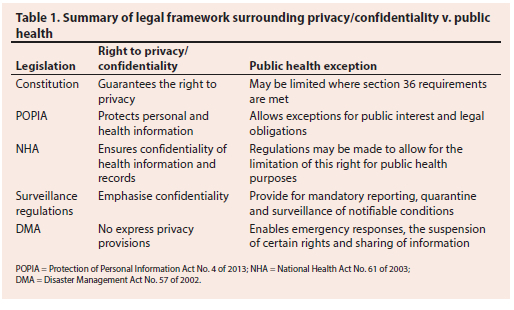
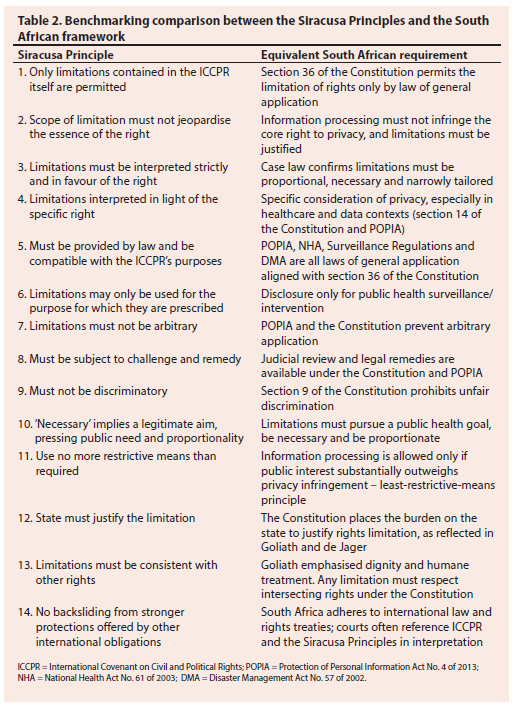
The COVID-19 pandemic highlighted the tension between protecting public health and safeguarding individual rights, particularly the right to privacy. In South Africa (SA), privacy is both a constitutional right and a statutory obligation under the Protection of Personal Information Act (POPIA). However, during public health crises, this right may be limited by legal measures such as surveillance, mandatory reporting and data processing under POPIA, the National Health Act and the Disaster Management Act. These instruments collectively define the conditions under which the right to privacy may be limited in the interest of public health. This article examines whether SA's legal framework allows for the lawful, necessary and proportionate limitation of privacy during disease outbreaks, drawing on key legislation and case law. To assess SA's compliance with international human rights standards, a benchmarking of domestic provisions against the International Covenant on Civil and Political Rights and the Siracusa Principles is also undertaken. These instruments offer guidance on how states may justifiably limit rights during public health emergencies. The article further briefly examines whether adhering to constitutional and statutory requirements translates into public trust during pandemics. Lastly, it also provides recommended requirements to guide future limitations on privacy that uphold constitutional values while enabling effective public health responses.
disease outbreaks; limitation of rights; pandemics; privacy; public health; regulatory framework