Filicide in South Africa: The need for legal reform
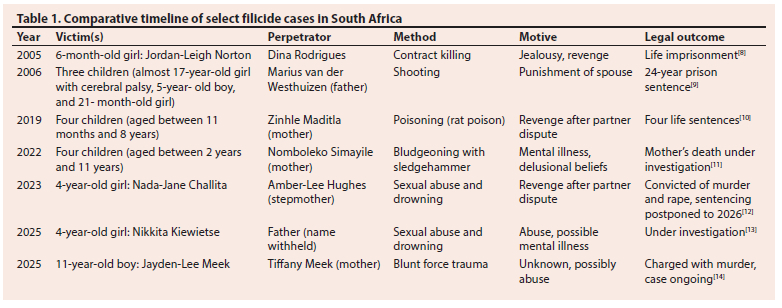
Filicide, the intentional killing of a child by a parent or parental figure, presents profound challenges within South Africa (SA)'s justice system. Despite its exceptional nature, filicide is prosecuted under the common-law crime of murder. Although filicide falls within the ambit of common-law murder, the absence of a distinct legal category obscures the unique psychological, relational and socioeconomic factors that differentiate these cases from other homicides. Sentencing practices reveal deep inconsistency, shaped by judicial discretion, the minimum-sentencing regime, and gendered narratives. This article argues that SA should retain filicide within common-law murder but urgently adopt national sentencing guidelines, mandatory pre-sentencing mental health assessments, and integrated prevention pathways linking social services, health systems and law enforcement. Establishing a national filicide database would further strengthen monitoring and policy design. By situating filicide within its broader sociolegal context, this article underscores the need for a co-ordinated, multidisciplinary response capable of preventing tragedy, ensuring consistent, proportionate sentencing, and protecting the country's most vulnerable group.
filicide; common-law murder; national sentencing guidelines; policy considerations