Impact of increased vitamin E and nutrient intake during early gestation on reproductive performance in sows
Abstract
This study investigated the impact of increased vitamin E and nutrient intake during early gestation on reproductive performance in sows. Thirty first-parity sows (Landrace × Yorkshire × Duroc) with an average initial body weight of 163 kg were used. Sows were randomly allocated to three dietary treatments in early gestation and fed one of three diets for 30 days: 1) 1.5 kg of a standard feed per day, 2) 1.5 kg of a feed containing 1.7× the vitamin and mineral content of the standard feed and a total vitamin E content of 150 IU per day, or 3) 2.5 kg of the standard feed per day. Water was provided ad libitum, and ten individually housed sows were assigned to each treatment. Data on body weight, backfat thickness, body condition score, and wean-to-oestrus interval were collected. Piglet data collected included the litter size, number of stillbirths, piglet birthweight, number of piglets weaned, and piglet weaning weight. Sows in treatment 3 had the highest body weight, backfat thickness, and body condition score on day 30 of gestation. Sows in treatment 2 had the lowest body weight, backfat thickness, and body condition score at weaning, but had the highest litter size and number of weaned piglets. Treatment 1 sows produced piglets with the highest average birth and weaning weights. It was concluded that a low intake of a feed containing 1.7× the vitamin and mineral content during early gestation can improve sow reproductive performance, particularly litter size, thereby enhancing profitability in pig production.
embryo survival; feeding strategy; gilt; litter size; swine reproduction
Introduction
The economics of modern swine production emphasise the number of piglets produced per sow per year, with an increase in sow reproductive performance (such as an increase in litter size) potentially increasing farmer or producer profits. Sows in the early gestation stage are susceptible to embryo losses of approximately 20%-30% (Geisert et al., 2020). It is therefore important to optimise the nutritional manipulation of embryos during implantation (De et al., 2008). Furthermore, feeding management can influence sow progesterone levels. A low feed intake or restricted feeding during early gestation increases the progesterone concentration, thus maintaining a stable uterine environment and enhancing the embryonic survival rate (Jindal et al., 1996). In contrast, a high feed intake increases body metabolism and affects the progesterone clearance rate (Leal et al., 2019). However, increasing feed intake during early gestation (days 0-30) also significantly increases litter size (Su et al., 2025a).
Increasing sow feed intake can provide more nutrients for the embryos and may enhance the progesterone concentration in the uterus (Langendijk, 2021). Moreover, modern sows produce larger litters and may thus need an increased nutrient supply for embryos. A high feed intake increases not only the sow's energy intake, but also its vitamin and mineral intake, which could potentially support embryo survival. It is well known that micronutrients such as vitamins and minerals - especially vitamin E (Wang et al., 2017) and selenium (Surai & Fisinin, 2016) - are antioxidants that increase the total antioxidant capacity and catalase enzyme activity, thereby contributing to cellular protection against oxidative stress, and can enhance sex hormone levels (Siddiqui et al., 2021). Consequently, it may not be sufficient to focus on energy intake levels during early gestation, and examining vitamin and mineral intake levels may be important; however, the available information is still uncertain, and further research is required.
This study forms part of a series of studies examining micronutrient factors affecting sows' reproductive performance based on deductive reasoning. Su et al. (2025b) investigated the value of micronutrients in general by providing a low feed intake (1.5 kg feed/day) with increasing levels of all vitamins and minerals from 0.10% to 0.20%, and found that litter size increased as the vitamin and mineral intake increased. In contrast, the current experiment focuses on vitamin E, using treatments providing different feed intakes and micronutrient levels, with additional vitamin E, with the aim of determining whether additional vitamin E is necessary for reproductive performance. This is of particular interest in light of the results reported by Dalto & da Silva (2020), who found that a commercial swine breeding farm used a higher level of vitamin E than that recommended by the National Research Council (2012). Therefore, this study aimed to investigate the effect of different feed intake and micronutrient levels, with additional vitamin E, during early gestation on the reproductive performance of sows.
Materials and methods
The experimental procedures followed the recommendations of the Institutional Animal Care and Use Committee (IACUC) of the National Pingtung University of Science and Technology on the guidelines for handling animals for scientific purposes, under IACUC no.112-122.
Experimental materials and procedures
This experiment was conducted in the dry sow house and climate-controlled chamber of the National Pingtung University of Science and Technology (NPUST) animal farm, 1 Shuefu Road, Neipu, Pingtung 912301, Taiwan.
Thirty first-parity sows (Landrace × Yorkshire × Duroc) with an average initial live weight of 163 kg were selected from a commercial farm (Zhong Yang pig farm, Pingtung, Taiwan). All the sows were raised in a fully temperature-controlled chamber and selected according to breeder characteristics. The sows exhibited standing oestrus behaviours (interested in boars, vulva swollen and reddened with mucous discharge, erect ears, low feed intake in some cases, and standing motionless during the back-pressure test), and the feeding level was managed according to body size to ensure that all sows had the same body size before mating. The sows were synchronised after their second oestrus using 5 mL of Regumate® Porcine (MSD Animal Health, Rue de Lyons, Igoville, France), administered orally at 18:00 daily for at least 18 days (with sows that came into oestrus last dosed continuously for 18 days). The Regumate treatment was then stopped for all sows for five days, after which the sows entered oestrus simultaneously. The sows were artificially inseminated with semen purchased from a commercial farm (Zhong Yang pig farm, Pingtung, Taiwan) at 05:00 and 17:00 for three days (six doses/sow) using a foam catheter. Sows were checked for pregnancy using an ultrasound machine (POC Medical Inc., Changhua, Taiwan) on days 18, 25, and 32 of gestation.
Dietary treatments
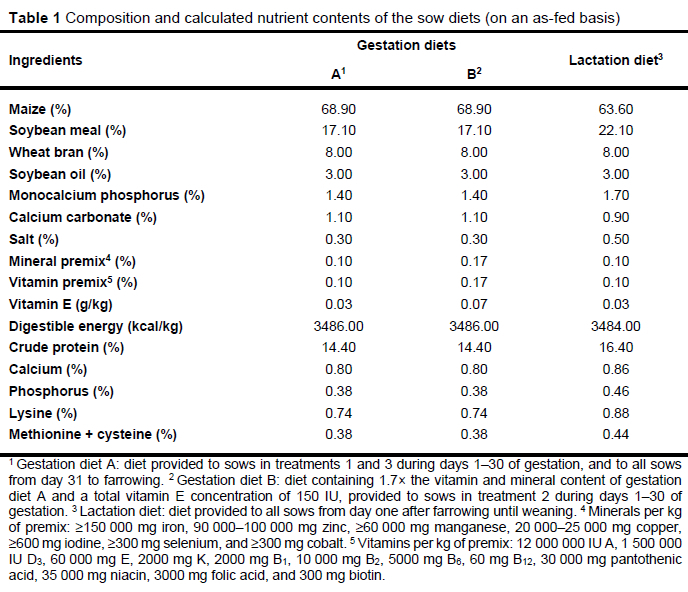
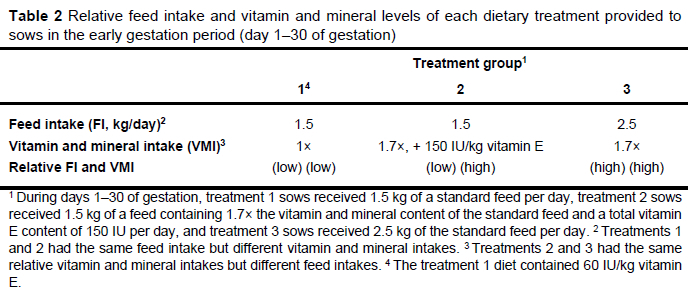
The thirty first-parity sows were assigned to three treatment groups after blocking by initial body weight to ensure that the three groups had the same average starting weights. The three dietary treatments were only applied for 30 days during early gestation. Treatment 1 sows received 1.5 kg of a standard feed per day, treatment 2 sows received 1.5 kg of a feed containing 1.7× the vitamin and mineral content of the standard feed and containing a total vitamin E concentration of 150 IU/kg per day, and treatment 3 sows received 2.5 kg of the standard feed per day. Each treatment group consisted of 10 sows. The compositions and calculated nutrient contents of the diets are shown in Table 1, and a comparison of the feed intake and vitamin and mineral levels applied in each treatment is shown in Table 2.
Animal care
Before mating and until day 80 of gestation, the sows were kept in the dry sow house at the NPUST animal farm, which is an open system with ventilation provided by fans. From the 80th day of gestation until farrowing, the sows were housed in the climate-controlled chamber, in which the temperature and humidity were stabilised and controlled. The chamber maintained a daytime temperature of 28 °C (06:00-18:00), and a night time temperature of 24 °C (18:00-06:00), to simulate summer conditions in Taiwan. Each sow pen (0.6 × 2.2 × 1.3 m) had a partially slotted solid concrete floor, an individual feeder, and a nipple drinker. Sows were allowed ad libitum access to water at all stages. The maize and soybean meal-based diets were provided in mash form, with the amount provided differing between the treatment groups during days 1-30 of gestation. After 30 days of gestation, all the sows were switched to the same feeding management (gestation diet A). During days 31-79 of gestation, the sows were provided with 2.2-2.6 kg/sow/day, restricted according to body condition score (BCS): sows with a BCS of 3 were fed 2.4 kg feed/day, sows with a BCS below 3 were fed 2.6 kg feed/day, and sows with a BCS over 3 were fed 2.2 kg feed/day. From day 80 of gestation to weaning, the sows were fed the lactation diet at 4.8 kg/sow/day. The sows were also moved to the farrowing house at this stage. Pens in the farrowing house were 1.8 × 2.2 × 1.3 m in size (including the piglet area), and had partially slatted floors, individual feeders, and nipple drinkers. The lactation period extended to weaning at 35 days post-partum, and all sows were observed and inspected for oestrus behaviour.
Data and sample collection
Physical parameters (body weight, backfat thickness, and BCS) for the 30 sows were recorded one day before mating, and on gestation days 30, 80, and 100, and lactation days 1, 18, and 35 (weaning day). Backfat thickness was measured at the P2 position on the right side of the sow's body using A-mode ultrasonography (Renco Lean-Meater®, Minneapolis, MN, USA). The P2 position is at the last rib of the sow, located 6 cm from the dorsal midline (Roongsitthichai & Olanratmanee, 2021). The BCS ranged from 1 (emaciated) to 5 (obese), in accordance with the standard described by Li et al. (2018), with an optimum BCS of 3.
The reproductive performance parameters recorded were the litter size at birth, number of stillborn piglets, farrowing time (1: 00:00-05:59, 2: 06:00-11:59, 3: 12:00-17:59, 4: 18:00-23:59), farrowing duration, farrowing day, and weaning-to-oestrus interval. Data for a total of 277 piglets born alive were recorded as follows: number of piglets weaned, litter birthweight, piglet birthweight, and piglet weight on days 18 and 35 (weaned weight).
Statistical analyses
All experimental data for each parameter were analysed using the general linear model with a one-way analysis of variance (ANOVA). Statistical analyses were performed using Statistical Analysis System (SAS) software (SAS Institute, 2021). The normality of residuals and homogeneity of variances were assessed before analysis to ensure that the assumptions of the ANOVA were met. The statistical model used was as follows:
Yij = μ + Ti + eij
where:
Yij: the observed value,
μ: the overall mean,
Ti: the effect of the treatment i, and
eij: the residual error term.
The experimental unit for this analysis was the individual sow. Differences between treatment means were determined using Duncan's new multiple range test at a significance level of P ≤0.05.
Results and discussion
This experiment emphasises the importance of feeding management during the early gestation stage in first-parity sows, especially the levels of feed intake, vitamins, and minerals. Sows in treatments 1 and 2 received the same amount of feed, but were fed feeds containing different levels of vitamins and minerals. In contrast, sows in treatments 2 and 3 were fed different amounts of feed but consumed the same amounts of vitamins and minerals. The relative feed intakes and vitamin and mineral intakes are shown in Table 2. The study was designed to investigate whether increasing the intake of vitamins and minerals may be more effective in enhancing reproductive performance than increasing the total feed intake during the early gestation stage.
Body weight, backfat thickness, and BCS of sows
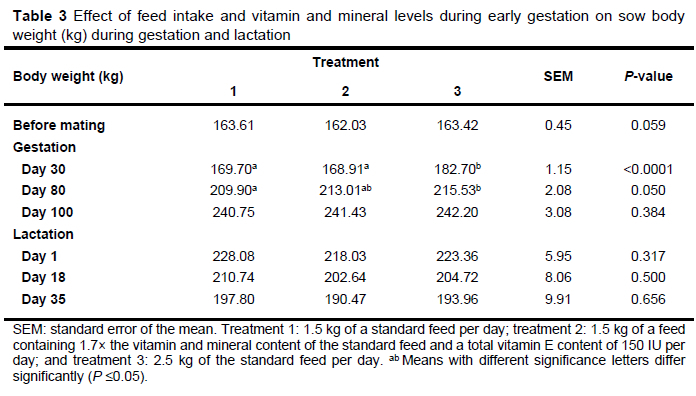
Table 3 shows the body weights of the sows. No significant differences between the treatments were observed in the initial body weights. However, during early gestation, sows in treatment 3 had the highest feed intake and the highest body weight (P <0.0001, 182.70 kg), compared to the treatment 1 (169.70 kg) and treatment 2 (168.91 kg) sows. This high feed intake during early gestation also resulted in a higher body weight on day 80 of gestation (P = 0.050). However, the sows' body weights on day 100 of gestation and during lactation did not significantly differ between the treatment groups, because from day 80 of gestation until weaning, all sows received 4.8 kg feed/day.
The high body weights of the sows who had the highest feed intakes during early gestation (treatment 3, 2.5 kg feed/day) concur with the results of Mallmann et al. (2020), who reported that higher feeding levels (1.8, 2.5, and 3.2 kg) linearly increased body weight gains in young sows during early gestation. Furthermore, increased energy or protein intake can increase body weight gain in early gestation sows (Hoving et al., 2011). In the lactation phase, all sows received 4.8 kg feed/day; however, despite the equal feed intake, the treatment 2 sows tended to have the lowest body weight. This may have been due to their high litter size, as discussed later. According to Quesnel et al. (2007), sows with large litters lose more body weight than those with small litters when compared at the same feed intake.
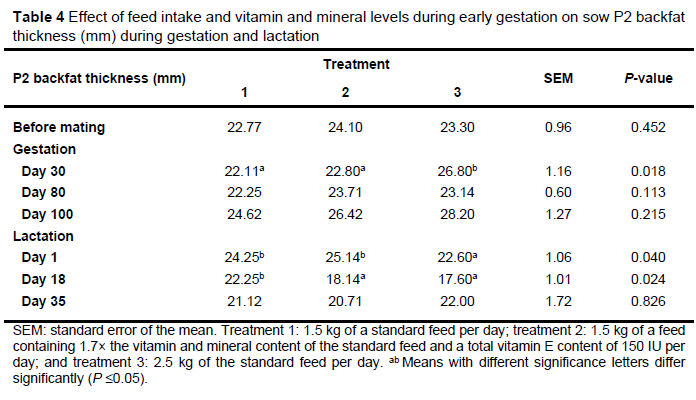
The backfat thickness results are reported in Table 4. Initial backfat thickness did not differ (P >0.05) between the treatment groups. However, by day 30 of gestation, sows in treatment 3 had thicker backfat (P ≤0.05) than sows in the other groups, with no significant difference between the treatment 1 and treatment 2 sows. Nonetheless, by days 80 and 100 of gestation, the treatment groups did not differ in backfat thickness. During the lactation period, treatment 2 had the highest backfat thickness on day one, although this did not significantly differ from the treatment 1 sows. In contrast, by day 18 of lactation, treatment 1 had the thickest backfat (P ≤0.05), possibly because of its smaller litters, as discussed later. By day 35 of lactation (weaning), the treatments did not differ significantly, with values of 21.12 mm, 20.71 mm, and 22.00 mm for treatments 1, 2, and 3, respectively. However, treatment 2 had the thinnest backfat, because of its larger litters at weaning.
Roongsitthichai & Tummaruk (2014) recommended a backfat thickness in gilts of 18-23 mm and controlled weight gain during gestation and lactation to achieve excellent subsequent reproductive performance. On day 30 of gestation, sows in treatment 3 had the thickest backfat, with this trend of high backfat thickness continuing to day 100 of gestation; conversely, this treatment had the thinnest backfat on days 1 and 18 of lactation. This finding clarifies that sows with a high energy intake and weight gain during gestation have a higher chance of backfat thickness loss during lactation. Thinner backfat during lactation affects piglet growth performance and may increase piglet mortality rates. Thongkhuy et al. (2020) reported that thick backfat at 109 days of gestation resulted in high backfat loss during lactation. Treatment 3 had thick backfat during gestation but almost immediate loss during lactation, possibly because the high fat accumulation during gestation caused sudden fat loss during lactation. However, further research is needed to confirm this. Furthermore, gilts that were fat (36 mm backfat) because of high energy intakes during pregnancy had less mammary DNA (Farmer et al., 2019). In other words, they had fewer epithelial cells at the end of gestation and subsequently produced less milk than leaner gilts (24 mm backfat) (Farmer et al., 2019). Hence, excessive fat deposition in sows during gestation affected mammary gland development, leading to less milk production during lactation, which adversely affected piglet growth performance and resulted in a high piglet mortality rate.
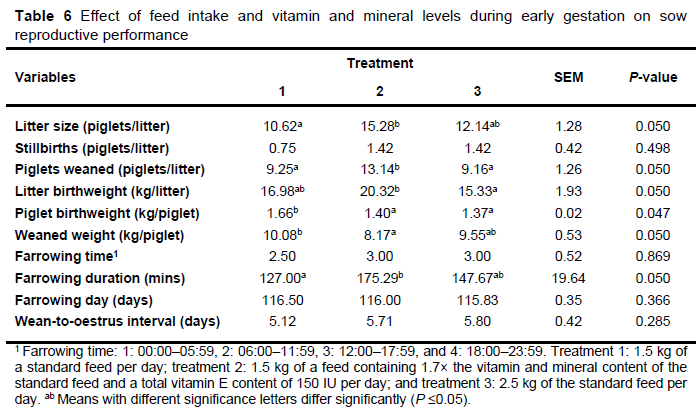
Sows in treatment 2 had the thickest backfat on day one of lactation, but had the numerically thinnest backfat by weaning (day 35 of lactation). This is most likely because treatment 2 sows produced the largest litters (15.28 piglets/litter, compared to 10.62 and 12.14 piglets/litter for treatments 1 and 3, respectively). This treatment group also weaned more piglets per sow than the other two treatment groups (13.14 piglets/litter, compared to 9.25 and 9.17 piglets/litter for treatments 1 and 3, respectively). The large litters in treatment 2 resulted in a high loss of backfat during lactation, as seen on days 18 and 35. Quesnel et al. (2007) reported that sows with large litters exhibited a more extreme change in backfat thickness than sows with smaller litters (−4.0 ± 0.6 mm and −0.3 ± 0.6 mm, respectively), when comparing sows with the same feed intake.
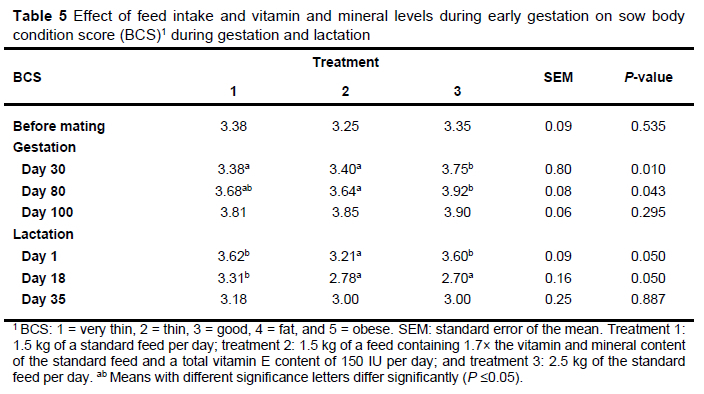
Table 5 reports the sows' BCS results. Before mating, there were no differences in the BCSs of the sows. In contrast, by days 30 and 80 of gestation, sows in treatment 3 had the highest BCSs (P = 0.010 and P = 0.043, respectively), but by day 100 of gestation, there were no significant differences between the groups. Moreover, on day one of lactation, treatments 1 and 3 had higher BCSs than treatment 2 (P = 0.050). On day 18 of lactation, treatment 1 had the highest BCS of the three groups (P = 0.050), because treatment 1 sows had the smallest litters. At weaning, there were no differences in BCSs between the treatments.
Body condition scoring differs at each stage of production. At farrowing, the BCS should range from 3.0 to 4.0. At weaning, the BCS reaches 2.5 to 3.0, and the change in the BCS of the sow during lactation is also influenced by litter size (Soni et al., 2019). High feed intake linearly increases the gain in BCS, body weight, backfat thickness, and calliper units (a method used to measure the BCS) during the first month of gestation (Mallmann et al., 2020). Sows in this study had an average initial BCS of 3.2-3.4 (before mating). Treatment 3 sows had the highest BCS on day 30 of gestation, because of their high feed intake, resulting in this group also having the highest BCS on day 80 of gestation. However, this was not the case on day 100 of gestation, because from day 80 of gestation onwards all sows received 4.8 kg feed/day, so all sows BCSs reached 3.5 to 4.0 before farrowing.
During lactation, the sow invests its energy resources in the piglets, making it challenging for sows to maintain their body condition while nursing a large litter, and there is a risk of substantial weight loss during lactation (Andersson, 2018). In this study, treatment 2 showed the highest BCS loss on day one of lactation. This can be explained by the larger litters and higher litter birthweights of this treatment compared to the other groups, which resulted in not only a greatly reduced BCS but also a reduced body weight after farrowing. Similarly, treatment 1 had a higher BCS on day 18 of lactation and a higher piglet weaning weight because of its smaller litters and fewer piglets weaned.
Reproductive performance of sows
The sows' reproductive performance results are shown in Table 6. Treatment 2 sows, which received 1.5 kg of feed/day of a feed containing 1.7× the vitamin and mineral content of the treatment 1 feed, as well as a total vitamin E concentration of 150 IU, had the largest litters at birth (P = 0.050), producing 15.29 piglets/litter, compared to 10.63 and 12.14 for treatments 1 and 3, respectively. Treatment 2 sows also had the highest number of weaned piglets (P = 0.050). The number of stillborn piglets did not differ significantly between the treatments, while the birthweights per piglet were lower in treatments 2 and 3 than in treatment 1 (P = 0.047). However, litter birthweight was highest in treatment 2 (P = 0.050), whereas weaned weight was highest in treatment 1 (P = 0.050). The weaning-to-oestrus interval, farrowing time, and farrowing day showed no significant differences between the treatments. However, treatment 2 had the longest farrowing duration (P = 0.050), because of its larger litters.
Progesterone is crucial during gestation and influences reproductive performance, particularly during early gestation. Liu et al. (2020) noted that progesterone can maintain a uterine environment suitable for implantation in the absence of uterine contraction. Progesterone is also related to embryo development and embryo survival rate. High implantation and embryo survival rates are associated with larger litter sizes (Argente, 2016). Early uterine secretions are important nutrient sources for the formation of the early conceptus. This experiment focused on nutritional management in first-parity sows and the interaction between feed intake levels and vitamin and mineral levels. Correlations between feeding levels and progesterone levels have been reported previously, but the results remain unclear.
The reports of Virolainen et al. (2004) for early gestation gilts provided with a high feed intake (4.3 kg feed/day for 34 days), a low feed intake (2.1 kg feed/day for 34 days), or a low-high-low feed intake (2.1 kg feed/day for 10 days, 4.3 kg feed/day for 7 days, and 2.1 kg feed/day for 17 days), showed that the high intake group had the lowest progesterone level, followed by the low-high-low and low intake groups.
It has been proposed that an increased feed intake during early gestation leads to a high progesterone clearance rate, and that high feed intake levels thus cause low progesterone levels (Jindal et al., 1996). High feed intake increases the body's metabolism and blood flow, increases the liver blood filtration rate, and thus induces progesterone clearance via the portal vein. Prime & Symonds (1993) reported that when feed intake increased from 1 kg to 3 kg in ovariectomised gilts, there was a 45% increase in blood flow in the portal vein, with a 47% concomitant increase in the metabolic clearance of progesterone. The feed intake level is also related to the insulin level. De et al. (2008) reported that serum insulin concentrations tended to be higher in a high feed intake group than in middle and low feed intake groups during early gestation, whereas progesterone levels were lowest in the high feed intake group. The highest embryonic survival rate was achieved at moderate intake levels, suggesting that other pathways may link feed allowance levels to embryonic survival rates.
In contrast, a high feed intake can support foetal growth and development and result in good reproductive performance. Hoving et al. (2011) found that second parity sows in a group provided with additional feed (3.25 kg feed/day) from day 3 to day 32 of gestation had higher numbers of piglets at birth and higher numbers of piglets born alive than in the control group (2.5 kg feed/day) and the increased protein (2.5 kg feed/day + 30% ileal digestible amino acids) group. Furthermore, the results reported by Hoving et al. (2011) suggested that the increase in the number of piglets born was only because of the additional protein, energy, and micronutrient intakes from the increased feed intake (3.25 kg feed/day), rather than because of an increase in the amino acid levels only, as the increased amino acid level group (2.5 kg feed/day + 30% ileal digestible amino acids) and control group did not significantly differ (13.6 versus 13.2 piglets, respectively). It should also be noted that the increase in feed intake not only increased the energy intake but also increased the vitamin and mineral intake. It is well known that vitamins and minerals are crucial for improving reproductive performance and antioxidant capacity. Some studies have further reported that vitamins are involved in maintaining sex hormone levels (Siddiqui et al., 2021).
Vitamins (such as vitamin E and vitamin D) and minerals (such as selenium, zinc, and copper) are micronutrients that act as antioxidants and antioxidant cofactors in the animal body and during cell growth. Antioxidant vitamins play a role in the attainment and maintenance of pregnancy and foetal development. Common feedstuffs do not contain high concentrations of micronutrients; therefore, they must be added to animal feeds to meet animals' requirements and improve production efficiency. During gestation, the levels of free radicals, such as reactive oxygen species, rapidly increase and induce oxidative stress, which damages cell development (Lipiński et al., 2019). Vitamin E is a commonly used antioxidant, especially for limiting lipid peroxidation. It can donate electrons to free radicals, causing their destruction and reducing the number of active free radicals available (Aziz et al., 2019). Less oxidation results in less cell damage, preeclampsia, miscarriage, and foetal intrauterine growth restriction. Vitamin E normally co-functions with selenium; both are antioxidant micronutrients, and deficiencies in reproducing sows can cause foetal resorption and a reduction in litter size (Mahan & Vallet, 1997). Vitamin E can also mimic the effects of progesterone, despite not being a hormone itself (Siddiqui et al., 2021). In this experiment, the total vitamin E concentration in the diet was increased to 150 IU/kg, which exceeds the National Research Council (2012) recommendation of 44 IU/kg, because current commercial recommendations suggest using vitamin E at levels of 60-220 IU/kg (Dalto & da Silva, 2020).
Vitamin A in uterine secretions may protect the conceptus against the oxidising activity of uteroferrin. The secretion of endometrial retinol-binding protein from liver reserves seems to be largely controlled by progesterone and may be influenced by oestrogen. Vitamin D significantly decreases the production of reactive oxygen species, which inhibit cell proliferation. It may also increase progesterone secretion by caprine granulosa cells in vitro (Grzesiak et al., 2022). A high intake of riboflavin during early pregnancy may increase riboflavin transfer to the conceptus, improving the conception rate and/or embryonal survival (Mahan & Vallet, 1997). Folic acid (vitamin B6) plays an important role in maintaining the reproductive state of dams. In early conceptus development, when DNA, RNA, and protein synthesis rates are high, the folic acid requirement to increase litter size is expected to be higher than during other periods of gestation (Mahan & Vallet, 1997). The iron of the uteroferrin molecule is used for haemoglobin formation, and the liver is the primary site of haematopoiesis in developing foetuses, crossing the maternoplacental barrier (Mahan & Vallet, 1997).
In the present study, treatment 2 had the highest litter size, possibly because of the 1.7× higher vitamin and mineral content of this diet, along with the higher total vitamin E concentration (150 IU). These results concur with those of Su et al. (2025b), who found that a low feed intake (1.5 kg feed/day) with increased (2×) levels of vitamins and minerals during early gestation can increase litter size as much as a high feed intake can (3 kg feed/day). Increased vitamin and mineral levels induce more antioxidant and progesterone secretion. In addition, a low feed intake increases progesterone secretion, as previously mentioned. Further research is needed to identify the specific period during early gestation when micronutrient levels should be increased in relation to feeding levels. This will help clarify whether elevated micronutrient levels are required only on the day of implantation or throughout the entire early gestation stage.
Conclusions
The results of this study indicate that during early gestation (days 0-30), sows with a low intake (1.5 kg feed/day) of a diet containing a high vitamin and mineral concentration (1.7× that of the control group) and a total vitamin E concentration of 150 IU had a more efficient increase in litter size and number of piglets weaned than both sows with a high feed intake (2.5 kg feed/day) and thus high vitamin and mineral intake, and sows with a low feed intake (1.5 kg feed/day) and low vitamin and mineral intake. Sows with a high feed intake had the highest body weight, backfat thickness, and BCS on day 30 of gestation; however, these gains were lost during lactation. Our findings confirm that a low intake of a feed with a high vitamin and mineral concentration can increase litter size. However, further research is needed to determine the specific period during early gestation when additional vitamins and minerals should be supplemented.
Authors' contributions
K.K. collected the data for this study and handled the methodology, writing, and original draft preparation. L.C.H. was responsible for conceptualisation and methodology, conducted the statistical analyses, collaborated in interpretation of the results, and reviewed the manuscript. S.P.S. handled the methodology, collaborated in the interpretation of the results, and reviewed the manuscript. W.J. and J.W.L. collaborated in the interpretation of the results and reviewed the manuscript. All authors have read and approved the final manuscript.
Conflict of interest declaration
We declare that we have no conflicts of interest with any organisation.
Acknowledgements
This experiment was supported financially by the Yu Chou Friendly Agriculture Research Institute and the facilities of the National Pingtung University of Science and Technology. The authors would like to thank the EBN lab mates and staff for their assistance.
References
- Andersson, E., 2018. Impact of litter size on sow health and welfare. Licentiate thesis. Swedish University of Agricultural Sciences, Department of Animal Environment and Health, Skara, Sweden.
-
Argente, M.J., 2016. Major components in limiting litter size. In: Insights from Animal Reproduction. Ed: Payan Carreira, R., InTech, London, UK. pp. 87-114. DOI: http://dx.doi.org/10.5772/62280
» http://dx.doi.org/10.5772/62280 -
Aziz, M.A., Diab, A.S., & Mohammed, A.A., 2019. Chapter 1: Antioxidant categories and mode of action. In: Antioxidants. Ed: Shalaby, E. IntechOpen Book Series: Physiology, Volume 5, London, UK. pp. 3-20. DOI: http://dx.doi.org/10.5772/intechopen.77838
» http://dx.doi.org/10.5772/intechopen.77838 -
Dalto, D.B. & da Silva, C.A., 2020. A survey of current levels of trace minerals and vitamins used in commercial diets by the Brazilian pork industry-a comparative study. Translational Animal Science, 4:195. DOI: https://doi.org/10.1093/tas/txaa195
» https://doi.org/10.1093/tas/txaa195 -
De, W., Ai-rong, Z., Yan, L., Sheng-yu, X., Hai-yan, G., & Yong, Z., 2008. Effect of feeding allowance level on embryonic survival, IGF-1, insulin, GH, leptin, and progesterone secretion in early pregnancy gilts. Journal of Animal Physiology and Animal Nutrition, 93:577-585. DOI: https://doi.org/10.1111/j.1439-0396.2008.00844.x
» https://doi.org/10.1111/j.1439-0396.2008.00844.x -
Farmer, C., Maes, D., & Peltoniemi, O., 2019. Chapter 18: Mammary system. In: Diseases of Swine. Eds: Zimmerman, J.J., Burrough, E.R., Karriker, L.A., Schwartz, K.J., & Zhang, J., John Wiley & Sons Ltd., Chichester, UK. pp. 313-338. DOI: https://doi.org/10.1002/9781119350927.ch18
» https://doi.org/10.1002/9781119350927.ch18 -
Geisert, R.D., Meyer, A.E., Pfeiffer, C.A., Johns, D.N., Prather, R.S., & Spencer, T.E., 2020. Early embryonic loss is an important mechanism for maximizing litter size in the pig. Journal of Animal Science, 98:123-123. DOI: https://doi.org/10.1093/jas/skaa278.225
» https://doi.org/10.1093/jas/skaa278.225 -
Grzesiak, M., Tchurzyk, M., Socha, M., Sechman, A., & Hrabia, A., 2022. An overview of the current known and unknown roles of Vitamin D3 in the female reproductive system: Lessons from farm animals, birds, and fish. International Journal of Molecular Sciences, 23:14137. DOI: https://doi.org/10.3390/ijms232214137
» https://doi.org/10.3390/ijms232214137 -
Hoving, L.L., Soede, N.M., Van der Peet-Schwering, C.M.C., Graat, E.A.M., Feitsma, H., & Kemp, B., 2011. An increased feed intake during early pregnancy improves sow body weight recovery and increases litter size in young sows. Journal of Animal Science, 89:3542-3550. DOI: https://doi.org/10.2527/jas.2011-3954
» https://doi.org/10.2527/jas.2011-3954 -
Jindal, R., Cosgrove, J.R., Aherne, F.X., & Foxcroft, G.R., 1996. Effect of nutrition on embryonal mortality in gilts: association with progesterone. Journal of Animal Science, 74:620-624. DOI: https://doi.org/10.2527/1996.743620x
» https://doi.org/10.2527/1996.743620x -
Langendijk, P., 2021. Latest advances in sow nutrition during early gestation. Animals, 11:1720. DOI: https://doi.org/10.3390/ani11061720
» https://doi.org/10.3390/ani11061720 -
Leal, D.F., Muro, B.B., Nichi, M., Almond, G.W., Viana, C.H., Vioti, G., Carnevale, R.F., & Garbossa, C.A., 2019. Effects of post-insemination energy content of feed on embryonic survival in pigs: A systematic review. Animal Reproduction Science, 205:70-77. DOI: https://doi.org/10.1016/j.anireprosci.2019.04.005
» https://doi.org/10.1016/j.anireprosci.2019.04.005 - Li, Y., Cui, S., Yang, X., Baidoo, S.K., & Johnston, L.J., 2018. Evaluating body condition of group-housed gestating sows: sow caliper measurements vs. backfat thickness and visual scores. Journal of Animal Science, 96:47-47.
-
Lipiński, K., Antoszkiewicz, Z., Mazur-Kuśnirek, M., Korniewicz, D., & Kotlarczyk, S., 2019. The effect of polyphenols on the performance and antioxidant status of sows and piglets. Italian Journal of Animal Science, 18:174-181. DOI: https://doi.org/10.1080/1828051X.2018.1503043
» https://doi.org/10.1080/1828051X.2018.1503043 -
Liu, X., Schwarz, T., Murawski, M., Tayade, C., Kridli, R., Granados, A.P., Sharma, C., & Bartlewski, P.M., 2020. Measurements of circulating progesterone and estrone sulfate concentrations as a diagnostic and prognostic tool in porcine pregnancy revisited. Domestic Animal Endocrinology, 71:106402. DOI: https://doi.org/10.1016/j.domaniend.2019.106402
» https://doi.org/10.1016/j.domaniend.2019.106402 -
Mahan, D.C. & Vallet, J.L., 1997. Vitamin and mineral transfer during fetal development and the early postnatal period in pigs. Journal of Animal Science, 75:2731-2738. DOI: https://doi.org/10.2527/1997.75102731x
» https://doi.org/10.2527/1997.75102731x -
Mallmann, A.L., Oliveira, G.S., Ulguim, R.R., Mellagi, A.P.G., Bernardi, M.L., Orlando, U.A., Gonçalves, M.A.D., Cogo, R.J., & Bortolozzo, F.P., 2020. Impact of feed intake in early gestation on maternal growth and litter size according to body reserves at weaning of young parity sows. Journal of Animal Science, 98(3): skaa075. DOI: https://doi.org/10.1093/jas/skaa075
» https://doi.org/10.1093/jas/skaa075 - National Research Council (NRC), 2012. Nutrient Requirements of Swine, 11th edition. National Academy Press, Washington, DC.
-
Prime, O.R. & Symonds, H.W., 1993. Influence of plane of nutrition on portal blood flow and the metabolic clearance rate of progesterone in ovariectomized gilts. Journal of Agricultural Science, 121:389-397. DOI: https://doi.org/10.1017/S0021859600085580
» https://doi.org/10.1017/S0021859600085580 -
Quesnel, H., Etienne, M., & Père, M.C., 2007. Influence of litter size on metabolic status and reproductive axis in primiparous sows. Journal of Animal Science, 85:118-128. DOI: https://doi.org/10.2527/jas.2006-158
» https://doi.org/10.2527/jas.2006-158 -
Roongsitthichai, A. & Olanratmanee, E.O., 2021. Fetal mortality associated with backfat thickness at first mating and first farrowing of the primiparous sows raised in a commercial herd in Thailand. Tropical Animal Health and Production, 53:1-8. DOI: https://doi.org/10.1007/s11250-021-02624-3
» https://doi.org/10.1007/s11250-021-02624-3 -
Roongsitthichai, A. & Tummaruk, P., 2014. Importance of backfat thickness to reproductive performance in female pigs. Thai Journal of Veterinary Medicine, 44:171-178. DOI: https://doi.org/10.56808/2985-1130.2557
» https://doi.org/10.56808/2985-1130.2557 - SAS Institute, 2021. SAS Users Guide: Statistics. SAS Institute, Cary, NC, USA.
-
Siddiqui, M.A., Ahmad, U., Ali, A., Ahsan, F., & Haider, M.F., 2021. Role of vitamin E in pregnancy. In: Vitamin E in Health and Disease - Interactions, Diseases and Health Aspects. Eds: Erkekoglu, E. & Scherer Santos, J., IntechOpen, London, UK. DOI: https://doi.org/10.5772/intechopen.97268
» https://doi.org/10.5772/intechopen.97268 - Soni, A., Mishra, S., Singh, N., Bobade, M.D., Dubey, A., Yadav, A., Bhagat, S., & Verma, U., 2019. Body condition scoring of swine: A review. International Journal of Chemical Studies, 7:749-768.
-
Su, S.P., Hsia, L.C., Jantasin, W., Lee, J.W., & Hsuuw, Y.D., 2025a. Early gestation feeding method improves reproductive performance of sow. Tropical Animal Science Journal, 48:156-162. DOI: https://doi.org/10.5398/tasj.2025.48.2.156
» https://doi.org/10.5398/tasj.2025.48.2.156 -
Su, S.P., Hsia, L.C., Jantasin, W., Lee, J.W., & Hsuuw, Y.D. 2025b. The impact of increased vitamin and mineral intake during early gestation on the reproductive performance of sows. South African Journal of Animal Science, 55:551-560. DOI: https://doi.org/10.17159/sajas.v55i11.03
» https://doi.org/10.17159/sajas.v55i11.03 -
Surai, P.F. & Fisinin, V.I., 2016. Selenium in sow nutrition. Animal Feed Science and Technology, 211:18-30. DOI: https://doi.org/10.1016/j.anifeedsci.2015.11.006
» https://doi.org/10.1016/j.anifeedsci.2015.11.006 -
Thongkhuy, S., Chuaychu, S.B., Burarnrak, P., Ruangjoy, P., Juthamanee, P., Nuntapaitoon, M., & Tummaruk, P., 2020. Effect of backfat thickness during late gestation on farrowing duration, piglet birth weight, colostrum yield, milk yield and reproductive performance of sows. Livestock Science, 234:103983. DOI: https://doi.org/10.1016/j.livsci.2020.103983
» https://doi.org/10.1016/j.livsci.2020.103983 -
Virolainen, J.V., Tast, A., Sorsa, A., Love, R.J., & Peltoniemi, O.A.T., 2004. Changes in feeding level during early pregnancy affect fertility in gilts. Animal Reproduction Science, 80:341-352. DOI: https://doi.org/10.1016/j.anireprosci.2003.08.005
» https://doi.org/10.1016/j.anireprosci.2003.08.005 -
Wang, L., Xu, X., Su, G., Shi, B., & Shan, A., 2017. High concentration of vitamin E supplementation in sow diet during the last week of gestation and lactation affects the immunological variables and antioxidative parameters in piglets. Journal of Dairy Research, 84:8-13. DOI: https://doi.org/10.1017/S0022029916000650
» https://doi.org/10.1017/S0022029916000650
Accepted 5 April 2026
Published 04 May 2026