Sprinkler flow rate affects physiological, behavioural and production responses of Holstein cows during heat stress
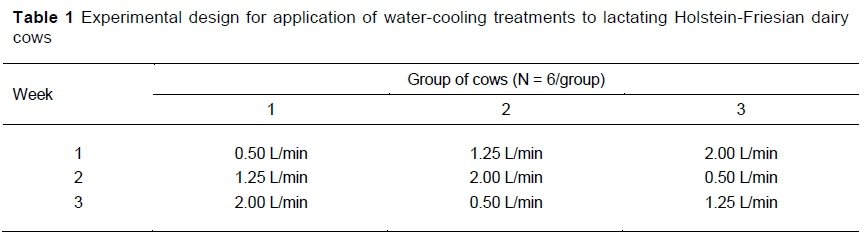
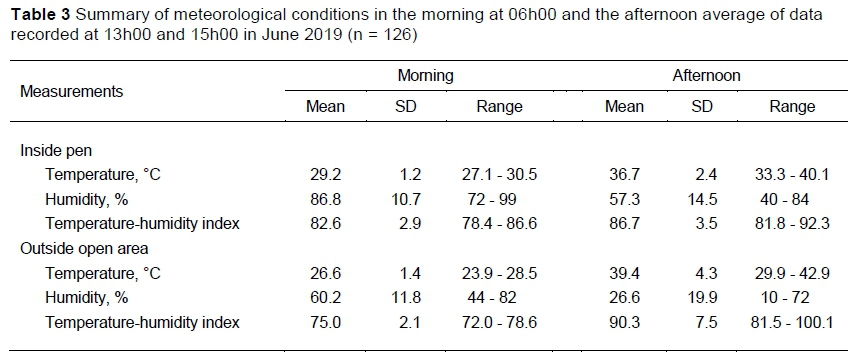
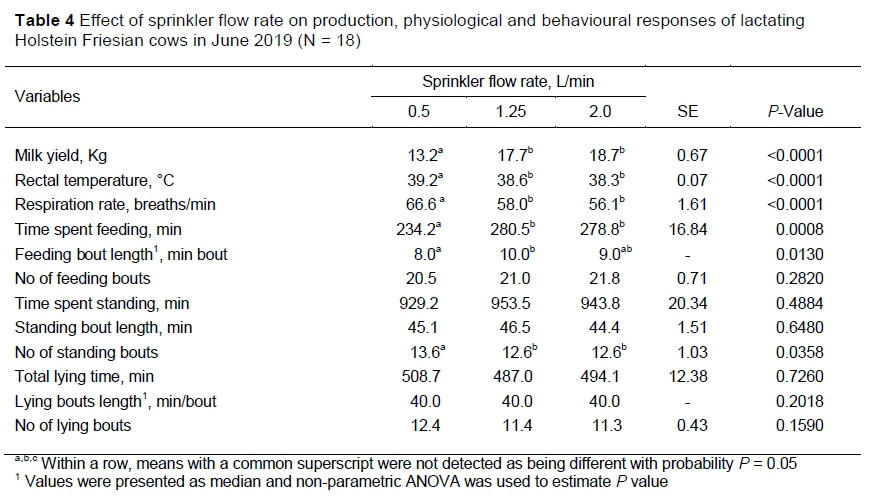
Heat stress is a major challenge for dairy cows in summer. Sprinklers at feed bunks are commonly used to cool cows. These sprinklers use groundwater, which is becoming limited. There is a need to explore a more efficient use of this precious resource. Eighteen lactating Holstein cows were randomly subjected to three sprinkler flow rates in a crossover design. These rates were 0.5, 1.25, and 2.0 L/min. The average temperature humidity index of the shed was 86.7 during the study. The cows in the 1.25 and 2.0 L/min groups had 0.6 °C and 0.9 °C lower rectal temperatures, respectively, than the 0.5 L/min group. Similarly, the 1.25 and 2.0 L/min groups had lower respiration rates than the 0.5 L/min group. The daily milk yield was approximately 5 kg/d higher in the 1.25 and 2.0 L/min groups, which were not detectably different from each other, than the 0.5 L/min group. The cows in the 0.5 L/min group spent less time feeding than those in the 1.25 and 2.0 L/min groups. These results suggested that sprinkler flow rates greater than 0.5 L/min produced desirable responses by the cows. The flow rate 1.25 L/min appeared to be more efficient as it used 37.5% less groundwater compared with 2.0 L/min.
cow performance; heat stress; sprinkler cooling; welfare