Pre-treatments of Mirasolia diversifolia using Lactobacillus bulgaricus at different dosages and fermentation times: Phytic acid concentration, enzyme activity, and fermentation characteristics
Abstract
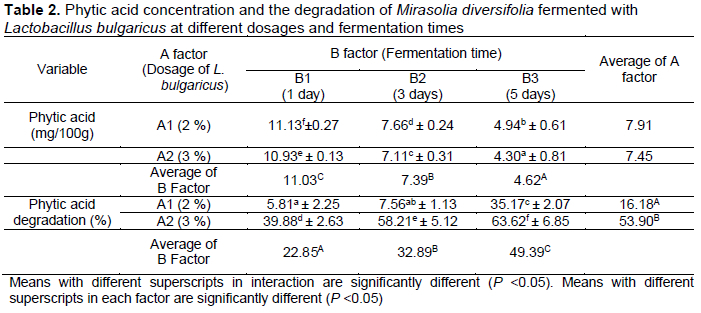
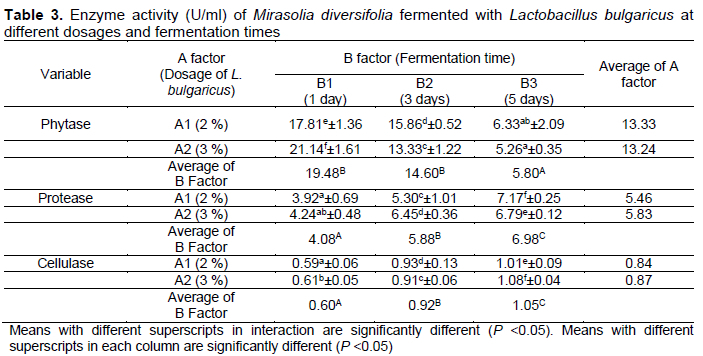
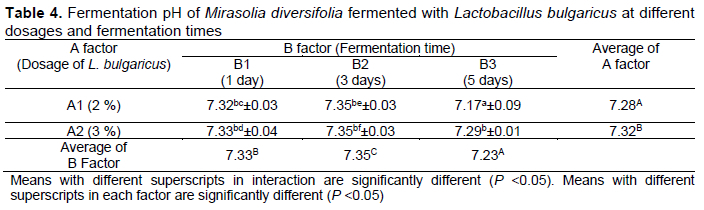
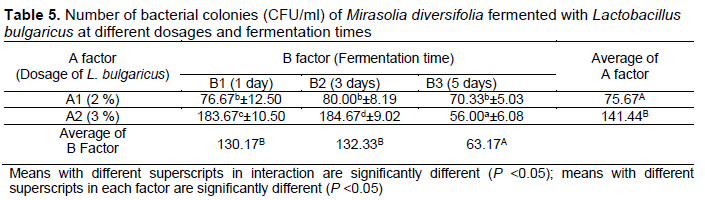
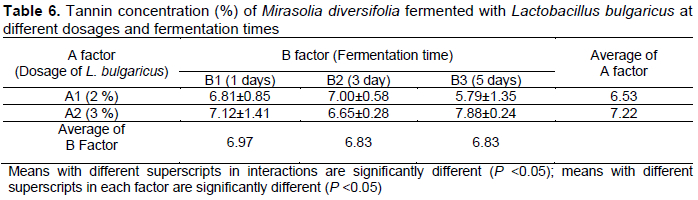
The present study aimed to determine the optimal dosage and fermentation time of Mirasolia diversifolia (leaves and stems) using Lactobacillus bulgaricus bacteria by observing the reduction in phytic acid, the activity of enzymes, pH of fermentation, number of bacterial colonies, and tannin concentration. An experiment was conducted using a completely randomized design (CRD) and 2x3 factorial design with three replications. The treatment factors were Factor A (L. bulgaricus dosages): A1 = 2% (g/v), A2 = 3% (g/v); and Factor B (fermentation times): B1 = 1 d, B2 = 3 d, B3 = 5 d. The dosage of L. bulgaricus and fermentation time had an interaction on phytic acid and its degradation, enzyme activities, pH fermentation, and the number of bacterial colonies. Tannin concentration was not affected. Mirasolia diversifolia fermented with 3% of L. bulgaricus for 5 d resulted in the lowest phytic acid content. Future research requires evaluating in vitro and in vivo dietary formulations for cattle using M. diversifolia fermented with L. bulgaricus.
dosage and fermentation time; enzyme activity; fermentation characteristics; Lactobacillus bulgaricus; Mirasolia diversifolia; phytic acid