Biochemical parameters of cedar (Mezla) honey
Abstract
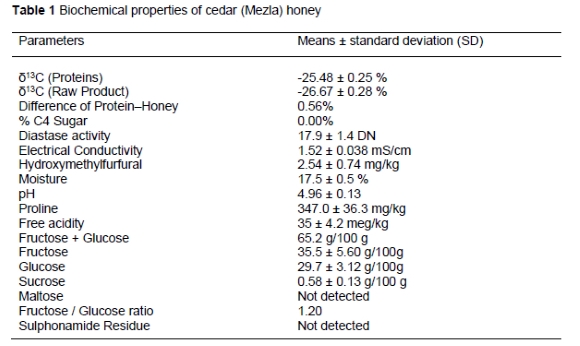
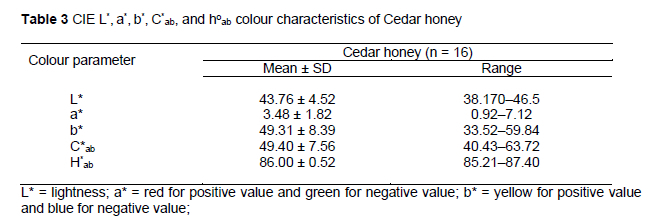
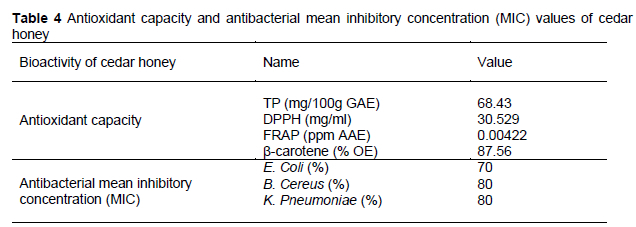
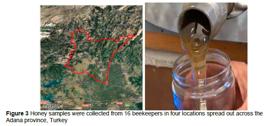
This study was conducted to determine the characteristics of cedar honey, which is an important honeydew honey produced on the Mediterranean coast of Turkey. The geographical classification of the honey was determined by applying carbon isotope, honey colour, aromatic compound, antioxidant activity, antibacterial minimum inhibitory concentration values, and physicochemical analyses to 16 samples collected from four regions. The investigation encompassed measurements of õ13C values for both protein and raw honey, obtaining the respective isotopic compositions of -25.48% and -26.67%. Diastase activity (17.9 DN), electrical conductivity (1.52 mS/cm), hydroxymethylfurfural (2.54 mg/kg), moisture (17.5%), pH (4.96), proline (347 mg/kg), free acidity (35 meq/kg), fructose (35.5 g/100 g), glucose (29.7 g/100 g), and sucrose (0.58 g/100 g) were determined. The L*, a*, and b* values were measured as 43.76 ± 4.52, 3.48 ± 1.82, and 49.31± 8.39, respectively. The total phenolic content (TP), DPPH, and FRAP were determined as 68.43 mg/100g GAE, 30.529 mg/ml, and 0.00422 ppm AAE, respectively. Antibacterial activity against Escherichia coli, Bacillus cereus, and Klebsiella pneumoniae displayed minimum inhibitory effects of 70%, 80%, and 80%, respectively. All samples exhibited cedar honey (honeydew) properties and all physicochemical parameters met the criteria set by regulatory standards for honeydew.
antimicrobial activity; antioxidant activity; aromatic component; cedar honey; chemical parameters
 Thumbnail
 Thumbnail
 Thumbnail
 Thumbnail