Effects of wood vinegar supplementation on the performance, carcass yield, intestinal histomorphology, and immune status of broiler chickens
Abstract
This study aimed to determine the effects of the addition of wood vinegar (WV) to drinking water on the production performance, intestinal histomorphology, and immune response of broiler chickens. In total, 432 one-day-old chicks were allocated to six groups (T1-T6), with six replicates of 12 chicks each (72 chicks per treatment group), and raised for 35 days. Group T1 (0.0% WV) served as a negative control, group T2 (0.02% oxytetracycline) as a positive control, and groups T3 to T6 as experimental groups that received WV in their drinking water at 0.1%, 0.2%, 0.5%, and 1.0%, respectively. Data were analysed using a general linear model, and the significance of differences between the treatment groups was determined using Duncan's multiple range test. The results demonstrated that the addition of WV to drinking water enhanced the feed conversion ratio, cumulative weight gain, and final body weight, while the abdominal fat yield was significantly decreased in the WV treatment groups. Compared to the negative control and antibiotic-treated groups, WV improved the ileum and jejunum villus height, as well as increasing plasma immunoglobulin A and M concentrations and the expression of the insulin-like growth factor-1 and growth hormone receptor genes in all the treated groups. Collectively, these results demonstrate that WV is a suitable replacement for antibiotics in broiler production, with no adverse effects on growth performance.
chickens; gene expression; growth metrics; immunoglobulin; organic acid
Introduction
Antibiotic growth promoters are used in the poultry industry to prevent diseases, increase feed conversion efficiency, improve gut health, and promote growth (Mehdi et al., 2018; Aminullah et al., 2025). However, antibiotic-resistant microorganisms can negatively affect human health (Azizi et al.,2024a) and consequently, most nations worldwide, including those of the European Union, have prohibited the addition of antibiotics to animal diets. The development of antibiotic-free diets for livestock is therefore imperative, and a concerted effort has been made to explore substitutes for antibiotics as growth promoters for livestock (Khan et al., 2014). Non-antibiotic alternatives include prebiotics, probiotics, symbiotics, postbiotics, paraprobiotics, metabolites, and organic acids (Loh et al., 2014; Bagal et al., 2016; Danladi et al., 2022). In chickens, organic acids can serve as replacements for antibiotics, and, in the interest of animal health and consumer safety, the European Union has encouraged the widespread adoption of organic acids and related salts as supplements for inclusion in livestock feed (Archana et al., 2019). This regulatory endorsement reflects the scientific confidence in the safety and efficacy of organic acids for ensuring animal health and increasing production efficiency. Earlier findings suggest that dietary organic acids can enhance performance, improve gut function, inhibit the proliferation of pathogenic bacteria, and improve digestibility and mineral assimilation (Archana et al., 2019).
Wood vinegar (WV) is also known as pyroligneous acid (Gama et al., 2024), and is a residue generated during the production of charcoal. It is typically obtained by burning and distilling wood under airless conditions. Wood vinegar is acidic, with a pH typically ranging from 2.5 to 3.7, and its colour varies from yellowish brown to dark or reddish brown, depending on the source material and production conditions (Gama et al., 2024). Plant materials that can be used to produce WV include bamboo, mangosteen, eucalyptus, broad-leaf trees, and coconut shells (Diógenes et al., 2019). Wood vinegar contains about 200 distinct organic acids and various minerals and microelements that can stimulate animal physiological processes (Kim, 1996). Its primary constituents include organic acids, phenols, furans, ketones, pyrans, alcohols, methanol, and aldehydes (Araújo et al., 2017; Pimenta et al., 2018; Suresh et al., 2019). Often referred to as a natural organic acid, WV creates an acidic environment in the gastrointestinal tract, which can modulate the composition of the intestinal microbiota (Sasaki et al., 1999). Wood vinegar is predominantly recognised as a safe additive in the food industry, and is valued for its distinctive smoky aroma. Additionally, it serves as a natural preservative that enhances the shelf life of products such as sausages, meats, and fish (Achmadi et al., 2013; Montazeri et al., 2013). Furthermore, Gama et al. (2024) described WV as a naturally derived chemical compound whose safety and functional properties have been acknowledged by several internationally recognised regulatory authorities. These include the Chemical Abstracts Service (CAS 8030-97-5), the Flavour and Extract Manufacturers Association (FEMA 2967), the European Inventory of Existing Commercial Chemical Substances (EINECS 232-450-0), Harmonised Commodity Description and Coding (HS 2915.50.5000), and the Food and Drug Administration (FDA-21-CFR compliance 172.515).
With its rich composition of bioactive compounds and inherent preservative properties, WV has attracted considerable scientific interest globally, particularly over the past two decades. It has found diverse applications across multiple fields, including animal production, veterinary medicine, the food industry, and agriculture, and has been used as a source of antioxidants, insect repellents, and antimicrobial agents (Gama et al., 2024). In animal nutrition, WV has been reported to increase feed utilisation efficiency and improve the intestinal morphology of broiler chickens by increasing crypt depth (CD) and villus height (VH) (Samanya & Yamauchi, 2001). It has also been found to enhance the growth and nutrient absorption of weaner pigs (Choi et al., 2009), and improve growth and decrease the proportion of harmful gut bacteria in pigs (Yan et al., 2012). Although WV contains a diverse range of bioactive compounds, it is the synergistic interaction among these constituents that distinguishes it from other organic acids. In the context of this study, organic acids and phenolic compounds played a predominant role. Wood vinegar is particularly rich in phenolic compounds such as guaiacol and syringol, which possess well-documented antioxidant properties. These phenolics are believed to enhance growth performance by mitigating oxidative stress and improving nutrient absorption in animals. Their antioxidant activity may also contribute to improved carcass traits by supporting muscle development and modulating fat deposition (Blavi et al., 2021). Furthermore, WV contains organic acids, including acetic, formic, propionic, butyric, lactic, and valeric acid, which can exert beneficial effects on gut health. These acids reduce the pH of the gastrointestinal tract, thereby inhibiting the proliferation of pathogenic bacteria and supporting the growth of beneficial gut microbiota. A healthier gut environment is associated with increased VH and reduced CD, resulting in a higher VH:CD ratio, an important indicator for enhanced nutrient absorption and improved growth performance (Khan & Iqbal, 2015).
Despite the promising benefits of WV, its effects on growth performance, carcass characteristics, immune status, gene expression related to growth, and histomorphology of the small intestine in broiler chickens remains inadequately explored. Understanding these variables is crucial as they directly relate to the overall health and productivity of poultry, which are vital for sustainable livestock production. Given the potential of WV to enhance poultry production, this study aims to evaluate the effects of WV supplementation in drinking water on growth performance, carcass yield, immune status, intestinal histomorphology, and hepatic growth-related gene expression in broiler chickens. By elucidating these relationships, this research seeks to contribute valuable insights into the potential of WV as a viable alternative to antibiotics in poultry production, enhancing production performance and promoting both animal welfare and public health.
Materials and methods
The study protocol was approved by the Institutional Animal Care and Use Committee of the Universiti Putra Malaysia (reference: UPM/IACUC/AUP-R050/2022), and the research was conducted in accordance with the Guide for the Care and Use of Agricultural Animals in Research and Teaching.
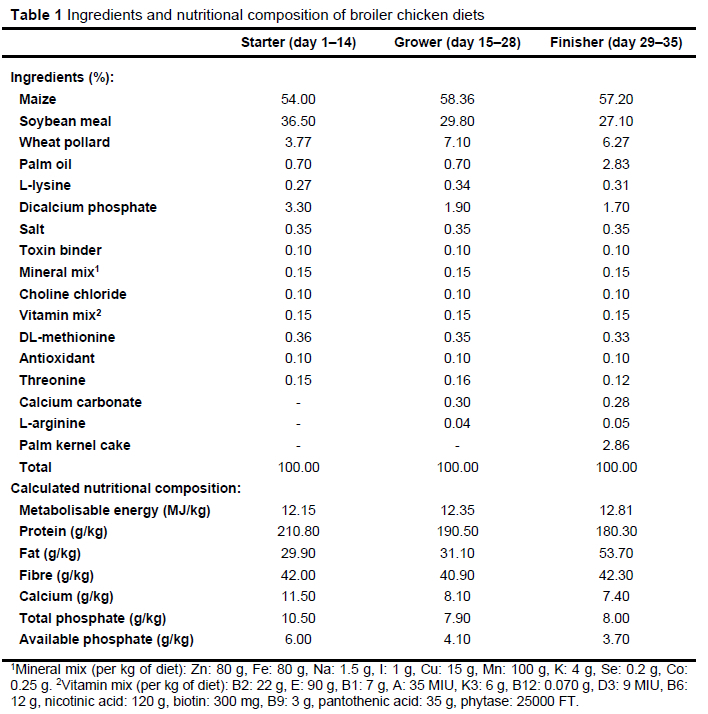
We obtained 432 one-day-old Cobb 500 chicks from FFM Farms Sdn Bhd, Sungai Buloh, Selangor, Malaysia. They were randomly allocated to six treatments (T1-T6), each consisting of six replicate pens containing 12 chicks per pen. The chicks were raised in an enclosed facility at a controlled temperature of 33 ± 1 °C on day 1, which was gradually decreased to approximately 25 ± 1 °C by day 15, with a relative humidity of 60%-70%. The T1 group (0.0% WV) served as a negative control, the T2 group (0.02% oxytetracycline) as a positive control, and groups T3 to T6 received WV in their drinking water at 0.1%, 0.2%, 0.5%, and 1.0%, respectively. Wood vinegar was administered twice daily, at 07:00 and 16:00, in the birds' drinking water. Fresh solutions were prepared before each administration and these solutions were provided ad libitum. The WV utilised in this study was derived from bamboo, and was chemically composed of acetic acid (1.5%), phenol (0.5%), propionic acid (0.0015%), furfural (0.003%), methanol (0.9%), and amino acids (0.019%). On days seven and 21, the chicks were vaccinated against infectious bronchitis and Newcastle disease via eye drops, and on day 14 they were vaccinated against infectious bursal disease, also through ocular administration. Feed and water were provided to the chickens ad libitum. The starter diet was offered for the first 14 days of life, followed by the grower diet from day 15 to 28, and the finisher diet from day 29 to 35, as indicated in Table 1.
The body weights and feed intakes of the chicks were measured weekly. These data were used to calculate the cumulative body weight gain (CWG) and feed conversion ratio (FCR). Six chickens randomly selected from each treatment group at the end of the starter and finisher phases were slaughtered. Samples of the small intestine (duodenum, jejunum, and ileum), blood, and liver were collected for subsequent analyses. An additional six birds per treatment group were randomly selected and slaughtered at the end of the finisher phase for carcass evaluation. Dressing percentage was determined as the ratio of the carcass weight to the slaughter weight. The weights of the internal organs, including the heart, intestine, liver, and spleen, as well as the abdominal fat, were recorded using a digital scale (Aarson, Digital Balance, Haryana, India) and expressed as a percentage of the slaughter weight. The weights of the drumsticks, thighs, shanks, wings, backs, and breast muscles were also measured.
Blood samples were obtained from six chickens per treatment group after slaughter at the end of weeks two and five. The blood was collected into vacutainer tubes containing ethylenediaminetetraacetic acid as an anticoagulant. The samples were mixed by gently inverting the tubes and temporarily stored on ice before centrifugation. Plasma was separated by centrifugation at 3500 x g for 15 minutes at 4 °C (Azizi et al., 2023). The plasma was collected in 1.5 mL tubes and stored at -80 °C until further analysis. The concentrations of immunoglobulin A (IgA), immunoglobulin G (IgG), and immunoglobulin M (IgM) in the plasma samples were determined. The duodenum, jejunum, and ileum samples were analysed to assess the VH and CD. A portion of liver tissue was excised immediately after slaughter, placed in 1.5 mL tubes, snap-frozen in liquid nitrogen, and subsequently stored at -80 °C for gene expression analyses.
Six chickens were selected from individual treatment groups at the end of the starter phase (week two) and finisher phase (week five) and slaughtered. The small intestines (duodenum, jejunum, and ileum) were collected for histomorphological analysis, as described in a previous report (Choe et al., 2012). Sections (5-6 cm in length) were excised from the duodenum (from the middle portion of the duodenal loop), the jejunum (from midway between the end of the duodenal loop and Meckel's diverticulum), and the ileum (from midway between Meckel's diverticulum and the ileocaecal junction), and were carefully washed with phosphate buffered saline and fixed in 10% neutral buffered formalin.
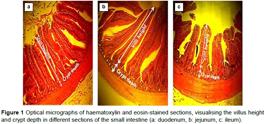
Subsequently, the sections were dehydrated with a tissue processing machine (Leica ASP 3000, Tokyo, Japan) and embedded in paraffin wax (Leica EG 1160, Tokyo, Japan). Sections of 4 μm were cut and fixed on slides, and heated at 58 °C to dry. The slides were later stained with haematoxylin and eosin and then mounted and examined under a light microscope. Villus height was determined as the distance from the villus tip to the villus-crypt junction, while CD was defined as the depth of the invagination between two adjacent villi, and was determined using an image analyser.
Plasma immunoglobulin concentrations (IgA, IgG, and IgM) were evaluated using enzyme-linked immunosorbent assay kits according to the manufacturer's instructions (QAYEE-BIO, Shanghai, China). Briefly, 50 μL standards and appropriately diluted plasma samples (in duplicate) were dispensed into microplate wells. Each well received 50 μL of horseradish peroxidase (HRP), followed by gentle mixing and incubation at 37 °C for 60 minutes. After incubation, the contents were discarded, and the wells were washed five times with washing buffer. Subsequently, 50 μL each of chromogen solution A and B was added to the wells, and the plate was incubated in the dark at 37 °C for 10 minutes. The reaction was terminated by adding 50 μL of stop solution to each well, and the absorbance was immediately measured at 450 nm using a microplate reader (BioTekTM ELx800 Winooski, Vermont, USA). A blank containing only the standard solution (without sample or HRP) was measured, and its absorbance was subtracted from the absorbance of the sample and standard. Plasma concentrations of IgM, IgA, and IgG were calculated from their respective standard curves.
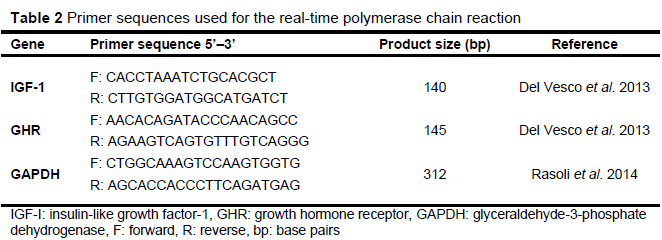
The RNA was extracted from the liver tissue samples using a Total RNA extraction kit (ELK Biotechnology, Wuhan, China) following the manufacturer's instructions. Frozen liver samples (approximated 20 mg in weight) were mixed with 300 μL RNA extraction lysate buffer, homogenised, and centrifuged at 12000 rpm for 5 minutes to collect the supernatant. An equal volume of 70% (v/v) ethanol was then added to the supernatant. The RNA collection and purification process was conducted using an R column, with RNA deproteinised buffer RRPB, DNase I, washing buffer RWB, and finally, RNase-free water to elute the RNA. The purity and concentration (260/280 nm ratio absorbance) of the extracted RNA was measured using a Nanodrop 2000 spectrophotometer (Thermo Scientific Wilmington DE, USA). The RNA was reverse transcribed into cDNA using an Entilink™ 1st Strand cDNA Synthesis kit. The real-time polymerase chain reaction (PCR) was performed on a CFX96 PCR instrument (Bio-Rad Laboratories, Hercules, CA, USA). Each 20 μL reaction volume included 10 μL of EnTurboTM SYBR Green PCR SuperMix (ELK Biotechnology, Wihan, China), 0.4 μL each of the reverse and forward primers (4 μΜ), 1 μL of template cDNA, and 8.2 μL of nuclease-free water. Glyceraldehyde-3-phosphate dehydrogenase (GAPDH) was used as a reference gene. The specific primers for the amplification of the target genes are presented in Table 2.
The data were analysed using one-way analysis of variance with SAS statistical software (version 9.4; SAS Institute, Cary, NC, USA), as shown in the model below:

where Yi,j,k is the dependent variable, μ is the general mean, Ti,j is the effect of WV, and Ei,j,k is the experimental error. The mean values were compared using Duncan's multiple-range test. A probability <0.05 was considered statistically significant.
The quadratic and linear effects of the WV concentrations were evaluated using the orthogonal polynomial contrast mode. Furthermore, regression analysis was used to describe the responses of broiler chickens to inclusion levels of WV using a quadratic equation:
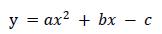
where y is the response variable, a and b are the coefficients of the quadratic equation, c is the intercept, and x is the WV concentration (%).
Results
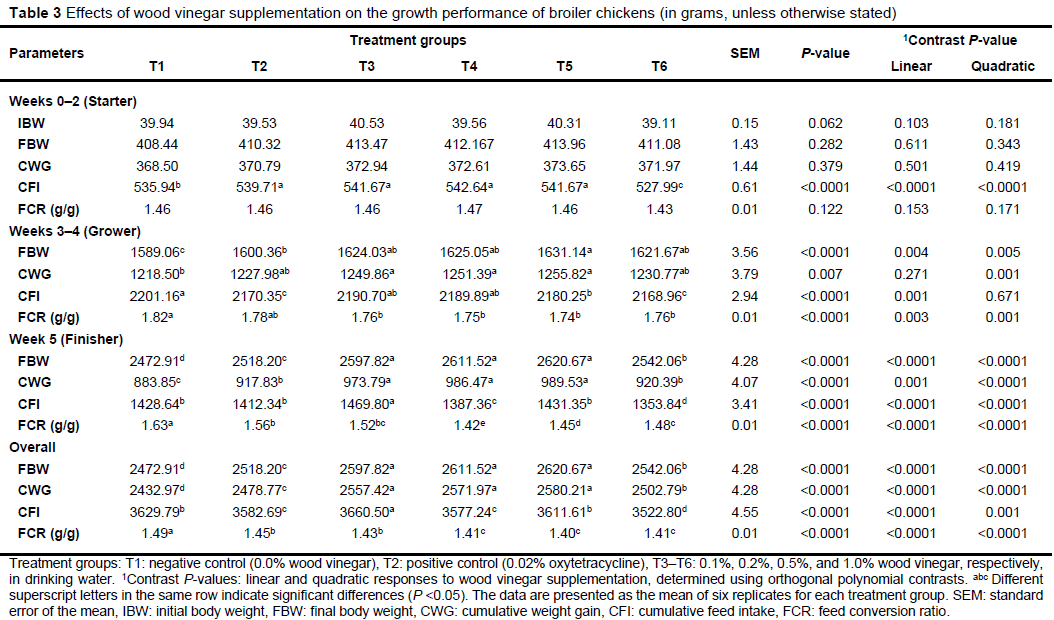
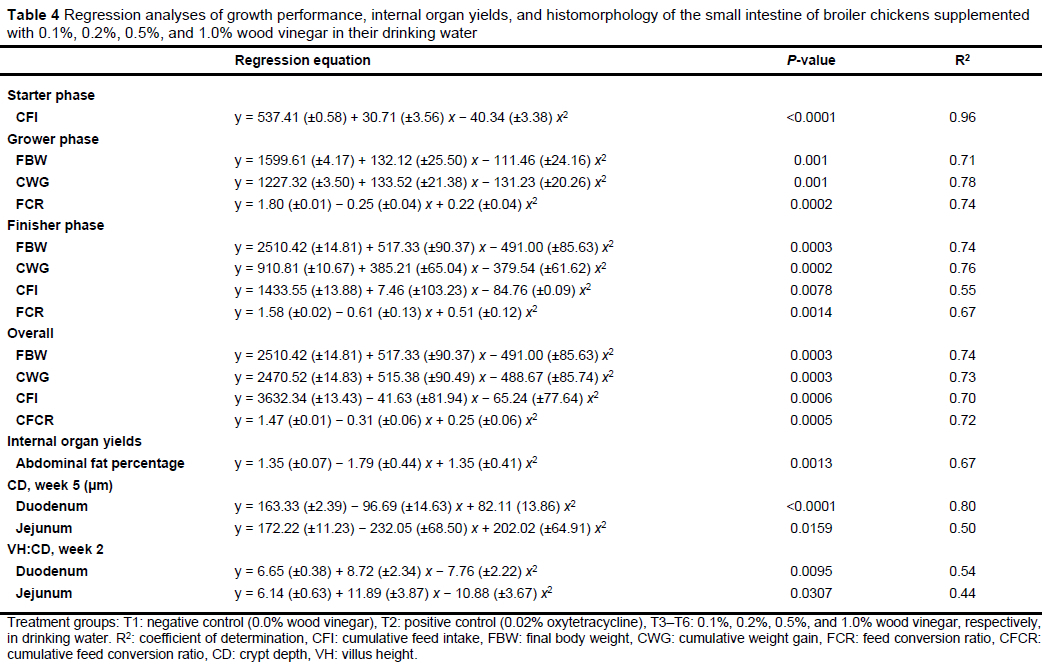
The growth performance of the chickens supplemented with WV is described in Table 3. Other than the cumulative feed intake (CFI), no other parameters were significantly affected during the starter phase. Notably, the CFI exhibited a linear (P <0.0001) increase up to T4, followed by a decline in T5 and T6. The quadratic relationship between the CFI and the levels of WV in the drinking water shows a coefficient of determination (R2) of 0.96, indicating a strong effect of WV on the CFI (Table 4).
During the grower phase, the final body weight (FBW), CWG, CFI, and FCR significantly differed between the treatment groups. The FBW increased linearly (P <0.004) with higher levels of WV up to T5 and subsequently decreased with a further increase in WV inclusion, thereby exhibiting a quadratic trend. This trend line showed a good fit, with a high coefficient of determination (R2 = 0.71) (Table 4). The CWG followed a similar quadratic trend [y = 1227.32 (±3.50) + 133.52 (±21.38) x - 131.23 (±20.26) x2; R2 = 0.78] (Table 4). Conversely, the CFI decreased linearly (P <0.001) with increasing WV supplementation, while the FCR exhibited a quadratic response (P <0.001).
During the finisher phase, significant effects were again observed across all performance parameters. Birds in the WV-treated groups (T3, T4, and T5) had higher FBW and CWG values (P <0.05) compared to both the negative control (T1) and the antibiotic-treated group (T2), while the FCR was significantly improved in T5. Both the FBW and CWG exhibited linear (P <0.0001) and quadratic (P <0.0001) trends, whereas the CFI and FCR decreased linearly and quadratically (P <0.0001) in response to increasing inclusion levels of WV.
In terms of overall growth performance, the birds in groups T3, T4, and T5 exhibited significantly higher FBW and CWG (P <0.05), while those in T4, T5, and T6 demonstrated an improved cumulative feed conversion ratio (CFCR) (P <0.05) compared to the control groups. Moreover, both linear and quadratic trends (P <0.001) were observed across all measured parameters, consistent with the patterns noted during the finisher phase.
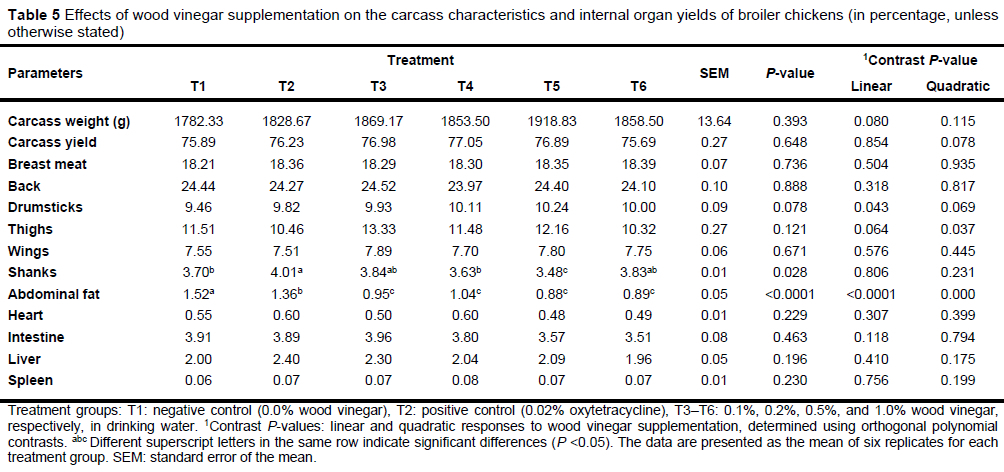
Wood vinegar supplementation had no significant effects on internal organ and carcass traits, except for on the abdominal fat and shank yields (Table 5). The abdominal fat yield was notably reduced in the WV-treated groups relative to the controls (T1 and T2). Furthermore, the percentage of abdominal fat exhibited a quadratic trend [y = 1.35 (±0.07) - 1.79 (±0.44) x + 1.35 (±0.41) x2; R2 = 0.67; P <0.0001] (Table 4) in response to increasing levels of WV.
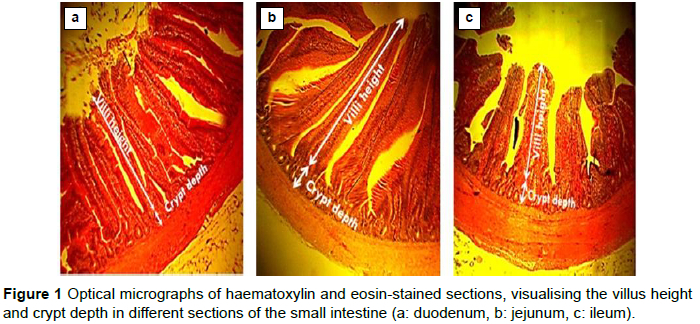
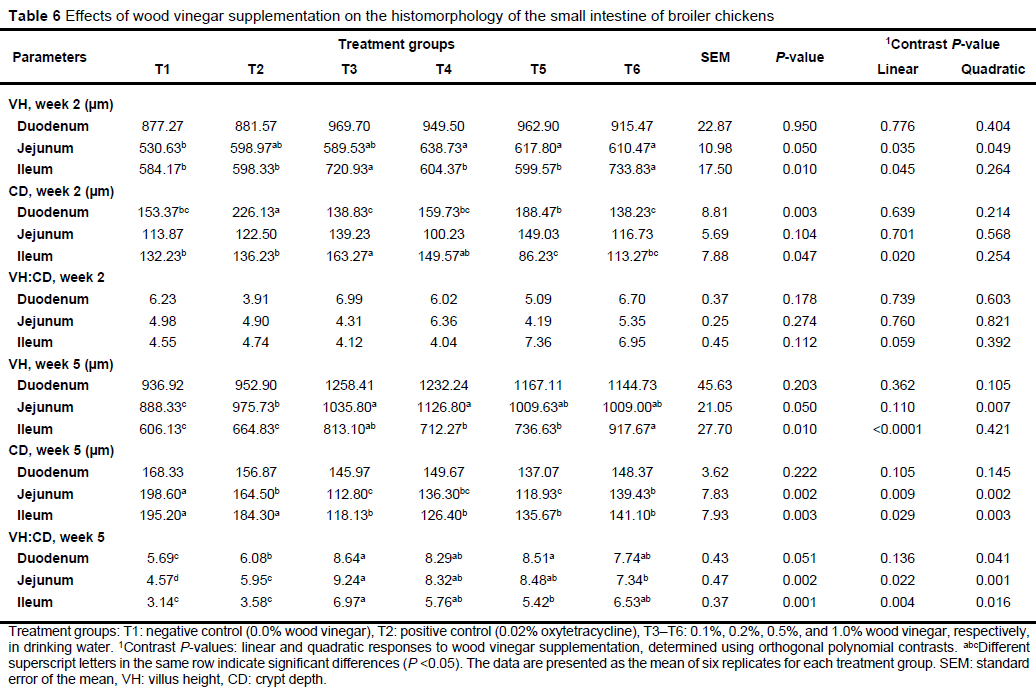
Table 6 presents the effects of WV supplementation on the histomorphology of the small intestine (Figure 1) in broiler chickens. During the starter phase, the duodenal VH was not significantly influenced by WV supplementation. However, a quadratic (P <0.049) trend in jejunal VH was observed, reaching its peak at T4 and T5 before declining at higher inclusion levels. Duodenal CD exhibited no significant linear or quadratic effects, whereas ileal CD showed a linear reduction (P <0.020). The VH:CD ratios in the duodenum, jejunum, and ileum did not significantly differ between the treatment groups.
During the finisher phase, duodenal VH remained unaffected (P >0.05) across all treatment groups. However, jejunal VH followed a quadratic trend (P <0.007), increasing with WV supplementation up to T4 (0.2% WV), before declining at higher doses. Conversely, ileal VH decreased linearly (P <0.0001) with incremental increases in WV supplementation up to T5, and thereafter increased to T6. No significant differences in the duodenal CD were observed between the treatments. Jejunal CD followed both linear and quadratic trends (P <0.009 and P <0.002, respectively) as WV levels increased. Similarly, ileal CD exhibited linear (P <0.029) and quadratic (P <0.003) trends. The VH:CD ratio in the duodenum followed a quadratic decline [y = 6.65 (±0.38) + 8.72 (±2.34) x - 7.76 (±2.22) x2; R2 <0.54] (Table 4) with increasing WV supplementation. The jejunal VH:CD ratio linearly (P <0.002) decreased with higher WV concentrations, while the ileal VH:CD ratio exhibited a linear and quadratic effect (P <0.004 and P <0.016, respectively) as WV inclusion levels increased.
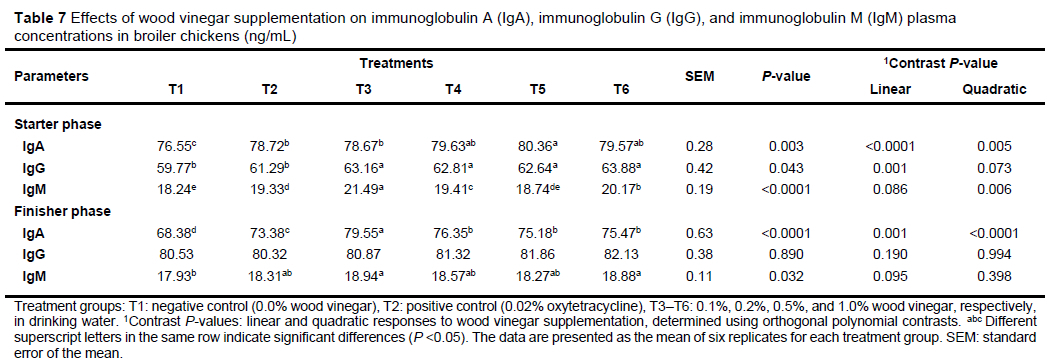
The effects of WV supplementation on the plasma IgA, IgG, and IgM levels are presented in Table 7. During the starter phase, IgA levels were significantly elevated in group T5, while the negative control group (T1) had the lowest levels. Additionally, the IgG level was substantially higher in all the WV treatment groups than in the antibiotic-treated group (T2) and the negative control group (T1). Group T3 had the highest IgM levels, in comparison with the other treatments. During the finisher phase, there were no statistically significant differences in IgG levels between the treatment groups. In contrast, WV supplementation significantly increased IgA and IgM levels, with group T3 exhibiting the highest IgA levels while group T1 had the lowest. Furthermore, IgM levels were significantly higher in the WV-treated groups and in the antibiotic-treated group than in the negative control group (T1). Regression analysis revealed that there were quadratic decreases in IgA in both phases, whereas IgG increased linearly in the starter phase only.
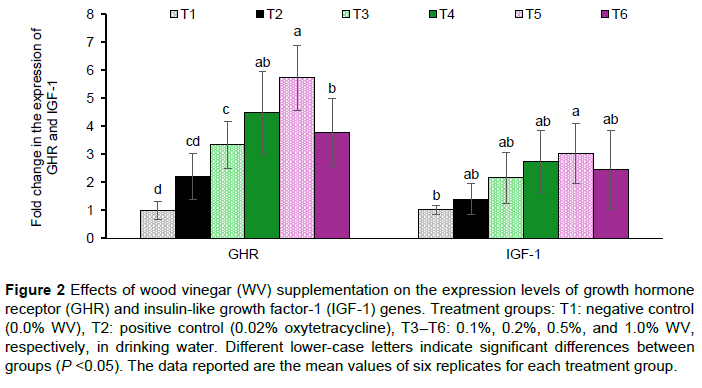
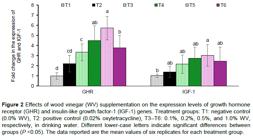
Figure 2 illustrates the effects of WV supplementation on growth hormone receptor (GHR) and insulin-like growth factor-1 (IGF-1) expression levels. Growth hormone receptor expression was significantly upregulated in group T5 compared to the controls (T1 and T2). Additionally, IGF-1 expression was increased in group T5 as compared to group T1, while levels were similar among the other treatment groups.
Discussion
Previous research on the applications of WV has predominantly focused on its use as a pesticide in agriculture and forestry, as well as a disinfectant and antimicrobial agent in medical applications. However, recent findings have suggested its potential as a dietary supplement in animal feed. Toxicological assessments conducted using Sprague rats and mice have indicated that WV is safe for oral administration in animals (Chen et al., 2007). Consequently, WV may be considered a safe feed additive, serving as a viable alternative to antibiotics in animals (Wang et al., 2012). Tasharofi et al. (2017) observed that the inclusion of WV in broiler chicken diets resulted in improved growth performance. Similarly, Choi et al. (2009) reported that pigs supplemented with 0.1%, 0.2%, and 0.3% WV exhibited enhanced growth performance and improved nutrient digestibility. Hayajneh et al. (2018) suggested that the dietary inclusion of WV in broiler diets may improve immune function and enhance antioxidant status. In the current study, WV supplementation in drinking water had a beneficial impact on the growth performance of broiler chickens. One key reason for this improvement might be the acetic acid content of WV, which has been identified to reduce pH levels and alter the composition of the gut microbiome of chickens to favour aerobic, anaerobic, and coliform bacteria (Fouad et al., 2018), thereby increasing nutrient assimilation and utilisation (Rattanawut, 2014).
In this study, it was observed that the supplementation of WV had no effect on the FBW, CWG, and FCR during the starter phase, indicating that early-stage growth was not markedly influenced by WV supplementation (Hanchai et al., 2021), However, the CFI was affected, with higher intake observed in the WV-treated groups (T3-T5) compared to the negative control and antibiotic-treated group, with the exception of the highest WV inclusion level (T6), where the CFI declined. The observed linear and quadratic trends suggest that moderate levels of WV may enhance early feed intake, whereas excessive supplementation could have detrimental effects. Consistent with this finding, Allahdo et al. (2018) reported lower feed intake in broilers supplemented with a higher level of vinegar during the early growth stage (1 -10 days).
During the grower phase (15-28 days), significant differences were observed in the FBW and CWG, with the 0.5% WV-treated group (T5) exhibiting the highest body weight and weight gain. This improvement may be attributed to the beneficial effects of WV as an acidifier, which supports gut health and microbiota balance and thereby optimises nutrient utilisation (Tasharofi et al., 2017). The enhancement of animal performance through dietary acidification may be facilitated by the structure of organic acids, which contain one proton and one anion. The proton contributes to feed acidification, whereas the anion plays a role in preventing microbial growth (Schutt, 2011). Research has also indicated that organic acids positively influence the gut microbiota, leading to enhanced growth performance in poultry (Abd El-Ghany, 2024). The observed linear and quadratic trends in the CFCR suggest that moderate levels of WV improved feed efficiency, while high concentrations may have adversely affected growth. Additionally, the positive effects on the growth performance-related parameters could be attributed to the improvement in small intestine histomorphology. Improvements in VH and CD can enhance the absorptive surface of the intestine and thereby facilitate nutrient absorption (Danladi et al., 2022). The CFI was higher in the negative control group than in the WV-treated groups, possibly because of the high acetic acid content of the WV (Ahmed et al., 2017). Canibe et al. (2010) reported reduced feed intake in piglets fed diets containing high concentrations of acetic acid, suggesting that excessive levels may impair palatability. The positive effects of WV supplementation were more pronounced in the finisher (29-35 days) and overall (1 -35 days) periods, with significant increases in both FBW and CWG in the WV-treated groups, compared to the controls. The CFI was also significantly affected, with birds in T3 and T5 having the highest feed intake. Nutritional needs primarily influence feed intake in chickens.
The results of this study demonstrate that supplementary WV increases palatability and nutrient digestibility, thereby enhancing feed consumption and CWG. This finding aligns with the findings reported by Tasharofi et al. (2017). Furthermore, the CFCR was significantly improved in the WV-treated groups (T4 and T5) compared to the controls. The enhanced CFCR observed in these groups indicates that organic acids may improve feed efficiency, potentially by promoting lipid metabolism and reducing fat deposition (Sabour et al., 2018). The improvement in growth performance observed in this study agrees with previous findings for broilers, quails, and pigs supplemented with WV and organic acids (Choi et al., 2009; Bagal et al., 2016; Diógenes et al., 2019). These beneficial effects may be attributed to the functional properties of organic compounds, including their ability to improve gastrointestinal function, enhance nutrient digestibility, and suppress pathogenic bacteria through competitive exclusion (Khan & Iqbal, 2015). Another notable effect is the reduction in gastric pH, which enhances nutrient digestibility and slows the rate of gastric emptying (Rodjan et al., 2017). The physical condition of the chickens receiving WV was comparable to those administered antibiotics throughout the experiment. The results demonstrated that WV may be a suitable substitute for antibiotics.
Carcass yield is a crucial indicator of dietary efficiency and nutritional quality in poultry (Manyeula et al., 2019). Carcass yields and internal organ weights remained largely unaffected by WV supplementation in this study, with the exception of the abdominal fat and shank yield. Notably, the percentage of abdominal fat was significantly lower in the WV-treated groups than in the negative and positive control groups, suggesting that WV supplementation via the drinking water may help reduce fat accumulation in broiler chickens. This observation corresponds with earlier reports by Allahdo et al. (2018) and Agboola et al. (2015), who also noted reductions in abdominal fat when WV and organic acids were supplemented in broiler diets. Wood vinegar is rich in organic acids and bioactive compounds, including acetic acid and phenolic substances, which contribute to its acidic nature. These components have been associated with various health benefits, such as reducing lipid accumulation and enhancing metabolic processes (Cai et al., 2012). Agboola et al. (2015) demonstrated that supplementing broiler diets with organic acids and probiotics could effectively decrease both abdominal fat and serum cholesterol levels. The mechanisms underlying these effects are well established: reducing dietary fat absorption and fatty acid synthesis, while simultaneously enhancing β-oxidation, leads to decreased abdominal fat deposition by reducing the size and/or number of adipose cells in the abdominal region (Allahdo et al., 2018). Regulating lipid metabolism through dietary composition and feeding strategies, while further elucidating their influence on key metabolic enzymes, may contribute to the production of leaner meat (Allahdo et al., 2018). The reduction in abdominal fat observed in this study could be attributed to the presence of organic acids in WV, which enhance the β-oxidation of fatty acids, thereby increasing energy expenditure and limiting fat accumulation. Additionally, the acidic nature of WV may promote nutrient absorption, thereby improving feed efficiency and facilitating a more favourable protein-to-fat conversion ratio (Hernández et al., 2006).
Villus height and CD are established indicators of intestinal health, as villi are important components for nutrient uptake in the intestine (Azizi et al., 2021). A greater VH correlates with improved growth performance, decreased gastrointestinal tract secretion, and increased small intestine absorption capacity (Awad et al., 2009). Fan et al. (1997) reported that increased epithelial cell turnover enhanced the VH:CD ratio and VH. Intestinal homeostasis relies on maintaining adequate food assimilation and lowering gut barrier dysfunction, and is dependent on the anatomy and function of the small intestine. Both nutrient absorption and digestion occur in the small intestine. A previous study reported that WV supplementation influenced the intestinal architecture in chickens (Jahantigh et al., 2021).
Jejunal and ileal VH were significantly influenced by WV supplementation during the starter phase (week 2) in this study, with the highest VH in the jejunum being recorded in treatment groups T4 to T6. A linear increase in VH with an increase in the WV concentration could suggest that WV promotes intestinal development by enhancing nutrient digestion and absorption (Hachai et al., 2021). Furthermore, an increase in VH correlates with enhanced intestinal digestive and absorptive capacity, as it expands the absorptive surface area, promotes the expression of brush border enzymes, and improves nutrient transport mechanisms (Wang et al., 2020). Additionally, greater VH reflects the enhanced activation of the functional capacity of intestinal villi (Awad et al., 2009). This indicates that the functional activity of the villi was stimulated following WV administration. Conversely, the duodenal VH did not show significant variation between the treatment groups, indicating a more stable growth pattern regardless of WV supplementation. However, the duodenal and ileal CD were influenced by WV supplementation during this phase. Notably, the ileal CD in groups T3 and T6 were higher than in the control groups, reflecting an adaptive response to enhanced nutrient absorption, as deeper crypts are associated with increased turnover of enterocytes (Parker et al., 2017). The linear and quadratic effects indicate that as the WV concentration increased, both the ileal VH and CD were positively affected, indicating that higher WV levels may promote better gut health and nutrient utilisation. However, the VH:CD ratio did not differ between the treatment groups.
In week 5, significant differences in VH were observed in both the jejunum and ileum, with groups T3 to T6 demonstrating higher VH than the control groups. The increase in VH in the WV-supplemented groups indicates improved nutrient absorption, likely due to enhanced mucosal development. Notably, the jejunal VH exhibited a quadratic trend, suggesting a potential saturation point beyond which additional WV supplementation may not yield further benefits. Similarly, the ileum exhibited notable improvements in both VH and CD in the higher WV-treated groups, supporting the notion that WV supplementation positively influenced gut morphology, ultimately enhancing growth performance (Hernández et al., 2006). Our findings revealed that both VH and CD were elevated in the WV-treated groups relative to the control groups, corroborating previous research by Allahdo et al. (2018), who noted similar effects when WV was added to the drinking water of broiler chickens. Likewise, Tasharofi et al. (2017) reported that the inclusion of vinegar made from waste dates enhanced intestinal morphology in broilers. Increased VH is positively correlated with enhanced absorptive capacity of the small intestine, contributing to a slower transit time, reduced intestinal moisture content, and improved FCR (Jahantigh et al., 2021). The improvement in VH and CD observed in this study could be attributed to the beneficial effects of the organic acids in the WV, which promote a healthier microbial balance in the intestine (Attia et al., 2013). Organic acids have been reported to enhance intestinal immunity, reduce inflammatory responses at the digestive mucosal surface, stimulate enzymatic secretions, and improve the digestion and absorption of essential nutrients (Khan & Iqbal, 2015). Moreover, the VH:CD ratio in the duodenum, jejunum, and ileum was significantly influenced by WV supplementation in week 5, suggesting improved absorptive efficiency and overall gut health. The enhanced VH:CD ratio further supports the hypothesis that WV optimises intestinal architecture, leading to better nutrient absorption and growth performance (Sabour et al., 2018). Additionally, the observed linear and quadratic trends indicate that moderate WV supplementation enhances intestinal function, while excessive levels may exert diminishing effects. The overall improvements in intestinal morphology align with previous findings that organic acids, such as those present in WV, contribute to gut health by modulating microbial populations and enhancing nutrient digestibility (Khan & Iqbal, 2015).
According to Bucław (2016), the production of immunoglobulins is attributed to B cells, a crucial constituent of the immune system. Although immunoglobulins are vital for immune system control and mucosal defence, environmental stresses can have an impact on them (Humam et al., 2019). Plasma levels of IgA, IgM, and IgG are established indicators of immunological status (Insoft et al., 1996). Immunoglobulin M regulates subsequent immunological responses, promotes IgG synthesis, and mediates the initial immune response to external antigens (Azizi et al., 2025). Immunoglobulin A, which is mostly secreted by mucosal membranes, is the most abundant immunoglobulin isotype synthesised in mammals (Macpherson et al., 2018). By protecting the mucous membranes, IgA helps to prevent pathogen invasion and colonisation (Danladi et al., 2022).
The results of this study indicate that WV supplementation improves plasma concentrations of IgA, IgG, and IgM in broiler chickens, which is consistent with earlier findings by Chu et al. (2012), who reported similar positive effects of WV on gut health and immune status in pigs. Similarly, Kim et al. (2014) observed elevated IgA and IgM levels in broiler chickens supplemented with phenyllactic acid. Mustafa et al. (2021) also found that dietary organic acid supplementation improved the immune status of chickens. Although the precise mechanisms through which WV enhances immune status have not been fully elucidated, several studies have proposed plausible pathways. Attia et al. (2013) reported that WV may modulate pro-inflammatory cytokines, notably interleukin-6 and tumour necrosis factor-alpha, which are integral to B-cell activation and the subsequent production of immunoglobulins, including IgG and IgM. This cytokine regulation may enhance systemic immune responses. Similarly, Hernández et al. (2006) noted that the polyphenols and flavonoids present in WV possess antioxidant properties that mitigate oxidative stress, thereby supporting immune cell functionality by promoting B-cell proliferation and immunoglobulin synthesis. Additionally, the bioactive compounds in WV, such as organic acids, phenols, and polyphenols, are known to modulate the gut microbiota composition, enhancing the growth of beneficial bacteria while suppressing pathogenic species (Wang et al., 2022). These microbial shifts may enhance the production of immune system components. Furthermore, WV aids in regulating the intestinal pH, which inhibits pathogenic colonisation and preserves epithelial barrier integrity, thereby strengthening both mucosal and systemic immunity (Jahantigh et al., 2021). Our findings contribute valuable insights into the efficacy of WV in enhancing the immune system of broiler chickens.
Wood vinegar supplementation upregulated the expression of IGF-1 and GHR genes in the livers of the broiler chickens in this study, as reflected by their improved growth performance. Growth hormone is a key regulator of the growth and body composition of chickens (Del Vesco et al., 2013). It is secreted by the pituitary gland, and the activation of growth hormone and GHR genes increases the hepatic synthesis of IGF-I. However, nutritional status can also influence the levels of IGF-1 and GHR (Kareem et al., 2016). Numerous studies have shown that IGF-I is an indicator of the growth rate of chickens (Humam et al., 2019; Azizi et al., 2024b).
In this study, WV supplementation upregulated the mRNA expression of IGF-1 and GHR in broiler chickens. This aligned with the prior findings of Danladi et al. (2022), who reported the increased expression of analogous genes in chickens, indicating a potential interaction between IGF-1 and the gut microbiota. Kozakova et al. (2016) reported that the presence of the gut microbiota was associated with elevated levels of IGF-1, when compared to microbiota-deficient mice, and demonstrated a direct connection between IGF-1 levels and skeletal growth, supporting the role of the gut microbiota in growth regulation. Humam et al. (2019) and Danladi et al. (2022) also documented increased levels of IGF-1 in broilers, while Yan et al. (2016) observed elevated levels of IGF-1 in mice fed diets supplemented with short-chain fatty acids.
The findings of this study demonstrate that chickens supplemented with WV exhibit enhanced growth performance, improved immune status, and upregulated levels of GHR and IGF-1, suggesting that IGF-1 can serve as a reliable biomarker for the growth performance of broiler chickens. Enhanced growth performance was correlated with a concomitant increase in IGF-1 expression following WV supplementation. This effect could be related to improved absorption and assimilation of nutrients, which may have led to the increased secretion of growth hormone from the pituitary gland, ultimately elevating IGF-1 production. Moreover, the bioactive compounds in WV could improve the physiological functions of livestock by increasing growth performance (Song et al., 2020) and enhancing animal well-being, thereby improving production. Thus, WV supplementation may have upregulated the expression of IGF-1 and GHR in this study. To the best of our knowledge, the effects of WV on the expression of IGF-1 and GHR in broiler chickens have not been previously reported. The upregulation observed in this study may be attributed to improvements in intestinal morphology and nutrient absorption, reductions in oxidative and inflammatory stress, and the favourable modulation of the gut microbiota, all of which contribute to improved growth performance.
Conclusions
Wood vinegar is a liquid by-product rich in organic acids. It is derived from the production of charcoal in an oxygen-deprived environment and exhibits antimicrobial properties against harmful microorganisms, with the potential to enhance physiological functions and modulate the gut microbiota by maintaining a lower gastric pH. This study evaluated the effects of WV supplementation in drinking water on the growth performance, immune responses, and intestinal histomorphology of broiler chickens. Birds receiving WV, particularly those receiving 0.5% WV (group T5), exhibited significant improvements in CWG and FCR compared to both the negative and positive controls. Wood vinegar-treated groups also had reduced abdominal fat yields, increased VH and VH:CD ratios, and higher plasma levels of IgA, IgG, and IgM, alongside upregulated expression of GHR and IGF-1. These findings suggest that WV can achieve growth-promoting effects similar to those of antibiotic growth promoters, positioning it as a promising natural alternative in poultry production. Further research is recommended to explore its long-term effects and efficacy under commercial production conditions.
Authors' contributions
All authors made substantial contributions to the study design, data collection, analysis, interpretation, and manuscript revisions, and approved the final version.
Conflict of interest declaration
The authors declare that they have no conflicts of interest.
Acknowledgements
The authors gratefully acknowledge the staff members of the Animal Science Department for their technical support. No specific funding was received for this work.
References
-
Abd El-Ghany, W.A., 2024. Applications of organic acids in poultry production: an updated and comprehensive review. Agriculture, 14(10):1756. DOI: 10.3390/agriculture14101756
» https://doi.org/10.3390/agriculture14101756 -
Achmadi, S.S., Mubarik, N.R., Nursyamsi, R., & Septiaji, P., 2013. Characterization of redistilled liquid smoke of oil-palm shells and its application as fish preservatives. Journal of Applied Sciences, 13(3):401-408. DOI: 10.3923/jas.2013.401.408
» https://doi.org/10.3923/jas.2013.401.408 -
Agboola, A.F., Omidiwura, B.R.O., Odu, O., Popoola, I.O., & lyayi, E.A., 2015. Effects of organic acid and probiotic on performance and gut morphology in broiler chickens. South African Journal of Animal Science, 45(5):494-501. DOI: 10.4314/sajas.v45i5.6
» https://doi.org/10.4314/sajas.v45i5.6 -
Ahmed, S.T., Mun, H.S., Son, S.B., & Yang, C.J., 2018. Effects of fermented bamboo vinegar liquid on growth performance, nutrient digestibility, faecal Escherichia coli concentration and ammonia emissions in growing pigs. South African Journal of Animal Science, 48(4):621-626. DOI: 10.4314/sajas.v48i4.3
» https://doi.org/10.4314/sajas.v48i4.3 -
Allahdo, P., Ghodraty, J., Zarghi, H., Saadatfar, Z., Kermanshahi, H., & Edalatian Dovom, M.R., 2018. Effect of probiotic and vinegar on growth performance, meat yields, immune responses, and small intestine morphology of broiler chickens. Italian Journal of Animal Science, 17(3):675-685. DOI: 10.1080/1828051X.2018.1424570
» https://doi.org/10.1080/1828051X.2018.1424570 -
Aminullah, N., Mostamand, A., Zahir, A., Mahaq, O., & Azizi, M.N., 2025. Phytogenic feed additives as alternatives to antibiotics in poultry production: A review. Veterinary World, 18:141-154. DOI: 10.14202/vetworld.2025.141-154
» https://doi.org/10.14202/vetworld.2025.141-154 - Archana, K., Zuyie, R., & Vidyarthi, V.K., 2019. Effects of dietary addition of organic acid on performance of broiler chicken. Livestock Research International, 7(2):71-76.
-
Araújo, E.S., Pimenta, A.S., Feijó, F.M.C., Castro, R.V.O., Fasciotti, M., Monteiro, T.V.C., & Lima, K.M.G., 2017. Antibacterial and antifungal activities of pyroligneous acid from the wood of Eucalyptus urograndis and Mimosa tenuiflora. Journal of Applied Microbiology, 124(1):85-96. DOI: 10.1111/jam.13626
» https://doi.org/10.1111/jam.13626 -
Attia, Y.A., Abdel-Hamid, A.E., Ellakany, H.F., Bovera, F., Al-Harthi M.A., & Ghazaly, S.A., 2013. Growing and laying performance of Japanese quail fed diet supplemented with different concentration of acetic acid. Italian Journal of Animal Science,12(2):e37. DOI: 10.4081/ijas.2013.e37
» https://doi.org/10.4081/ijas.2013.e37 -
Awad, W., Ghareeb, K., Abdel-Rahem, S., & Bohm, J., 2009. Effects of dietary inclusion of probiotic and symbiotic on growth performance, organ weights, and intestinal histomorphology of broiler chickens. Poultry Science, 88(1):49-56. DOI: 10.3382/ps.2008-00244
» https://doi.org/10.3382/ps.2008-00244 -
Azizi, M.N., Loh, T.C., Foo, H.L., & Izuddin, W.I., 2025. Effects of seaweed on blood plasma immunoglobulin concentration, mucosal immunity, small intestine histomorphology, cecal microbial population, and volatile fatty acid profile in broiler chickens. Veterinary World, 18(2):508-518. DOI: 10.14202/vetworld.2025.508-518
» https://doi.org/10.14202/vetworld.2025.508-518 -
Azizi, M.N., Zahir, A., Mahaq, O., & Aminullah, N., 2024a. The alternatives of antibiotics in poultry production for reducing antimicrobial resistance. World's Veterinary Journal, 14(2):270-283. DOI: 10.54203/scil.2024.wvj34
» https://doi.org/10.54203/scil.2024.wvj34 -
Azizi, M.N., Loh, T.C., Foo, H.L., & Izuddin, W.I., 2024b. Growth performance, apparent ileal digestibility, and nutrient transporter gene expressions of broilers fed seaweed-supplemented diets. Tropical Animal Science Journal, 47(3):333-342. DOI: 10.5398/tasj.2024.47.3.333
» https://doi.org/10.5398/tasj.2024.47.3.333 -
Azizi, M.N., Loh, T.C., Foo, H.L., Akit, H., Izuddin, W.I., & Yohanna, D., 2023. Brown and green seaweed antioxidant properties and effects on blood plasma antioxidant enzyme activities, hepatic antioxidant genes expression, blood plasma lipid profile, and meat quality in broiler chickens. Animals, 13(10):1582. DOI: 10.3390/ani13101582
» https://doi.org/10.3390/ani13101582 -
Azizi, M.N., Loh, T.C., Foo, H.L., & Chung, E.L.T., 2021. Is palm kernel cake a suitable alternative feed ingredient for poultry? Animals, 11(2):1-15. DOI: 10.3390/ani11020338
» https://doi.org/10.3390/ani11020338 -
Bagal, V.L., Khatta, V.K., Tewatia, B.T., Sangwan, S.K., & Raut, S.S., 2016. Relaive efficacy of organic acids and antibiotics as growth promoters in broiler chicken. Veterinary World, 9(2):377-382. DOI: 10.14202/vetworld.2016.377-382
» https://doi.org/10.14202/vetworld.2016.377-382 -
Beccavin, C., Chevalier, B., Cogburn, L., Simon, J., & Duclos, M., 2001. Insulin-like growth factors and body growth in chickens divergently selected for high or low growth rate. Journal of Endocrinology, 168(2):297-306. DOI: 10.1677/joe.0.1680297
» https://doi.org/10.1677/joe.0.1680297 -
Blavi, L., Solà-Oriol, D., Llonch, P., López-Vergé, S., Martín-Orúe, S.M., & Pérez, J.F., 2021. Management and feeding strategies in early life to increase piglet performance and welfare around weaning: a review. Animals, 11(2):302. DOI: 10.3390/ani11020302
» https://doi.org/10.3390/ani11020302 -
Buclaw, M., 2016. The use of inulin in poultry feeding: a review. Journal of Animal Physiology and Animal Nutrition, 100(6):1015-1022. DOI: 10.1111/jpn.12484
» https://doi.org/10.1111/jpn.12484 -
Cai, K., Jiang, S., Ren, C., & He, Y., 2012. Significant damage rescuing effects of wood vinegar extract in living Caenorhabditis elegans under oxidative stress. Journal of the Science of Food and Agriculture, 92(1):29-36. DOI: 10.1002/jsfa.4624
» https://doi.org/10.1002/jsfa.4624 - Canibe, N., Pedersen, A.O., & Jensen, B.B., 2010. Impact of acetic acid concentration of fermented liquid feed on growth performance of piglets. Livestock Science, 133:117-119.
- Chen, S.W., Shao, S.F., Zhuang, X.W., Bai, M.G., Pan, X., & Wang, Z.Y., 2007. Toxicological safety evaluation on purified bamboo vinegar. Journal of Bamboo Research, 26(3):41-44.
-
Choe, D.W., Loh, T.C., Foo, H.L., Hair-Bejo, M., & Awis, Q.S., 2012. Egg production, faecal pH and microbial population, small intestine morphology, and plasma and yolk cholesterol in laying hens given liquid metabolites produced by Lactobacillus plantarum strains. British Poultry Science, 53:106-115. DOI: 10.1080/00071668.2012.659653
» https://doi.org/10.1080/00071668.2012.659653 -
Choi, J.Y., Shinde, P.L., Kwon, I.K., Song, Y.H., & Chae, B.J., 2009. Effect of wood vinegar on the performance, nutrient digestibility, and intestinal microflora in weanling pigs. Asian-Australasian Journal of Animal Sciences, 22(2):267-274. DOI: 10.5713/ajas.2009.80355
» https://doi.org/10.5713/ajas.2009.80355 -
Chu, G.M., Jung, C.K., Kim, H.Y., Ha, J.H., Kim, J.H., Jung, M.S., Lee, S.J., Song, Y., Ibrahim, R.I.H., Cho, J.H., Lee, S.S., & Song, Y.M., 2012. Effects of bamboo charcoal and bamboo vinegar as antibiotic alternatives on growth performance, immune responses and fecal microflora population in fattening pigs. Animal Science Journal, 84(2):113-120. DOI: 10.1111/j.1740-0929.2012.01045.x
» https://doi.org/10.1111/j.1740-0929.2012.01045.x -
Danladi, Y., Loh, T.C., Foo, H.L., Akit, H., Md Tamrin, N.A., & Naeem, A.M., 2022. Effects of postbiotics and paraprobiotics as replacements for antibiotics on growth performance, carcass characteristics, small intestine histomorphology, immune status and hepatic growth gene expression in broiler chickens. Animals, 12:917. DOI: 10.3390/ani12070917
» https://doi.org/10.3390/ani12070917 -
Del Vesco, A., Gasparino, E., Oliveira Neto, A., Guimaraes, S., & Voltolini, D., 2013. Dietary methionine effects on IGF-I and GHR mRNA expression in broilers. Genetics and Molecular Research, 12(4):6414-6423. DOI: 10.4238/2013.December.10.2
» https://doi.org/10.4238/2013.December.10.2 -
Diógenes, G.V., Teixeira, E.N.M., Pimenta, A.S., Souza, J.G., Moreira, J.A., Marinho, A.L., Veras, A., & Argentina, I.A., 2019. Wood vinegar from eucalyptus as an additive in broiler quail feed. International Journal of Plant, Animal and Environmental Sciences, 9(3):164-181. DOI: 10.26502/ijpaes.003
» https://doi.org/10.26502/ijpaes.003 -
Fan, Y.K., Croom, J., Christensen, V.L., Black, B.L., Bird, A.R., Daniel, L.R., Mcbride, B.W., & Eisen, E.J., 1997. Jejunal glucose uptake and oxygen consumption in turkey poults selected for rapid growth. Poultry Science, 76(12):1738-1745. DOI: 10.1093/ps/76.12.1738
» https://doi.org/10.1093/ps/76.12.1738 -
Fouad, W., Farag, M.E., Abou-Shehema, B.M., & Abd El-Halim, H.A.H., 2018. Effect of acetic acid and date residues on some physiological characteristics, productive and reproductive parameters of quail during summer season. Egyptian Journal of Nutrition and Feeds, 21(3):793-805. DOI: 10.21608/ejnf.2018.75795
» https://doi.org/10.21608/ejnf.2018.75795 -
Gama, G.S.P., Pimenta, A.S., Feijó, F.M.C., Azevedo, T.K.B., Melo, R.R., & Andrade, G.S., 2024. The potential of wood vinegar to replace antimicrobials used in animal husbandry-a review. Animals, 14:381. DOI: 10.3390/ani14030381
» https://doi.org/10.3390/ani14030381 -
Gouda, E.M. & Essawy, G.S., 2010. Polymorphism of insulin-like growth factor I gene among chicken breeds in Egypt. Zeitschrift für Naturforschung C, 65(3-4):284-288. DOI: 10.1515/znc-2010-3-418
» https://doi.org/10.1515/znc-2010-3-418 -
Hanchai, K., Trairatapiwan, T., & Lertpatarakomol, R., 2021. Drinking water supplemented with wood vinegar on growth performance, intestinal morphology, and gut microbial of broiler chickens, Veterinary World, 14(1):92-96. DOI: 10.14202/vetworld.2021.92-96
» https://doi.org/10.14202/vetworld.2021.92-96 -
Hayajneh, F.M.F., Jalal, M., Zakaria, H., Abdelqader, A., & Abuajamieh, M., 2018. Anticoccidial effect of apple cider vinegar on broiler chicken: an organic treatment to measure antioxidant effect. Polish Journal of Veterinary Sciences, 21(2):361 -369. DOI: 10.24425/122605
» https://doi.org/10.24425/122605 -
Hernández, F., García, V., Madrid, J., Orengo, J., Catalá, P., & Megías, M.D., 2006. Effect of formic acid on performance, digestibility, intestinal histomorphology and plasma metabolite levels of broiler chickens. British Poultry Science, 47(1):50-56. DOI: 10.1080/00071660500475574
» https://doi.org/10.1080/00071660500475574 -
Humam, A.M., Loh, T.C., Foo, H.L., Samsudin, A.A., Mustapha, N.M., Zulkifli, I., & Izuddin, W.I., 2019. Effects of feeding different postbiotics produced by Lactobacillus plantarum on growth performance, carcass yield, intestinal morphology, gut microbiota composition, immune status, and growth gene expression in broilers under heat stress. Animals, 9(9):644. DOI: 10.3390/ani9090644
» https://doi.org/10.3390/ani9090644 -
Insoft, R.M., Sanderson, I.R., & Walker, W.A., 1996. Development of immune function in the intestine and its role in neonatal diseases. Pediatric Clinics, 43(2):551-571. DOI: 10.1016/s0031-3955(05)70420-x
» https://doi.org/10.1016/s0031-3955(05)70420-x -
Jahantigh, M., Kalantari, H., Ayda Davari, S., & Saadati, D., 2021. Effects of dietary vinegar on performance, immune response and small intestine histomorphology in 1- to 28-day broiler chickens. Veterinary Medicine and Science, 7(3):766-772. DOI: 10.1002/vms3.408
» https://doi.org/10.1002/vms3.408 -
Kareem, K.Y., Loh, T.C., Foo, H.L., Akit, H., & Samsudin, A.A., 2016. Effects of dietary postbiotic and inulin on growth performance, IGF1 and GHR mRNA expression, faecal microbiota and volatile fatty acids in broilers. BMC Veterinary Research, 12(1):8-17. DOI: 10.1186/s12917-016-0790-9
» https://doi.org/10.1186/s12917-016-0790-9 -
Khan, R.U., Naz, S., & Dhama, K., 2014. Chromium: pharmacological applications in heat stressed poultry. International Journal of Pharmacology, 10(4):213-217. DOI: 10.3923/ijp.2014.213.217
» https://doi.org/10.3923/ijp.2014.213.217 -
Khan, S.H. & Iqbal, J., 2015. Advances in the role of organic acids in poultry nutrition. Journal of Applied Animal Research, 44(1):359-369. DOI: 10.1080/09712119.2015.1079527
» https://doi.org/10.1080/09712119.2015.1079527 - Kim, P.G., 1996. Subacute toxicity study of refined wood vinegar. Bulletin of Natural Science Youngin University, 1:35-49.
-
Kim, D.W., Kim, J.H., Kang, H.K., Akter, N., Kim, M.J., Na, J.C., Hwangbo, J., You, S.W., Choi, H.C., Suh, O.S., & Salim, H.M., 2014. Dietary supplementation of phenyllactic acid on growth performance, immune response, cecal microbial population, and meat quality attributes of broiler chickens. Journal of Applied Poultry Research, 23:661-670. DOI: 10.3382/japr.2014-00974
» https://doi.org/10.3382/japr.2014-00974 -
Kozakova, H., Schwarzer, M., Tuckova, L., Srutkova, D., Czarnowska, E., Rosiak, L., & Aleksandrzak-Piekarczyk, T., 2016. Colonization of germ-free mice with a mixture of three Lactobacillus strains enhances the integrity of gut mucosa and ameliorates allergic sensitization. Cellular and Molecular Immunology, 13(2):251-262. DOI: 10.1038/cmi.2015.09
» https://doi.org/10.1038/cmi.2015.09 -
Loh, T.C., Choe, D.W., Foo, H.L., Sazili, A.Q., & Bejo, M.H., 2014. Effects of feeding different postbiotic metabolite combinations produced by Lactobacillus plantarum strains on egg quality and production performance, faecal parameters and plasma cholesterol in laying hens. BMC Veterinary Research, 10(1):1-9. DOI: 10.1186/1746-6148-10-149
» https://doi.org/10.1186/1746-6148-10-149 -
Macpherson, A.J., Yilmaz, B., Limenitakis, J.P., & Ganal-Vonarburg, S.C., 2018. IgA function in relation to the intestinal microbiota. Annual Review of Immunology, 36:359-381. DOI: 10.1146/annurev-immunol-042617-053238
» https://doi.org/10.1146/annurev-immunol-042617-053238 -
Manyeula, F., Mlambo, V., Marume, U., & Sebola, N.A., 2019. Partial replacement of soybean products with canola meal in indigenous chicken diets: size of internal organs, carcass characteristics and breast meat quality. Poultry Science, 99(1):256-264. DOI: 10.3382/ps/pez470
» https://doi.org/10.3382/ps/pez470 -
Mehdi, Y., Létourneau-Montminy, M.P., Gaucher, L.M., Chorfi, Y., Suresh, G., Rouissi, T., Kaur Brar, S., Côté, C., Avalos Ramirez, A., & Godbout, S., 2018. Use of antibiotics in broiler production: Global impacts and alternatives. Animal Nutrition, 4(2):170-178. DOI: 10.1016/j.aninu.2018.03.002
» https://doi.org/10.1016/j.aninu.2018.03.002 -
Montazeri, N., Oliveira, A.C.M., Himelbloom, B.H., Leigh, M.B., & Crapo, C.A., 2013. Chemical characterization of commercial liquid smoke products. Food Science and Nutrition, 1(1):102-115. DOI: 10.1002/fsn3.9
» https://doi.org/10.1002/fsn3.9 -
Mustafa, A., Bai, S., Zeng, Q., Ding, X., Wang, J., Xuan, Y., Su, Z., & Zhang, K., 2021. Effect of organic acids on growth performance, intestinal morphology, and immunity of broiler chickens with and without occidial challenge. AMB Express, 11(1):140. DOI: 10.1186/s13568-021-01299-1
» https://doi.org/10.1186/s13568-021-01299-1 -
Parker, A., Maclaren, O.J., Fletcher, A.G., Muraro, D., Kreuzaler, P.A., Byrne, H., Maini, P.K., Watson, A.J.M., & Pin, C., 2017. Cell proliferation within small intestinal crypts is the principal driving force for cell migration on villi. The FASEB Journal, 31(2):636-649. DOI: 10.1096/fj.201601002
» https://doi.org/10.1096/fj.201601002 -
Pimenta, A.S., Gama, G.S., Feijó, F.M.C., Braga, R.M., de Azevedo, T.K.B., de Melo, R.R., de Oliveira Miranda, N., & de Andrade, G.S., 2023. Wood vinegar from slow pyrolysis of eucalyptus wood: assessment of removing contaminants by sequential vacuum distillation. Forests, 14(1):2414 DOI: 10.3390/f14122414
» https://doi.org/10.3390/f14122414 -
Pimenta, A.S., Fasciotti, M., Monteiro, T.V.C., & Lima, K.M.G., 2018. Chemical composition of pyroligneous acid obtained from eucalyptus GG100 clone. Molecules, 23(2):426. DOI: 10.3390/molecules23020426
» https://doi.org/10.3390/molecules23020426 - Rasoli, M., Yeap, S.K., Tan, S.W., Moeini, H., Ideris, A., Bejo, M.H., & Omar, A.R., 2014. Alteration in lymphocyte responses, cytokine and chemokine profiles in chickens infected with genotype VII and VIII velogenic Newcastle disease virus. Comparative Immunology, Microbiology and Infectious Diseases, 37(1): 11-21.
-
Rattanawut, J., 2014. Effects of dietary bamboo charcoal powder including bamboo vinegar liquid supplementation on growth performance, fecal microflora population and intestinal morphology in betong chickens. Journal of Poultry Science, 51(12):165-171. DOI: 10.2141/jpsa.0130109
» https://doi.org/10.2141/jpsa.0130109 - Rodjan, P., Theapparat, Y., Khongthong, S., & Jeenkeawpieam, J., 2017. Effects of mangosteen wood vinegar as a potential additive on nutrient digestibility in growing pigs. Songklanakarin Journal of Science and Technology, 40(5):1002-1008.
-
Sabour, S., Tabeidian, S.A., & Sadeghi, G.H., 2018. Dietary organic acids and fibre source affect performance, intestinal morphology, immune responses and gut microflora in broilers. Animal Nutrition, 5(4):50-59. DOI: 10.1016/j.aninu.2018.07.004
» https://doi.org/10.1016/j.aninu.2018.07.004 -
Samanya, M. & Yamauchi, K., 2001. Morphological changes of the intestinal villi in chickens fed the dietary charcoal powder including wood vinegar compounds. Journal of Poultry Science, 38(4):289-301. DOI: 10.2141/jpsa.38.289
» https://doi.org/10.2141/jpsa.38.289 -
Sasaki, J., Ishita, K., Uchisawa, H., & Matsue, H., 1999. Antibacterial activities of garlic powder against Escherichia coli O-157. Journal of Nutritional Science and Vitaminology, 45(6):785-790. DOI: 10.3177/jnsv.45.785
» https://doi.org/10.3177/jnsv.45.785 - Schutte, J.B., 2011. Nutritive and antimicrobial effects of organic acids in pigs. Revista Computadorizada de Producción Porcina, 18(2):101 -105.
-
Song, J., Zhang, J., Su, Y., Zhang, X., Li, J., Tu, L., Yu, J., Zheng, Y., & Wang, M., 2020. Monascus vinegar mediated alternation of gut microbiota and its correlation with lipid metabolism and inflammation in hyperlipidemic rats. Journal of Functional Foods, 74(68):104152. DOI: 10.1016/j.jff.2020.104152
» https://doi.org/10.1016/j.jff.2020.104152 -
Suresh, G., Pakdel, H., Roussi, T., Brar, S.K., Fliss, I., & Roy, C., 2019. In vitro evaluation of antimicrobial efficacy of pyroligneous acid from softwood mixture. Biotechnology Research and Innovation, 3(1):47-53. DOI: 10.1016/j.biori.2019.02.004
» https://doi.org/10.1016/j.biori.2019.02.004 - Tasharofi, S., Yazdanpanah Goharrizi, L., & Mohammadi, F., 2017. Effects of dietary supplementation of waste date's vinegar on performance and improvement of digestive tract in broiler chickens. Veterinary Research Forum, 8:127-132.
-
Wang, X., Qi, Y., & Zheng, H., 2022. Dietary polyphenol, gut microbiota, and health benefits. Antioxidants, 11:1212. DOI: 10.3390/antiox11061212
» https://doi.org/10.3390/antiox11061212 -
Wang, M., Yang, C., Wang, Q.Y., Li, J.Z., Li, Y.L., Ding, X.Q., Yin, J., Yang, H.S., & Yin, Y.L., 2020. The growth performance, intestinal digestive and absorptive capabilities in piglets with different lengths of small intestines. Animal, 14(6):1196-1203. DOI: 10.1017/s175173111900288x
» https://doi.org/10.1017/s175173111900288x - Wang, H.F., Wang, J.L., Wang, C., Zhang, W.M., Liu, J.X., & Dai, B., 2012. Effect of bamboo vinegar as an antibiotic alternative on growth performance and fecal bacterial communities of weaned piglets. Livestock Science, 144(1-2):173-180.
-
Yan, L., Kim, I.H., & Huh, K., 2012. Influence of bamboo vinegar supplementation on growth performance, apparent total tract digestibility, blood characteristics, meat quality, fecal noxious gas content, and fecal microbial concentration in finishing pigs. Livestock Science, 144(3):240-246. DOI: 10.1016/j.livsci.2011.11.020
» https://doi.org/10.1016/j.livsci.2011.11.020 -
Yan, J., Herzog, J.W., Tsang, K., Brennan, C.A., Bower, M.A., Garrett, W.S., Sartorb, B.R., Aliprantisa, A.O., & Charles, J.F., 2016. Gut microbiota induce IGF-1 and promote bone formation and growth. Proceedings of the National Academy of Sciences, 113(47):E7554-E7563. DOI: 10.1073/pnas.1607235113
» https://doi.org/10.1073/pnas.1607235113
Accepted 21 July 2025
Published 31 July 2025