Performance and meat quality of broiler chickens fed diets containing hydroethanolic extract of guavira seed or peel
Abstract
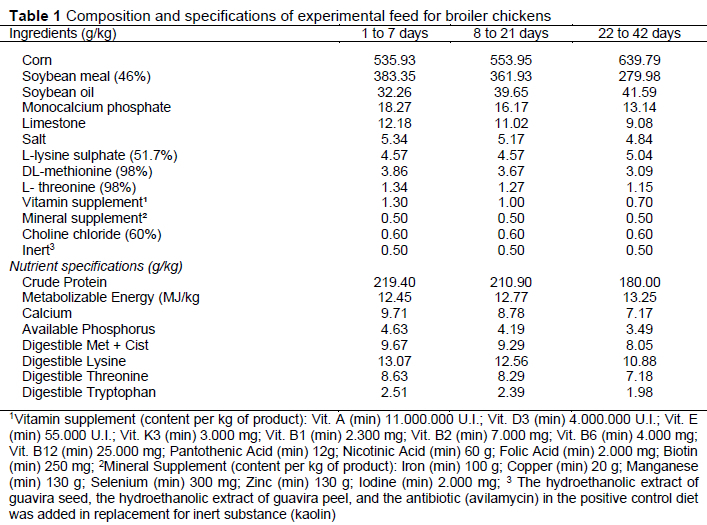
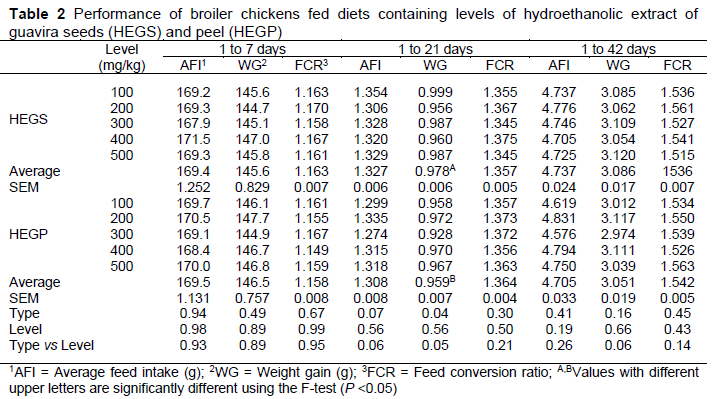
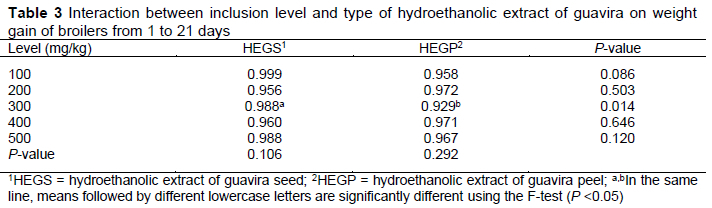
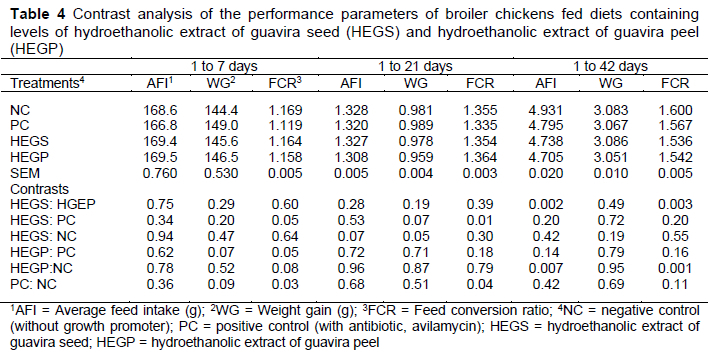
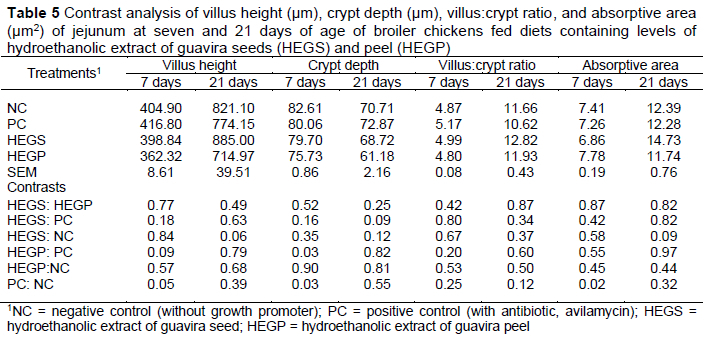
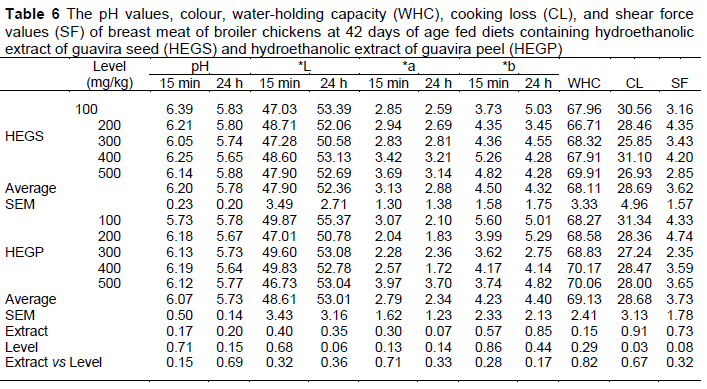
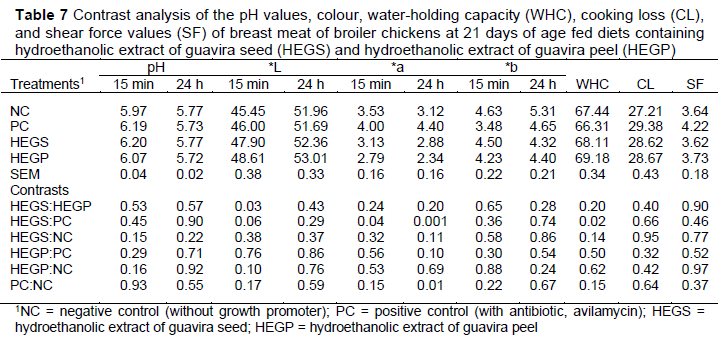
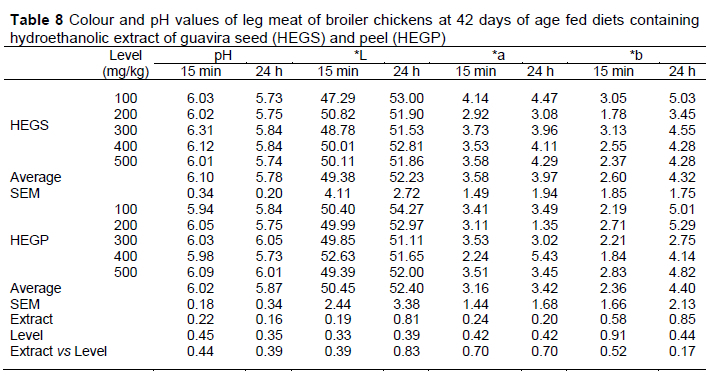
The dietary inclusion of hydroethanolic extract of guavira seed or peel was evaluated on broiler performance, intestinal morphometry, carcass yield, and meat quality. A total of 1,680 male chicks, one day old, were distributed in a 2x5+2 factorial design (hydroethanolic extract of guavira seed (HEGS) or hydroethanolic extract of guavira peel (HEGP); 100; 200; 300; 400 and 500 mg/kg of inclusion and a positive control (PC) with antibiotics and negative control (NC) without growth promoter), with seven replicates and 20 birds each. A better feed conversion ratio (FCR) was observed from days 1-7 and days 1-21 on the PC diet than on the NC diet. FCR from 1-7d of broilers on PC was better than those on HEGS or HEGP, and this better FCR was maintained until 21 d for the HEGS treatment. The HEGP diet showed lower average feed intake and better FCR for the total period compared to NC diets. Higher carcass yield and a higher L15 value for breast meat was observed in the HEGP group compared to HEGS. Broilers fed the PC diet showed a higher a* value 15 min and 24 h postmortem, higher water retention capacity in breast meat compared to birds fed HEGS, and a higher value of a* 24 h postmortem than those receiving NC. The inclusion of 100 to 500 mg/kg of HEGP or HEGS did not improve performance, intestinal morphometry, and carcass characteristics when compared to the performance-enhancing antibiotic. However, the HEGP diet provided better performance of broilers than the non-use of growth promoter additives in the diet.
antioxidant; cerrado fruits; natural additive