Precision livestock farming technologies to support sustainable beef cattle production: A South African perspective
Abstract
The global livestock sector is undergoing substantial transformation, driven by the need to improve production efficiency, environmental sustainability, and animal welfare in response to growing demand for animal-derived protein. Precision livestock farming (PLF) has emerged as a paradigm shift from conventional herd-level management to data-driven systems that enable continuous monitoring and management of individual animals. This review synthesises current knowledge and emerging applications of PLF technologies worldwide, with a focus on the South African beef industry, which exhibits a dual production structure comprising both emerging and commercial farming systems. The integration of sensor technologies, automated systems, and advanced data analytics facilitates real-time monitoring of physiological, behavioural, and environmental parameters. Key applications, including radio frequency identification for animal identification and traceability, global positioning system technologies and accelerometers for spatial and behavioural monitoring, and automated feeding systems, are discussed in relation to intensive feedlot operations and extensive rangeland systems. The contribution of these technologies to improving traceability, supporting quality assurance, and enhancing biosecurity within the beef value chain is also highlighted. Strategies addressing the challenges of commercial rangeland systems and emerging smallholder farms are reviewed, highlighting current limitations. Despite challenges associated with implementation costs, data integration, and rural connectivity, PLF offers opportunities to enhance productivity, resource-use efficiency, and sustainability. Adoption of these technologies is critical for the South African beef industry to meet national production goals, strengthen competitiveness, and respond to global market and sustainability demands. The benefits of PLF technology can be made available to the smallholder and emerging sectors through tailor-made financing and technical support.
animal welfare; automation; data analytics; sensors; traceability
Introduction
Rising global demand for animal protein is placing increasing pressure on livestock systems to enhance productivity, sustainability, and animal welfare (Van der Merwe et al., 2020; Bernabucci et al., 2025). These pressures, combined with climate variability and resource constraints, have driven a shift from traditional herd-level management toward more data-driven, precision approaches. Precision livestock farming (PLF) represents this shift, enabling the continuous monitoring of individual animals through integrated sensors, automation, and analytics, supporting timely management decisions that improve efficiency, welfare, and resilience (Kaur et al., 2023; Tzanidakis et al., 2023; Panda et al., 2024).
The conceptual foundations of PLF stem from the development and implementation of precision agriculture (PA) in the 1980s and 1990s, which introduced geospatial mapping, global positioning system (GPS) guidance, and variable-rate management to optimise crop production (Zhang et al., 2002; McBratney et al., 2005; Rayhan Shaheb et al., 2022). The success of PA demonstrated the value of continuous data collection and decision support systems, laying the groundwork for the adoption of similar approaches in livestock production. Rising input costs, labour shortages, and environmental concerns, as well as demands for higher productivity, facilitated this transfer from crops to animals (Monteiro et al., 2021).
The implementation of PLF in the livestock industry began in the late 1990s and early 2000s, initially in dairy systems, where individual monitoring of health, reproduction, and productivity demonstrated the benefits of real-time, animal-level data (Rutten et al., 2013; Berckmans, 2017; Jiang, 2023). Beef cattle systems began adopting PLF shortly thereafter, with innovations in identification, growth monitoring, and behavioural tracking allowing producers to manage both feedlot and extensive grazing operations more efficiently (Halachmi et al., 2019; Versluijs et al., 2023; Harland et al., 2025). These applications have been particularly important for monitoring adaptive traits such as feed efficiency, fertility, and disease resilience, which are challenging to measure using traditional approaches (Garrick & Golden, 2009; Van Marle-Köster et al., 2018). Advances in PLF continue to be driven by improvements in connectivity, data integration, and decision-support analytics, while integration with genomics and digital phenotyping enhances the capacity to select and manage animals with desirable traits. Collectively, the evolution from PA to PLF illustrates a technological trajectory that has transformed beef production, enabling the more precise, sustainable, and welfare-oriented management of cattle (Van Marle-Köster et al., 2018).
The South African cattle industry remains a cornerstone of the national agricultural economy, and is characterised by a dualistic structure in which a relatively small number of commercial producers operate alongside a broad base of small-scale and communal farmers. According to the latest data from the Department of Agriculture, Land Reform and Rural Development (DALRRD, 2024), South Africa's total cattle herd at the end of August 2024 was approximately 12.15 million head, with beef cattle representing about 80% of this total. Commercial operations, including feedlots and stud breeding enterprises, manage a large portion of the beef herd (approximately 60%), whereas small-scale and communal farmers generally manage smaller herds under extensive, low-input systems. This heterogeneity, coupled with the diversity of breeds used - indigenous, composite, and exotic crosses - presents both challenges and opportunities for the adoption of modern management tools.
South Africa has a long-standing tradition of animal recording and genetic evaluation, particularly within stud breeding programmes, where decades of phenotypic and pedigree data have supported selection for productivity, adaptability, and resilience traits. This robust framework provides a solid platform for integrating PLF approaches, enabling real-time performance data to be linked with genetic potential for data-driven breeding and management decisions (Van Marle-Köster et al., 2018; Ncube et al., 2025). In recent years, commercial producers and feedlot operations have increasingly adopted PLF technologies to enhance efficiency, animal welfare, and traceability. Beyond improving on-farm productivity, PLF strengthens value chain traceability, linking cow-calf operations and feedlots with abattoirs and processing facilities. Such integration supports quality control, disease surveillance, biosecurity compliance, and access to export markets (Conter, 2024; Tang, 2025).
Although adoption remains emergent, the South African beef sector, which is underpinned by strong genetic evaluation systems and a focus on efficiency, is increasingly recognising sensor and data-driven technologies as essential tools for competitiveness (Van der Merwe et al., 2020; Visser et al., 2020; Soeker et al., 2021). Industry reports indicate that the return on investment associated with scientific livestock technologies in South Africa, as well as internationally, ranges from approximately 3:1 to 10:1 (Agricultural Research Council, 2025). This means that for every unit of capital invested in PLF and related genetic or performance-recording tools, producers can expect returns of three to ten times the investment. This high return on investment highlights the economic justification for adopting PLF within the South African beef sector.
By combining real-time monitoring, data analytics, and value chain traceability, PLF has the potential to improve resource use, enhance animal welfare, boost productivity, and ensure transparency and competitiveness in both domestic and global markets (Visser et al., 2020; Tadele et al., 2025). This review examines the current and emerging PLF technologies available both globally and within the South African beef industry, exploring how these innovations are transforming the monitoring, management, and welfare of cattle, and how their adoption can contribute to a more sustainable, competitive, and welfare-conscious beef sector in South Africa.
Precision livestock farming technologies
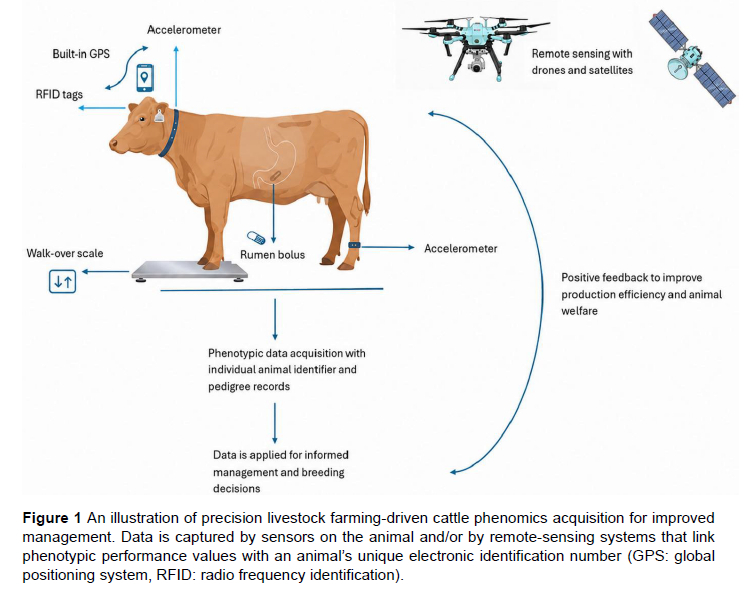
Technology systems in beef production rely on an interconnected suite of animal-mounted sensors, environmental monitoring devices, and remote-sensing platforms that collectively generate continuous, high-resolution phenotypic information across the production cycle (Jiang et al., 2023; Kaur et al., 2023). As illustrated in Figure 1, data flow begins with the deployment of multiple sensor types - behavioural, physiological, spatial, and environmental - attached to or placed around cattle and their production environments. These sensors stream raw data into a central processing system, where information is cleaned, integrated, and analysed before being returned to the producer as actionable insights.
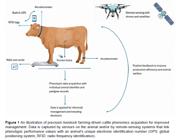
Within this integrated architecture, PLF leverages hardware such as radio-frequency identification (RFID) devices, GPS collars, accelerometers, rumen boluses, biosensors, automated weighing systems, environmental monitoring nodes, and remote-sensing platforms. These sensors form the primary data collection layer, enabling the measurement of individual animal behaviour, physiology, and performance with high temporal resolution (Halachmi et al., 2019). These heterogeneous datasets are then transmitted via Bluetooth, Wi-Fi, ultra-high-frequency radio signals, or Internet of Things (IoT) networks to local gateways or cloud servers, where preprocessing routines and algorithms synchronise timestamps, remove noise, and validate data integrity (Wolfert et al., 2017).
Analytical platforms can apply machine-learning classifiers, digital phenotyping models, and rule-based decision engines to merge the various data streams using each animal's electronic identity as the integrative key, producing real-time metrics of health, welfare, nutrition, environmental stress, and productivity (Riaboff et al., 2022; Curti, 2023). The processed insights are visualised for producers through mobile and web dashboards, while automated output systems, such as smart feeders or environmental control systems, can respond immediately to sensor-derived indicators (Tullo et al., 2019). Collectively, the system depicted in Figure 1 captures the full PLF data pipeline, demonstrating how digital technologies transform beef production from reactive management to proactive, data-driven decision-making.
Application of PLF in the beef value chain
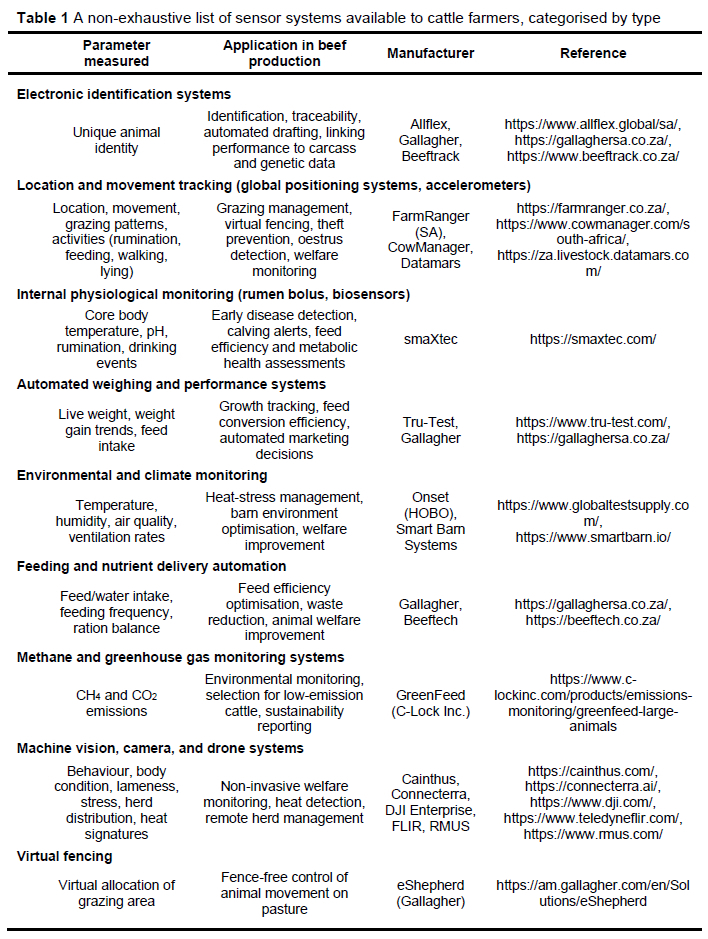
As digital livestock systems expand, farmers are increasingly supported by a wide array of global and local technology manufacturers offering tools for identification, monitoring, environmental management, and data-driven decision-making. South African producers benefit from locally available solutions, including FarmRanger for GPS-based security and herd monitoring, alongside regionally distributed global brands such as Gallagher and Datamars (Table 1). Together, these systems enable farmers to capture high-resolution location, behavioural, physiological, environmental, and performance data at scale. Table 1 summarises a selection of technologies highlights the key parameters they measure, their practical applications in beef production systems, and the leading manufacturers that deliver these tools to producers worldwide.
Traceability
The foundation of data collection and strategic application in PLF begins with electronic identification (EID) systems, which provide the unique animal identities necessary to integrate and link data streams from all other monitoring technologies. Modern EID ear tags and collar-mounted transponders enable the automated capture of identity whenever animals interact with sensors, walk-over weighing (WOW) units, or feeding stations, and this identity forms the primary key that connects measured metrics within farm management software (Brown-Brandl et al., 2019). Precision livestock farming relies on longitudinal, individual-level monitoring, and therefore robust EID systems underpin the accuracy of animal performance measurement and phenotypic or genomic data pipelines (Wolfert et al., 2017; Kaur et al., 2023; Lamanna et al., 2025). The integration of these digital data platforms with national databases further facilitates disease surveillance, enhances biosecurity, and supports genetic evaluations through estimated breeding values (EBVs) and genomic EBVs (GEBVs), strengthening the capacity for data-driven selection and herd improvement (Van Marle-Köster et al., 2018).
The application of EID extends beyond basic identification to traceability, which is a cornerstone of modern beef production. In South Africa, traceability in the red meat sector is facilitated through the use of global location numbers linked to specific GPS coordinates, allowing the precise identification of all participants across the value chain. Animal movements are digitally recorded and communicated via integrated livestock management systems connected to the Red Meat Industry Services (RMIS) traceability platform, ensuring seamless and transparent data flow between farms, auctions, feedlots, abattoirs, and retailers (https://rmis.co.za/services/traceability/; accessed 05 January 2026). These advancements align with national initiatives like the Livestock Identification and Traceability System South Africa (LITS-SA), which regulates animal identification and traceability for all livestock in South Africa (Department of Agriculture, Forestry and Fisheries, 2018).
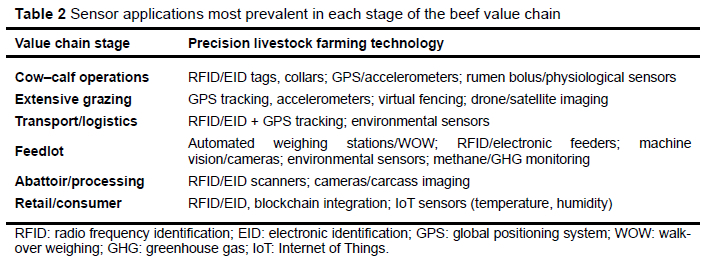
The beef value chain, post-farm gate, also benefits from sensor-based precision capabilities by enhancing traceability and environmental monitoring. Table 2 illustrates the application of the different PLF technologies discussed above highlights their value not only for individual animal management and rangeland utilisation but also across the broader vertical chain.
Electronic identification and blockchain-enabled traceability systems ensure that every animal and carcass can be tracked from birth to retail, supporting the rapid identification of contamination sources and compliance with food safety regulations (Cao et al., 2022). Environmental sensors, automated monitoring, and machine-vision systems further ensure that storage, transport, and processing conditions are maintained within optimal parameters, minimising microbial growth and spoilage. Collectively, these technologies establish a high-resolution, data-driven framework that improves production efficiency, mitigates risk, and enhances consumer confidence in product quality and safety (Ellahi et al., 2023)
Studies from southern Africa demonstrate the practical benefits of EID-based traceability. Prinsloo (2017) reported that the implementation of RFID-based traceability in Swaziland and Namibia improved compliance with export requirements and disease control, enabling communal and small-scale producers to access international markets that had previously excluded them because of a lack of credible traceability. These systems facilitated the digital recording of animal ownership, movement, and health status, thereby improving disease surveillance, biosecurity, and food safety, resulting in socio-economic benefits for communal farmers including better prices for their cattle and enhanced household incomes, livelihoods, and market integration. Similarly, a study by Oladele & Jood (2010) in Botswana demonstrated that over 98% of surveyed pastoral farmers successfully adopted EID devices as part of a livestock identification and trace-back system. This was achieved using rumen boluses administered via balling guns and ear-button RFID tags, indicating strong feasibility even in remote, low-input systems. These identifiers enabled the accurate recording of animal movements, ownership, and health interventions within a centralised database. Farmers reported benefits such as access to international markets and an improved ability to locate lost or stolen animals, while authorities could monitor and trace cattle movements across vast communal grazing areas.
The Namibian Livestock Identification and Traceability System (NamLITS) also provides a national framework for the EID of cattle, using tamper-proof RFID ear tags linked to a centralised database. All animals intended for slaughter or export must be registered on NamLITS, and their movements between farms, auctions, or export abattoirs are recorded and monitored through mandatory movement permits (https://namlits.com; https://nammic.com.na; accessed 07 January 2026). This system ensures that every animal's origin, ownership history, and movement record is documented, forming a traceable backbone that supports export compliance, disease management, and biosecurity measures. The Livestock Identification and Traceability System-Botswana (LITS-Botswana) and NamLITS, together with RMIS and LITS-SA, illustrate how national EID-based traceability platforms can underpin reliable, export-ready beef production in southern Africa.
Critically, robust livestock traceability systems play a central role in strengthening biosecurity in South Africa by supporting effective disease surveillance and outbreak responses, particularly in the context of brucellosis, tuberculosis, and foot-and-mouth disease (FMD). By linking individual animals to unique identities, health histories (including vaccination records and detailed movement records), in conjunction with traceability systems, enable the rapid reconstruction of animal contact networks following disease detection (Knight-Jones & Rushton, 2013; Thomson et al., 2013). This allows veterinary authorities and industry stakeholders to identify potential exposure points, trace high-risk animal movements, and prioritise epidemiological investigations more efficiently during, for example, FMD outbreaks. In turn, this supports the implementation of targeted quarantine measures, zoning, and compartmentalisation strategies, reducing the reliance on blanket movement bans that carry significant economic consequences for the livestock sector.
Behaviour and welfare
In extensive beef production systems in South Africa, PLF technologies have become preferable for effective herd management across large and often remote rangelands. Global positioning system collars, virtual fencing, and accelerometers enable the real-time tracking of movement, grazing patterns, and behaviour, providing producers with actionable insights into pasture utilisation, welfare, and security. FarmRanger, for example (Table 1), supplies GPS collars tailored for the South African context, offering theft prevention, location tracking, and behavioural alerts that are particularly useful for communal and emerging farmers managing extensive herds. Globally, GPS-based data inform pasture rotation models and can detect events such as heat stress or parturition by analysing movement patterns (Bailey et al., 2018; García et al., 2023). When combined with accelerometers, these devices can distinguish between behaviours such as feeding, rumination, walking, or resting, and integration with ultra-wideband sensors has been shown to increase behavioural classification accuracy to nearly 99% (Benaissa et al., 2023; Versluijs et al., 2023).
Building on the EID layer, GPS and accelerometer data are linked to individual animal identities, enabling the reconstruction of grazing circuits, daily travel distances, and spatial responses to pasture quality or environmental stressors (Cabezas et al., 2022; Riaboff et al., 2022). These high-frequency datasets are streamed to cloud-based analytical platforms where machine-learning algorithms detect anomalies such as sudden reductions in movement or grazing time, which may indicate early disease, allowing producers to intervene proactively (Halachmi et al., 2019).
South African research increasingly demonstrates the value of GPS technologies for understanding and improving the use of semi-arid rangelands by cattle across both communal and commercial systems. In communal areas of the Eastern Cape, Gusha et al. (2023) showed that cattle and sheep fitted with GPS collars grazed disproportionately frequently around homesteads, footpaths, and riparian zones, leading to the dominance of disturbance-adapted grasses such as Hyparrhenia hirta and Eragrostis plana and highlighting the risks of localised overuse. Their fine-scale movement data, recorded at five-minute intervals, provided evidence that livestock distribution is strongly influenced by proximity to human activity rather than rangeland condition, underscoring the need for informed policy interventions and rotational strategies.
Complementing these findings, Slayi & Jaja (2025) used GPS movement tracking and behavioural observations over a 12-month period to compare Nguni and Bonsmara cattle across communal and commercial environments, demonstrating significant breed-specific adaptations: Nguni cattle in communal systems walked more, grazed for longer, and selected a broader diet, enabling efficient use of lower-quality forage, whereas Bonsmara cattle in commercial systems focused on high-quality patches, with shorter, more concentrated grazing bouts that supported superior weight gain. Together, these studies illustrate how GPS tracking provides empirical insights into spatial grazing pressures, breed-linked foraging strategies, and seasonal vulnerabilities, enabling evidence-based, site-specific rangeland management to enhance sustainability and livestock productivity.
In conjunction with external behavioural monitoring, internal physiological sensors such as rumen boluses equipped with temperature, pH, motility, or pressure sensors provide continuous, non-invasive monitoring of core physiological states, supporting the early detection of ruminal acidosis, fever, heat stress, and drinking behaviour (Han et al., 2022). Evidence from international studies illustrates how rumen bolus systems offer detailed physiological insights across diverse production environments and breeds. Fromm et al. (2024) monitored 70 feedlot bulls, including Uckermärker, Hereford, and Simmentaler types, for 210 days, and showed that bolus sensors captured continuous reticulorumen temperature, rumination, pH, and activity data under commercial conditions. While temperature showed little association with heat load, the researchers observed marked reductions in rumination and subtle declines in pH during periods of high thermal stress, revealing early physiological strain before outward symptoms appeared. A bolus-based accelerometery system has been validated to detect ruminal contraction patterns (Arai et al., 2020), with the bolus successfully differentiating between feeding and resting motility patterns and identifying ruminal atony following xylazine administration, demonstrating precise detection of contraction frequency and amplitude linked to gastrointestinal function.
A broader technical review by Han et al. (2022) highlighted work conducted across multiple countries, outlining advances in implantable rumen microsensors capable of recording fluctuations in pH, temperature, histamine, volatile fatty acids, and movement. Their synthesis demonstrates how these systems capture highly time-resolved metabolic changes, which can serve as early warning signs that traditional sampling cannot measure. Across these studies, the combined findings illustrate that bolus devices can characterise breed-specific responses to environmental conditions (Fromm et al., 2024), detect clinically relevant disruptions in rumen motility (Arai et al., 2020), and document biochemical shifts linked to digestive activity (Han et al., 2022). In addition, wearable biosensors, including thermometers and rumination microphones embedded in collars or ear tags, further enhance these datasets by enabling high-resolution phenotyping for health, resilience, and welfare traits (Reiter et al., 2018; Lee & Seo, 2021). The integration of these physiological data streams with EID systems could allow South African producers to link real-time animal performance with predictive health models and genetic selection programmes, thereby improving herd management, animal welfare, and long-term productivity across extensive grazing systems.
Body weight and nutrition
A parallel development in PLF is automated weighing and performance monitoring, especially WOW systems that record live weight whenever animals voluntarily cross a weighing platform. These systems match weight records to individual identities, producing daily growth trajectories without labour-intensive manual handling (Parsons et al., 2023). Automated weighing becomes particularly powerful when linked with individual feed intake data from electronic feeders, supporting the precise estimation of feed conversion efficiency and enabling both nutritional optimisation and genetic evaluation of economically important efficiency traits (Curti et al., 2023). The management of this feature is dependent on integrated software filters that remove noise (such as that caused by partial steps or an unstable stance) from weight data before generating smooth weight curves and performance alerts.
A closely related development is feeding and nutrient-delivery automation, where electronic feeders record and store data on feed intake events, meal size, feeding frequency, and ration composition for individually identified animals. These systems employ load cells and RFID gating to quantify individual feed consumption and transmit records directly into farm databases. Such detailed intake data support precision nutrition, enabling producers to match nutrient supply with physiological demand and identify deviations in feeding patterns that often precede clinical illness (Curti et al., 2023). On-farm precision-feeding trials in South Africa demonstrate that adjusting rations according to each calf's phenotypic growth curve improves feed efficiency, optimises energy use, and supports more uniform growth, showing that precision nutrition is valuable even outside the controlled conditions of feedlots (Hentzen & Holm, 2025).
Virtual fencing uses GPS-enabled neckbands that deliver audio cues and mild pulses to control livestock movement without physical fences. Data from these collars stream into management platforms that show herd location, compliance behaviour, and grazing pressure in real time (Campbell et al., 2021a,b). Virtual fencing supports dynamic pasture allocation, rotational grazing strategies, and the exclusion of animals from environmentally sensitive areas, making it a powerful tool for sustainable rangeland management (Lomax et al., 2019). Integration with behaviour and forage-quality datasets allows managers to optimise grazing distribution and reduce labour demands. Studies conducted with beef cattle in Tasmania, using 60 untrained Angus heifers fitted with virtual fence collars, maintained cell-grazing patterns under virtual front- and back-fences across successive paddock allocations, showing containment efficiency comparable to traditional electric fences (Campbell et al., 2021a). Research from rangeland environments in the United States also demonstrated the capacity of virtual fence technology to exclude cattle from burned sagebrush-steppe zones, highlighting its value for habitat protection and conservation-grazing strategies (Boyd et al., 2023). These studies illustrate that virtual fencing can facilitate rotational grazing, adaptive paddock allocation, and environmentally sensitive exclusion, all while reducing labour and infrastructure demands for South African beef farmers.
Environment
Precision livestock farming is becoming increasingly central to addressing environmental concerns in the beef industry, particularly through environmental and emissions monitoring. Systems such as GreenFeed automatically measure methane (CH4) and carbon dioxide (CO2) emissions from individual cattle during feeding (Table 1). These emission data can be integrated with feed intake, weight gain, and activity data to estimate emission intensity and inform management decisions aimed at reducing methane per unit of product (Hristov et al., 2013; McGinn et al., 2021; Tedeschi et al., 2022). Research indicates that methane traits are moderately heritable (h2 = 0.09-0.43), highlighting the potential for these data to feed into genetic selection programmes for lower-emission cattle (Ryan et al., 2024). In South Africa, the Agricultural Research Council is piloting emission-monitoring projects using GreenFeed technology to align both extensive and intensive beef production systems with global sustainability objectives (Marais, 2025). This initiative directly responds to the need for increased emphasis on greenhouse gas emission-monitoring technologies and research within the southern African context, as highlighted by Pophiwa et al. (2025).
In addition to feeder-mounted emission sensors, environmental and climate monitoring within PLF captures barn or pasture microclimates, including temperature, humidity, airflow, and ammonia levels. These climate data provide context for interpreting variations in behaviour, feed intake, and physiological stress responses (Tullo et al., 2019). Microclimate nodes, often integrated into IoT networks, transmit real-time data to cloud-based platforms where environmental models detect heat stress thresholds, recommend ventilation adjustments, or trigger automated cooling systems (Wolfert et al., 2017). When synchronised with individual animal metrics, these environmental datasets strengthen predictive models, enabling welfare-oriented interventions while supporting broader environmental stewardship. Advanced sensing platforms, such as open-path lasers and in-barn multi-gas sensors, further enhance scalability, allowing large commercial operations to monitor greenhouse gas emissions efficiently (Tedeschi et al., 2022). Collectively, these PLF-enabled monitoring systems provide South African beef producers with actionable insights to optimise both environmental performance and animal welfare. While the extensive nature of the South African beef industry may not lend itself to intensive barn-based sensors, these sensor systems are still worth mentioning for applications in close-quarters feed and welfare management, or research trials in the stud or feedlot industry.
Remote sensing
Rapid advances in machine vision, camera systems, satellite imaging, and drone technologies are enabling the extraction of visual phenotypes previously reliant on subjective human measurement. Fixed cameras in feedlots and barns provide continuous video images that can be analysed using deep learning models to detect lameness, assess body condition, monitor aggression, or track feeding behaviour (Nasirahmadi et al., 2017). Unmanned aerial vehicles (UAVs) equipped with red, blue, green (RGB) sensors and thermal cameras extend monitoring into intensive and extensive landscapes, mapping herd distributions, detecting heat stress, and estimating body size or body condition without physical restraint (Wang et al., 2025).
Studies demonstrate that drones/UAVs offer a scalable, non-invasive approach to monitoring beef cattle behaviour, welfare, and movement. Abdulai et al. (2021) evaluated 18 two-year-old black Angus heifers using unmanned aerial vehicle (UAV) flights at a 9 m altitude with circular and grid patterns. Heart rate and GPS-derived movement data revealed no significant stress responses to repeated flights, indicating that UAVs can safely capture high-resolution behavioural information in grazing cattle. Beyond behavioural monitoring, UAVs also support spatial and nutritional management through remote sensing and machine learning (Ahmad, 2023). Shine et al. (2025) used UAV-mounted multispectral sensors to map cattle dung distribution in pastures, revealing clustering patterns related to water sources, corners, and supplementary feeders under ultra-high stocking densities. The study achieved 82.6% classification accuracy, showing that UAVs can quantify nutrient deposition patterns and inform pasture management. Collectively, these studies demonstrate that UAV-based monitoring offers beef managers actionable data on movement, behaviour, and grazing patterns, with applications for welfare assessment, stocking density management, and resource optimisation, particularly in extensive or semi-intensive systems where traditional monitoring is challenging in South Africa.
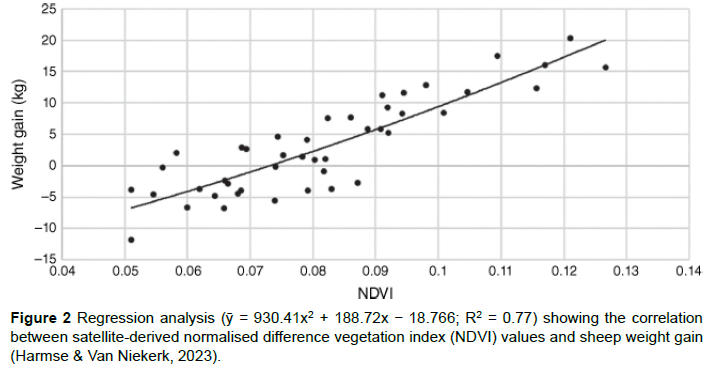
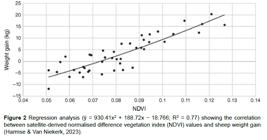
A study by Harmse & Van Niekerk (2023), although focused on sheep production in South Africa, made a key contribution through the successful integration of satellite-derived normalised difference vegetation index (NDVI) data with GPS-linked animal movement data to predict liveweight gain. Their findings have direct and significant relevance for beef production systems operating across South Africa's extensive rangelands. The model demonstrated that remotely sensed forage productivity (biomass availability through NDVI) could explain significant daily and seasonal variation in animal performance (weight gain), offering a powerful proxy where physical weighing is infrequent or impractical (Figure 2). Translating this approach to beef cattle extends its impact substantially: in most South African beef regions, cattle typically graze large, heterogeneous landscapes where weight gain depends on shifting forage quality, distance travelled, and seasonal nutritional stress. Remote-sensing models could therefore generate daily or weekly predicted weight curves, enabling farmers to make evidence-based decisions about supplementary feeding, weaning timing, market readiness, and drought-trigger thresholds without handling animals.
Feedlots
In South African feedlots, PLF technologies are increasingly deployed as integrated service-based solutions that support operational decision-making, animal welfare management, and productivity optimisation. Motion-sensing technologies, for example, enable continuous monitoring of animal activity and behaviour, allowing service providers to generate actionable alerts related to lameness, fatigue, or early signs of illness, thereby facilitating timely and proactive interventions (Ding et al., 2025).
By delivering analysed insights rather than raw data, these services allow feedlot managers to concentrate on operational oversight while effectively outsourcing aspects of monitoring and data interpretation to technology providers. Within this service-oriented model, animal tracking, feeding behaviour, and health indicators are integrated into cloud-based dashboards supported by predictive analytics, which inform daily management decisions. Industry-level support by the South African Feedlot Association strengthens adoption by promoting standardisation, training, and guidance, ensuring that PLF systems are implemented efficiently while maintaining welfare and production benchmarks (https://safeedlot.co.za; accessed 12 January 2026). Overall, the emphasis on service delivery, alongside technology application, shifts management in South African feedlots from reactive observation to data-supported, decision-guided systems, where real-time monitoring, predictive analytics, and operational support are delivered as a cohesive management tool.
Challenges and solutions
The adoption of PLF technologies in southern Africa is shaped by diverse socio-economic, infrastructural, and institutional factors, which vary across production systems. In commercial feedlot and extensive rangeland operations, adoption is constrained by the heterogeneity of management systems, large herd sizes, and harsh environmental conditions, making it difficult to standardise PLF tools or integrate multiple data streams (Groher et al., 2020; Piña et al., 2023). Large distances and dispersed herds reduce the reliability of GPS trackers, EID tags, and automated weighing stations, while cloud-based platforms often fail owing to limited connectivity and unstable electricity supplies (Elkoraichi et al., 2025). Even when sensors are deployed, fragmented data, erroneous sensor readings, and the need for advanced analytics or trained personnel restrict practical use (Wolfert et al., 2017; Boyer et al., 2024).
Solutions for these systems include solar-powered and low-power devices capable of offline data collection and delayed synchronisation. Integrated platforms that consolidate data from multiple sources and targeted training will enhance technical capacity and data interpretation skills (Gumbi et al., 2023; Bontsa et al., 2023; Bontsa et al., 2024; Nxumalo & Chauke, 2025). Additionally, artificial intelligence-driven quality assurance, IoT monitoring, and blockchain-based traceability can enhance operational efficiency and market access when infrastructure constraints are addressed (Patel et al., 2023; Conter, 2024).
For communal and emerging smallholder producers, affordability is the primary barrier, as these farmers often cannot invest in high-cost sensors, automated feeders, or cloud-based monitoring platforms (Kendall et al., 2022; Bashiru et al., 2024). Limited digital literacy, awareness, and training further constrain adoption, while poor mobile network coverage and unreliable electricity supplies complicate real-time monitoring and data synchronisation (Choruma et al., 2024; Elkoraichi et al., 2025; Nxumalo & Chauke, 2025). Furthermore, standalone devices often generate fragmented data, limiting actionable decision-making at the farm level.
Practical strategies for these producers include low-cost, mobile-enabled or offline-capable devices for monitoring animal health, movement, and body weight. Financial mechanisms such as cooperative ownership, service-based delivery models, and shared infrastructure can reduce individual investment burdens and facilitate collective learning (Daum & Birner, 2020; Abdulai et al., 2023; Bontsa et al., 2023; Gumbi et al., 2023; Muromba et al., 2025). Capacity-building interventions, such as participatory extension programmes, workshops, and simplified, user-friendly platforms that integrate multiple data streams, can enhance digital literacy, improve usability, and support evidence-based management decisions (Gumbi et al., 2023; Bontsa et al., 2024; Nxumalo & Chauke, 2025). Incremental adoption strategies supported by cooperative or community-managed models can improve traceability, reduce livestock losses, and expand market access for smallholder producers (Bashiru et al., 2024; Choruma et al., 2024).
National PLF rollout programmes specifically targeting emerging farmers are in development, and several extension support mechanisms and technology adoption pathways exist that can be leveraged to enable PLF uptake. Research on GPS tracking devices for stock theft mitigation underscores that awareness, knowledge transfer, and access to mobile connectivity are key determinants of adoption among smallholders (Zantsi & Nkunjana, 2021). Moreover, broader digital agriculture initiatives in South Africa that promote the use of mobile advisory systems and farm management platforms provide a foundation on which PLF tools can be built (https://farmonaut.com/africa/empowering-bethulie-farmers-5-digital-solutions; accessed 25 March 2026). Community-level projects, such as digital traceability and RFID tagging in regions like Bethulie, illustrate emerging, practical approaches to integrating livestock monitoring technologies for small and communal producers, particularly when supported by cooperative models or sponsorships.
Overall, tailored strategies that address the distinct challenges of commercial rangeland systems and emerging smallholder farms, including infrastructure, affordability, capacity, and data integration, offer a pathway for widespread PLF adoption in southern Africa. Such interventions can improve herd performance, enhance traceability, reduce operational costs, and strengthen market access across the diverse beef production systems of the region (Daum & Birner, 2020; Kendall et al., 2022; Gumbi et al., 2023; Bashiru et al., 2024; Choruma et al., 2024; Muromba et al., 2025).
Conclusion
Precision livestock farming offers transformative potential for the South African beef industry by improving efficiency, sustainability, and animal welfare. However, published research on PLF applications within South Africa remains limited, highlighting the need for continued investigations across the country's diverse breeds and production systems, and throughout the total value chain. Available literature suggests that adoption levels vary considerably, from the advanced use of RFID tags, GPS tracking, and automated systems in intensive commercial operations to minimal or no implementation among emerging farmers. As technology costs decline and accessibility improves, opportunities are expanding for wider inclusion across all farming sectors. Strategic efforts to overcome barriers related to cost, connectivity, and technical capacity will be crucial for realising PLF's benefits in building a more competitive and sustainable national beef industry.
Authors' contributions
The original manuscript was drafted by A.U. Gresse, but a comprehensive revision was done by E. van Marle-Köster. Both authors provided editorial suggestions and approved the final manuscript.
Conflict of interest declaration
The authors have no conflicts of interest to declare.
References
-
Abdulai, A.-R., Quarshie, P.T., Duncan, E., & Fraser, E., 2023. Is agricultural digitization a reality among smallholder farmers in Africa? Unpacking farmers' lived realities of engagement with digital tools and services in rural Northern Ghana. Agriculture & Food Security, 12:11. DOI: https://doi.org/10.1186/s40066-023-00416-6
» https://doi.org/10.1186/s40066-023-00416-6 -
Abdulai, G., Sama, M., & Jackson, J., 2021. A preliminary study of the physiological and behavioral response of beef cattle to unmanned aerial vehicles (UAVs). Applied Animal Behaviour Science, 241:105355. DOI: https://doi.org/10.1016/j.applanim.2021.105355
» https://doi.org/10.1016/j.applanim.2021.105355 -
Ahmad, A.A., 2023. Application of machine learning in drone technology for tracking cattle movement. Indian Journal of Animal Research, 57(12):1717-1724. DOI: https://doi.org/10.18805/IJAR.BF-1697
» https://doi.org/10.18805/IJAR.BF-1697 -
Arai, S., Okada, H., Sawada, H., Takahashi, Y., Kimura, K., & Itoh, T., 2020. Evaluation of ruminal motility in cattle by a bolus-type wireless sensor. Journal of Veterinary Medical Science, 82(12):1771-1778. DOI: https://doi.org/10.1292/jvms.19-0487
» https://doi.org/10.1292/jvms.19-0487 - Agricultural Research Council, 2025. Annual Beef Bulletin. National Beef Recording and Improvement Scheme, Pretoria, South Africa.
-
Bailey, D.W., Trotter, M.G., Knight, C.W., & Thomas, M.G., 2018. Use of GPS tracking collars and accelerometers for rangeland livestock production research. Translational Animal Science, 2(1):81-88. DOI: https://doi.org/10.1093/tas/txx006
» https://doi.org/10.1093/tas/txx006 -
Bashiru, M., Ouedraogo, M., Ouedraogo, A., & Läderach, P., 2024. Smart farming technologies for sustainable agriculture: A review of the promotion and adoption strategies by smallholders in sub-Saharan Africa. Sustainability, 16(11):4817. DOI: https://doi.org/10.3390/su16114817
» https://doi.org/10.3390/su16114817 -
Benaissa, S., Tuyttens, F.A.M., Plets, D., Martens, L., Vandaele, L., Joseph, W., & Sonck, B., 2023. Improved cattle behaviour monitoring by combining ultra-wideband location and accelerometer data. Animal, 17:100730. DOI: https://doi.org/10.1016/j.animal.2023.100730
» https://doi.org/10.1016/j.animal.2023.100730 -
Berckmans, D., 2017. General introduction to precision livestock farming. Animal Frontiers, 7(1):6-11. DOI: https://doi.org/10.2527/af.2017.0102
» https://doi.org/10.2527/af.2017.0102 -
Bernabucci, U., Evangelista, C., Girotti, P., Viola, P., Spina, R., Ronchi, B., & Primi, R., 2025. Precision livestock farming: An overview on the application in extensive systems. Italian Journal of Animal Science, 24(1):859-884. DOI: https://doi.org/10.1080/1828051X.2025.2480821
» https://doi.org/10.1080/1828051X.2025.2480821 -
Bontsa, N.V., Mushunje, A., Ngarava, S., & Zhou, L., 2023. Utilisation of digital technologies by smallholder farmers in South Africa. South African Journal of Agricultural Extension, 51(4):104-146. DOI: https://doi.org/10.17159/2413-3221/2023/v51n4a15337
» https://doi.org/10.17159/2413-3221/2023/v51n4a15337 -
Bontsa, N., Mushunje, A., Ngarava, S., & Zhou, L., 2024. Awareness and perception of digital technologies by smallholder farmers in the Eastern Cape Province, South Africa. South African Journal of Agricultural Extension, 52(5):73-93. DOI: https://doi.org/10.17159/2413-3221/2024/v52n5a16200
» https://doi.org/10.17159/2413-3221/2024/v52n5a16200 -
Boyd, C.S., O'Connor, R.C., Bohnert, D.W., Bates, J.D., Johnson, D.D., Davies, K.W., & Doherty, K.E., 2023. Using virtual fencing to create fuel breaks in the sagebrush steppe. Rangeland Ecology & Management, 89:87-93. DOI: https://doi.org/10.1016/j.rama.2022.07.006
» https://doi.org/10.1016/j.rama.2022.07.006 -
Boyer, C.N., Cavasos, K.E., & Greig, J.A., 2024. Influence of risk and trust on beef producers' use of precision livestock farming. Computers and Electronics in Agriculture, 218:108641. DOI: https://doi.org/10.1016/j.compag.2024.108641
» https://doi.org/10.1016/j.compag.2024.108641 -
Brown-Brandl, T.M., Adrion, F., Maselyne, J., Kapun, A., Hessel, E.F., Saeys, W., Van Nuffel, A., & Gallmann, E., 2019. A review of passive radio-frequency identification systems for animal monitoring in livestock facilities. Applied Engineering in Agriculture, 35(4):579-591. DOI: https://doi.org/10.13031/aea.12928
» https://doi.org/10.13031/aea.12928 -
Cabezas, J., Muñoz, F., & Pérez, F., 2022. Analysis of accelerometer and GPS data for cattle behaviour identification and anomalous event detection. Entropy, 24(3):336. DOI: https://doi.org/10.3390/e24030336
» https://doi.org/10.3390/e24030336 -
Campbell, D.L.M., Marini, D., Lea, J.M., Keshavarzi, H., Dyall, T.R., & Lee, C., 2021a. The application of virtual fencing technology effectively herds cattle and sheep. Animal Production Science, 61:1393-1402. DOI: https://doi.org/10.1071/AN20525
» https://doi.org/10.1071/AN20525 -
Campbell, D.L.M., Ouzman, J., Mowat, D., Lea, J.M., Lee, C., & Llewellyn, R.S., 2021b. Virtual fencing technology excludes beef cattle from an environmentally sensitive area. Animals, 10(6):1069. DOI: https://doi.org/10.3390/ani10061069
» https://doi.org/10.3390/ani10061069 -
Cao, S., Foth, M., Powell, W., Miller, T., & Li, M., 2022. A blockchain-based multisignature approach for supply chain governance: A use case from the Australian beef industry. Blockchain: Research and Applications, 3(4):100091. DOI: https://doi.org/10.1016/j.bcra.2022.100091
» https://doi.org/10.1016/j.bcra.2022.100091 -
Choruma, D.J., Dirwai, T.L., Mutenje, M.J., Mustafa, M., Chimonyo, V.G.P., Jacobs-Mata, I., & Mabhaudhi, T., 2024. Digitalisation in agriculture: A scoping review of technologies in practice, challenges, and opportunities for smallholder farmers in sub-Saharan Africa. Journal of Agriculture and Food Research, 18:101286. DOI: https://doi.org/10.1016/j.jafr.2024.101286
» https://doi.org/10.1016/j.jafr.2024.101286 -
Conter, M., 2024. Recent advancements in meat traceability, authenticity verification, and voluntary certification systems. Italian Journal of Food Safety, 14(1):12971. DOI: https://doi.org/10.4081/ijfs.2024.12971
» https://doi.org/10.4081/ijfs.2024.12971 -
Curti, P. de F., Selli, A., Pinto, D.L., Merlos-Ruiz, A., Balieiro, J.C. de C., & Ventura, R.V., 2023. Applications of livestock monitoring devices and machine learning algorithms in animal production and reproduction: An overview. Animal Reproduction, 20(2):e20230077. DOI: https://doi.org/10.1590/1984-3143-AR2023-0077
» https://doi.org/10.1590/1984-3143-AR2023-0077 - Department of Agriculture, Forestry and Fisheries (DAFF), 2018. LITS SA General Standards Framework. DAFF, Pretoria, South Africa.
- Department of Agriculture, Land Reform and Rural Development (DALRRD), 2024. Trends in the agricultural sector. Department of Agriculture, Land Reform and Rural Development, Pretoria, South Africa.
-
Daum, T. & Birner, R., 2020. Agricultural mechanization in Africa: Myths, realities and an emerging research agenda. Global Food Security, 26:100393. DOI: https://doi.org/10.1016/j.gfs.2020.100393
» https://doi.org/10.1016/j.gfs.2020.100393 -
Ding, L., Zhang, C., Yue, Y., Yao, C., Li, Z., Hu, Y., Yang, B., Ma, W., Yu, L., Gao, R., & Li, Q., 2025. Wearable sensors-based intelligent sensing and application of animal behaviours: A comprehensive review. Sensors, 25:4515. DOI: https://doi.org/10.3390/s25144515
» https://doi.org/10.3390/s25144515 -
Elkoraichi, Y., Elfezazi, S., & Belhadi, A., 2025. Analysis of barriers to blockchain technology adoption in the African agri-food supply chain. Discover Sustainability, 6:289. DOI: https://doi.org/10.1007/s43621-025-01125-9
» https://doi.org/10.1007/s43621-025-01125-9 -
Ellahi, R.M., Wood, L.C., & Bekhit, A.E.-D.-A., 2023. Blockchain-based frameworks for food traceability: A systematic review. Foods, 12(16):3026. DOI: https://doi.org/10.3390/foods12163026
» https://doi.org/10.3390/foods12163026 -
Fromm, K., Ammon, C., Amon, T., & Hoffmann, G., 2024. Evaluating reticulorumen temperature, rumination, activity and pH measured by rumen sensors as indicators of heat load in fattening bulls. Sensors, 25(20):6401. DOI: https://doi.org/10.3390/s25206401
» https://doi.org/10.3390/s25206401 -
García, M.J., Maroto Molina, F., Pérez Marín, C.C., & Pérez Marín, D.C., 2023. Potential for automatic detection of calving in beef cows grazing on rangelands from Global Navigation Satellite System collar data. Animals, 17(8):100901. DOI: https://doi.org/10.1016/j.animal.2023.100901
» https://doi.org/10.1016/j.animal.2023.100901 -
Garrick, D.J. & Golden, B.L., 2009. Producing and using genetic evaluations in the United States beef industry today. Journal of Animal Science, 87(E Suppl.):E11-E18. DOI: https://doi.org/10.2527/jas.2008-1431
» https://doi.org/10.2527/jas.2008-1431 -
Groher, T., Heitkämper, K., & Umstätter, C., 2020. Digital technology adoption in livestock production with a special focus on ruminant farming. Animal, 14:2404-2413. DOI: https://doi.org/10.1017/S1751731120001391
» https://doi.org/10.1017/S1751731120001391 -
Gumbi, N., Gumbi, L., & Twinomurinzi, H., 2023. Towards sustainable digital agriculture for smallholder farmers: A systematic literature review. Sustainability, 15(16):12530. DOI: https://doi.org/10.3390/su151612530
» https://doi.org/10.3390/su151612530 -
Gusha, B., Palmer, A.R., & Zondani, T.C., 2023. Assessing livestock grazing distribution in communal rangelands of the Eastern Cape, South Africa: Towards monitoring livestock movements in rangelands. Land, 12(4):760. DOI: https://doi.org/10.3390/land12040760
» https://doi.org/10.3390/land12040760 -
Halachmi, I., Guarino, M., Bewley, J.M., & Pastell, M., 2019. Smart animal agriculture: Application of real-time sensors to improve animal well-being and production. Annual Review of Animal Biosciences, 7:403-425. DOI: https://doi.org/10.1146/annurev-animal-020518-114851
» https://doi.org/10.1146/annurev-animal-020518-114851 -
Han, C.S., Kaur, U., Bai, H., dos Reis, B.R., White, R., Nawrocki, R.A., Voyles, R.M., Kang, M.G., & Priya, S., 2022. Invited review: Sensor technologies for real-time monitoring of the rumen environment. Journal of Dairy Science, 105(11):9223-9244. DOI: https://doi.org/10.3168/jds.2021-20576
» https://doi.org/10.3168/jds.2021-20576 -
Harland, B., Bailey, D., & Trotter, M., 2025. Evaluating virtual fencing as a tool to manage beef cattle for rotational grazing across multiple years. Livestock Science, 295:105106. DOI: https://doi.org/10.1016/j.jenvman.2025.125166
» https://doi.org/10.1016/j.jenvman.2025.125166 -
Harmse, C. & Van Niekerk, A., 2023. A remotely sensed weight gain model for sheep in the semi-arid Karoo shrublands of South Africa. Rangeland Journal, 45(1). DOI: https://doi.org/10.1071/RJ22049
» https://doi.org/10.1071/RJ22049 -
Hentzen, A.H.R. & Holm, D.E., 2025. Precision feeding of feedlot calves based on phenotypic production profiles: I. The effect on economically important production parameters. Animals, 15(10):1361. DOI: https://doi.org/10.3390/ani15101361
» https://doi.org/10.3390/ani15101361 -
Hristov, A.N., Oh, J., Firkins, J., Dijkstra, J., Kebreab, E., Waghorn, G., Mertens, D., Adesogan, A., Reynolds, C., & Tricarico, J., 2013. Mitigation of methane and nitrous oxide emissions from animal operations: I. A review of enteric methane mitigation options. Journal of Animal Science, 91(11):5045-5069. DOI: https://doi.org/10.2527/jas.2013-6583
» https://doi.org/10.2527/jas.2013-6583 -
Jiang, B., Tang, W., Cui, L., & Deng, X., 2023. Precision livestock farming research: A global scientometric review. Animals, 13:2096. DOI: https://doi.org/10.3390/ani13132096
» https://doi.org/10.3390/ani13132096 -
Kaur, U., Singh, S., & Kumar, A., 2023. Invited review: Integration of technologies and systems for precision animal agriculture: A case study on precision dairy farming. Journal of Animal Science, 101:skad206. DOI: https://doi.org/10.1093/jas/skad206
» https://doi.org/10.1093/jas/skad206 -
Kendall, H., Clark, B., Li, W., Jin, S., Jones, G.D., Chen, J., Taylor, J., Li, Z., & Frewer, L.J., 2022. Precision agriculture technology adoption: A qualitative study of small-scale commercial "family farms" located in the North China Plain. Precision Agriculture, 23(1):319-351. DOI: https://doi.org/10.1007/s11119-021-09839-2
» https://doi.org/10.1007/s11119-021-09839-2 -
Knight-Jones, T.J.D. & Rushton, J., 2013. The economic impacts of foot and mouth disease-What are they, how big are they and where do they occur? Preventive Veterinary Medicine, 112(3-4):161-173. DOI: https://doi.org/10.1016/j.prevetmed.2013.07.013
» https://doi.org/10.1016/j.prevetmed.2013.07.013 -
Lamanna, M., Bovo, M., & Cavallini, D., 2025. Wearable collar technologies for dairy cows: Current applications and future innovations. Animals, 15(3):458. DOI: https://doi.org/10.3390/ani15030458
» https://doi.org/10.3390/ani15030458 -
Lee, M. & Seo, S., 2021. Wearable wireless biosensor technology for monitoring cattle: A review. Animals, 11(10):2779. DOI: https://doi.org/10.3390/ani11102779
» https://doi.org/10.3390/ani11102779 -
Lomax, S., Colusso, P.I., & Clark, C.E.F., 2019. Does virtual fencing work for grazing dairy cattle? Animals, 9(7):429. DOI: https://doi.org/10.3390/ani9070429
» https://doi.org/10.3390/ani9070429 -
Marais, S., 2025. ARC can now determine an animal's burp tax. Agricultural Research Council, Pretoria, South Africa. Available: https://www.arc.agric.za
» https://www.arc.agric.za -
McBratney, A., Whelan, B., Ancev, T., & Bouma, J., 2005. Future directions of precision agriculture. Precision Agriculture, 6:7-23. DOI: https://doi.org/10.1007/s11119-005-0681-8
» https://doi.org/10.1007/s11119-005-0681-8 -
McGinn, S.M., Beauchemin, K.A., & Coulombe, J., 2021. Validation of the GreenFeed system for measuring enteric gas emissions from cattle. Journal of Animal Science, 99(3):skab046. DOI: https://doi.org/10.1093/jas/skab046
» https://doi.org/10.1093/jas/skab046 -
Monteiro, A., Santos, S., & Gonçalves, P., 2021. Precision agriculture for crop and livestock farming-Brief review. Animals, 11(8):2345. DOI: https://doi.org/10.3390/ani11082345
» https://doi.org/10.3390/ani11082345 -
Muromba, P., Keeni, M., & Fuyuki, K., 2025. A systematic review of mobile agricultural service applications for smallholder farmers in sub-Saharan Africa: Perspectives from the technology acceptance model. Agriculture & Food Security, 14:34. DOI: https://doi.org/10.1186/s40066-025-00563-y
» https://doi.org/10.1186/s40066-025-00563-y -
Nasirahmadi, A., Edwards, S.A., & Sturm, B., 2017. Implementation of machine vision for detecting behaviour of cattle and pigs. Livestock Science, 202:25-38. DOI: https://doi.org/10.1016/j.livsci.2017.05.014
» https://doi.org/10.1016/j.livsci.2017.05.014 -
Ncube, K.T., Nephawe, K.A., Mpofu, T.J., Monareng, N.J., Mofokeng, M.M., & Mtileni, B., 2025. Genomic advancements in assessing growth performance, meat quality, and carcass characteristics of goats in sub-Saharan Africa: A systematic review. International Journal of Molecular Sciences, 26(5):2323. DOI: https://doi.org/10.3390/ijms26052323
» https://doi.org/10.3390/ijms26052323 -
Nxumalo, G.S. & Chauke, H., 2025. Challenges and opportunities in smallholder agriculture digitization in South Africa. Frontiers in Sustainable Food Systems, 9:1583224. DOI: https://doi.org/10.3389/fsufs.2025.1583224
» https://doi.org/10.3389/fsufs.2025.1583224 -
Oladele, O.I. & Jood, M., 2010. Factors affecting adoption of livestock identification and trace-back system among cattle farmers in Kgalagadi district, Botswana. Livestock Research for Rural Development, 22(8). Available: http://www.lrrd.org/lrrd22/8/olad22147.htm
» http://www.lrrd.org/lrrd22/8/olad22147.htm -
Panda, S.S., Sharma, P., & Rath, S., 2024. Development of a decision support system for animal health management using geo-information technology. Agriculture, 14(5):696. DOI: https://doi.org/10.3390/agriculture14050696
» https://doi.org/10.3390/agriculture14050696 -
Parsons, I.L., Norman, D.A., Karisch, B.B., & Webb, S.L., 2023. Automated walk-over-weigh system to track daily body mass and growth in grazing steers. Computers and Electronics in Agriculture, 212:108113. DOI: https://doi.org/10.1016/j.compag.2023.108113
» https://doi.org/10.1016/j.compag.2023.108113 -
Patel, A.S., Brahmbhatt, M.N., Bariya, A.R., Nayak, J.B., & Singh, V.K., 2023. Blockchain technology in food safety and traceability concerning livestock products. Heliyon, 9:e16526. DOI: https://doi.org/10.1016/j.heliyon.2023.e16526
» https://doi.org/10.1016/j.heliyon.2023.e16526 -
Piña, R., Lange, K., Machado, V., & Bratcher, C., 2023. Big data technology adoption in beef production. Smart Agricultural Technology, 5:100235. DOI: https://doi.org/10.1016/j.atech.2023.100235
» https://doi.org/10.1016/j.atech.2023.100235 -
Pophiwa, P., Mwape, A., Hassen, A., du Toit, C.J., Van Marle-Koster, E., & Sibanda, L.M., 2025. Insights on agricultural greenhouse gas research and collaboration in Southern Africa. Regional Environmental Change, 25(3):104. DOI: https://doi.org/10.1007/s10113-025-02404-x
» https://doi.org/10.1007/s10113-025-02404-x -
Prinsloo, T., 2017. Livestock traceability systems in Swaziland and Namibia: Towards an impact-for-sustainable-agriculture framework. PhD thesis, University of Pretoria, South Africa. Available: http://hdl.handle.net/2263/65508
» http://hdl.handle.net/2263/65508 -
Reiter, S., Sattlecker, G., Lidauer, L., Kickinger, F., Öhlschuster, M., Auer, W., & Manninger, J., 2018. Evaluation of an ear-tag-based accelerometer for monitoring rumination in dairy cows. Journal of Dairy Science, 101(4):3398-3411. DOI: https://doi.org/10.3168/jds.2017-12686
» https://doi.org/10.3168/jds.2017-12686 -
Riaboff, L., Shalloo, L., Smeaton, A.F., Couvreur, S., Madouasse, A., & Keane, M.T., 2022. Predicting livestock behaviour using accelerometers: A systematic review of processing techniques for behaviour prediction from raw data. Computers and Electronics in Agriculture, 192:106610. DOI: https://doi.org/10.1016/j.compag.2021.106610
» https://doi.org/10.1016/j.compag.2021.106610 -
Rayhan Shaheb, Md., Sarker, A., & A. Shearer, S., 2022. Precision Agriculture for Sustainable Soil and Crop Management. IntechOpen. Available: https://doi:10.5772/intechopen.101759
» https://doi:10.5772/intechopen.101759 -
Ryan, C.V., Pabiou, T., Purfield, D.C., Berry, D.P., Conroy, S., Murphy, C.P., & Evans, R.D., 2024. Exploring definitions of daily enteric methane emission phenotypes for genetic evaluations using a population of indoor-fed multi-breed growing cattle. Journal of Animal Science, 102:skae034. DOI: https://doi.org/10.1093/jas/skae034
» https://doi.org/10.1093/jas/skae034 -
Rutten, C., Velthuis, A., Steeneveld, W., & Hogeveen, H., 2013. Invited review: Sensors to support health management on dairy farms. Journal of Dairy Science, 96(4):1928-1952. DOI: https://doi.org/10.3168/jds.2012-6107
» https://doi.org/10.3168/jds.2012-6107 -
Shine, A.E., Mamo, M., Abagandura, G.O., Schacht, W., Volesky, J., & Wardlow, B., 2025. Unmanned aerial vehicle-based remote sensing of cattle dung: Detection, classification, and spatial analysis of distribution. Rangeland Ecology & Management, 98(1):192-203. DOI: https://doi.org/10.1016/j.rama.2024.06.002
» https://doi.org/10.1016/j.rama.2024.06.002 -
Slayi, M. & Jaja, I.F., 2025. Optimizing rangeland use: Forage selection and grazing patterns of Nguni and Bonsmara cattle across traditional and commercial systems. Veterinary and Animal Science, 25:100436. DOI: https://doi.org/10.1016/j.vas.2025.100436
» https://doi.org/10.1016/j.vas.2025.100436 -
Soeker, I.A., Lusinga, S., & Chigona, W., 2021. Readiness of the South African agricultural sector to implement IoT. arXiv, 2108.10081. DOI: https://doi.org/10.48550/arXiv.2108.10081
» https://doi.org/10.48550/arXiv.2108.10081 -
Tadele, E., Worku, D., Yigzaw, D., Muluneh, T., & Melese, A., 2025. Precision dairy farming: Navigating challenges and seizing opportunities in Africa. Frontiers in Animal Science, 6:1541838. DOI: https://doi.org/10.3389/fanim.2025.1541838
» https://doi.org/10.3389/fanim.2025.1541838 -
Tang, J., 2025. Applications of blockchain technology for enhancing traceability and food safety management in the beef supply chain. European Journal of Food Agriculture, 37:1-20. DOI: https://doi.org/10.3897/ejfa.2025.168820
» https://doi.org/10.3897/ejfa.2025.168820 -
Tedeschi, L.O., Charmley, E., & Gunter, S., 2022. Quantification of methane emitted by ruminants: A review of measurement techniques and their application. Journal of Animal Science, 100(7):skac197. DOI: https://doi.org/10.1093/jas/skac197
» https://doi.org/10.1093/jas/skac197 -
Thomson, G.R., Penrith, M.L., Atkinson, M.W., Thalwitzer, S., Mancuso, A., Atkinson, S.J., & Osofsky, S.A., 2013. International trade standards for commodities and products derived from animals: The need for a system that integrates food safety and animal disease risk management. Transboundary and Emerging Diseases, 60(6):507-515. DOI: https://doi.org/10.1111/tbed.12164
» https://doi.org/10.1111/tbed.12164 -
Tullo, E., Finzi, A., & Guarino, M., 2019. Environmental impact of livestock farming and precision livestock farming as a mitigation strategy. Science of the Total Environment, 650:2751-2760. DOI: https://doi.org/10.1016/j.scitotenv.2018.10.018
» https://doi.org/10.1016/j.scitotenv.2018.10.018 -
Tzanidakis, C., Tzamaloukas, O., Simitzis, P., & Panagakis, P., 2023. Precision livestock farming applications for grazing animals. Agriculture, 13:288. DOI: https://doi.org/10.3390/agriculture13020288
» https://doi.org/10.3390/agriculture13020288 -
Van der Merwe, D.A., Brand, T.S., & Hoffman, L.C., 2020. Precision finishing of South African lambs in feedlots: A review. Tropical Animal Health and Production, 52(6):2769-2786. DOI: https://doi.org/10.1007/s11250-020-02282-x
» https://doi.org/10.1007/s11250-020-02282-x -
Van Marle-Köster, E. & Visser, C., 2018. Genetic improvement in South African livestock: Can genomics bridge the gap between the developed and developing sectors? Frontiers in Genetics, 9:331. DOI: https://doi.org/10.3389/fgene.2018.00331
» https://doi.org/10.3389/fgene.2018.00331 -
Versluijs, E., Niccolai, L., Spedener, M., Zimmermann, B., Hessle, A., Tofastrud, M., & Devineau, O., 2023. Classification of behaviors of free-ranging cattle using accelerometry signatures collected by virtual fence collars. Frontiers in Animal Science, 4:1083272. DOI: https://doi.org/10.3389/fanim.2023.1083272
» https://doi.org/10.3389/fanim.2023.1083272 -
Visser, C., Van Marle-Köster, E., Myburgh, H.C., & De Freitas, A., 2020. Phenomics for sustainable production in the South African dairy and beef cattle industry. Animal Frontiers, 10(2):12-18. DOI: https://doi.org/10.1093/af/vfaa003
» https://doi.org/10.1093/af/vfaa003 -
Wang, Y., Kooistra, L., Mücher, S., & Wang, W., 2025. Integrated unmanned aerial vehicle-based LiDAR and RGB data for individual cattle growth monitoring in precision livestock farming. Scientific Data, 12(1):1318. DOI: https://doi.org/10.1038/s41597-025-04783-6
» https://doi.org/10.1038/s41597-025-04783-6 -
Wolfert, S., Ge, L., Verdouw, C., & Bogaardt, M.-J., 2017. Big data in smart farming: A review. Agricultural Systems, 153:69-80. DOI: https://doi.org/10.1016/j.agsy.2017.01.023
» https://doi.org/10.1016/j.agsy.2017.01.023 -
Zantsi, S. & Nkunjana, L., 2021. A review of possibilities for using animal tracking devices to mitigate stock theft in smallholder livestock farming systems in rural South Africa. South African Journal of Agricultural Extension, 49(1):10784. DOI: https://doi.org/10.17159/2413-3221/2021/v49n1a10784
» https://doi.org/10.17159/2413-3221/2021/v49n1a10784 -
Zhang, N., Wang, M., & Wang, N., 2002. Precision agriculture: A worldwide overview. Computers and Electronics in Agriculture, 36(2-3):113-132. DOI: https://doi.org/10.1016/S0168-1699(02)00096-0
» https://doi.org/10.1016/S0168-1699(02)00096-0
Accepted 9 April 2026
Published 03 June 2026