Using Nigella sativa seed meal as a substitute for soybean meal in broiler diets
Abstract
The proximate chemical composition, mineral, fatty acid, and amino acid profiles of Nigella seed meal (NSM) was determined. In addition, apparent (AAAU) and true (TAAU) amino acid utilization, and apparent (AMET) and true (TMET) metabolisability were determined using a force-feeding bioassay with two groups of eight cockerels each at 20 weeks old. Furthermore, a protein efficiency bioassay was conducted with 160 Ross-308 unsexed broilers aged between 22 and 42 days. These broilers were randomly assigned to two treatments, each with eight replicates of 10 broilers. The broilers were fed two diets in which soybean meal 44% CP (SBM) and NSM were the main protein sources. NSM contains approximately 35% crude protein, 10% ether extract, and significant amounts of minerals, fatty acids, and amino acids. AAAU and TAAU were 82.33% and 89.17%, whereas AMET and TMET were 2998 and 3780 kcal/kg, respectively. The protein efficiency bioassay clarified the possibility of using NSM instead of SBM in broilers diets aged 22-42 days of age. NSM is a rich source of nutrients that can be tested in further studies to estimate its capability as a source of protein in broilers diets during the whole period of growth (1-42 d of age). Moreover, testing higher levels of NSM in broilers diets is of the utmost importance in future studies.
Nigella sativa seed meal; chemical composition; fatty acids; amino acids; metabolisable energy; broilers
Introduction
The use of cereals and oilseeds for biofuel production has caused a substantial increase in the price of traditional protein supplements for poultry diets, with a concomitant increase in the general price of feeds; thus, there is an urgent need to find alternative protein resources (Al-Harthi et al., 2009; El-Deek et al., 2011; Abdollahzadeh & Abdulkarimi, 2012; Alsaffar et al., 2013; Al-Harthi et al., 2018; 2019, 2022, 2023). In Mediterranean countries and Saudi Arabia, Nigella sativa seed meal (Kalanji or black cumin), a by-product of Nigella sativa Linn., is a widely distributed herbaceous plant. It is utilized as a medicinal plant, herb, and spice in Asia, the Middle East, and Africa (Akhtar et al., 2003).
It is reported in the literature that the nutrient content of Nigella seed meal (NSM) ranges from 27.9% to 34.1% crude protein, 10.5% to 14.3% crude fibre, 15.2% to 18.7% ether extract, 23.5% to 33.2% carbohydrates, and 5.5% to 9.5% ash (Abdel-Aal & Attia, 1993; Akhtar et al., 2003; Attia et al., 2008). These differences in the chemical composition of NSM could be attributed to the agronomic condition, variety of NSM, processing method, and temperature (Silvia et al., 2012; Al-Harthi et al., 2019, 2022). In this regard, Silvia et al. (2012) reported that different processing temperatures, e.g. 50, 60, 70, 80, 90, and 100 °C, did not affect the proximate chemical composition, minerals, or amino acids except for methionine and cystine, which were negatively affected by increasing the processing temperature from 50 to 100°C. It was concluded that the variability in metabolisable energy values or dietary composition of different feedstuffs may have consequences on animal performance (Al-Harthi, 1997; Al-Harthi et al., 2018, 2019, 2022, 2023). Although the metabolisable energy value, amino acid profile, and protein quality of NSM make it usable in poultry diets, NSM has received little attention in research.
Thus, this study aimed to investigate the chemical composition, mineral, fatty and amino acid profiles, amino acid utilization, metabolisable energy, and protein conversion ratio of NSM when used as a source of protein in broiler diets.
Materials and Methods
All the procedures were approved by the department committee that recommends animal rights, welfare, and minimal stress, that is subjected to Government Law No. 9 in 24-8-2010, on the regulations of research ethics in living creatures. This research was carried out in Hada Al-Sham Research Station, Faculty of Environmental Sciences, King Abdulaziz University, Jeddah, Saudi Arabia.
NSM was obtained from the local market in Saudi Arabia. Then the by-product was prepared after seed screw pressing for oil extraction at 90 °C. The screw press machine was from Tongshi Machinery, Zhengzhou City, Henan Province, China. Then, we distributed NSM on the floor of a large room (10 x 5 m) equipped with four big fans, two on each side, to pull in warm air from the outside (environmental temperature was ~45 °C) and pushed it back outside as a ventilation cycle. The NSM was continuously stirred until completely dried. Next, we ground it into a dry powder, sieved it in a special capacity to achieve the desired size, i.e., ~0.5 mm, and stored it in special bags until it was used for biological evaluation. Chemical analyses were determined twice on a randomized sample and the average was calculated. The proximate chemical composition of NSM was determined according to the AOAC (2006): dry matter, method number 934.01; crude protein, method number 954.01; ether extract, method number 920.39; crude fibre, method number 978.10; and ash, method number 942.05.
Macro- and micro-minerals were determined using atomic absorption (Avanta Z, GBC Scientific Equipment Ltd, Braeside, Australia) using a standard curve according to Jackson (1967). Phosphorus was measured according to Dickman & Bray (1940). A part of the lipid in NSM was analysed for total lipids, according to Folch et al. (1957), and fatty acid content according to Radwan (1978), using a Shimadzu GC4CM gas chromatograph (Shimadzu Corp., Kyoto, Japan), with field influence mobility, a glass column (3 m χ 3.1 mm ID, cat. no. 221-14368-31, Shimadzu Corp., Kyoto, Japan) packed with 5% diethylene glycol succinate and equipped with a Flame Ionization Detector. Two measurements were made for every test, and the average was then calculated.
Apparent and true metabolisable energy (AME and TME) of NSM were determined according to Sibbald (1979). Then, apparent and true metabolisability (AMET and TMET, kcal/kg, respectively), were calculated. Therefore, two groups of eight cockerels each at 20 weeks old were used. The first group was fasted for 24 h to ensure that there were no feed residues in their digestive tracts, then force-fed 30 g of the tested material (NSM) per cock. The other group was fasted for 24 h to empty their digestive tracts, and then was fasted for another 24 h for endogenous loss collection. After 24 h of feeding (the first group) and 48 h (fasted group), excreta were collected from each cock separately, cleaned of feathers, and dried in an oven at 70 °C until completely dried. Then, excreta were equilibrated with atmospheric moisture for 24 h, crushed into a dry powder, and sieved in a special capacity in order to reach the appropriate size, e.g., ~0.5 mm. The dried samples were kept in a tightly-sealed, glass bottle until the analyses were done.
Energy of the NSM, excreta, and endogenous losses were determined using an IKA-adiabatic bomb calorimeter model C400 (IKA Analysentechnik GmbH, Gribheimer Weg 5, D79423, Heitersheim, Germany); AMET and TMET were calculated as kcal/kg of NSM. The AMET was also calculated using the equation of Carpenter & Clegg (1956):

where: CP% = crude protein, EE% = ether extract, and NFE% = nitrogen-free extract in feedstuff.
NFE% was calculated using the equation:

The amino acid profile of NSM was determined at the Novus International Research, Missouri, USA, according to AOAC (2006) using a Hitachi-L8900 Amino Acid Analyzer (Minato-ku, Tokyo, Japan). Tryptophan was determined as reported by Concon (1975) and modified by Ogunsua (1988). The ratio of amino acids to crude protein, and the ratio of total amino acids of NSM to total amino acids required for broilers during the second period (22-42 d) of age were calculated (NRC, 1994). Two samples of metabolisable energy and amino acids were measured and the average was calculated.
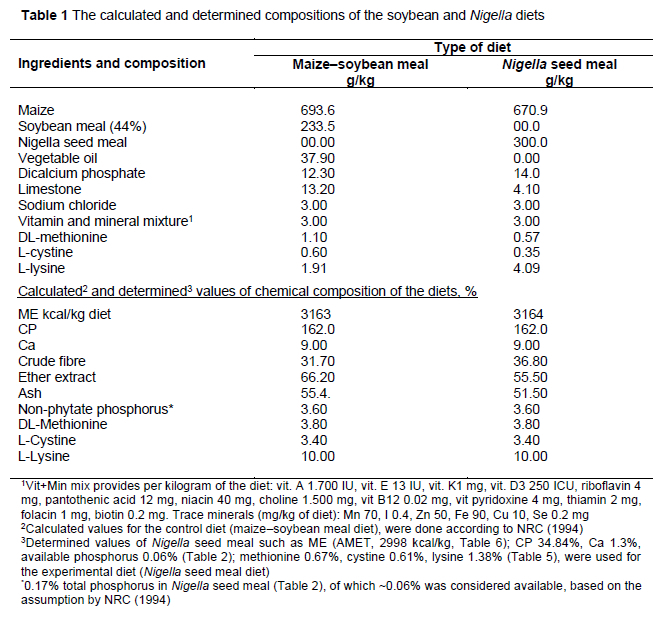
One hundred and sixty Ross-308 unsexed broilers were randomly distributed into two treatments with eight replicates of 10 broilers each. Two isocaloric and isonitrogenous mash diets were formulated using SBM (44% CP, in the control diet), and NSM (34.48% CP, in the experimental diet) as the main protein supplements where SBM in the control diet was 23.35% ª 44% CP = 10.27% CP, and NSM in the experimental diet was 30% ª 34.84% CP = 10.45% CP (Table 1).
The broilers were housed in battery brooders (1 m width x 1 m depth x 60 cm height) under similar management and hygienic conditions from 22-42 d of age and provided with feed and water ad libitum. The brooding temperature was 33, 30, and 27 °C during the first, second, and third week of age, respectively, and then was 23 °C for the rest of the experiment. During the preliminary period (1-21 d of age), the broilers were fed a commercial broiler mash diet, 23% CP and 3200 kcal/kg, (NRC, 1994). Then each diet (SBM or NSM) was fed to eight replicates when the broilers were 22-42 d of age. Feed intake and body weight gain were recorded during the experimental period, then calculated per broiler per day, and finally protein intake and protein conversion ratio were calculated:

Data were subjected to statistical analysis using the SAS® (2010) software application with one-way variance analyses using the GLM procedures of SAS. The difference between means was tested at P <0.05 using the Student-Newman-Keuls Test (SAS, 2010). When needed, the percentage data were transformed using the arcsin (χ/100) transformation to improve the normality of data distribution before analysis.
Results and Discussion
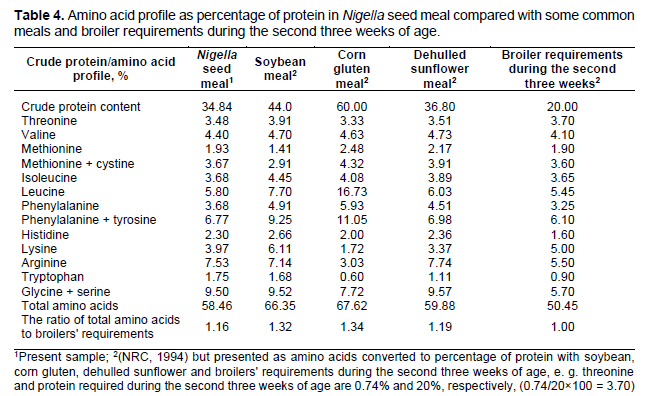
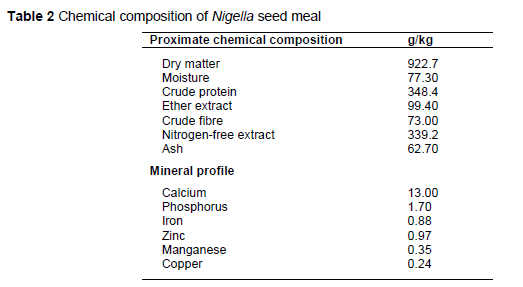
The chemical composition of NSM is shown in Table 2. The values of dry matter, crude protein, ether extract, crude fibre, nitrogen free extract, and ash were in the range cited by Akhtar et al. (2003), and in complete agreement with those reported by Attia et al. (2008), El-Deek et al. (2009), and Silvia et al. (2012). The present results reveal that NSM has substantial nutritive value, which makes it a good feed ingredient for poultry nutrition. NSM contained 79.2% CP of SBM, 58.1% of corn gluten meal, and 94.7% of dehulled sunflower (Table 4).
The mineral profile of NSM was 1.3% Ca, 0.17% P, 88 mg/100 g Fe, 97 mg/100 g Zn, 35 mg/100 g Mn, and 24 mg/100 g Cu. These data indicate that NSM is a rich source of minerals. Silvia et al. (2012) found that NSM excreted at 100 °C using a screw pressed machine contained 1.7% Ca, 119.8 mg/100 g Fe, 27.1 mg/100 g Zn, 18.65 mg/100 g Mn, and 7.62 mg/100 g Cu. The results in the current study indicated higher Ca, Fe, Zn, Mn, and Cu contents than those found in SBM 44% CP (NRC, 1994). In this respect, El-Deek et al. (2009) reported that NSM contained 4,600 ppm of Fe and 2.900 ppm of Mn, whereas Ca and P percentages of NSM were found to be 0.29% and 0.93%, respectively. Variances in chemical composition of different NSM samples are expected due to different agronomic conditions, type of soil, method of oil extraction (organic solvent vs. screw press or a combination of both methods), processing temperature, and source of oil, seeds, or NSM (Al-Silvia et al., 2012; Al-Harthi et al., 2019, 2022, 2023).
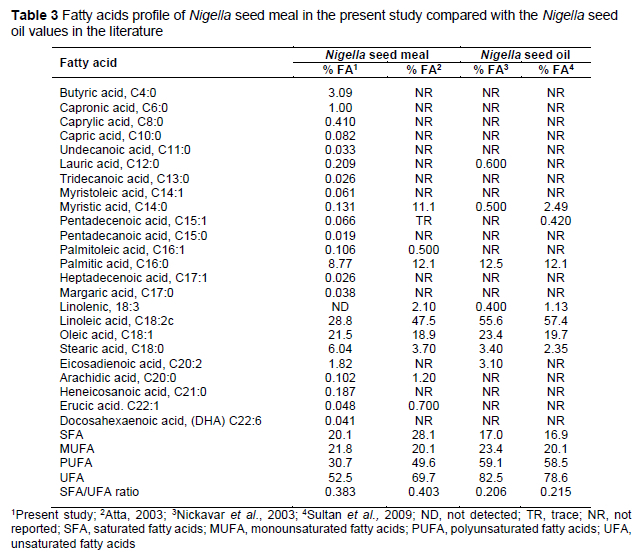
The fatty acid profile of NSM is presented in Table 3. The results indicated that NSM is a rich source of unsaturated fatty acids (UFA, 52.5%), polyunsaturated fatty acids (PUFA, 30.7%), and monounsaturated fatty acids (MUFA, 21.8%), whereas the saturated fatty acids (SFA) were 20.1%. The ratio between SFA/UFA was 0.383. Linoleic (28.8%), oleic (21.5%), and palmitic acids (8.8%) were the dominant PUFA, MUFA, and SFA, respectively. In the literature, the fatty acid profile of NSM is not shown, so the fatty acid profile of NSM in this study was compared to that of Nigella seed oil (Atta, 2003; Nickavar et al., 2003; Sultan et al., 2009). The differences in specific fatty acid concentration in the literature reports could be attributed to the oil extraction process as mentioned above, the source of the oil, seeds or NSM, and to different agronomic conditions. The dominant fatty acids in Nigella seed oil reported by the previous authors were linoleic (47.5-57.4%), oleic (18.9-23.40%), and palmitic (12.1 -12.5%) acids; the ratio of SFA/UFA was 0.206-0.403.
The amino acids profile of NSM is displayed in Table 4. The results indicate that the crude protein of NSM contains a reasonable amount of essential amino acids. It is worth mentioning that the crude protein of NSM or the ratio of total essential amino acids to total essential amino acids required by broilers of 22-42 d of age (NRC, 1994), which converted as a percentage of protein, ranked fourth after corn gluten meal, SBM, and dehulled sunflower meal. However, the increase in corn gluten meal over NSM is 15.5% (1.34/1.16 = 15.5%). The increase in NSM over that required for broilers from 22-42 d of age was 16% (1.16/1.00). In general, the values agree with those cited by Abdel-Aal & Attia (1993), El-Deek et al. (2009), and Silvia et al. (2012). The differences in the amino acid composition of NSM compared with other seeds can be attributed to the difference in plant species, diversity in the agronomic conditions and the type of soil, and the oil source and extraction method, as mentioned previously (Silvia et al., 2012; Al-Harthi et al., 2019, 2022, 2023).
Valine, leucine, and arginine were the most abundant amino acids in NSM. It was noted that amino acids of SBM were higher than that of NSM, however, methionine with or without cystine, arginine, and tryptophan were lower than NSM, and similar content was found between SBM and NSM in glycine with serine. When compared to corn gluten meal, threonine, histidine, lysine, arginine, tryptophan, and glycine with serine were higher in NSM, but other amino acids were lower than corn gluten meal. Moreover, dehulled sunflower meal had higher amino acids than NSM, except for lysine and tryptophan which were lower than NSM, with similar content of glycine with serine. Silvia et al. (2012) reported that methionine, histidine, and arginine were the most abundant amino acids in NSM produced using the screw press process at 100 °C. The results found in the current study indicate that NSM has a considerable amount of amino acids that can support broiler growth, and concurred with the results obtained by Attia et al. (2008) and El-Deek et al. (2009).
In summary, with regard to the NSM chemical composition, mineral elements, fat/fatty acids, and protein/amino acids (Tables 2-4), NSM contains substantial nutritive value, which qualifies it as a good ingredient for poultry feeds.
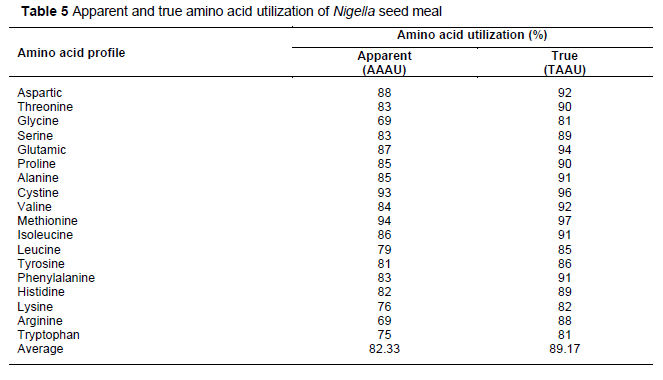
Results in Table 5 show AAAU, which ranged from 69% for glycine and arginine to 94% for methionine (94-69 = 25%), whereas TAAU varied from 81% for glycine and tryptophan to 97% for methionine (97-81 = 16%). This indicates that methionine was the highest amino acid utilized. In addition, the average of AAAU was 82.33%, whereas that of TAAU was 89.17%, showing an increase (89.17-82.33%) of 6.84% due to endogenous amino acid correction.
The lower utilization values for glycine, arginine, and tryptophan can be attributed to the hydraulic reaction in NSM during screw press processing due to the high heat generated, which causes considerable damage to the nutritive value of the protein known as the Maillard reaction (Silvia et al., 2012). The low AAAU and TAAU of glycine found here could be attributed to the involvement of glycine in uric acid synthesis and in different metabolic functions in poultry (Brown et al., 2023). Moreover, glycine represents 95% of amino nitrogen in biliary salts of pigs (Corring & Jung, 1972; Sturkie, 1986; Corzo et al., 2004). Furthermore, the negative effects of antinutritional factors on the utilization of the diet or specific nutrients cannot be ignored. Reverse relationships between the utilization of specific amino acids and content in the diet, where the amount in excess of requirement will be excreted reduces its utilization (Dari et al., 2005). The increase in arginine, tryptophan, and glycine + serine was 37%, 94%, and 67%, respectively, over broiler requirements (Table 4).
The values of AAAU and TAAU in NSM in the current study were higher than those recorded with whole Prosopis pod meal (34.9% and 65.0%, respectively) or in defatted Moringa pregrina seed meal (were 30.92% and 61.06%, respectively), which were attributed to antinutritional factors (Al-Harthi et al., 2018, 2019, 2022, 2023). Fibre content of whole Prosopis pod meal and defatted Moringa pregrina seed meal was ~19% and 32%, respectively, whereas it was ~7% in NSM and this might be, to some extent, the reason for the higher average values of AAAU and TAAU found with NSM. El-Deek et al. (2009) found lower and higher ranges of AAAU and TAAU values (15.26% and 39.69%, respectively), when NSM was used in broiler diets, which is contrary to the ranges found here (25% and 16%, respectively). However, the previous study recorded similar average values to the findings here for AAAU (81.63%) and TAAU (91.94%).
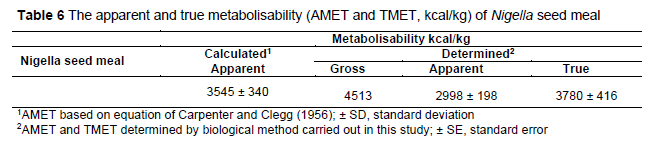
Table 6 shows the gross energy, AMET, and TMET values of NSM (kcal/kg). The determined values of gross energy, AMET, and TMET were 4513, 2998, and 3780 kcal/kg, respectively. The calculated value of AMET based on a proximate chemical composition was 3545 kcal/kg according to the equation of Carpenter & Clegg (1956). The difference between the two values of AMET herein could be due to the method of estimation (biological or chemical). The lower AMET value of the biological method compared to the chemical composition method could be attributed to the lower utilization of some nutrients in NSM. Moreover, the negative effects of fibre and ash on the metabolisability value cannot be ignored (NRC, 1994; Al-Harthi et al., 2009; Rostagno, 2011; Alsaffar et al., 2013). Fibre and ash were not used in the equation of Carpenter & Clegg (1956). The determined values reported herein are lower than those (3185 and 3900 kcal/kg for AMET and TMET, respectively) observed by El-Deek et al. (2009) with NSM. This might be due to the difference in fat content of NSM in this study and El-Deek' study (9.94% vs. 17.7%, respectively). The present results indicate that NSM, in addition to its high nutrient profile, can be considered an energy source for poultry, which is similar to findings reported by Attia et al. (2008), Al-Beitawi et al. (2010) and Khan et al. (2012). Abdel-Hady et al. (2009) reported a value of 3604 kcal/kg for AMET of NSM when calculated using chemical composition. The differences in AMET values in the previous studies and those found herein can be attributed to the variations in NSM chemical composition, as previously mentioned. The effect of diet or ingredient composition on energy metabolisability has been reported previously (NRC, 1994; Al-Harthi, 1997; Al-Harthi et al., 2009; Rostagno, 2011; Alsaffar et al., 2013; Al-Harthi et al., 2019, 2022, 2023). The method used to determine these values (biological or chemical) cannot be ignored.
In summary, with regard to the benefit to broiler chickens from the protein/amino acids and energy in NSM, NSM can be regarded as an ingredient that broiler chickens can use in large quantities (Tables 5 and 6).
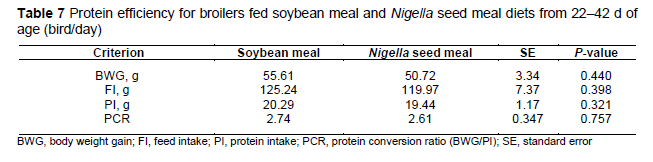
The results in Table 7 show growth rate, feed intake, protein intake, and protein conversion ratio from 22-42 d of age. Using NSM as a source of protein in broiler diets instead of SBM protein did not negatively affect growth parameters. These results confirm the quality of amino acids in NSM in terms of content and utilization (Tables 4 and 5) and indicate that NSM protein is a suitable protein source for poultry diets. Similar results were reported by Attia et al. (2008) and El-Deek et al. (2009). However, Abou-Egla et al. (2001) found that the protein conversion ratio of NSM was substantially lower than that of SBM. The findings in the current study encourage doing further studies to test the efficacy of using NSM as a source of protein instead of SBM for the whole growth period of broilers (1-42 d of age).
Nigella sativa seed (NSS) is considered a valuable ingredient in terms of its chemical composition; broilers can use its nutrients easily and in large quantities. NSS contains some antinutritional factors such as fibre (non-starch polysaccharides, NSPs), phytic acid, tannins, oxalate, alkaloids, phenols, flavonoids, saponins, glycosides, and steroids, in addition to protease inhibitors which all adversely affect animal performance by decreasing the utilization of the nutrients in the NSS. This is carried out by chelating with minerals, vitamins, and other nutrients like starch, protein, and fat, hence decreasing the utilization from the dietary intake. However, techniques are usually used to alleviate or eliminate these undesirable effects, such as heating the seeds by boiling, autoclaving, roasting, and pelleting; and/or subjecting them to biochemical procedures such as soaking, germination, fermentation (Al-Harthi, 1997; Al-Harthi et al., 2009; Mamun & Absar, 2018; Al-Harthi et al., 2018, 2019; Suri et al., 2019; Agarwa et al., 2020; Javaid et al., 2021; Al-Harthi et al., 2022, 2023). Consistent with this, the by-product NSM used in the current study was obtained using seed screw-pressing for oil extraction at 90 °C, and this definitely helped to some extent in improving the utilization of NSM by broilers. This was evident from the high utilization of amino acids (AAAU 82.33%, Table 5), and energy (AMET 2998 kcal/kg, Table 6), and was confirmed by the protein efficiency trial, which indicated similar growth between the two groups of broilers when fed on soybean meal or NSM as a major source of protein in the diet (Table 7).
Conclusions
The nutrient profile of NSM indicates that it contains ~34% CP, 10% ether extract, and a considerable content of minerals, amino acids, and fatty acids. The apparent and true amino acid utilization was 82.33% and 89.17%, respectively. The determined values of apparent and true metabolisability were 2998 and 3780 kcal/kg, respectively. The protein conversion ratio suggested the possibility of using NSM instead of SBM for broilers between 22 d and 42 d of age. Thus, it can be concluded that NSM is a rich source of nutrients and can be tested in future studies to estimate its potency as a source of protein in broiler diets during the whole period of growth (1 -42 d of age). Moreover, testing higher levels of NSM in broilers diets is important in future studies.
Conflict of Interest
Authors declare no conflict of interest.
References
- Abdel-Aal, E-S.M. & Attia, R.S., 1993. Characterization of black cumin Nigella sativa seeds 2- Proteins. Alex. Sci. Exch. 14, 483-496.
- Abdel-Hady, A.A., Abdel-Azeem, F.A., Abdel-Rafea, A.A. & Gamal A.G., 2009. Effect of replacement of soybean meal protein by Nigella sativa meal protein on performance of growing Japanese quail. Egypt. Poult. Sci. J. 29, 407-422.
- Abdollahzadeh, F. & Abdulkarimi, R., 2012. The effects of some agricultural by-products on ruminal fermentation and apparent digestibility of Holstein dairy cow. Life Sci. J. 9, 181-184.
- Abou-Egla, E.S., Salwa Genedy, G.K., Abou-Zeid, A.E. & Zeweil H.S., 2001. Nigella sativa seed oil meal as a nontraditional source of plant protein in Japanese quail diets. Egypt. Poult. Sci. J. 21, 107-125.
-
Agarwal, S., Tripathi, S., Arshi & Mishra, N., 2020. Nutritional composition and antioxidant profiles of Nigella sativa L. seeds. Ann. Phytomed. 9(2), 207-214. doi: 10.21276/ap.2020.9.2.18.
» https://doi.org/10.21276/ap.2020.9.2.18 - Akhtar, M.S, Nasir, Z. & Abid, A.R., 2003. Effect of feeding powdered Nigella sativa L. seeds on poultry egg production and their suitability for human consumption. Veterinarski Arhiv. 73, 181-190.
-
Al-Beitawi, N.A., El-Ghousein, S.S. & Athamneh, M.Z., 2010. Effect of adding crushed Pimpinella anisum, Nigella sativa seeds, and Thymus vulgaris mixture to antibiotic-free rations of vaccinated and non-vaccinated male broilers on growth performance, antibody titre, and haematological profile. Ital. J. Anim. Sci. 9(e43), 222-228. doi: 10.4081/ijas.2010.e43.
» https://doi.org/10.4081/ijas.2010.e43 - Al-Harthi, M.A., 1997. The effects of high ambient temperature on energy expenditure, utilisation and partition in the domestic fowl. Ph. D. The University of Edinburgh, School of Agriculture, United Kingdom.
-
Al-Harthi, M.A., El-Deek, A.A., Attia, Y.A., Bovera, F. & Qota, E.M., 2009. Effect of different dietary levels of mangrove Laguncularia racemosa leaves and spice supplementations on productive performance, egg quality, lipids metabolism and metabolic profile in laying hens. Br. Poult. Sci. 50, 700-708. doi: 10.1080/00071660903202948.
» https://doi.org/10.1080/00071660903202948 -
Al-Harthi, M.A., Attia, Y.A., Al-sagan, A. & Elgandy, M.F., 2018. The effects of autoclaving or/and multi-enzymes complex supplementation on performance, egg quality and profitability of laying hens fed whole Prosopis juliflora pods meal diet. Europ. Poult. Sci., 82, 1-15. doi: 10.1399/eps.2018.248.
» https://doi.org/10.1399/eps.2018.248 -
Al-Harthi, M.A., Attia, Y.A., Al-sagan, A. & Elgandy, M.F., 2019. Nutrient profile, protein quality, and energy value of whole Prosopis pod meal as a feedstuff for poultry feeding. Ital. J Anim Sci. 18(1), 30-38. doi: 10.1080/1828051X.2018.1464889.
» https://doi.org/10.1080/1828051X.2018.1464889 -
Al-Harthi, M.A., Attia, Y.A., Elgandy, M.F. & Bovera, F., 2022. Oil-extracted Moringa peregrina Seed Cake as a Feed Ingredient in Poultry: A chemical composition and nutritional value study. Animals. 12(24),1-12. doi: 10.3390/ani12243502.
» https://doi.org/10.3390/ani12243502 -
Al-Harthi, M.A., Attia, Y.A., Elgandy, M.F. & Bovera, F., 2023. The effects of Moringa peregrina seed meal, autoclaving, and/or exogenous enzyme cocktail on performance, carcass traits, meat quality, and blood lipids of broilers. Front. Vet. Sci. 10, 1-18. doi: 10.3389/fvets.2023.1158468.
» https://doi.org/10.3389/fvets.2023.1158468 -
Alsaffar, A.A., Attia, Y.A., Mahmoud, M.B., Zewell, H.S. & Bovera, F. 2013. Productive and reproductive performance and egg quality of laying hens fed diets containing different levels of date pits with enzyme supplementations. Trop. Anim. Health and Prod. 45, 327-334. Doi: 10.1007/s11250-012-0222-1
» https://doi.org/10.1007/s11250-012-0222-1 - AOAC, 2006. Official methods of analysis of the Association of Official Analytical Chemists, 16th edn. Washington, D.C., USA.
- Atta, M.B., 2003. Some characteristics of Nigella sativa L. seed cultivated in Egypt and its lipid profile. Food Chem. 83, 63-68.
- Attia, Y.A., Tag El-Din, A.E., Zeweil, H.S., Hussein, A.S. & Arafat, M.A., 2008. The effect of supplementation of enzyme on laying and reproductive performance in Japanese quail hens fed Nigella seed meal. J. Poult. Sci. 45, 110-115.
-
Brown, C.L.J., Zaytsoff, S.J.M., Iwaniuk, A.N., Metz, G.A.S., Montina, T. & Inglis, G.D., 2023. Comparative analysis of the temporal impacts of corticosterone and simulated production stressors on the metabolome of broiler chickens. Metabolites, 13(2), 144. doi: 10.3390/metabo13020144
» https://doi.org/10.3390/metabo13020144 - Carpenter, K.J. & Clegg, K.M., 1956. The metabolisable energy of poultry feeding stuffs in relation to their chemical composition. J. Sci. Food Agric. 7, 45-51.
- Concon, J.M., 1975. Rapid and simple method for the determination of tryptophan in cereal grains. Analytical Biochem. 67, 206-219.
- Corring, T. & Jung, J., 1972. The amino acid composition of pig pancreatic juice. Nutr Rep Int. 6, 187-190.
-
Corzo, A., Kidd, M.T., Burnham, D.J. & Kerr, B.J., 2004. Dietary glycine needs of broiler chicks. Poult Sci. 83, 1382-1384. doi: 10.1093/ps/83.8.1382.
» https://doi.org/10.1093/ps/83.8.1382 -
Dari, R.L., Penz Jr, A.M., Kessler, A.M. & Jost, H.C., 2005. Use of digestible amino acids and the concept of ideal protein in feed formulation for broilers. J. Appl. Poult. Res. 14, 195-203. doi: 10.1093/japr/14.2.195
» https://doi.org/10.1093/japr/14.2.195 - Dickman, S.R. & Bray, R.H., 1940. Colorimetric determination of phosphate. Ind. Eng. Chem. Anal. Ed., 12, 665-668.
- El-Deek, A.A., Hamdy, S.M., Attia, Y.A. & Khalifah, M.M., 2009. Nigella sativa seed oil meal as a source of plant protein in broiler diets. Egypt. Poult. Sci. J. 29, 39-52.
- El-Deek, A.A., Al-Harthi, M.A. & Attia, Y.A., 2011. Effect of different dietary levels of dried eggs by-product without or with shell on the performance of laying strain chicks from 2 to 8 wk of age. Archiv. Geflügelk. 75, 20-29.
- Folch, J., Lees, M. & Stanley, G.H.S., 1957. A simple method for the isolation and purification of total lipids from animal tissues. J. Biol. Chem. 226, 497-509.
- Jackson, M.I., 1967. Soil Chemical Analysis. Asia Publishing House: Madras, India.
-
Javaid, B., Majeed, N., Deeba, F., Muhammad, A., Ahmad, M.S., Rehman, A.U., Blanchard, C. & Naqvi, S.M.S., 2021. Anti-trypsin and antihypertensive activity of protein extracts from Nigella sativa seeds. Pak. J. Agri. Sci. 58(4), 1237-1243. DOI: 10.21162/PAKJAS/21.204.
» https://doi.org/10.21162/PAKJAS/21.204 -
Khan, S.H., Ansari, J., Haq, A.U. & Abbas, G., 2012. Black cumin seeds as phytogenic product in broiler diets and its effects on performance, blood constituents, immunity and caecal microbial population. Ital. J. Anim. Sci. 11(77e), 438-444. doi: 10.4081/ijas.2012.e77.
» https://doi.org/10.4081/ijas.2012.e77 - Mamun, M.A. & Absar, N., 2018. Major nutritional compositions of black cumin seeds cultivated in Bangladesh and the physicochemical characteristics of its oil. Int. Food Res. J. 25(6), 2634-2639.
- National Research Council (NRC) 1994. Nutrient Requirements of Poultry, 8th revised edn. National Academy Press, Washington, D.C., USA.
- Nickavar, B., Mojab, F., Javidnia, K. & Amoli, M.A.R., 2003. Chemical composition of the fixed and volatile oils of Nigella sativa L. from Iran. Z. Naturforsch 58c, 629-631.
- Ogunsua, A.O., 1988. Amino acid determination in conophor nut by gas liquid chromatography. Food Chem. 28, 287-298.
- Radwan, S.S., 1978. Coupling of two dimensional thin layer chromatography with GC for the quantitative analysis of lipid classes and their constituent fatty acids. J. Chrom. Sci. 16, 538-542.
- Rostagno, H.S., Albino, L.F.T., Donzele, J.L., Gomes, P.C., De Oliveira, R.F.M., Lopes, D.C., Ferreira, A.S. & Barreto, S.L.T., 2011. Brazilian tables for poultry and swine: Composition of feedstuffs and nutritional requirements, 3rd ed. Viçosa, MG: UFV, DZO, Brazil.
- Sibbald, I.R., 1979. A bioassay for valuable amino acids and true metabolisable energy in feeding stuffs. Poult. Sci. 58, 934-939.
-
Silvia, D., Farah Masturah, M., Tajul Aris Y., Wan Nadia W.A. & Rajeev B., 2012. The effects of different extractions temperature of the screw press on proximate compositions, amino acids contents and mineral contents of Nigella sativa meal. Am. J. Food Techn. 4, 180-191. doi: 10.3923/ajft.2012.180.191.
» https://doi.org/10.3923/ajft.2012.180.191 - SAS Institute. 2010. SAS/STAT User's Guide: Statistics: Release 9.2 Ed.; SAS Institute Inc.: Cary, NC, USA.
- Sturkie, P.D., 1986. Avian physiology. 4th ed. NY, USA: Springer Verlag.
- Sultan, M.T., Butt, M.S., Anjum, F.M., Jamil, A., Akhtar, S. & Nasir, M., 2009. Nutritional profile of indigenous cultivar of black cumin seeds and antioxidant potential of its fixed and essential oil Pak. J. Bot., 41, 1321-1330.
-
Suri, S., Kumar, V., Tanwar, B., Goyal, A. & Gat, Y., 2019. Impact of soaking and germination time on nutritional composition and antioxidant activity of Nigella Sativa. Curr. Res. Nutr. Food Sci. J. 7(1), 142-149. doi:10.12944/CRNFSJ.7.1.14.
» https://doi.org/10.12944/CRNFSJ.7.1.14
Accepted 27 August 2024
Published 31 August 2024