Short communication: Genetic predisposition to wet carcass syndrome in sheep - evidence from a SNP-based heritability analysis
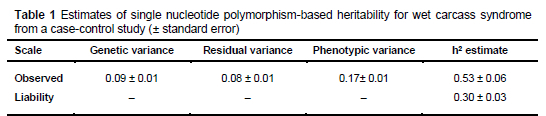
Wet carcass syndrome (WCS) is a defect that occurs in sheep and is characterised by a wet, translucent appearance of the carcass, resulting in condemnation and industry losses. This defect is undetectable until the carcass has been chilled after slaughter, and genetic improvement has thus been proposed as a potential mitigation strategy. This study estimated the single nucleotide polymorphism-based heritability of WCS using a case-control population of South African Dorper, merino-type, and cross-bred sheep genotyped using the Illumina OvineSNP50 BeadChip. After quality control, 32 077 single nucleotide polymorphisms and 540 animals (164 cases, 376 controls) were retained. A genomic relationship matrix was constructed, and heritability was estimated using genomic-relatedness-based restricted maximum likelihood on the observed and liability scales. The liability-scale heritability was 0.30 ± 0.03, demonstrating a substantial additive genetic component underlying WCS susceptibility. These results provide foundational evidence that susceptibility to WCS has a genetic component and support future genome-wide association studies and genomic selection aimed at reducing the prevalence of this economically important condition.
GREML; meat quality; ovine genomics; SNP-based heritability estimate