Morphological and physiological characteristics of claw quality in South African Bonsmara cattle
Abstract
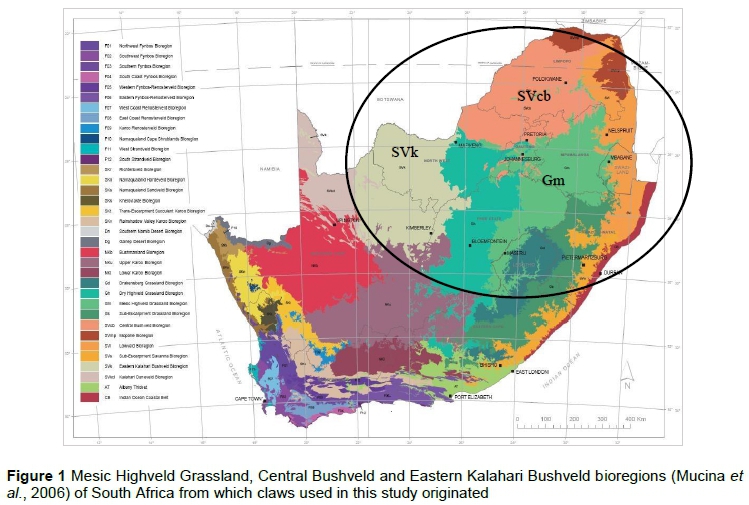
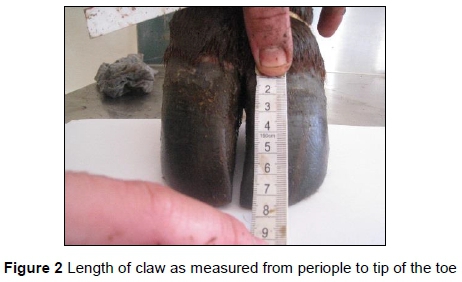
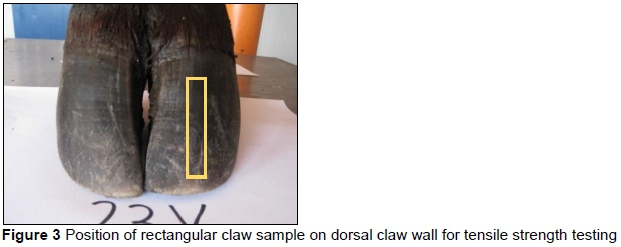
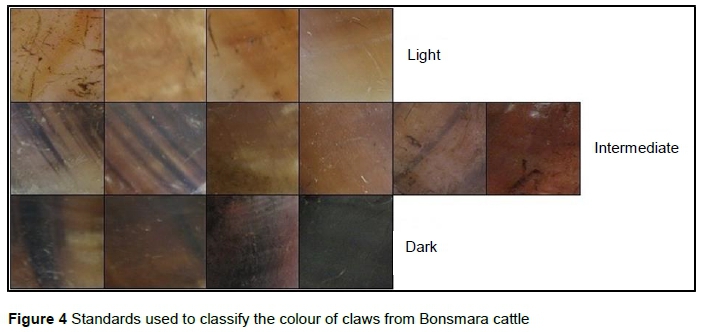
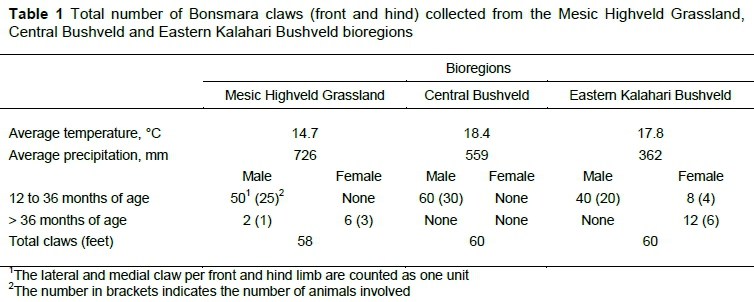
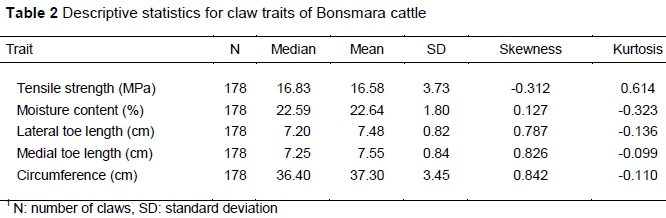
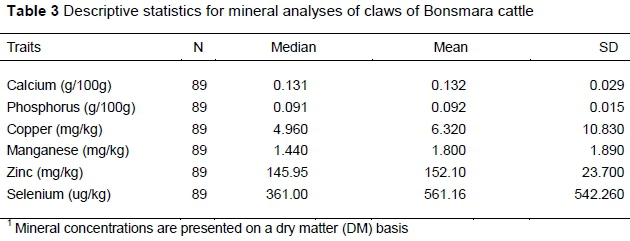
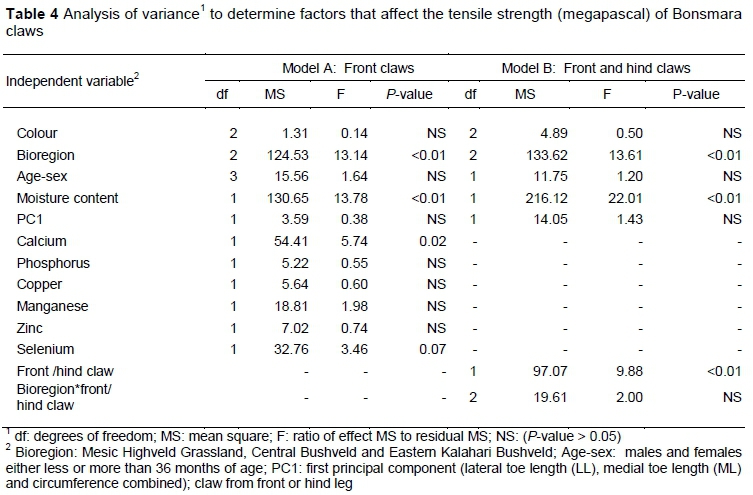
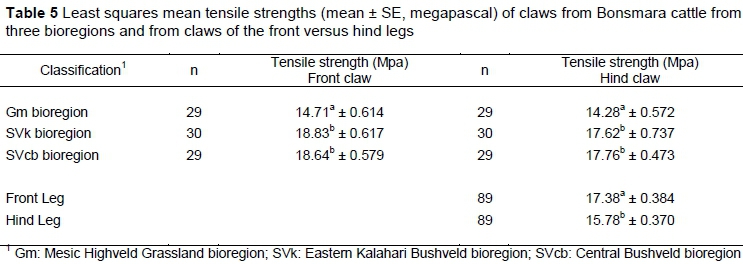
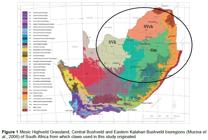
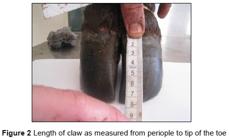
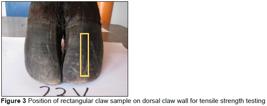
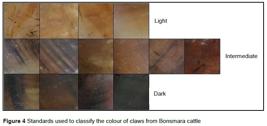
Sound claws are essential for beef cattle, given the marked influence they have on functional longevity and subsequent performance. The aim of this study was to evaluate morphological and physiological claw characteristics of Bonsmara SA beef cattle in the major bioregions of South Africa. Normal claws of 89 Bonsmara stud animals were collected from three bioregions in which Bonsmara cattle are farmed, namely Mesic Highveld Grassland, Eastern Kalahari Bushveld and Central Bushveld bioregions. Most of these claws were from Bonsmara bulls that were slaughtered after completion of a standardized intensive feeding test and a few were from older cows. Lateral toe length (LL), medial toe length (ML), claw circumference, colour coding and tensile strength (TS) were determined on the fore and hind claws and mineral composition only on the fore claws. Multifactorial analysis of variance (ANOVA) models indicated that bioregion, moisture content, calcium (Ca), selenium (Se) and claw position (fore versus hind claws) had a significant effect (P <0.05) on TS. It is clear that environmental factors need to be considered in the evaluation of claw quality. This research serves as a benchmark for claw traits in the Bonsmara breed. Recording of claw and conformation traits is essential for genetic improvement.
bioregion; claw parameters; colour; lateral and medial claw length; mineral composition; tensile strength
 Thumbnail
 Thumbnail
 Thumbnail
 Thumbnail