The response in food intake and reproductive parameters of breeding ostriches to increasing dietary energy
Abstract
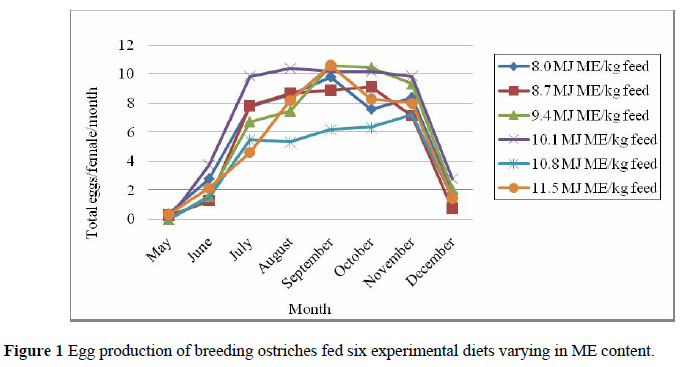
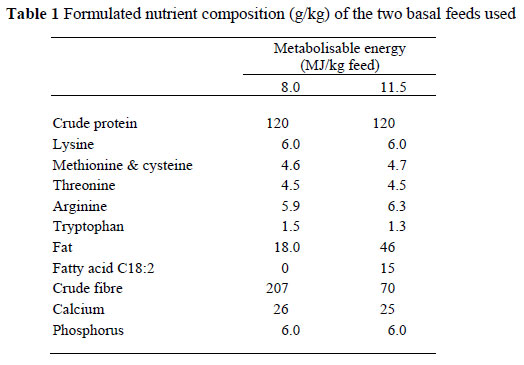
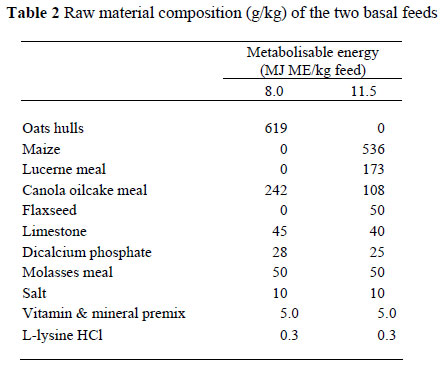
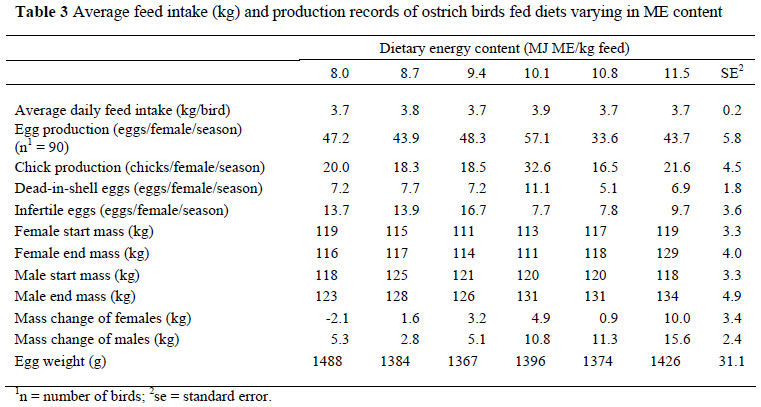
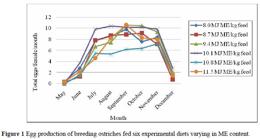
Elucidating the factors affecting feed intake is important when quantifying nutrient responses in breeding ostriches. The experiment was conducted to determine to what extent dietary energy content will affect the important production parameters of breeding ostriches. Ninety pairs of breeding ostriches were divided into six groups, consisting of 15 breeding pairs per group. Six diets with increasing metabolisable energy content (8.0, 8.7, 9.4, 10.1, 10.8 and 11.5 MJ ME/kg feed) were provided ad libitum to birds during the breeding season. All the other nutrients were kept constant in all feeds. Responses were measured by simple linear regression. Average daily feed intake (3.7 ± 0.2 kg) was unaffected by energy content as were all the reproductive parameters measured, including total eggs produced per female (45.6 ± 5.8), number of chicks hatched (21.3 ± 4.5), number of infertile eggs (11.6 ± 3.6), number of dead-in-shell eggs (7.5 ± 1.8) and egg weight (1406 ± 31 g). However, the significant increase in live mass of both males and females indicated that energy was over-consumed as the energy content of the diet was increased. Breeding ostriches did not regulate feed intake according to dietary energy content but instead based their intake on the concentration of the limiting nutrient in the feed.
Feed intake regulation; response to energy; egg production; chick production
 Thumbnail