External stimuli help restore post-partum ovarian activity in Pelibuey sheep
Abstract
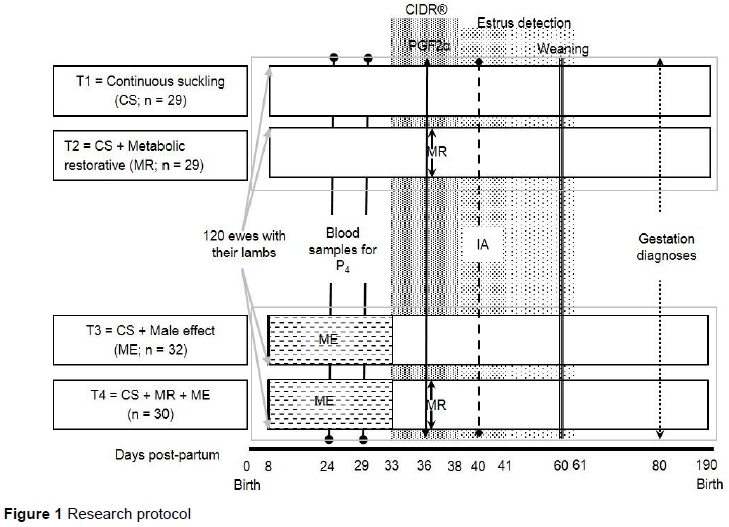
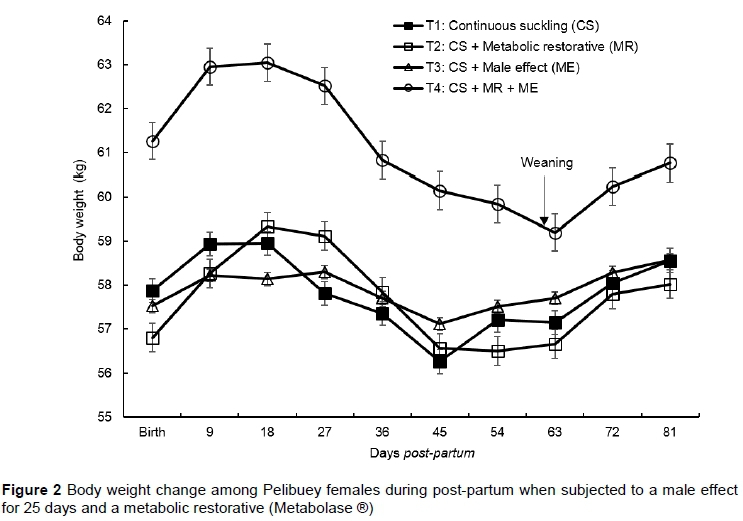
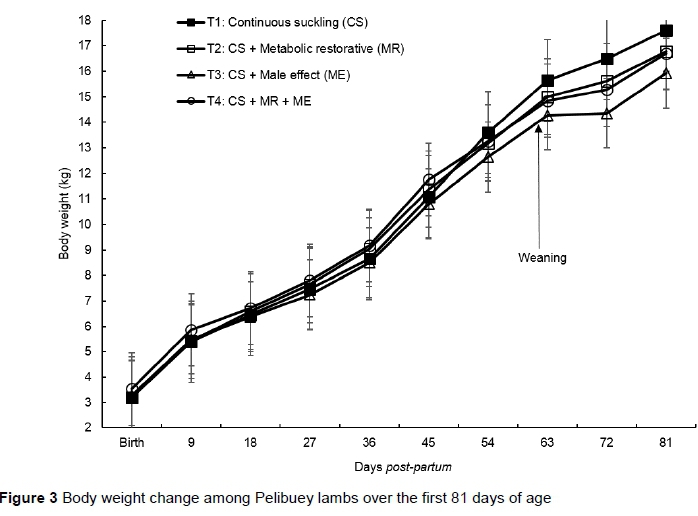
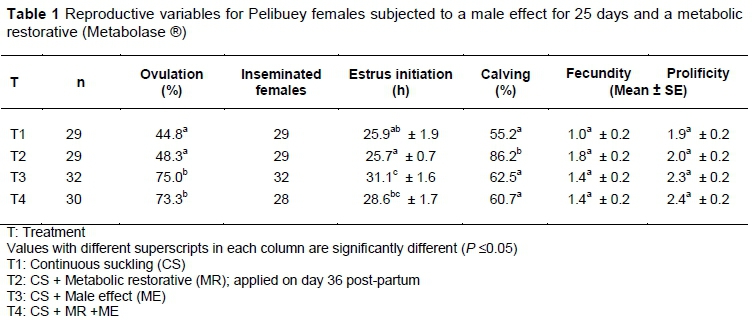
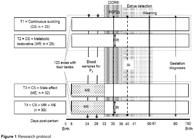
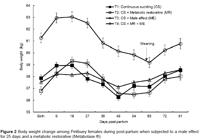
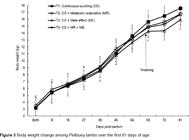
Post-partum anestrus is a problem on farms, and its duration depends on the frequency and intensity of suckling which affects reproduction and production efficiency to become a determining economic factor. The aim of this study was to determine the post-partum reproductive response in ewe to a "male effect" with an ovulation induction protocol of five days using progesterone and the application of a metabolic restorative (MR; Metabolase ®). One hundred and twenty females were randomly assigned to one of four treatments: T1: Continuous suckling (CS; n = 29), T2: CS + MR (n = 29), T3: CS + Male Effect (ME; n = 32), and T4: CS + MR + ME. The percentage of females in ovulation, weight changes among females and lambs, the onset of estrus, calving, fecundity, and prolificacy were also determined. The ovulation percentage was higher in CS + ME and CS + MR + ME (75.0 and 73.3%) than in the other treatments. Weight changes in females and lambs were different among periods. The onset of estrus was similar for CS and CS + MR (25.9 ± 1.9 and 25.7 ± 0.7 h, respectively). The calving percentage was higher for CS + MR (86.2%) than other treatments. Male presence positively affected the postpartum cyclic ovarian re-establishment and the metabolic restorative could even improve the fertility of hair ewes in continuous suckling with similar hormone protocol.
Male effect; metabolic stimulation; post-partum anestrus
 Thumbnail
 Thumbnail
 Thumbnail