The impact of increased vitamin and mineral intake during early gestation on the reproductive performance of sows
Abstract
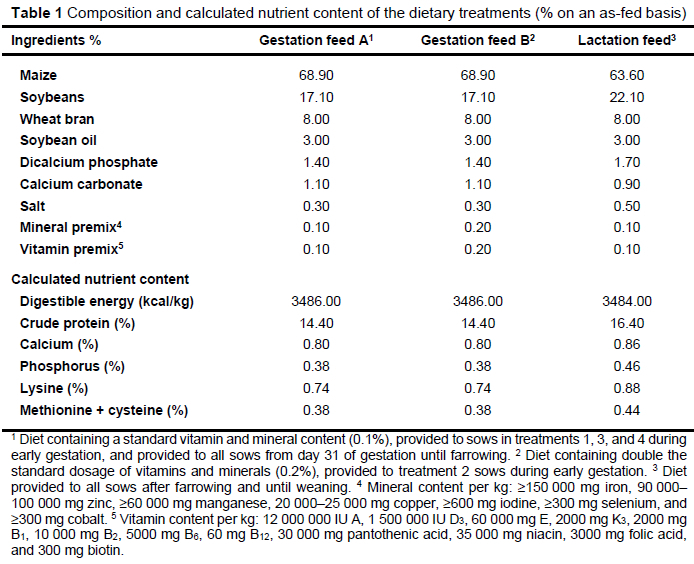
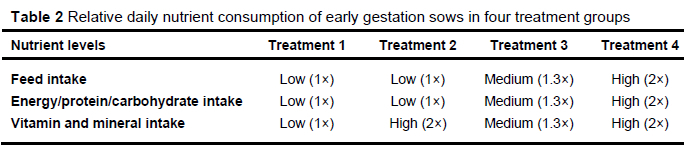
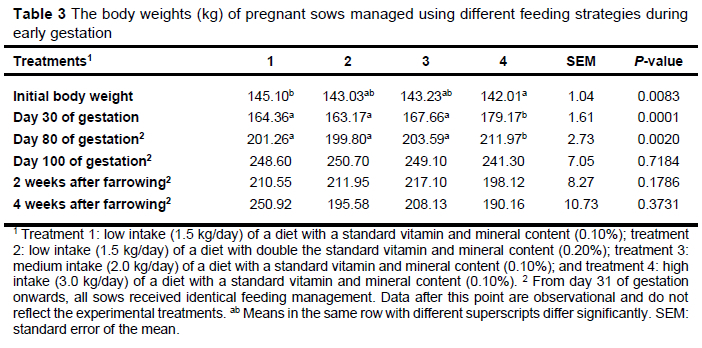
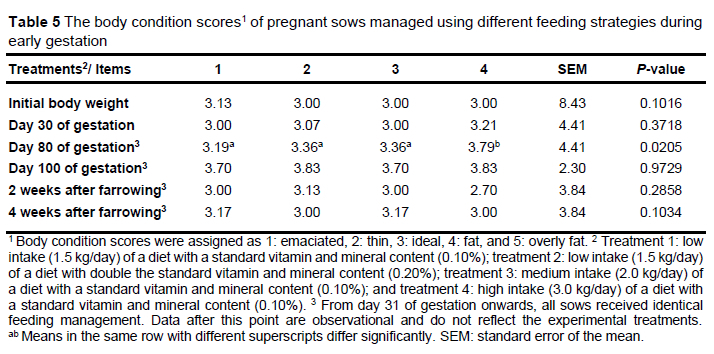
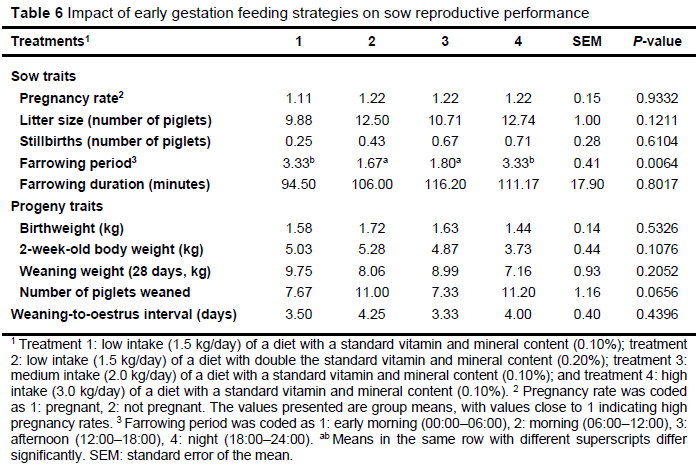
This study investigated the effects of supplementing vitamins and minerals to sows during early gestation. A total of 36 primiparous sows were randomly assigned one day before mating to four dietary treatments that were applied from mating to day 30 of gestation. Treatment 1: low feed intake (1.5 kg/day) with standard vitamin and mineral provision (0.10% as fed); treatment 2: low feed intake (1.5 kg/day) with double the standard provision of vitamins and minerals (0.20% as fed); treatment 3: medium feed intake (2.0 kg/day) with standard vitamin and mineral provision (0.10% as fed); and treatment 4: high feed intake (3.0 kg/day) with standard vitamin and mineral provision (0.10% as fed). Results showed that sows in treatment 4 had the highest body weights at days 30 (179.17 kg) and 80 (211.97 kg) of gestation. Sows in treatments 2 and 4 also had numerically larger litters (12.50 and 12.74 piglets, respectively) than sows in treatments 1 and 3 (9.88 and 10.71 piglets, respectively), although this difference was not statistically significant. Additionally, treatment 2 and 4 sows tended to wean more piglets (11.00 and 11.20 piglets, respectively) than treatment 1 and 3 sows. Overall, both a high level of vitamin and mineral supplementation with a low feed intake (treatment 2), and a high feed intake with standard vitamin and mineral supplementation (treatment 4) during early gestation seemed to have the potential to increase litter size to a similar extent, although a high feed intake may be associated with non-significantly reduced piglet growth.
feed intake; first parity; gestational nutrition; litter characteristics; micronutrient supplementation