Slaughter and carcass characteristics of cross- and purebred lambs finished in a pasture-based system
Abstract
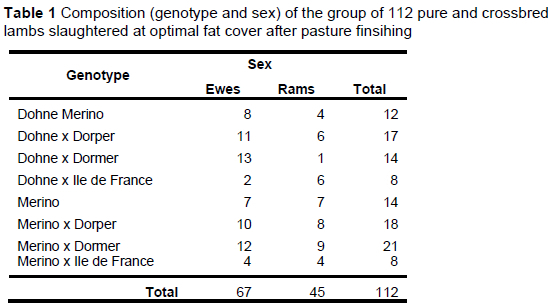
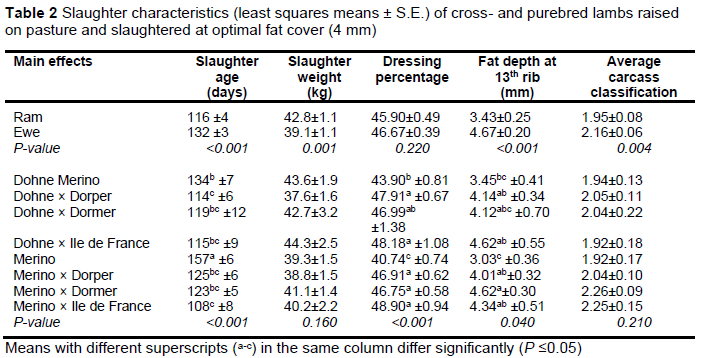
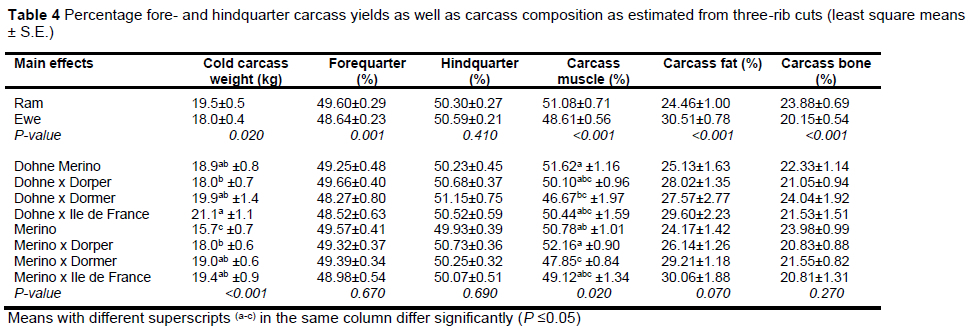
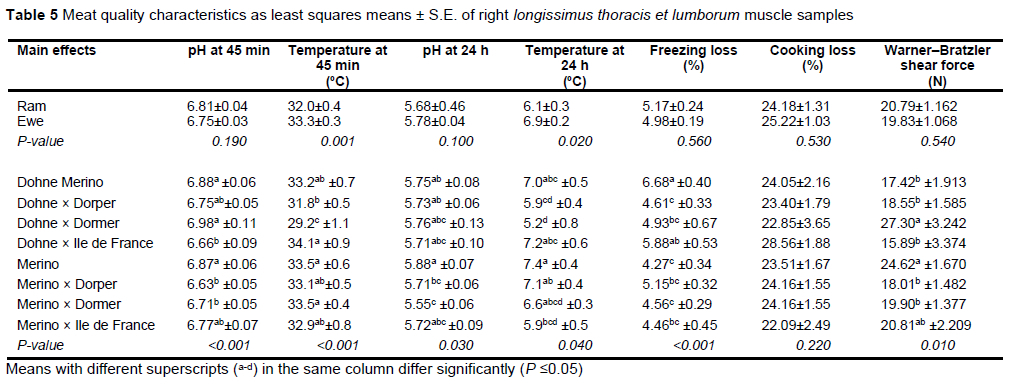
One hundred and twelve cross- and purebred pasture-reared lambs were slaughtered at optimal backfat thickness (4 mm). Selected slaughter, carcass, and meat quality characteristics of these animals were assessed. Slaughter age, but not weight, was influenced by genotype, whereas rams were younger and heavier at slaughter than ewes. Throughout, the crossbred genotypes were younger at slaughter than their purebred contemporaries. Merinos had a lower dressing percentage (40.74%) than Dohne Merinos (43.89%), which in turn dressed out substantially lower than all crossbred combinations (~47%). Genotype did not influence the fat or bone percentage in the carcass, but differences existed for the meat percentage. Meat from all groups could be described as very tender (<32.96 N) and acceptable even to consumers not preferring pasture-produced lamb. The reduced slaughter age of crossbred lambs presents the possibility of shortening the production cycle of lamb while simultaneously increasing carcass yields.
heterosis; lamb production; meat quality; sheep