Nutritive value and physical characteristics of Xaraes palisadegrass as affected by grazing
Abstract
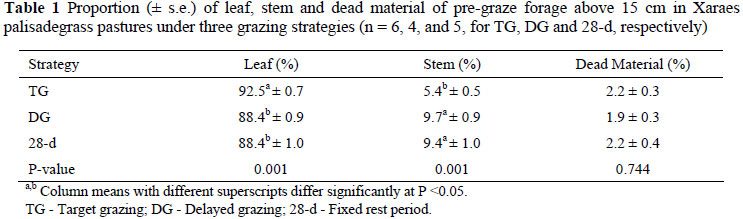
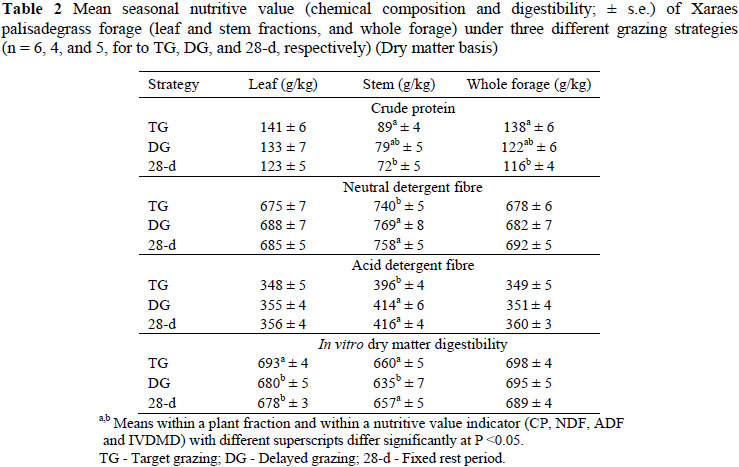
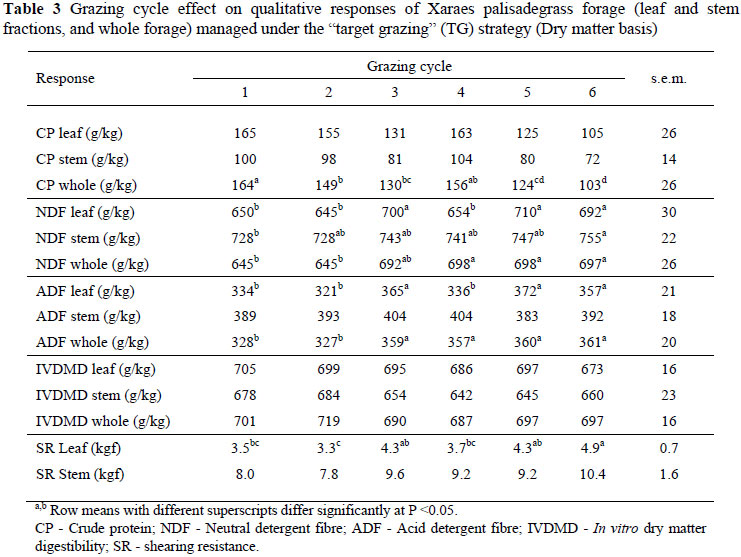
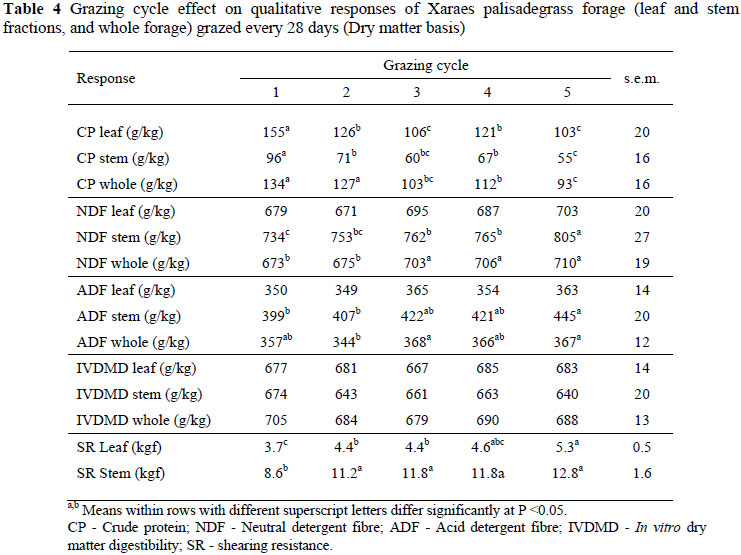
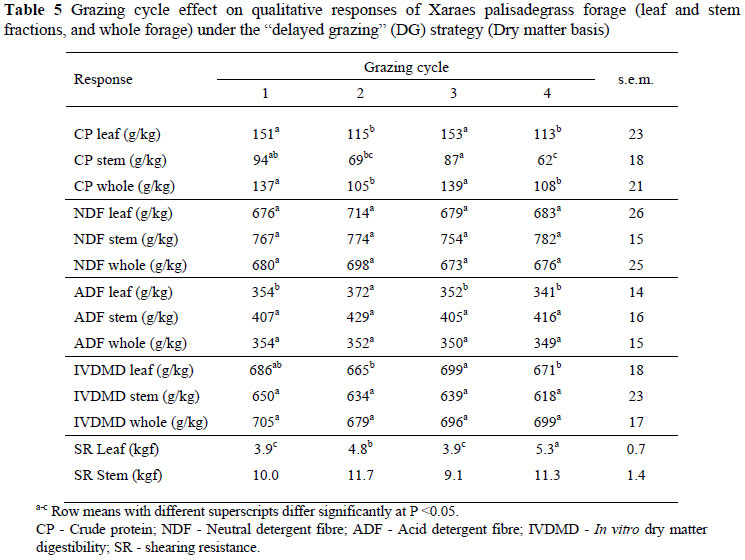
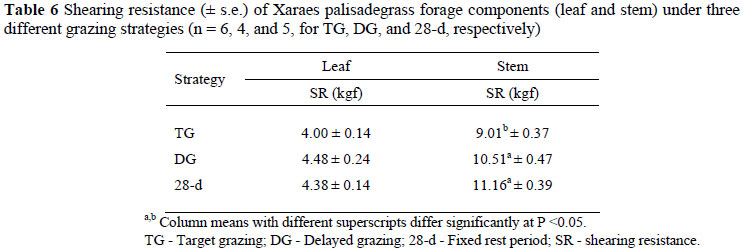
The aim of this study was to ascertain whether the defoliation frequency based on a fixed rest period would generate variable sward structural and physiological conditions at each subsequent grazing event. The relative importance of the physiological age was established in comparison with the chronological age in the determination of the forage nutritive value of Xaraes palisadegrass [Brachiaria brizantha (Hochst ex A. RICH.) STAPF. cv. Xaraes]. Two grazing frequencies were defined by light interception (LI) at initiation of grazing (95% LI - "target grazing" [TG] or 100% LI - "delayed grazing" [DG]) and one based on chronological time, grazing every 28 days (28-d). Forage produced under the TG schedule was mostly leaves (93%) with a higher concentration of crude protein (CP; 138 g/kg in the whole forage), a lower concentrations of neutral detergent fibre (NDF) in the stems (740 g/kg), and higher in vitro dry matter digestibility (IVDMD) of the leaves (690 g/kg), compared to the other treatments. Lower grazing frequency strategies (DG and 28-d) resulted in forage with higher proportions of stems (10 and 9%, respectively). Strategies based on light interception did not produce pre-graze forage with a uniform nutritive value, as the indicators varied across grazing cycles. The treatment based on fixed days of rest did not result in uniformity.
Digestibility; light interception; shearing resistance; forage quality