Carcass and meat quality of Boer and indigenous goats of South Africa under delayed chilling conditions
Abstract
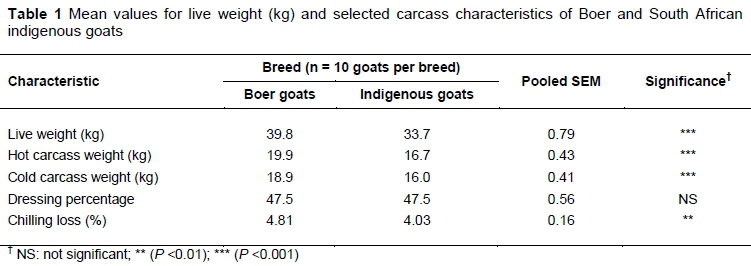
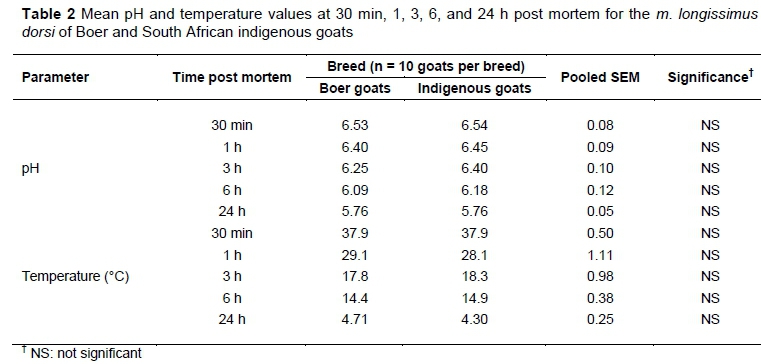
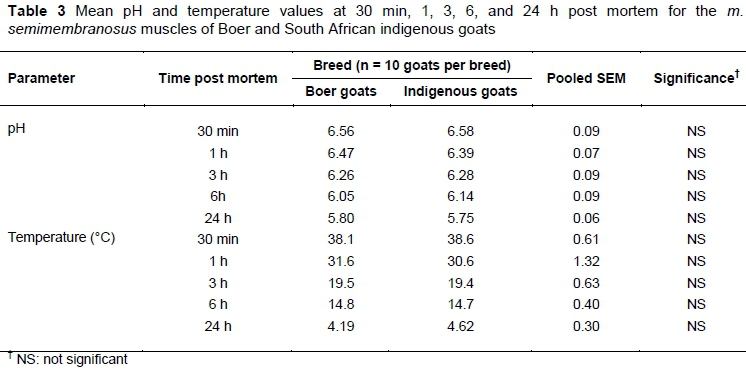
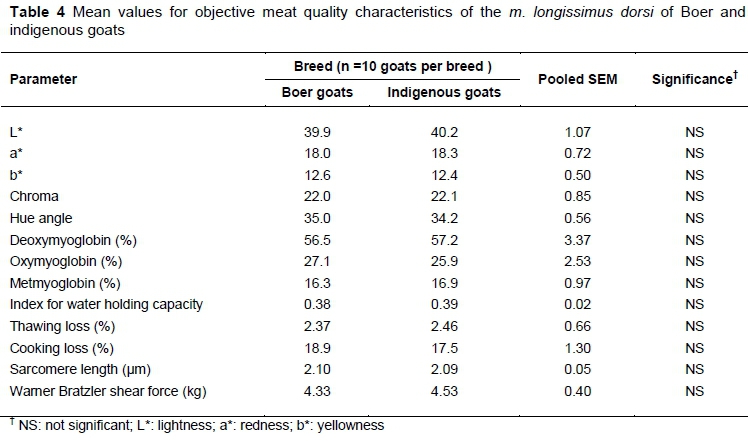
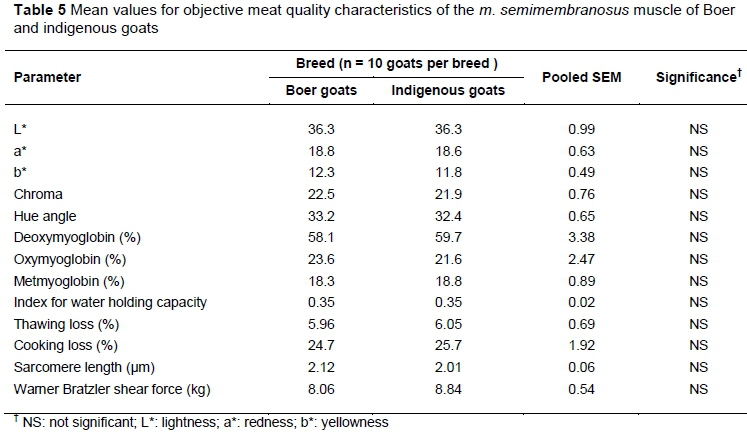
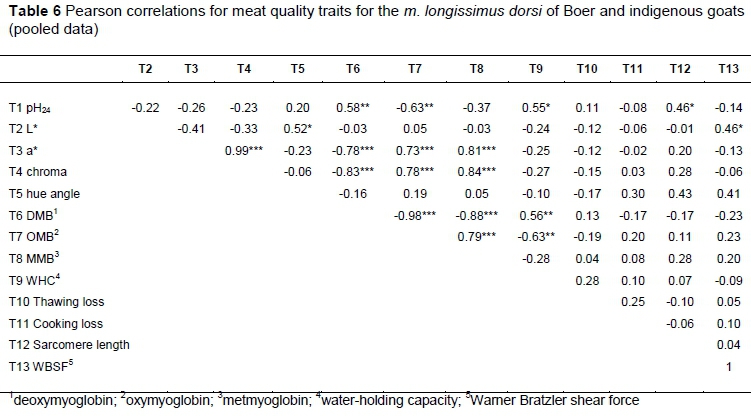
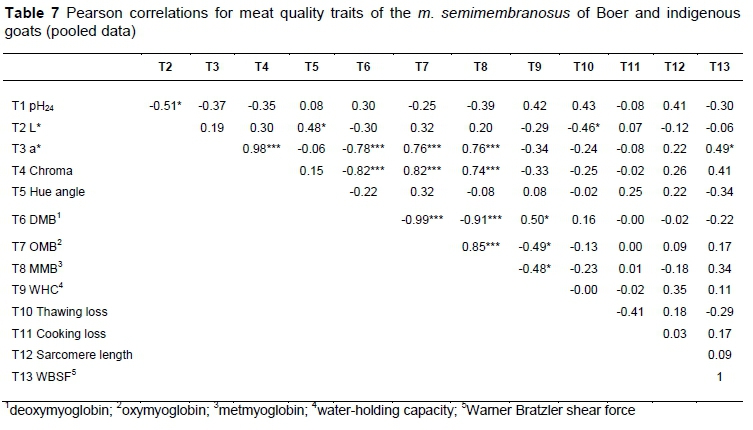
This study was conducted to evaluate the carcass and meat quality of Boer goats and unimproved indigenous goats of South Africa, under delayed chilling conditions. Ten goats per breed were used for the study. The goats were slaughtered according to standard abattoir procedures. The dressed carcasses were held at 10-15 °C for 6 hours before chilling at 4 °C until 24 hours (delayed chilling). The pH/temperature values, instrumental colour (CIE L*, a*, b*, chroma and hue angle), surface myoglobin pigments (deoxyglobin, oxyglobin and metmyoglobin), water-holding capacity (WHC), thawing loss, cooking loss, sarcomere length, and Warner Bratzler shear force (WBSF) values were evaluated on samples of the m. longissimus dorsi (LD) and the m. semimembranosus (SM). Carcasses of Boer goats were heavier and had higher chilling loss than those of indigenous goats. There were no breed differences in dressing percentages, pH/temperature values or meat quality characteristics. Overall, the mean ultimate pH values (5.75-5.80), were marginally higher than the recommended pH for desirable eating quality. However, the mean L* (36.3-40.2), a* (18.0-18.8), WHC (0.35-0.39) and metmyoglobin (16.3-18.8%) values were within the range that is acceptable for normal meat. On average, LD samples were tender (WBSF values of 4.43 ± 0.40 kg), but SM samples were marginally tough (WBSF values of 8.45 ± 0.54 kg). This study shows that delayed chilling could be a useful strategy in improving the colour and tenderness of goat meat.
Goat meat quality; meat colour; sarcomere length; tenderness